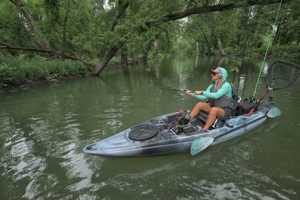
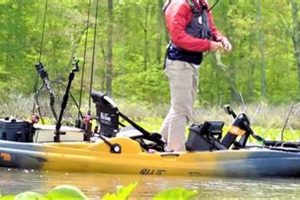
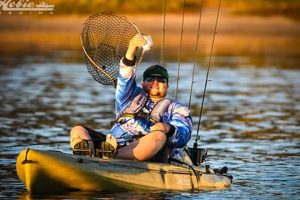
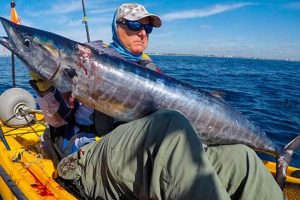
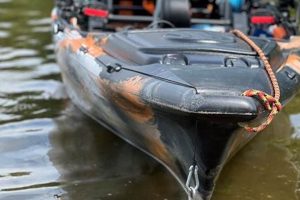
Adapting a kayak for angling involves adding, removing, or adjusting its features to improve stability, functionality, and the overall fishing experience. This might include installing rod holders, mounting fish finders, creating storage for tackle, or enhancing comfort and safety measures. For instance, a simple modification could involve strategically placing anchor trolleys for improved boat control while fishing in currents.
A well-outfitted fishing kayak provides several advantages, including increased efficiency, improved safety, and greater enjoyment on the water. Anglers can dedicate more time to fishing rather than managing gear, and strategically positioned equipment can enhance casting accuracy and retrieval speed. Historically, kayaks have been utilized for fishing, but modern materials and technology allow for more tailored and effective modifications. This evolution has spurred the development of specialized fishing kayaks and a wider array of aftermarket customization options.
This article will explore key areas for kayak modification, including seating adjustments, storage solutions, electronic integration, and effective mounting techniques. It will address stability considerations, offer advice on selecting appropriate equipment, and provide guidance on ensuring safe and enjoyable kayak fishing experiences.
Tips for Kayak Fishing Modifications
Careful planning and execution are crucial for successful kayak modification. These tips offer guidance for enhancing a kayak’s fishing capabilities while maintaining safety and stability.
Tip 1: Prioritize Stability: Before adding accessories, assess the kayak’s inherent stability. Modifications should not compromise balance. Outriggers or wider hulls can enhance stability if needed.
Tip 2: Plan Layout Strategically: Consider angler reach and workflow when positioning rod holders, fish finders, and storage compartments. Equipment should be easily accessible without disrupting balance or paddling.
Tip 3: Choose Appropriate Mounting Hardware: Use marine-grade stainless steel hardware to resist corrosion. Select appropriate adhesives and sealants for secure and watertight installations.
Tip 4: Consider Weight Distribution: Distribute added weight evenly to maintain balance and performance. Avoid overloading the kayak, which can compromise stability and maneuverability.
Tip 5: Test Modifications Incrementally: After each modification, test the kayak in calm water to assess stability and functionality. Make adjustments as needed before venturing into more challenging conditions.
Tip 6: Research and Learn from Others: Consult online resources, forums, and experienced kayak anglers for advice and inspiration. Learning from others’ successes and mistakes can save time and effort.
Tip 7: Prioritize Safety Equipment: Ensure proper safety equipment, including a personal flotation device (PFD), is readily accessible. Modifications should not obstruct access to essential safety gear.
By following these guidelines, anglers can create a customized kayak fishing platform that enhances efficiency, comfort, and safety on the water.
These modifications offer a pathway to a more rewarding and productive fishing experience from a kayak. The subsequent sections will delve into specific modification projects and provide detailed instructions.
1. Planning
Effective kayak fishing modifications hinge on thorough planning. A well-defined plan prevents costly mistakes, ensures compatibility between modifications and the kayak’s design, and maximizes functionality on the water. Planning considers factors such as fishing style, target species, and prevailing water conditions. For example, an angler targeting large pelagic fish in offshore waters requires different modifications than someone fishing for bass in a calm lake. The former might prioritize rod holders capable of handling heavy tackle, while the latter might focus on storage solutions for a variety of lures and accessories. Without a plan, modifications might conflict, compromise stability, or prove unsuitable for the intended fishing environment.
The planning process should involve sketching potential layouts, researching compatible equipment, and considering weight distribution. Mapping out the placement of rod holders, fish finders, and storage compartments ensures optimal reach and minimizes interference with paddling. Researching mounting systems and accessories guarantees compatibility and durability. Careful consideration of weight distribution maintains stability and maneuverability. For instance, an angler planning to install a heavy fish finder battery should plan for counterbalancing weight elsewhere on the kayak. Neglecting weight distribution could create an unstable platform, increasing the risk of capsizing.
Careful planning provides a roadmap for successful kayak modification, leading to enhanced fishing efficiency, comfort, and safety. By considering the interplay between different modifications and their impact on the kayak’s performance, anglers can create a customized fishing platform tailored to their specific needs and fishing style. This methodical approach avoids unnecessary expenses and ensures a functional and enjoyable on-the-water experience.
2. Mounting Systems

Secure and reliable mounting systems are fundamental to successful kayak fishing modifications. They provide the foundation for attaching various accessories, ensuring stability and functionality on the water. Choosing the right mounting system depends on the specific accessory, the kayak’s construction, and the angler’s preferences. Improperly installed or inadequate mounting systems can lead to equipment failure, compromising safety and potentially damaging the kayak.
- Track Systems:
Track systems, such as YakAttack or Railblaza, offer versatile mounting solutions. These tracks are installed along the gunwales or other strategic locations on the kayak, allowing for adjustable positioning of rod holders, fish finders, and other accessories. Tracks provide flexibility for customization and allow for easy removal or repositioning of gear. For example, an angler can adjust rod holder positions based on trolling versus casting techniques.
- Flush Mounts:
Flush mounts provide a low-profile and streamlined solution for specific accessories. They are often used for rod holders, transducer mounts, and other items that benefit from a secure and permanent installation. Flush mounts minimize interference with paddling and reduce the risk of snagging lines. Recessed rod holders offer a prime example of a flush mount application, keeping rods close to the kayak’s deck for improved maneuverability.
- Starports:
Starports, like those offered by Railblaza, provide a versatile and easily adaptable mounting platform. These small, star-shaped mounts can be installed on various surfaces and accommodate a wide range of accessories. Their compact size makes them suitable for mounting gear in tight spaces. A camera mount attached to a Starport provides an example of their adaptability for capturing on-the-water action.
- Adhesive Mounts:
Adhesive mounts offer a convenient solution for attaching lightweight accessories to smooth surfaces. Marine-grade adhesives ensure a secure bond, but proper surface preparation and adhesive selection are critical for long-term durability. These mounts are often used for attaching small items like GPS units or phone holders. However, it’s crucial to select adhesives specifically designed for marine environments to withstand exposure to water and UV radiation. Improper adhesive selection can lead to mount failure, potentially damaging both the accessory and the kayak.
Selecting and installing appropriate mounting systems is paramount for a successful kayak fishing modification project. A well-chosen system enhances the functionality and safety of added accessories, contributing to a more efficient and enjoyable fishing experience. By understanding the strengths and limitations of each system, anglers can create a customized setup tailored to their specific needs and fishing style. This methodical approach ensures that modifications are secure, durable, and seamlessly integrated into the kayak’s design.
3. Rod Holders

Rod holders are essential modifications for kayak fishing, enabling anglers to manage multiple rods, troll effectively, and keep their hands free for other tasks. Proper rod holder selection and placement significantly impact fishing efficiency and safety. Choosing inappropriate holders or positioning them incorrectly can lead to tangled lines, lost rods, and compromised stability.
- Types of Rod Holders:
Various rod holder types cater to different fishing styles and kayak setups. Flush-mounted rod holders offer a streamlined profile, ideal for trolling or navigating tight spaces. Adjustable rod holders provide flexibility for various fishing techniques and accommodate different rod lengths. Rotating rod holders allow for quick adjustments to rod angles, beneficial when fighting fish or changing lure presentations. For example, a kayak angler targeting different species might use flush mounts for trolling rods and adjustable holders for casting rods.
- Placement Considerations:
Strategic rod holder placement optimizes reach, minimizes interference with paddling, and ensures balanced weight distribution. Positioning holders within easy reach allows for efficient rod retrieval and reduces the risk of losing balance. Avoiding placement near paddles or other equipment prevents tangles and improves maneuverability. For instance, placing rod holders behind the seat keeps rods out of the paddling arc and facilitates quick access. Conversely, poorly placed holders can hinder paddling and increase the risk of entanglement.
- Mounting Options:
Rod holders can be mounted using various methods, including track systems, starports, and direct mounting to the kayak’s hull. Track systems provide flexibility for adjusting holder positions, while starports offer adaptable mounting solutions. Direct mounting provides a secure and permanent installation. Choosing the appropriate mounting method depends on the kayak’s construction and the angler’s preferences. For instance, a kayak with a track system allows for easy repositioning of rod holders, while a kayak without tracks might require direct mounting.
- Material and Construction:
Rod holders are typically constructed from durable materials like plastic, aluminum, or stainless steel. Plastic holders offer affordability and corrosion resistance but may lack the robustness of metal options. Aluminum holders provide a balance of strength and lightweight, while stainless steel offers superior corrosion resistance in saltwater environments. The choice of material depends on the fishing environment and budget. For example, saltwater anglers often prefer stainless steel rod holders for their durability in corrosive environments.
Selecting and installing appropriate rod holders is crucial for optimizing a fishing kayak. Careful consideration of rod holder types, placement, mounting options, and material ensures a customized setup that enhances fishing efficiency, safety, and overall enjoyment on the water. By integrating rod holders seamlessly into the kayak’s design, anglers create a functional and personalized fishing platform tailored to their specific needs and fishing style. This attention to detail transforms a standard kayak into a specialized angling vessel, maximizing the potential for a successful and rewarding fishing experience.
4. Storage Solutions

Efficient storage solutions are crucial for modifying a kayak for fishing. Organized storage maximizes space, keeps essential gear readily accessible, and contributes to a safe and efficient fishing experience. A cluttered kayak impedes movement, compromises stability, and increases the risk of losing or damaging equipment. Effective storage solutions address these challenges, allowing anglers to focus on fishing rather than managing gear.
- Tackle Storage:
Tackle storage systems organize lures, hooks, weights, and other small items. Options include tackle boxes, trays, and bags designed for kayak use. Waterproof containers protect gear from moisture, while clear lids facilitate quick identification of contents. For example, a waterproof tackle box secured within a recessed compartment keeps lures dry and readily accessible. Efficient tackle storage minimizes time spent searching for specific items, maximizing fishing time.
- Rod and Paddle Storage:
Secure rod and paddle storage prevents equipment loss and damage while maintaining a clear deck space. Rod leashes secure rods to the kayak, while paddle clips or bungee cords keep paddles within easy reach. These systems prevent equipment from shifting or falling overboard, particularly in rough conditions. For instance, a rod leash prevents a prized fishing rod from being lost overboard during a sudden wave or unexpected encounter with a submerged object. Secure storage ensures essential equipment remains readily available while minimizing clutter.
- Dry Storage:
Dry storage compartments protect essential items like phones, wallets, and cameras from water damage. Waterproof bags or hatches provide secure storage for sensitive electronics and personal belongings. These compartments are essential for maintaining dry gear in the event of splashes, rain, or capsizing. A waterproof hatch, for example, safeguards a mobile phone from water damage, ensuring communication capabilities in case of an emergency. Dry storage contributes to peace of mind and preserves valuable items.
- Gear Crates and Bags:
Gear crates and bags offer versatile storage solutions for larger items like clothing, food, and safety equipment. These containers can be secured to the kayak’s deck using bungee cords or straps. Selecting waterproof or water-resistant options provides additional protection from the elements. For example, a waterproof gear crate strapped to the rear deck can store extra clothing layers, rain gear, and a first-aid kit. These storage solutions enhance organization and maintain a clutter-free deck, contributing to a safer and more efficient fishing experience. They also facilitate easy transport of gear to and from the kayak launch.
Integrating effective storage solutions significantly enhances a kayak’s functionality for fishing. Organized storage improves efficiency, maximizes space utilization, and contributes to a safer on-the-water experience. By strategically incorporating various storage methods, anglers can create a customized and efficient fishing platform that caters to their specific needs and fishing style. This methodical approach transforms a standard kayak into a dedicated fishing vessel, maximizing enjoyment and promoting a successful angling experience.
5. Fish finder integration
Integrating a fish finder significantly enhances a kayak’s fishing capabilities. These electronic devices provide real-time underwater insights, enabling anglers to locate fish, identify structures, and understand bottom contours. This information translates to increased fishing efficiency and a more strategic approach to angling. A fish finder transforms a kayak into a sophisticated fishing platform, offering a significant advantage over traditional methods of locating fish.
- Transducer Mounting:
Effective transducer mounting is crucial for accurate fish finder readings. Options include through-hull mounting for optimal performance, inside-hull mounting for simplified installation, and transom-mounted transducers for kayaks with a suitable mounting point. Each method offers distinct advantages and disadvantages regarding signal clarity and installation complexity. For example, through-hull mounting provides the clearest signal but requires more invasive installation, while inside-hull mounting sacrifices some signal quality for easier installation.
- Power Supply:
Fish finders require a stable power supply. A dedicated 12V battery provides reliable power and avoids draining the kayak’s other electronics. Battery size and capacity depend on the fish finder’s power requirements and intended usage duration. Proper battery placement and secure mounting are essential for weight distribution and safety. For instance, a larger capacity battery provides longer run times but adds more weight, influencing kayak balance and requiring careful placement.
- Display Mounting:
Secure and accessible display mounting optimizes fish finder usability. Options include mounting the display directly to the kayak using a RAM mount or utilizing a portable mount attached to the angler’s PFD. Display placement should allow for easy viewing without interfering with paddling or other fishing activities. For example, mounting the display on a RAM mount near the rod holders provides convenient access to fish finder information while maintaining a clear paddling arc.
- Wiring and Cable Management:
Proper wiring and cable management ensure fish finder functionality and prevent interference with other kayak equipment. Securing cables with zip ties or clips prevents tangles and protects wiring from damage. Waterproof connectors maintain electrical integrity and prevent corrosion. For example, routing cables along the inside of the kayak hull and securing them with clips minimizes clutter and protects them from accidental damage. Well-managed wiring contributes to a safe and efficient fishing environment.
Integrating a fish finder into a kayak fishing setup enhances angling effectiveness by providing valuable underwater insights. Proper transducer mounting, power supply considerations, display placement, and cable management ensure optimal fish finder performance and contribute to a more informed and productive fishing experience. These modifications transform a standard kayak into a technologically advanced fishing platform, increasing the likelihood of locating and catching target species.
6. Anchor Trolley System

An anchor trolley system is a crucial modification for kayak anglers, providing enhanced boat control and positioning flexibility. It allows for precise anchor deployment and adjustment, enabling anglers to hold position in currents, wind, or specific fishing locations. This system significantly improves fishing efficiency by minimizing drift and maximizing time spent in productive areas. Without an anchor trolley, maintaining position in challenging conditions becomes difficult, hindering fishing effectiveness.
- System Components:
The core components of an anchor trolley system include a length of strong rope or cord, typically marine-grade nylon or braided polyethylene, and a series of hardware attachments. These attachments include pulleys, rings, and cleats, strategically positioned along the kayak’s gunwale. The rope runs through these attachments, allowing the anchor’s attachment point to slide along the kayak’s length. This sliding mechanism is the defining feature of the anchor trolley, enabling adjustable positioning.
- Positioning and Functionality:
The anchor trolley is typically installed along one side of the kayak, running from bow to stern. This configuration allows anglers to position the anchor at various points along the kayak’s length, adjusting for wind or current direction. For instance, positioning the anchor towards the bow allows the kayak to face into the current, while anchoring from the stern allows for a down-current drift. This adaptability is crucial for maintaining optimal fishing position and presentation.
- Benefits in Various Fishing Scenarios:
An anchor trolley proves beneficial in diverse fishing situations. In rivers or tidal flows, it prevents excessive drift, allowing anglers to target specific structures or cover. In windy conditions, it stabilizes the kayak and maintains desired casting angles. When fishing near drop-offs or other underwater features, it allows for precise positioning to maximize fishing effectiveness. For example, when fishing a river channel, the trolley allows anglers to adjust their position within the channel without re-anchoring, optimizing lure presentation and depth control.
- Installation and Customization:
Anchor trolley installation involves attaching the hardware components to the kayak’s gunwale and running the rope through them. Customization options include adjustable cleats for fine-tuning anchor position and quick-release mechanisms for rapid anchor deployment or retrieval. Proper installation ensures the system’s reliability and durability in various fishing conditions. Choosing high-quality marine-grade hardware is essential for withstanding the stresses of anchoring and exposure to the elements.
By offering precise boat control and adaptability to various fishing situations, the anchor trolley system enhances kayak angling effectiveness. Its integration into a modified fishing kayak contributes significantly to a more controlled, efficient, and productive fishing experience. The ability to precisely position and adjust the anchor’s attachment point transforms how anglers interact with their environment, maximizing their time in productive fishing zones and ultimately increasing their chances of success. This seemingly simple modification significantly impacts the overall fishing experience from a kayak.
7. Safety Enhancements
Safety enhancements are integral to responsible kayak fishing modifications. Modifications, while improving fishing functionality, can introduce potential hazards if safety isn’t prioritized. Increased weight from added gear, altered stability due to equipment placement, and potential distractions from electronic devices all contribute to heightened risks. Addressing these safety concerns through appropriate modifications and practices is paramount for accident prevention. For example, neglecting weight distribution after installing a heavy fish finder battery could destabilize the kayak, increasing the risk of capsizing. Therefore, integrating safety considerations into every modification decision is crucial.
Several safety-focused modifications directly mitigate potential risks. High-visibility flags and lights enhance kayak visibility to other boaters, especially in low-light conditions or crowded waterways. Installing additional flotation devices or foam blocks improves buoyancy and stability, mitigating the destabilizing effects of added weight. Securely attaching gear with leashes or straps prevents equipment loss in the event of a capsize. Practicing self-rescue techniques and carrying essential safety equipment, such as a whistle, signaling mirror, and first-aid kit, further strengthens preparedness for unforeseen circumstances. Furthermore, understanding the kayak’s modified weight capacity and staying within those limits is crucial for maintaining stability and preventing overloading. These proactive measures significantly reduce the likelihood of accidents and enhance overall safety on the water.
Modifying a kayak for fishing requires a holistic approach, balancing functionality with safety. Ignoring safety considerations can negate the benefits of other modifications, turning a potentially enjoyable fishing trip into a hazardous situation. Prioritizing safety enhancements alongside functional modifications ensures a balanced approach, creating a fishing platform that is both effective and secure. This comprehensive approach fosters responsible kayak angling practices and contributes to a safe and enjoyable experience on the water.
Frequently Asked Questions
Addressing common queries regarding kayak fishing modifications clarifies potential uncertainties and promotes informed decision-making. These responses aim to provide comprehensive insights into various aspects of kayak modification.
Question 1: How does modifying a kayak impact its stability?
Modifications can alter a kayak’s stability, both positively and negatively. Added weight lowers the center of gravity, potentially increasing stability, while improperly distributed weight or accessories positioned high on the kayak can decrease stability. Careful planning and weight distribution are essential for maintaining balance.
Question 2: Are modifications universally compatible with all kayaks?
Compatibility varies depending on kayak design and construction. Specific mounting systems may require pre-installed tracks or specific hull materials. Researching compatibility before purchasing modifications is essential.
Question 3: What materials are recommended for mounting hardware in saltwater environments?
Marine-grade stainless steel hardware is crucial for saltwater environments due to its corrosion resistance. Non-stainless steel hardware will rust and degrade quickly in saltwater, potentially compromising safety.
Question 4: What are the most crucial safety considerations when modifying a kayak for fishing?
Maintaining stability through proper weight distribution is paramount. Visibility enhancements, such as flags and lights, and secure storage of gear prevent accidents. Carrying essential safety equipment, like a PFD and signaling devices, is crucial.
Question 5: How can one determine the appropriate weight capacity for a modified kayak?
The manufacturer’s stated weight capacity serves as a baseline. However, modifications alter this capacity. One must account for the added weight of modifications and deduct it from the original capacity to determine the adjusted weight limit. Exceeding this limit compromises safety and performance.
Question 6: Where can one find reliable resources and guidance for kayak fishing modifications?
Reputable online forums, kayak fishing communities, and experienced anglers provide valuable insights and guidance. Manufacturers’ websites often offer specific modification recommendations for their kayak models. Consulting these resources empowers informed decision-making and facilitates successful modifications.
Careful consideration of these frequently asked questions equips individuals with the knowledge necessary for informed modifications and safe kayak fishing practices.
This concludes the FAQ section. The following section will offer a summary of key takeaways and concluding thoughts.
Conclusion
Modifying a kayak for fishing involves a multifaceted approach, encompassing planning, equipment selection, mounting systems, and safety considerations. Strategic modifications enhance functionality, efficiency, and the overall fishing experience. However, neglecting crucial aspects, particularly weight distribution and stability, can compromise safety. Thoughtful planning, informed decision-making, and prioritizing safety are essential for successful modification projects.
A well-modified fishing kayak expands angling opportunities, allowing access to diverse fishing locations and techniques. Continuous learning, adaptation, and responsible angling practices ensure rewarding experiences on the water. Embracing these principles fosters a deeper appreciation for the sport and promotes the long-term sustainability of kayak fishing.