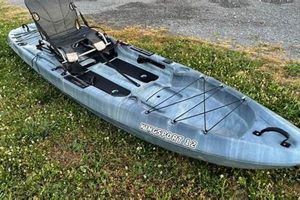
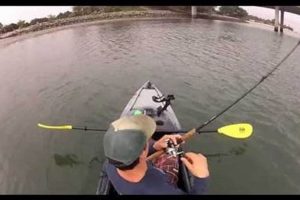
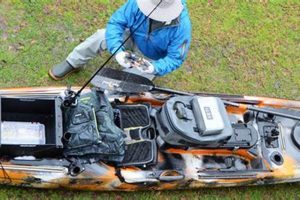
This specific watercraft, manufactured by Hobie, is a vessel designed for angling, measuring approximately ten feet in length. It combines the maneuverability of a smaller kayak with sufficient stability for fishing activities. Typically constructed from durable, lightweight materials like rotomolded polyethylene, these kayaks often feature specialized seating, storage for tackle and equipment, and mounting points for accessories like rod holders and fish finders.
The compact size offers advantages in navigating shallow waters and tighter spaces, making it suitable for diverse fishing environments like ponds, rivers, and inshore coastal areas. Its stability and specialized features contribute to a comfortable and efficient fishing experience, allowing anglers to focus on their pursuit. The popularity of this type of watercraft has grown alongside the increasing interest in kayak fishing, offering a more accessible and personalized approach to the sport compared to larger boats.
The subsequent sections will delve deeper into various aspects of this type of kayak, including specific models, essential accessories, paddling techniques, and recommended fishing locations. Further information on maintenance, safety procedures, and transportation will also be provided.
Tips for Utilizing a 10-Foot Fishing Kayak
Proper utilization of a 10-foot fishing kayak maximizes enjoyment and ensures safety on the water. Careful consideration of the following tips will enhance fishing success and overall experience.
Tip 1: Weight Distribution is Key: Proper weight distribution is crucial for stability. Gear should be evenly distributed throughout the kayak, avoiding overloading one area. Low placement of heavier items enhances stability.
Tip 2: Practice Paddling Techniques: Efficient paddling techniques are essential for covering distances and maneuvering effectively. Practicing different strokes before venturing into open water improves control and conserves energy.
Tip 3: Understand Water Conditions: Prior to launching, one should assess water conditions, including wind, currents, and tides. Awareness of potential hazards like submerged obstacles or changing weather patterns is paramount.
Tip 4: Utilize Appropriate Safety Gear: A personal flotation device (PFD) should always be worn. Carrying a whistle, signaling device, and first-aid kit are also recommended safety measures. Informing someone of the planned fishing location and estimated return time is also advisable.
Tip 5: Choose Suitable Fishing Locations: Selecting fishing locations appropriate for a 10-foot kayak is important. Calm, protected waters like ponds, lakes, and slow-moving rivers are often ideal for this size vessel.
Tip 6: Master Anchor Positioning: Effective anchor deployment keeps the kayak in a desired fishing spot, preventing drift in currents or wind. Understanding proper anchoring techniques, considering water depth and bottom conditions, is essential.
Tip 7: Organize Tackle and Gear: Keeping essential fishing tackle and gear organized and readily accessible maximizes fishing time and minimizes disruptions. Utilizing storage compartments and mounting accessories designed for kayaks optimizes efficiency.
Adhering to these guidelines contributes significantly to a safe and rewarding kayak fishing experience. Preparation and mindful practice increase efficiency and enjoyment on the water.
The following section concludes with essential considerations for choosing the right 10-foot fishing kayak based on individual needs and preferences.
1. Brand

The “Hobie” brand is integral to understanding the “Hobie 10ft fishing kayak.” Hobie Cat Company, founded by Hobart Alter, has a rich history of innovation in watersports, particularly in sailboats and kayaks. This brand association signifies specific design philosophies, construction quality, and performance characteristics relevant to the 10-foot fishing kayak.
- MirageDrive Pedal System:
Hobie is renowned for its MirageDrive pedal system, a hands-free propulsion system utilizing leg power. This feature, often integrated into their fishing kayaks, allows anglers to navigate and position themselves efficiently while keeping their hands free for fishing. This differentiates Hobie from other kayak brands and contributes significantly to the fishing experience.
- Hull Design and Stability:
Hobie kayaks typically feature carefully engineered hull designs optimized for stability and performance. This is crucial for fishing kayaks, as stability is essential for casting, reeling, and landing fish. Specific hull designs cater to different water conditions, enhancing versatility.
- Build Quality and Materials:
Hobie emphasizes durability and quality in its kayak construction. Utilizing robust materials like rotomolded polyethylene ensures longevity and resistance to impacts and wear. This robust construction contributes to the kayak’s performance and lifespan in demanding fishing environments.
- Fishing-Specific Features:
Hobie fishing kayaks often incorporate specialized features like rod holders, tackle storage compartments, and mounting points for fish finders and other accessories. These integrated features cater specifically to anglers’ needs, enhancing functionality and convenience on the water.
These facets, linked by the Hobie brand, contribute to the distinct identity and value proposition of the Hobie 10ft fishing kayak. The brand’s reputation for innovation and performance, combined with these features, positions the Hobie 10ft fishing kayak as a specialized tool for anglers seeking enhanced on-the-water experiences. Considering these elements alongside factors like price and specific model variations allows potential buyers to make informed decisions aligned with their individual fishing styles and preferences.
2. Length

The length of 10 feet is a defining characteristic of the Hobie 10ft fishing kayak, directly influencing its maneuverability, stability, and overall suitability for specific fishing environments. This dimension represents a balance between compact agility and sufficient storage capacity, differentiating it from shorter recreational kayaks and longer touring or sea kayaks. Understanding the implications of this length is crucial for evaluating its performance and suitability for individual angling needs.
- Maneuverability in Confined Waters:
A 10-foot length allows for nimble navigation within confined spaces such as narrow creeks, shallow rivers, and mangrove forests. This maneuverability proves advantageous when targeting specific fish habitats inaccessible to larger vessels. Shorter kayaks might offer even greater agility in extremely tight quarters, but often compromise stability and storage capacity, essential for fishing activities.
- Stability and Tracking:
While shorter than touring kayaks designed for straight-line tracking, the 10-foot length provides sufficient hull surface area for reasonable stability, a crucial factor for casting, reeling, and landing fish. This stability is further enhanced by hull design features specific to fishing kayaks. Longer kayaks might offer superior tracking in open water but sacrifice maneuverability in tighter environments.
- Storage Capacity and Gear Organization:
The 10-foot length offers adequate space for integrating storage compartments and mounting points for fishing gear, including rods, tackle boxes, and fish finders. While not as expansive as larger kayaks designed for extended expeditions, this length strikes a balance between storage and maneuverability. Shorter kayaks may lack sufficient storage for essential fishing equipment.
- Transportation and Portability:
The 10-foot length facilitates relatively easy transportation and storage. It can often be transported on roof racks or in the bed of a pickup truck without requiring specialized trailers. While longer kayaks offer advantages in speed and cargo capacity, they present greater logistical challenges regarding transportation and storage.
The 10-foot length of the Hobie fishing kayak strategically balances maneuverability, stability, storage, and portability. This design choice caters specifically to the needs of anglers operating in diverse environments, from shallow inlets to open lakes. Understanding the trade-offs inherent in kayak length, in conjunction with other features like hull design and propulsion systems, informs selection and contributes to a more productive and enjoyable fishing experience.
3. Purpose
The “fishing” purpose defines the core functionality and design considerations of the Hobie 10ft fishing kayak. This specialized purpose distinguishes it from recreational or touring kayaks, influencing features, construction, and overall performance. Understanding this core purpose provides a framework for evaluating its suitability for specific angling activities and differentiating it within the broader kayak market.
- Stability and Platform:
A fishing kayak prioritizes stability as a fundamental design element. The Hobie 10ft fishing kayak’s hull design and features contribute to a stable platform essential for casting, reeling, and landing fish. This contrasts with recreational kayaks where maneuverability often takes precedence over stability. Enhanced stability allows anglers to focus on fishing techniques without constantly compensating for instability, leading to a more comfortable and productive experience.
- Specialized Features and Integrations:
Designed explicitly for angling, this kayak integrates specialized features such as rod holders, tackle storage compartments, and mounting points for fish finders and other accessories. These features optimize functionality and efficiency on the water, setting it apart from kayaks designed for general recreation or touring. Integrated rod holders keep rods secure and accessible, while dedicated storage compartments keep tackle organized, enabling anglers to quickly adapt to changing fishing conditions.
- Performance in Fishing Environments:
The Hobie 10ft fishing kayak’s performance characteristics align directly with its fishing purpose. Maneuverability in shallow water, stability in currents, and the capacity to carry fishing gear contribute to its effectiveness in various fishing environments. This contrasts with touring kayaks designed for open water and speed, which may be less suitable for navigating shallow rivers or sheltered bays.
- Durability and Construction:
Often subjected to demanding conditions, fishing kayaks require robust construction. The Hobie 10ft fishing kayak typically utilizes durable materials resistant to impacts, abrasion, and UV exposure, ensuring longevity and reliable performance in diverse environments. This durability sets it apart from recreational kayaks intended for calmer, less demanding conditions, reflecting the specific requirements of fishing activities.
The “fishing” purpose permeates every aspect of the Hobie 10ft fishing kayak’s design and functionality. From specialized features to performance characteristics, its focus on angling differentiates it within the kayak market. Understanding this core purpose provides crucial context for evaluating its suitability for individual fishing needs and appreciating its specialized capabilities. By catering specifically to the demands of fishing, the Hobie 10ft fishing kayak provides a platform for anglers to pursue their passion effectively and comfortably.
4. Type
The “kayak” designation within “Hobie 10ft fishing kayak” signifies its fundamental nature as a small, narrow watercraft propelled by a double-bladed paddle. This categorization inherently links it to a specific mode of waterborne activity and distinguishes it from other vessel types like canoes, paddleboards, or motorboats. This classification influences design considerations, performance expectations, and overall user experience. For instance, the kayak’s closed-deck design and sit-in cockpit differentiate it from a canoe’s open structure, impacting stability and protection from the elements. This distinction is crucial for fishing, where maintaining a stable platform and remaining relatively dry are essential.
The kayak’s inherent design facilitates efficient paddling and maneuverability. The streamlined hull and double-bladed paddle allow for precise control and navigation through various water conditions, a critical attribute for accessing diverse fishing locations. For example, navigating narrow creeks or maneuvering around submerged structures requires the agility afforded by a kayak’s design, contrasting with the broader strokes and less precise control characteristic of a canoe. Understanding this connection between “kayak” and its functional attributes highlights its suitability for specific fishing applications.
The “kayak” classification influences practical considerations like storage, transportation, and launch procedures. Its relatively compact size compared to larger vessels simplifies transportation on vehicle roof racks or trailers. Launching a kayak from a shoreline or shallow water access point is considerably easier than launching larger boats requiring ramps or specialized equipment. This ease of access broadens the range of potential fishing locations reachable with a kayak, contributing to its versatility. The “kayak” designation, therefore, has significant practical implications for anglers seeking diverse and accessible fishing experiences.
5. Activity

The “watersport” activity designation establishes the “Hobie 10ft fishing kayak’s” operational context within a broader category of recreational pursuits. This classification inherently links the kayak to a realm of activities centered around water-based recreation, influencing design considerations, user expectations, and the overall experience. Fishing, as a subset of watersports, utilizes the kayak as a platform for engaging with the aquatic environment. This connection necessitates design adaptations specific to fishing, differentiating it from other watersports like kayaking for leisure or competitive racing. For instance, stability requirements for fishing differ significantly from those for whitewater kayaking, influencing hull design and construction. This distinction underscores the importance of the “watersport” context in shaping the kayak’s specialized features.
The “watersport” classification influences the selection and utilization of appropriate safety equipment and practices. Personal flotation devices (PFDs), essential for most watersports, become critical for fishing kayaks, providing buoyancy and safety in case of capsizing. Understanding weather conditions, water currents, and potential hazards becomes paramount when engaging in any watersport, including fishing from a kayak. Knowledge of navigation rules and appropriate signaling devices further enhances safety. For example, awareness of tidal flows and wind patterns affects fishing strategy and ensures a safe return to shore. This highlights the practical significance of understanding “watersport” safety protocols within the context of kayak fishing.
The “watersport” activity framework encourages responsible environmental stewardship. Kayak fishing, as a low-impact watersport, provides opportunities for observing aquatic ecosystems and appreciating the natural environment. Respecting wildlife, adhering to catch-and-release practices, and avoiding disturbing sensitive habitats are essential considerations for responsible anglers. For instance, minimizing noise pollution and properly disposing of fishing line contribute to preserving the integrity of the aquatic environment. The “watersport” classification, therefore, emphasizes the interconnectedness between recreational activities and environmental responsibility, encouraging mindful interaction with natural water resources.
Frequently Asked Questions
This section addresses common inquiries regarding Hobie 10ft fishing kayaks, providing concise and informative responses to facilitate informed decision-making and enhance user understanding.
Question 1: What differentiates a Hobie 10ft fishing kayak from other fishing kayaks on the market?
Key differentiators often include the patented MirageDrive pedal system, enabling hands-free propulsion, and specialized fishing-oriented features like integrated rod holders and tackle management systems. Specific hull designs optimized for stability and performance in various fishing environments also contribute to their unique attributes.
Question 2: How does the MirageDrive system impact fishing activities?
The MirageDrive system allows anglers to maintain position and navigate efficiently without paddling, freeing hands for casting, retrieving lures, and handling fish. This hands-free propulsion offers a significant advantage in various fishing scenarios, particularly in currents or when precise boat control is essential.
Question 3: What weight capacity can a typical Hobie 10ft fishing kayak handle?
Weight capacity varies depending on the specific model, but generally ranges between 300-400 lbs, including the angler’s weight, gear, and any potential catch. Consulting the manufacturer’s specifications for the chosen model provides precise weight limitations.
Question 4: Are Hobie 10ft fishing kayaks suitable for both freshwater and saltwater environments?
Yes, these kayaks are typically designed for use in both freshwater and saltwater environments. However, appropriate rinsing and maintenance after saltwater use are crucial for preventing corrosion and ensuring longevity. Specific model features may cater more effectively to specific water conditions.
Question 5: What are the primary considerations when choosing a Hobie 10ft fishing kayak model?
Key considerations include the target fishing environment (rivers, lakes, or ocean), desired features (rod holders, storage capacity), propulsion preferences (MirageDrive vs. paddle), and budget. Evaluating these factors alongside individual fishing styles and preferences aids informed model selection.
Question 6: How does one transport a Hobie 10ft fishing kayak?
Transportation options include roof racks designed for kayaks, trailers specifically for small watercraft, or in the bed of a pickup truck with appropriate padding and tie-down straps. The kayak’s relatively compact size facilitates transport without requiring specialized oversized trailers.
Understanding these key aspects of Hobie 10ft fishing kayaks empowers potential buyers to make informed decisions aligned with their individual needs and fishing aspirations. Consulting authorized dealers or the manufacturer directly can provide further clarification and model-specific information.
The following section delves into the evolution of Hobie kayaks, providing historical context and highlighting key innovations that have shaped their current designs.
Conclusion
This exploration of the Hobie 10ft fishing kayak has highlighted its key attributes, from the brand’s legacy of innovation to the practical implications of its length, purpose-driven design, and classification within watersports. The analysis emphasized the interplay between these elements, showcasing how they contribute to a specialized angling platform. Specific features, including the MirageDrive system, specialized storage, and hull design optimized for stability and maneuverability, were examined in detail, underscoring their significance in diverse fishing environments.
The Hobie 10ft fishing kayak represents a convergence of design, functionality, and angler-centric features. Its compact size and specialized capabilities position it as a versatile tool for navigating diverse waterways and pursuing a range of fishing styles. Continued advancements in kayak design and technology promise further enhancements to on-the-water experiences, solidifying the importance of informed selection based on individual needs and fishing aspirations. Careful consideration of the factors outlined herein empowers anglers to choose equipment best suited for their specific fishing pursuits and contributes to a more informed and rewarding experience on the water.