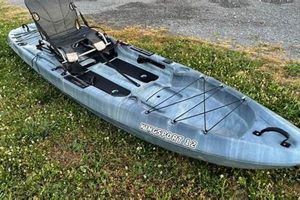
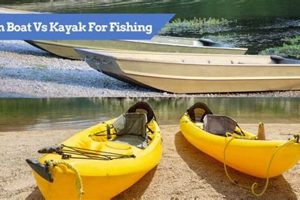
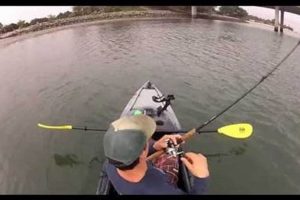
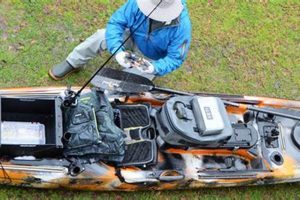
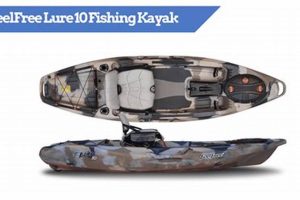
This activity involves using a small, maneuverable watercraft designed for navigating rivers and streams to engage in angling. A specialized vessel often features rod holders, storage compartments for tackle, and a stable hull for casting and reeling in fish from a seated position. For instance, an angler might use such a vessel to pursue trout in a fast-flowing mountain stream or bass in a wider, slower river.
The combination of angling and river navigation in a compact, purpose-built vessel offers distinct advantages. It provides access to otherwise difficult-to-reach fishing spots, allows for a stealthy approach to fish, and presents a physically engaging way to experience the natural environment. Historically, similar small craft have been utilized for fishing in rivers, but modern designs incorporating specialized materials and features enhance stability, comfort, and overall fishing efficacy.
The following sections will explore various aspects of this popular activity in greater detail, including suitable watercraft selection, essential gear and safety precautions, effective fishing techniques, and responsible environmental practices.
Tips for River Kayak Fishing
Successful river kayak fishing requires careful planning and execution. The following tips offer guidance for a safe and productive experience.
Tip 1: Choose the Right Kayak. A shorter, wider kayak offers greater stability, especially for beginners. Longer, narrower kayaks are faster but require more experience to handle, particularly in moving water. Consider features like rod holders, storage compartments, and anchor systems.
Tip 2: Understand River Dynamics. Current speed, water depth, and obstacles like rocks and submerged logs present challenges. Research the river beforehand and scout the area if possible. Be aware of potential hazards such as strainers (partially submerged objects that allow water to pass through but trap solid objects).
Tip 3: Pack Essential Gear. A personal flotation device (PFD) is crucial for safety. Essential fishing gear includes appropriate rods, reels, lines, lures, and tackle. A first-aid kit, signaling devices, and a dry bag for electronics and valuables are also recommended.
Tip 4: Master Basic Paddling Techniques. Efficient paddling conserves energy and allows for precise maneuvering. Learn basic strokes like the forward stroke, reverse stroke, and sweep stroke for controlling direction and speed.
Tip 5: Practice Proper Casting Techniques. Casting from a seated position in a kayak requires adjustments. Practice casting accurately and efficiently while maintaining balance and stability.
Tip 6: Employ Effective Anchoring Strategies. Anchoring allows anglers to hold position in desired fishing locations. Choose an appropriate anchor system and learn proper anchoring techniques to avoid entanglement and ensure a secure hold.
Tip 7: Respect Wildlife and the Environment. Practice catch-and-release fishing whenever possible. Pack out all trash and avoid disturbing natural habitats. Be mindful of other river users and adhere to local regulations.
By following these tips, individuals can enhance their safety, improve their fishing success, and contribute to the preservation of the natural environment.
The information provided in this article aims to offer a comprehensive overview of river kayak fishing. Further research and practice are encouraged to develop proficiency and ensure responsible enjoyment of this activity.
1. Kayak Selection

Appropriate kayak selection is fundamental to a successful and enjoyable river fishing experience. The chosen vessel directly impacts maneuverability, stability, and overall fishing efficacy. Careful consideration of hull design, length, width, and specialized features is essential for optimizing performance in specific river environments.
- Hull Design
Hull design significantly influences a kayak’s performance characteristics. A flat-bottomed hull offers excellent stability, ideal for calmer waters and beginners. A rounded or V-shaped hull provides greater maneuverability and speed, suited for navigating currents and rapids but requiring more experience to control. A pontoon-style hull maximizes stability, especially beneficial for stand-up fishing, but sacrifices maneuverability. Choosing the appropriate hull type is crucial for balancing stability and agility in the intended fishing environment.
- Length and Width
Kayak length and width directly affect tracking and stability. Longer kayaks track straighter and glide more efficiently, beneficial for covering longer distances on larger rivers. Shorter kayaks are more maneuverable, ideal for navigating tight turns and obstacles in smaller streams. Wider kayaks offer greater initial stability, important for casting and reeling in fish, while narrower kayaks are faster but less stable. Selecting the optimal length and width depends on the specific river characteristics and the angler’s skill level.
- Specialized Features
Modern fishing kayaks often incorporate specialized features to enhance angling performance. Rod holders secure fishing rods, freeing hands for paddling and other tasks. Storage compartments accommodate tackle, gear, and personal items. Anchor systems allow anglers to maintain position in desired fishing locations. Other features like adjustable seating, footrests, and rudder systems further enhance comfort and control. Considering these features during kayak selection significantly improves overall fishing functionality and convenience.
- Material and Weight Capacity
Kayak construction materials and weight capacity are important practical considerations. Common materials include polyethylene, fiberglass, and composites, each offering different durability, weight, and performance characteristics. Weight capacity determines the maximum load the kayak can safely carry, including the angler, gear, and any potential catch. Selecting a kayak with appropriate material and weight capacity ensures safety and longevity while accommodating the intended fishing activities.
By carefully considering these factors hull design, length and width, specialized features, and material and weight capacity anglers can select a kayak that optimizes their fishing experience on the river. A well-chosen vessel enhances safety, maneuverability, and overall fishing effectiveness, ultimately contributing to a more productive and enjoyable outing.
2. River Dynamics

River dynamics significantly influence fishing kayak strategies and outcomes. Current speed, water depth, and flow patterns dictate fish behavior and ideal fishing locations. Faster currents often hold species like trout that prefer oxygen-rich water, requiring anglers to adjust kayak positioning and casting techniques. Slower, deeper pools may harbor catfish or bass, necessitating different approaches. Understanding how these dynamics interact is crucial for successful angling. For instance, recognizing eddy lines where faster and slower currents meet allows anglers to target fish that congregate in these areas to conserve energy while still accessing food sources. Similarly, identifying underwater structures like rocks or submerged logs, which affect current flow and create holding points for fish, improves fishing success.
Navigating various river features requires adapting paddling and anchoring techniques. Rapids and riffles necessitate precise maneuvering to maintain control and avoid capsizing. Calm stretches allow for relaxed paddling and focused fishing. Anchor placement becomes critical in swift currents to hold position effectively, demanding careful consideration of riverbed composition and potential snags. Furthermore, seasonal changes in river flow, temperature, and water clarity affect fish behavior and necessitate adjusting fishing strategies throughout the year. For example, during spring runoff, higher water levels and increased turbidity may require heavier lures and modified retrieval techniques.
Successfully integrating knowledge of river dynamics with kayak fishing techniques optimizes angling outcomes. This understanding enables informed decisions about kayak selection, fishing location, and lure presentation. Neglecting these factors can lead to inefficient fishing, reduced catch rates, and potentially hazardous situations. Therefore, analyzing river dynamics is not merely an academic exercise but a practical necessity for responsible and productive kayak fishing.
3. Essential Gear

Specialized gear enhances safety and effectiveness while fishing from a river kayak. Appropriate equipment selection considers the specific challenges and opportunities presented by the river environment. These items contribute to angler comfort, efficient fishing practices, and preparedness for unexpected situations.
- Personal Flotation Device (PFD)
A PFD is paramount for safety in any kayaking activity, especially in dynamic river environments. It provides buoyancy and support in case of capsizing or accidental immersion. Selecting a comfortable, well-fitting PFD designed for paddling allows unrestricted movement while ensuring adequate flotation. A brightly colored PFD enhances visibility, aiding in potential rescue situations. This essential piece of equipment should always be worn while on the water.
- Paddle and Leash
A properly sized paddle and leash are indispensable for kayak control and propulsion. The paddle length should be appropriate for the kayak’s width and the paddler’s height. A leash secures the paddle to the kayak, preventing loss in case of dropping or capsizing. A durable, lightweight paddle with a comfortable grip reduces fatigue during extended paddling sessions. Choosing the right paddle contributes significantly to efficient navigation and maneuverability.
- Fishing Tackle and Storage
Specialized fishing tackle and appropriate storage solutions are crucial for effective angling from a kayak. A tackle box or bag organizes lures, hooks, lines, and other essential fishing accessories. Rod holders securely mount rods to the kayak, freeing hands for paddling and other tasks. Selecting lures and tackle appropriate for the target fish species and river conditions is vital for maximizing catch rates. Efficient storage ensures easy access to equipment and prevents clutter within the limited space of the kayak.
- Safety and Navigation Tools
Safety and navigation tools enhance preparedness and situational awareness on the river. A first-aid kit addresses minor injuries or emergencies. A whistle or other signaling device facilitates communication in case of distress. A waterproof map and compass, or a GPS device, assist in navigation and route planning. A dry bag protects essential electronics, documents, and other valuables from water damage. These items contribute significantly to overall safety and preparedness in the often-unpredictable river environment.
These essential gear components, when thoughtfully selected and utilized, optimize the river kayak fishing experience. They enhance safety, facilitate effective fishing practices, and improve comfort and preparedness, contributing to a successful and enjoyable outing. Neglecting these elements can compromise not only fishing success but also angler safety and overall well-being on the water.
4. Fishing Techniques

Effective fishing techniques in a river kayak require adapting traditional methods to the unique challenges and opportunities presented by this dynamic environment. The angler must consider factors like current flow, kayak positioning, and specialized equipment to optimize lure presentation and hookset success. Proficiency in these adapted techniques significantly enhances fishing outcomes and overall enjoyment.
- Drift Fishing
Drift fishing from a kayak allows anglers to cover a wider area of the river, presenting lures naturally within the current. Controlling the kayak’s drift with subtle paddle strokes or a drogue anchor ensures optimal lure presentation and depth. This technique is particularly effective for targeting species that hold in specific current seams or near underwater structures. For example, drifting a nymph or dry fly through a riffle allows it to drift naturally along a trout’s feeding lane. Drift fishing requires adjusting kayak position and speed relative to the current, maximizing lure exposure to target fish.
- Eddy Fishing
Eddies, areas of slower or reversed current formed behind rocks or other obstructions, provide strategic fishing locations. Positioning the kayak at the edge of an eddy allows anglers to cast into the faster current, retrieving lures along the eddy line where fish often congregate. This technique requires precise kayak control to maintain position and avoid being swept into the main current. Eddies offer a prime ambush point for predatory fish, presenting opportunities for targeted presentations with lures or bait. The reduced current speed within the eddy also facilitates more controlled lure manipulation and increases the likelihood of a successful hookset.
- Anchor Fishing
Anchoring in specific locations provides stability and allows for concentrated fishing efforts. Deploying an anchor upstream or downstream of promising structures, like submerged logs or rock piles, keeps the kayak stationary, enabling repeated casts to target holding fish. This technique is especially effective in deeper pools or slower-moving sections of the river. Anchor fishing requires careful selection of anchor type and deployment technique to avoid snags and ensure a secure hold. It offers a strategic advantage for targeting specific areas and maximizing fishing efficiency.
- Trolling
Trolling involves dragging a lure or bait behind a moving kayak. This technique covers a wider range of water and allows exploration of different depths. Controlling kayak speed and direction governs lure action and presentation. Trolling is often effective for locating active fish and identifying productive areas. Varying trolling speed and lure depth helps determine fish preferences and maximize strikes. This method is particularly useful for covering large stretches of river and locating schools of baitfish or actively feeding predators.
These adapted fishing techniques, combined with a thorough understanding of river dynamics and appropriate kayak maneuvering skills, significantly increase angling success in a river environment. Mastering these methods allows anglers to effectively target different species and exploit various river features, ultimately leading to a more rewarding and productive fishing experience from a kayak.
5. Safety Precautions
Safety precautions are paramount in fishing river kayak activities due to the dynamic and often unpredictable nature of river environments. Currents, obstacles, weather changes, and potential interactions with other water users present inherent risks that necessitate careful planning and proactive measures. Neglecting safety protocols can lead to serious consequences, ranging from equipment damage and minor injuries to life-threatening situations. For instance, an angler failing to wear a personal flotation device (PFD) risks drowning if capsized in swift currents or cold water. Similarly, ignoring weather forecasts can expose individuals to sudden storms or rapidly changing water levels, increasing the likelihood of accidents. Understanding and implementing appropriate safety measures significantly mitigates these risks.
Several key precautions contribute significantly to safe river kayak fishing experiences. Wearing a properly fitted and approved PFD is non-negotiable. Checking weather conditions before embarking and continuously monitoring for changes during the outing is crucial. Carrying essential safety equipment, such as a whistle, first-aid kit, and communication device, enhances preparedness for emergencies. Informing someone of the intended fishing location and estimated return time provides an additional layer of security. Furthermore, possessing adequate paddling skills and knowledge of self-rescue techniques equips anglers to handle unexpected situations effectively. For example, knowing how to perform a wet exit and re-enter a capsized kayak in moving water can be a life-saving skill. Understanding river dynamics, including current patterns, potential hazards like strainers (partially submerged objects that allow water to pass through but trap solid objects), and appropriate navigation techniques further enhances safety.
Integrating these safety precautions into every fishing river kayak outing establishes a foundation for responsible enjoyment of the activity. This proactive approach minimizes risks, promotes angler well-being, and fosters a culture of safety within the kayaking community. While inherent risks exist in any outdoor pursuit, particularly in dynamic environments like rivers, a comprehensive understanding of safety protocols and their diligent application significantly reduces the likelihood of accidents and promotes a positive and safe experience for all participants.
6. Environmental Responsibility

Environmental responsibility is integral to sustainable fishing river kayak practices. Maintaining the ecological integrity of river systems ensures the long-term health of fish populations and preserves the natural environment for future generations. Irresponsible behavior can negatively impact water quality, disrupt delicate ecosystems, and diminish the overall recreational experience. Therefore, incorporating environmentally conscious practices is not merely an ethical consideration but a practical necessity for the continued enjoyment of this activity.
- Leave No Trace Principles
Adhering to Leave No Trace principles minimizes human impact on the river environment. Proper waste disposal, including packing out all trash and fishing line, prevents pollution and protects wildlife. Minimizing campfire impacts, if fires are permitted, reduces fire hazards and habitat disruption. Respecting wildlife by observing from a distance and avoiding disturbance contributes to their well-being and preserves natural behaviors. These practices ensure that river ecosystems remain pristine and undisturbed for the benefit of both wildlife and future recreational users.
- Catch and Release Practices
Practicing catch and release fishing conserves fish populations and promotes sustainable angling. Handling fish carefully, using appropriate hooks and tackle, and minimizing air exposure reduces stress and increases their chances of survival upon release. Utilizing barbless hooks facilitates quicker and less damaging hook removal. Reviving exhausted fish in the water before release further enhances their recovery. These practices ensure healthy fish populations and maintain the quality of the fishing experience for all.
- Respect for Riparian Habitats
Riparian habitats, the vegetated areas along riverbanks, play a crucial role in maintaining water quality and providing habitat for various species. Avoiding trampling vegetation, minimizing disturbance to riverbanks, and refraining from removing plants or trees preserves these sensitive ecosystems. Riparian vegetation filters pollutants, stabilizes riverbanks, and provides shade, regulating water temperature and benefiting aquatic life. Protecting these areas contributes significantly to overall river health and ecological balance.
- Invasive Species Awareness
Preventing the spread of invasive species protects native biodiversity. Cleaning kayaks, paddles, and other equipment thoroughly before and after entering different waterways removes any attached plant fragments or organisms that could introduce invasive species to new environments. Disposing of bait and fish parts responsibly prevents the introduction of non-native species that could disrupt local ecosystems. Raising awareness about invasive species and their potential impacts encourages proactive measures to prevent their spread and protect the integrity of native aquatic communities.
By integrating these environmentally responsible practices into fishing river kayak outings, anglers contribute to the long-term health and sustainability of these valuable ecosystems. This mindful approach ensures the continued enjoyment of the sport while preserving the natural beauty and ecological integrity of rivers for future generations. Ultimately, responsible kayaking fosters a harmonious relationship between recreational activities and the environment, benefiting both the angler and the natural world.
Frequently Asked Questions
This section addresses common inquiries regarding kayak fishing in river environments, providing concise and informative responses to enhance understanding and promote safe and responsible practices.
Question 1: What type of kayak is best suited for river fishing?
Kayak selection depends on individual needs and river characteristics. Shorter, wider kayaks offer enhanced stability for beginners and calmer waters, while longer, narrower kayaks provide greater speed and maneuverability in currents but require more experience. Specialized fishing kayaks often feature built-in rod holders, storage compartments, and anchor systems. Careful consideration of hull design (flat, rounded, or pontoon) further refines selection based on desired stability and maneuverability.
Question 2: What essential safety gear is recommended for river kayak fishing?
A properly fitted personal flotation device (PFD) is paramount. Additional safety equipment includes a whistle, first-aid kit, communication device (e.g., waterproof cell phone or VHF radio), and a throw rope. A paddle leash prevents paddle loss in case of capsize. River-specific safety gear may also include a helmet and appropriate footwear. Knowing basic swimming skills and self-rescue techniques is strongly advised.
Question 3: How does current affect fishing techniques in a river?
Current significantly influences fishing strategies. Drift fishing techniques utilize the current to present lures naturally. Eddy fishing targets areas of slower or reversed current behind obstacles. Anchoring provides stability for concentrated fishing in specific locations. Trolling involves dragging a lure behind a moving kayak. Understanding current patterns and adjusting techniques accordingly optimizes fishing success.
Question 4: What are the environmental considerations for responsible river kayak fishing?
Minimizing environmental impact is crucial. Adhering to Leave No Trace principles by packing out all trash and fishing line prevents pollution. Practicing catch and release fishing conserves fish populations. Respecting riparian habitats by avoiding trampling vegetation preserves sensitive ecosystems. Preventing the spread of invasive species by cleaning equipment thoroughly safeguards native biodiversity.
Question 5: What are the legal requirements for kayak fishing on rivers?
Regulations vary by location. Obtaining necessary fishing licenses and permits is essential. Adhering to size and catch limits ensures sustainable fishing practices. Understanding specific regulations regarding access points, permitted fishing methods, and protected species is crucial for compliance and responsible angling.
Question 6: What resources are available for learning more about river kayak fishing?
Numerous resources offer valuable information. Local kayak fishing clubs and outfitters provide guided trips and educational programs. Online forums and communities share tips and experiences. State fish and wildlife agencies offer resources on regulations and conservation practices. Reputable instructional videos and books provide guidance on techniques and safety procedures.
Careful consideration of these frequently asked questions enhances preparedness, promotes responsible practices, and ultimately contributes to safer and more enjoyable river kayak fishing experiences.
Beyond these frequently asked questions, further exploration of specific river systems, local regulations, and advanced fishing techniques will enhance proficiency and understanding.
Conclusion
This exploration of fishing river kayak activities has highlighted the multifaceted nature of this pursuit. From kayak selection and understanding river dynamics to mastering specialized fishing techniques and prioritizing safety and environmental responsibility, each aspect contributes significantly to a successful and enriching experience. The interplay of these elements underscores the importance of informed preparation and mindful execution in maximizing both angling outcomes and overall enjoyment while minimizing potential risks and environmental impact.
Successful navigation of river environments in a kayak for fishing purposes demands a nuanced understanding of both the sport and the natural world. Continued learning, skill development, and a commitment to responsible practices will not only enhance individual experiences but also contribute to the long-term preservation of these valuable ecosystems for future generations of anglers and outdoor enthusiasts. The confluence of skill, knowledge, and respect for the environment ultimately defines the rewarding pursuit of fishing from a river kayak.