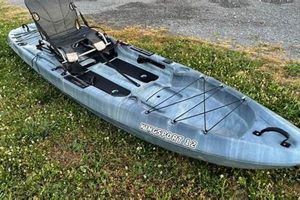
Kayak weight is a crucial factor for anglers. A kayak’s total weight impacts portability, transportation, and on-the-water maneuverability. For example, a lighter kayak is easier to car-top, carry to a launch point, and paddle or pedal through the water, while a heavier kayak offers more stability, especially in rough conditions. Considering the total weight includes not only the hull itself but also any added gear, such as fishing rods, tackle boxes, and coolers.
Understanding kayak weight is essential for selecting the right vessel for individual needs and fishing styles. Historically, kayaks were constructed from heavier materials like wood or fiberglass. Modern advancements in materials like rotomolded polyethylene and composites allow for a range of weights, offering anglers more choices to optimize performance and convenience. The right weight can significantly improve the overall fishing experience, allowing for easier access to fishing spots and more efficient paddling or pedaling throughout the day.
The following sections will explore factors influencing kayak weight, different weight categories and their respective advantages, and tips for managing weight capacity and distribution for optimal performance and safety.
Tips for Considering Kayak Weight
Kayak weight significantly influences the overall fishing experience. Careful consideration of weight, combined with individual needs and fishing style, leads to a more enjoyable and productive time on the water. The following tips offer guidance for navigating the nuances of kayak weight.
Tip 1: Evaluate Transportation Needs: Consider how the kayak will be transported. Will it be car-topped, trailered, or carried to the launch point? Transportation methods and distances influence the practicality of heavier kayaks.
Tip 2: Assess Physical Capabilities: Realistically assess one’s strength and ability to handle the kayak’s weight, especially for solo loading and unloading. Lighter kayaks present fewer challenges for individuals with physical limitations.
Tip 3: Factor in Fishing Gear: Account for the combined weight of fishing rods, tackle boxes, coolers, and other essential gear. Ensure the chosen kayak offers sufficient weight capacity to accommodate all equipment safely.
Tip 4: Consider Water Conditions: Heavier kayaks generally offer greater stability in rough water or strong currents. Lighter kayaks are more susceptible to wind and waves, requiring greater paddling effort.
Tip 5: Research Kayak Materials: Different materials contribute to varying weights. Rotomolded polyethylene kayaks are typically heavier but more durable, while composite kayaks offer lighter options but often at a higher cost.
Tip 6: Prioritize Maneuverability: Lighter kayaks typically offer greater maneuverability, allowing for easier navigation through tight spaces, shallow water, and swift currents.
Tip 7: Test Before Purchasing: Whenever possible, test different kayak weights before making a purchase. This hands-on experience provides valuable insight into the kayak’s handling characteristics and overall suitability.
By carefully considering these factors, anglers can select a kayak with the appropriate weight for their specific needs, enhancing both comfort and performance on the water.
Understanding weight’s impact on kayak performance empowers anglers to make informed decisions. The concluding section will summarize key takeaways and offer final recommendations for selecting the ideal fishing kayak.
1. Hull Material

Hull material significantly influences a fishing kayak’s weight. Material choice represents a crucial balance between durability, performance, and portability. Understanding the properties of various hull materials allows for informed decisions aligned with specific fishing needs and preferences.
- Polyethylene (Rotomolded)
Rotomolded polyethylene is a common, durable, and relatively affordable material. Its robust nature makes it resistant to impacts and abrasions, suitable for navigating rocky shorelines or shallow waters. However, this durability often translates to a heavier kayak, potentially impacting portability and maneuverability. Kayaks constructed from rotomolded polyethylene represent a practical choice for anglers prioritizing durability and affordability over lighter weight.
- High-Density Polyethylene (HDPE)
HDPE offers a higher strength-to-weight ratio compared to standard polyethylene. Kayaks made with HDPE tend to be slightly lighter while maintaining reasonable durability. This makes them suitable for anglers seeking a balance between weight and ruggedness, often favored for recreational fishing in varied environments.
- Composites (Fiberglass, Carbon Fiber, Kevlar)
Composite materials offer significant weight savings compared to polyethylene. Fiberglass, carbon fiber, and Kevlar kayaks are known for their lighter weight, increased speed, and enhanced responsiveness on the water. However, these materials typically come at a higher price point and may be less resistant to impacts. Composite kayaks are often preferred by anglers prioritizing performance and speed, particularly in tournament fishing or longer expeditions.
- Thermoformed Plastic
Thermoformed plastic kayaks represent a middle ground between rotomolded polyethylene and composites. This process uses sheets of plastic heated and molded into shape, often resulting in lighter kayaks than rotomolded options while remaining relatively durable and more affordable than composites. Thermoformed kayaks provide a suitable option for anglers seeking a balance between weight, durability, and cost.
Hull material directly correlates with overall kayak weight. Selecting the appropriate material depends on individual priorities, balancing durability, performance, and portability requirements to optimize the fishing experience. Choosing a heavier, more durable material might be necessary for challenging environments, whereas lighter composites offer performance advantages for speed and maneuverability.
2. Kayak Length
Kayak length directly correlates with weight. Longer kayaks generally weigh more due to increased material usage. Understanding this relationship is crucial for selecting a kayak that balances desired stability and maneuverability with portability and transportation considerations. This section explores the influence of length on kayak weight and its implications for various fishing styles.
- Shorter Kayaks (Under 10 feet)
Shorter kayaks offer enhanced maneuverability, making them ideal for navigating tight spaces in rivers, creeks, and smaller ponds. Their reduced length typically translates to a lower overall weight, simplifying transportation and launching. However, shorter kayaks may sacrifice stability and tracking compared to longer options.
- Mid-Sized Kayaks (10-12 feet)
Mid-sized kayaks represent a balance between maneuverability and stability. Their moderate length often results in a manageable weight suitable for a range of fishing environments, from calm lakes to slow-moving rivers. They offer good tracking while remaining relatively easy to transport and maneuver.
- Longer Kayaks (12+ feet)
Longer kayaks excel in tracking and speed, making them well-suited for open water and larger bodies of water. Their increased length contributes to greater stability, especially in rough conditions, but also results in a heavier overall weight. Transporting and maneuvering longer kayaks can be more challenging, requiring additional effort and potentially specialized equipment.
- Fishing Style Considerations
Kayak length should align with the intended fishing style. Shorter kayaks are suitable for close-quarters fishing in confined areas, while longer kayaks cater to open-water angling and longer paddling distances. The chosen length influences not only weight but also speed, stability, and maneuverability, each impacting the overall fishing experience.
Kayak length, and therefore weight, influences performance characteristics crucial for different fishing styles. Matching kayak length to the intended fishing environment and personal preferences optimizes stability, maneuverability, and ease of transport, enhancing the overall fishing experience. Longer lengths provide stability and speed for open water, while shorter lengths prioritize maneuverability in tighter spaces, each impacting the overall weight and handling of the kayak.
3. Added Features

Added features enhance a fishing kayak’s functionality but contribute to its overall weight. Careful consideration of these features is essential, balancing desired functionality with weight management for optimal performance. Understanding the weight implications of various features allows for informed decisions based on individual fishing needs and preferences.
- Rod Holders
Rod holders, while essential for fishing, add weight depending on their material and mounting system. Flush-mounted rod holders integrated into the kayak’s hull add minimal weight, while adjustable or rotating rod holders with more complex mechanisms contribute more. Anglers must consider the number and type of rod holders needed against their weight impact.
- Livewells
Livewells, used for keeping bait or caught fish alive, significantly impact weight, especially when filled with water. Larger livewells with integrated aeration systems contribute more weight than smaller, simpler designs. Anglers should assess the necessity and size of a livewell based on target species and fishing style, balancing its utility against added weight.
- Anchoring Systems
Anchoring systems, including anchors, ropes, and mounting hardware, contribute to overall weight. Heavier anchors provide greater holding power in stronger currents but add more weight than lighter options. Anglers should select an anchoring system appropriate for the typical fishing environment, balancing holding power with weight considerations.
- Electronics and Accessories
Fish finders, GPS units, and other electronic accessories, along with their mounting hardware and batteries, add weight. Larger displays and more complex systems contribute more significantly than smaller, simpler units. Anglers should prioritize essential electronics and consider their weight impact, opting for lighter options when feasible.
Each added feature contributes to the overall weight of a fishing kayak. Prioritizing essential features and selecting lighter options when available helps manage total weight without sacrificing functionality. Careful consideration of these features allows anglers to optimize their kayak’s performance by balancing desired functionality with weight management for a more enjoyable and efficient fishing experience.
4. Weight Capacity
Weight capacity, often misinterpreted as synonymous with kayak weight, represents the maximum safe combined weight of the paddler, gear, and any additional cargo. Kayak weight, the vessel’s inherent mass, directly influences its weight capacity. A heavier kayak often, but not always, possesses a higher weight capacity due to its larger size and more robust construction. However, the relationship is not solely linear; design and material choice also play significant roles. For example, a longer, narrower kayak constructed from a lightweight composite material might have a similar weight capacity to a shorter, wider kayak made from heavier polyethylene, despite the difference in their respective weights. Understanding this distinction is crucial for safe and efficient kayak operation. Exceeding the weight capacity compromises stability, maneuverability, and potentially safety, especially in challenging conditions.
Weight capacity dictates the practical limitations of a fishing kayak. Consider a scenario where an angler weighing 175 pounds intends to carry 50 pounds of fishing gear. Selecting a kayak with a weight capacity of 200 pounds would be insufficient and unsafe. The kayak would sit lower in the water, increasing the risk of capsizing, especially in rough conditions. A kayak with a weight capacity of 250 pounds or more would provide a safer margin. Manufacturers typically provide weight capacity information, and adhering to these recommendations is paramount for safe operation. Calculating the combined weight of all intended cargo, including personal weight, fishing gear, and any additional accessories, is essential before embarking on any fishing trip. This proactive approach ensures optimal performance and prevents potentially dangerous situations.
The interplay between kayak weight and weight capacity significantly impacts performance and safety. While a heavier kayak may offer increased stability, it can also be more challenging to transport and maneuver. Conversely, a lighter kayak might be easier to handle but may offer less stability and a lower weight capacity. Selecting a kayak requires careful consideration of both factors, balancing portability and maneuverability with the need to carry the necessary gear safely. Understanding this relationship empowers informed decision-making, ensuring a safe and enjoyable fishing experience.
5. Target Species
Target species significantly influence fishing kayak selection, including weight considerations. Larger species, such as tuna or marlin, necessitate kayaks with higher weight capacities and greater stability, often translating to heavier kayaks. These kayaks are typically longer and wider, constructed from robust materials like rotomolded polyethylene, and equipped with features like rod holders designed for heavy-duty fishing gear. Conversely, targeting smaller species, such as panfish or trout, allows for lighter, more maneuverable kayaks. These kayaks are often shorter and narrower, potentially constructed from lighter materials like composites, and prioritize agility over sheer stability. For example, a kayak designed for offshore fishing targeting large pelagic fish will necessitate a heavier, more stable platform compared to a kayak intended for freshwater fishing targeting smaller species in calm rivers or ponds. The choice of kayak weight must align with the target species to ensure both safety and fishing effectiveness.
Practical implications arise directly from the relationship between target species and kayak weight. Transporting a heavier kayak designed for offshore fishing presents logistical challenges compared to a lighter, smaller kayak suitable for inland waters. Maneuverability within the fishing environment also varies significantly. A heavier kayak, while stable in open ocean conditions, becomes cumbersome in narrow creeks or shallow waters. Conversely, a lighter kayak, while easily maneuvered in tight spaces, might prove unstable in rough seas when targeting larger fish. Consider the difference between fishing for largemouth bass in a small lake versus pursuing tuna in the open ocean. The former allows for a lighter, more agile kayak, while the latter demands a heavier, more stable platform equipped for the rigors of offshore fishing. Understanding this dynamic allows anglers to select kayaks optimized for their target species and intended fishing environment.
Selecting a fishing kayak requires careful consideration of target species. This factor influences not only the kayak’s weight but also its size, stability, and features. Matching the kayak to the target species and fishing environment ensures optimal performance, safety, and overall fishing success. Failure to consider this crucial aspect can lead to an inefficient and potentially unsafe fishing experience. Aligning kayak choice with target species empowers anglers to maximize their effectiveness on the water, safely and efficiently pursuing their desired catch.
6. Fishing Style
Fishing style significantly influences kayak selection, particularly concerning weight. Different fishing styles demand varying levels of stability, maneuverability, and gear capacity, directly impacting the suitable kayak weight. Understanding this relationship is crucial for optimizing fishing effectiveness and overall experience.
- Trolling
Trolling involves dragging lures or bait behind a moving kayak. This style often requires a stable platform capable of tracking straight lines, typically favoring heavier, longer kayaks designed for open water. These kayaks often feature rod holders and ample storage for tackle and equipment, further contributing to their weight. The added weight enhances stability, crucial for maintaining course and handling larger fish commonly targeted through trolling.
- Casting and Spinning
Casting and spinning involve repeatedly casting and retrieving lures or bait. This active fishing style often prioritizes maneuverability, allowing anglers to cover more water and target specific areas efficiently. Lighter, shorter kayaks excel in this environment, enabling quick turns and easier navigation through complex waterways. Their reduced weight facilitates paddling and maneuverability, enhancing casting accuracy and retrieval efficiency.
- Still Fishing/Drift Fishing
Still fishing and drift fishing involve presenting bait or lures in a stationary or drifting position. Stability is paramount in these styles, especially in moving water or when targeting larger fish. Heavier kayaks, offering increased stability, are generally preferred, allowing anglers to maintain position and effectively manage hooked fish. Their increased weight minimizes drift and provides a more stable platform for extended periods of stationary fishing.
- Fly Fishing
Fly fishing requires specialized casting techniques and often involves wading or maneuvering in shallow water. Lighter, more agile kayaks are advantageous for this style, allowing for precise positioning and easier navigation through shallows and tight spaces. Their reduced weight enhances maneuverability and portability, crucial for accessing remote fishing locations and effectively executing fly fishing techniques.
Kayak weight considerations directly correlate with fishing style. Trolling and still fishing benefit from heavier, more stable platforms, while casting, spinning, and fly fishing favor lighter, more maneuverable kayaks. Matching kayak weight to the intended fishing style optimizes performance, efficiency, and overall enjoyment on the water. Selecting the appropriate weight allows anglers to effectively execute their chosen fishing style, enhancing their ability to target specific species and navigate their preferred fishing environments.
Frequently Asked Questions
This section addresses common inquiries regarding fishing kayak weight, providing concise and informative responses to clarify potential uncertainties and misconceptions.
Question 1: What is the average weight of a fishing kayak?
Fishing kayak weights vary considerably, typically ranging from 40 to 100 pounds. Numerous factors influence weight, including length, material, and added features. Shorter recreational kayaks often weigh less, while longer, feature-rich kayaks designed for offshore fishing tend to weigh more.
Question 2: How does kayak weight affect performance?
Weight significantly impacts performance. Heavier kayaks offer increased stability, particularly in rough water conditions, but can be more challenging to transport and maneuver. Lighter kayaks offer enhanced maneuverability and easier portability but may sacrifice some stability.
Question 3: What is the heaviest fishing kayak one can reasonably transport solo?
Solo transportation of heavier kayaks depends on individual strength and available equipment. Kayaks exceeding 80 pounds can become challenging to manage alone, especially for car-topping. Specialized loading systems or assistance may be necessary for heavier kayaks.
Question 4: Do heavier kayaks offer advantages beyond stability?
Heavier kayaks often possess higher weight capacities, allowing for more gear and potentially larger catches. Their increased mass can also provide smoother tracking in open water conditions.
Question 5: How does kayak material influence weight?
Kayak material significantly influences overall weight. Polyethylene kayaks are generally heavier but more durable, while composite materials like fiberglass and carbon fiber offer weight savings but often at a higher cost.
Question 6: Are there weight considerations specific to inflatable fishing kayaks?
Inflatable fishing kayaks often weigh significantly less than rigid kayaks, simplifying transport and storage. However, their weight capacity and performance characteristics differ, requiring careful consideration based on intended use and fishing style.
Understanding the nuances of fishing kayak weight empowers informed purchasing decisions. Carefully balancing weight, stability, maneuverability, and transport considerations ensures optimal performance and enjoyment on the water.
The subsequent section offers a comprehensive guide to selecting the ideal fishing kayak, incorporating weight considerations alongside other essential factors.
Conclusion
Kayak weight significantly influences angler experiences. Careful consideration of weight, alongside factors like hull material, length, added features, weight capacity, target species, and fishing style, is crucial for selecting the appropriate kayak. Balancing desired stability and maneuverability with portability and transport requirements optimizes performance on the water. Ignoring weight implications can lead to an inefficient and potentially unsafe fishing experience.
Informed decision-making regarding kayak weight empowers anglers to maximize their time on the water. Prioritizing appropriate weight selection ensures both safety and efficiency, enabling anglers to focus on the true objective: a successful and enjoyable fishing experience. Ultimately, the ideal kayak weight depends on individual needs and preferences balanced against the demands of the chosen fishing environment and target species.