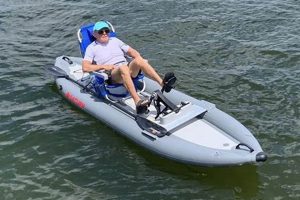
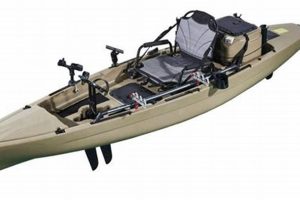
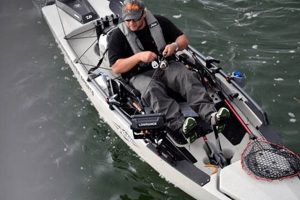
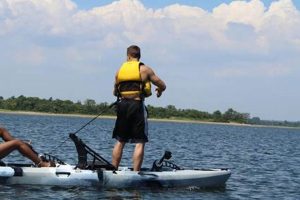
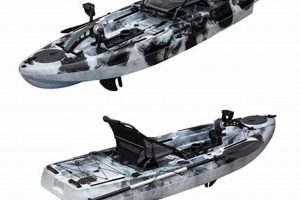
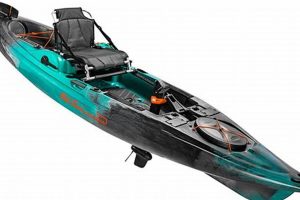
Hands-free propulsion kayaks designed specifically for anglers offer a unique blend of stability, speed, and maneuverability. These vessels typically feature a foot-powered pedal drive system that propels the kayak forward or backward, leaving the angler’s hands free for casting, reeling, and other fishing tasks. This system often incorporates a propeller or fin-based mechanism beneath the hull, offering efficient movement through the water with minimal disturbance.
The advantages of this type of watercraft are numerous. Anglers gain an edge with increased mobility and stealth compared to traditional paddle kayaks, allowing them to cover more water and approach fish without startling them. The hands-free operation facilitates techniques like trolling and sight fishing, enhancing the overall fishing experience. Furthermore, the stability inherent in these designs allows anglers to stand and cast with confidence, a significant advantage in many fishing scenarios. This evolution in kayak design builds upon the traditional paddle kayak, providing a more efficient and effective platform for angling.
This article will delve into the key features to consider when selecting such a vessel, including drive mechanisms, hull designs, and specialized fishing features. Further exploration will cover popular models, maintenance best practices, and essential accessories to maximize angling potential.
Tips for Selecting and Using Hands-Free Fishing Kayaks
Choosing and effectively utilizing a hands-free fishing kayak requires careful consideration of several factors. These tips offer guidance for maximizing on-the-water success and enjoyment.
Tip 1: Consider Water Conditions. Hull design significantly impacts performance. Wider, flatter hulls provide excellent stability in calm lakes and rivers, while longer, narrower hulls offer better tracking and speed in open water or currents.
Tip 2: Evaluate Propulsion Systems. Propeller-based systems excel in open water and offer speed, while fin-based systems are advantageous in shallow water and around vegetation, minimizing the risk of entanglement.
Tip 3: Prioritize Seating and Comfort. Adjustable seating positions and adequate back support contribute to all-day comfort and reduce fatigue, especially during extended fishing trips.
Tip 4: Assess Storage Capacity. Ample storage for tackle, gear, and catches is crucial. Consider dedicated compartments, rod holders, and dry storage options to keep equipment organized and protected.
Tip 5: Practice Maneuvering. Familiarize oneself with the vessel’s handling characteristics before venturing into challenging environments. Practice turning, reversing, and maneuvering in various conditions.
Tip 6: Factor in Transportation and Storage. Consider the kayak’s weight and size when selecting a model. Roof racks, trailers, or specialized kayak carts may be necessary for transport and storage.
Tip 7: Prioritize Safety Gear. Always wear a personal flotation device (PFD) and carry essential safety equipment, including a whistle, signaling device, and first-aid kit.
By carefully considering these factors, anglers can select the appropriate vessel and enhance their on-the-water fishing experience. Informed decisions contribute to improved comfort, efficiency, and safety.
These tips provide a solid foundation for choosing and effectively using a hands-free fishing kayak. The subsequent conclusion will summarize the key benefits and reinforce the value of these specialized watercraft for anglers.
1. Hands-Free Fishing

Hands-free fishing represents a significant advantage offered by pedal-powered kayaks. This capability fundamentally alters the angling experience, enabling techniques and efficiencies previously unavailable to traditional kayak anglers. The direct connection between pedal propulsion and hands-free operation allows anglers to focus entirely on fishing techniques, such as casting, retrieving lures, and fighting fish, without the constant interruption of paddling. This is particularly advantageous in dynamic fishing situations requiring quick reactions and precise lure control. Consider a scenario where an angler hooks a strong fish in a current; the ability to maintain position and control the kayak with foot pedals while simultaneously managing the rod and reel significantly increases the chance of landing the fish.
This hands-free capability expands fishing possibilities. Techniques like trolling become significantly easier and more effective, as anglers can maintain consistent speeds and adjust course without interrupting the presentation of their lures. Similarly, sight fishing benefits immensely from hands-free operation, allowing anglers to quietly maneuver into position and make precise casts without the disruptive motion of paddling. The ability to quickly switch between rods or adjust tackle without losing control of the kayak enhances versatility and responsiveness to changing fishing conditions. For instance, an angler pursuing bonefish in shallow flats can sight the fish, stealthily approach using the pedals, and make a precise cast with a fly rod, all while maintaining boat control.
In essence, hands-free fishing, facilitated by pedal kayaks, represents a paradigm shift in kayak angling. The enhanced control, increased efficiency, and expanded fishing opportunities translate to a more productive and enjoyable experience on the water. While mastering any new vessel takes practice, the advantages of hands-free fishing present a compelling case for anglers seeking to elevate their kayak fishing endeavors.
2. Increased Propulsion

Increased propulsion represents a defining characteristic of fishing pedal kayaks, distinguishing them from traditional paddle-powered counterparts. This enhanced propulsion stems from the biomechanics of leg-powered systems, which leverage larger muscle groups and offer greater sustained power output compared to arm and shoulder muscles used in paddling. The result is a notable increase in speed and efficiency, particularly over longer distances. This translates directly into practical advantages for anglers, allowing them to cover more water, reach distant fishing spots faster, and spend less time transiting and more time fishing. For example, an angler targeting offshore reefs can reach their destination more quickly, maximizing fishing time during optimal tidal windows.
Furthermore, pedal-powered propulsion offers superior control and maneuverability in challenging conditions. Maintaining position in currents or wind becomes significantly easier, allowing anglers to focus on fishing rather than constantly battling to maintain their desired location. The precise control offered by pedal systems facilitates subtle adjustments in position and speed, crucial for techniques like trolling or drifting specific structures. Consider a scenario where an angler is working a weed line for bass; the pedal drive allows them to maintain a precise distance and speed along the vegetation, maximizing lure presentation and minimizing snags. This level of control is difficult to achieve with paddle kayaks, particularly in challenging conditions.
The increased propulsion offered by these kayaks significantly expands fishing opportunities. Anglers can explore larger bodies of water, access previously unreachable areas, and spend more time actively fishing. While factors such as wind and current still influence speed and range, the inherent advantages of pedal propulsion offer a notable improvement over traditional paddling. This increased efficiency and range contribute directly to a more productive and rewarding fishing experience.
3. Enhanced Stability

Enhanced stability stands as a critical feature of fishing pedal kayaks, directly influencing angler safety, comfort, and fishing effectiveness. This inherent stability derives from several design elements that work in concert to create a platform significantly more stable than traditional paddle kayaks. This characteristic allows for a wider range of fishing activities, including standing casting, fighting larger fish, and maneuvering in challenging conditions.
- Lower Center of Gravity
The pedal drive system, positioned low in the hull, contributes significantly to a lower center of gravity. This inherent stability reduces the likelihood of capsizing, especially during abrupt movements or when encountering uneven water surfaces or wakes. A lower center of gravity allows for greater confidence when leaning over the side to land a fish or retrieve a dropped item.
- Wider Hull Design
Many fishing pedal kayaks feature wider hulls than recreational kayaks, further enhancing stability. This increased beam provides a larger base of support, resisting tipping and creating a more stable platform for standing. The wider hull also allows for more comfortable seating and increased storage capacity.
- Weight Distribution
The weight distribution in a pedal kayak, with the angler positioned centrally and the heavier pedal drive system low in the hull, further contributes to stability. This balanced weight distribution minimizes rocking and swaying, enabling smoother tracking and more predictable handling. This is particularly noticeable when standing to cast or sight fish.
- Outrigger or Pontoon Systems
Some advanced pedal kayaks incorporate outriggers or pontoon systems, offering unparalleled stability. These additions create an even wider base of support, enabling anglers to stand and fish with exceptional confidence, even in rougher water conditions. These systems are particularly popular for anglers targeting larger game fish or fishing in open water environments.
The enhanced stability inherent in fishing pedal kayaks translates into a safer, more comfortable, and ultimately, more productive fishing experience. This stability allows anglers to focus on fishing rather than maintaining balance, opening up new possibilities for techniques and locations previously inaccessible with traditional kayaks. The combination of a lower center of gravity, wider hull designs, balanced weight distribution, and optional outrigger systems contributes to a platform that significantly enhances angler confidence and control on the water.
4. Stealthy Approach

Stealth plays a crucial role in angling success, particularly in shallow water or when targeting wary species. Fishing pedal kayaks offer a significant advantage in this regard, enabling a quieter and less intrusive approach compared to traditional paddle kayaks. The primary source of noise reduction stems from the elimination of paddle splashes and drips, which can spook fish, especially in calm conditions. The underwater propulsion system, whether propeller or fin-based, operates far more quietly than a paddle, minimizing disturbance and maximizing the chances of an undetected approach. For instance, when fishing in clear, shallow flats for bonefish or redfish, the quiet operation of a pedal kayak allows anglers to get within casting range without alarming these easily spooked species. This is a significant advantage over paddle kayaks, where even the slightest paddle drip can send fish scattering.
Beyond noise reduction, pedal kayaks contribute to a stealthier approach through improved boat control. Precise maneuverability allows anglers to navigate tight spaces, approach fish from upwind or upcurrent, and maintain ideal positioning without the constant adjustments and corrections often required with paddling. This controlled movement minimizes disturbance of the water’s surface and reduces the likelihood of creating pressure waves that can alert fish to the angler’s presence. Consider a scenario where an angler is targeting trout in a crystal-clear stream; the subtle control offered by a pedal kayak enables precise positioning and drift control, maximizing the chances of a natural drift presentation and reducing the risk of detection.
The stealthy approach facilitated by fishing pedal kayaks represents a substantial advantage for anglers seeking to improve their success rates. The reduction in noise and enhanced boat control contribute significantly to a less intrusive presence on the water, increasing the likelihood of getting closer to fish and presenting lures or bait without detection. This enhanced stealth translates directly into more opportunities for hookups and ultimately, a more rewarding fishing experience, particularly when targeting species sensitive to noise and disturbance.
5. Elevated Fishing Experience

The concept of an “Elevated Fishing Experience” centers around maximizing angler enjoyment and effectiveness on the water. Fishing pedal kayaks contribute significantly to this elevated experience through a combination of features that enhance comfort, efficiency, and overall fishing success. These kayaks offer a unique blend of capabilities that cater to diverse fishing styles and environments, transforming the way anglers interact with the water and pursue their target species. The following facets explore the key components that contribute to this elevated experience.
- Enhanced Comfort and Reduced Fatigue
Traditional paddle kayaks often lead to fatigue, particularly during long fishing trips. Pedal kayaks mitigate this issue by engaging larger leg muscles, reducing strain on the upper body. Comfortable seating and adjustable configurations further enhance comfort, allowing anglers to fish for extended periods without physical limitations. This reduced fatigue translates to more time focused on fishing and less on physical exertion, enhancing overall enjoyment.
- Improved Fishing Efficiency
Hands-free operation allows anglers to dedicate their full attention to fishing techniques, maximizing efficiency. The ability to simultaneously control the kayak and manage fishing rods allows for quicker reactions and more precise lure presentations. This enhanced efficiency increases the likelihood of successful hookups and contributes to a more productive fishing experience. For example, an angler can maintain a precise trolling speed and direction while simultaneously adjusting lure depth and action, increasing the chances of enticing a strike.
- Greater Access and Exploration
The increased speed and range offered by pedal kayaks expand fishing opportunities. Anglers can cover more water, reach distant fishing spots, and explore areas inaccessible to traditional paddle kayaks. This expanded range opens up new possibilities for targeting different species and exploring diverse fishing environments, enriching the overall experience. For instance, anglers can explore distant coves, navigate upstream against moderate currents, or venture further offshore, expanding their fishing horizons.
- Connection with Nature and Immersion
While efficiency and effectiveness are key aspects of the elevated fishing experience, the connection with nature also plays a significant role. Pedal kayaks, with their quiet operation and hands-free design, allow anglers to immerse themselves in the surrounding environment. The reduced physical exertion and enhanced control contribute to a more relaxed and focused experience, fostering a deeper appreciation for the natural world. This immersive experience enhances the overall enjoyment and provides a sense of tranquility and connection with the aquatic environment.
These facets combine to create an elevated fishing experience unique to pedal kayaks. By enhancing comfort, increasing efficiency, expanding access, and fostering a deeper connection with nature, these kayaks transform the way anglers interact with the water and pursue their passion. This combination of factors contributes to a more rewarding, enjoyable, and ultimately, more fulfilling fishing experience, redefining what’s possible on the water.
Frequently Asked Questions
This section addresses common inquiries regarding pedal-powered fishing kayaks, providing concise and informative responses to clarify key aspects and address potential concerns.
Question 1: What are the primary advantages of a pedal-powered fishing kayak over a traditional paddle kayak?
Key advantages include hands-free operation for fishing, increased speed and range, enhanced stability, and a stealthier approach. These features combine to create a more efficient and enjoyable fishing experience.
Question 2: How does the propulsion system on a pedal kayak function?
Propulsion systems typically utilize either a propeller or fin-based mechanism beneath the hull. The angler pedals, similar to riding a bicycle, which rotates the propeller or oscillates the fins, generating forward or reverse movement.
Question 3: Are pedal kayaks suitable for all water types?
While highly versatile, suitability depends on specific hull design and propulsion type. Wider, flatter hulls excel in calm lakes and rivers, while longer, narrower hulls perform better in open water or currents. Fin-based systems are generally preferred for shallow water and areas with heavy vegetation due to their lower risk of entanglement. Consideration of water conditions is paramount for selecting the appropriate design.
Question 4: What is the typical price range for a fishing pedal kayak?
Prices vary significantly based on features, materials, and brand reputation. Entry-level models typically start around $1,000, while high-end, feature-rich kayaks can exceed $5,000. Researching various models and features within a defined budget is recommended.
Question 5: What maintenance is required for a pedal kayak’s propulsion system?
Regular rinsing with fresh water after each use is crucial, especially in saltwater environments. Periodic lubrication of moving parts, inspection for damage, and occasional replacement of wear-and-tear components, such as cables and bearings, will ensure optimal performance and longevity.
Question 6: Are there any safety considerations specific to pedal kayaks?
Standard kayak safety practices apply, including wearing a personal flotation device (PFD) and carrying essential safety equipment. Understanding the vessel’s handling characteristics, practicing maneuvering skills, and awareness of water conditions are crucial for safe operation. Avoiding shallow water or areas with submerged obstacles will minimize the risk of propulsion system damage or entanglement.
Addressing these common questions provides a clearer understanding of the key aspects and considerations related to pedal-powered fishing kayaks. Informed decision-making based on individual needs, fishing style, and target environments ensures optimal selection and a rewarding on-the-water experience.
The following section will offer concluding thoughts on the overall value and future trends of pedal-powered fishing kayaks in the angling landscape.
Conclusion
Fishing pedal kayaks represent a significant advancement in angling technology, offering distinct advantages over traditional paddle-powered kayaks. The convergence of hands-free operation, increased propulsion, enhanced stability, and stealthy approach contributes to a more efficient, effective, and enjoyable fishing experience. These specialized vessels empower anglers to cover more water, access previously unreachable areas, and employ a wider range of fishing techniques with greater precision and control. Careful consideration of hull design, propulsion system, and features tailored to specific fishing styles and target environments remains crucial for maximizing the benefits of these advanced kayaks.
The evolution of kayak fishing continues, with ongoing advancements in design, materials, and technology. As the demand for specialized fishing kayaks grows, further innovation and refinement of pedal-powered systems are anticipated. This continuous evolution promises to further enhance the capabilities and accessibility of these vessels, empowering anglers to explore new frontiers and pursue their passion with greater efficiency and enjoyment on the water. Diligent research and informed decision-making remain essential for anglers seeking to harness the full potential of these evolving tools and elevate their fishing experience.