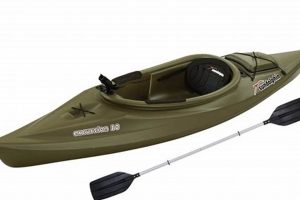
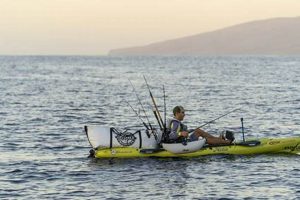
A small, human-powered watercraft designed for angling, enhanced with a supplementary wind-powered propulsion system, offers a unique blend of paddling and sailing experiences. This configuration allows anglers to cover greater distances, conserve energy, and maintain position more effectively, especially in open water or challenging currents. Imagine silently drifting across a lake, propelled solely by the wind, while a fishing line trails patiently behind.
This combination provides significant advantages for anglers. Reduced reliance on paddling expands the reachable fishing grounds and minimizes physical exertion, allowing for longer outings. The sail offers hands-free operation, facilitating various fishing techniques. Historically, sail-powered small craft were essential for fishing and transportation, predating modern motorized solutions. The contemporary adaptation with kayaks merges this historical functionality with modern materials and design, creating a versatile platform for recreational and serious fishing endeavors.
This discussion will explore the specific features, types, and benefits of this hybrid vessel, providing a deeper understanding of its place within the broader context of both kayaking and sailing. Topics to be covered include design variations, sail types, performance characteristics, safety considerations, and suitable fishing environments.
Tips for Effective Kayak Sailing
Successful integration of sailing and kayak fishing requires careful consideration of several key factors. These tips offer guidance for enhancing safety and maximizing the benefits of this combined approach.
Tip 1: Stability Considerations: Begin with a kayak designed for stability, especially in open water. Wider hulls and outriggers enhance stability under sail. Consider the combined center of gravity with added fishing gear and the sailor’s weight.
Tip 2: Sail Selection and Management: Choose a sail appropriate for the kayak’s size and the expected wind conditions. Smaller sails are easier to manage in stronger winds. Practice deploying and retrieving the sail in a controlled environment before venturing into open water.
Tip 3: Wind Awareness and Navigation: Continuously assess wind direction and speed. Understand basic sailing principles, including points of sail and tacking. Carry a compass and navigational charts, and be prepared to adjust plans based on changing weather.
Tip 4: Safety Equipment and Procedures: Always wear a personal flotation device (PFD). Carry a whistle, signaling mirror, and communication device. Inform someone of your intended route and estimated return time. Understand proper capsize recovery techniques specific to sailing kayaks.
Tip 5: Fishing Techniques Adaptation: Adapt fishing techniques to the dynamics of a sailing kayak. Trolling can be highly effective while under sail. Consider downwind drifts for casting or jigging. Securely store fishing gear to prevent entanglement with the sail or rigging.
Tip 6: Maintenance and Care: Regularly inspect and maintain the sail, rigging, and kayak hull. Rinse the sail and rigging with fresh water after each use to prevent salt buildup and corrosion. Store the kayak and sail properly to protect them from the elements.
Tip 7: Local Regulations and Permits: Research and adhere to local regulations regarding kayaking and sailing, including required permits or licenses. Be aware of any restricted areas or speed limits.
Adhering to these guidelines will contribute to a safer and more productive experience, enabling anglers to fully utilize the potential of this unique approach to fishing.
By understanding the nuances of combining sailing and kayak fishing, anglers can unlock new possibilities and enrich their time on the water. The following conclusion will synthesize the key takeaways and offer a final perspective on the advantages of this dynamic approach.
1. Stability

Stability forms a critical cornerstone for safe and effective operation of a fishing kayak with sail. The addition of a sail introduces dynamic forces that significantly influence a kayak’s balance, requiring careful consideration of design, technique, and environmental factors.
- Center of Gravity
A lower center of gravity enhances stability. Kayak design, payload distribution (including angler weight and fishing gear), and sail position all influence the combined center of gravity. A higher center of gravity increases susceptibility to capsizing. Maintaining a low center of gravity through proper weight distribution and appropriate kayak selection is paramount for safe sailing.
- Hull Design
Wider hulls and specialized designs, such as pontoon or outrigger systems, contribute significantly to stability. Wider kayaks offer increased initial stability, resisting tipping. Outriggers enhance secondary stability, aiding recovery from larger leans. The chosen hull design must balance stability with maneuverability and desired performance characteristics.
- Wind and Water Conditions
Wind strength and direction, combined with water currents and wave action, exert external forces on the kayak, impacting stability. Stronger winds increase heeling forces and require more active sail management. Currents and waves can further destabilize the vessel. Careful assessment of prevailing conditions and appropriate sail adjustments are essential for maintaining balance.
- Angler Technique and Movement
An angler’s movements within the kayak, particularly during casting, retrieving, and landing fish, further influence stability. Sudden shifts in weight can induce instability. Practicing smooth, deliberate movements and maintaining a low center of gravity during fishing activities minimizes the risk of capsizing. Anticipating and counteracting the forces generated by casting and retrieving lines is crucial for maintaining balance.
These interconnected facets of stability highlight the importance of a holistic approach to kayak sailing for fishing. Careful consideration of kayak design, environmental conditions, and angler actions are crucial for maintaining balance and ensuring a safe and successful fishing experience. A well-balanced system optimizes performance and safety, allowing anglers to focus on the task at hand.
2. Sail Area

Sail area plays a crucial role in the performance and handling of a fishing kayak with sail. The size of the sail directly influences the propulsive force generated by the wind. Larger sails capture more wind, resulting in greater speed potential, particularly in lighter winds. However, increased sail area also amplifies the heeling force, increasing the risk of capsize in stronger winds. A balance must be struck between sufficient propulsion and manageable stability. For example, a larger sail might be advantageous for traversing open water efficiently in light to moderate winds, while a smaller sail offers greater control and reduces the risk of capsize in confined areas or stronger gusts. Understanding this relationship allows for optimized sail selection based on anticipated conditions and desired performance characteristics.
The sail area’s impact extends beyond speed. Maneuverability is also affected. Larger sails can make tacking and other maneuvers more challenging, especially in tight spaces or rapidly changing wind conditions. Smaller sails, while potentially sacrificing some speed, offer greater responsiveness and control, allowing for more precise maneuvering around obstacles or in crowded waterways. Consider a scenario where an angler needs to navigate through a narrow channel with unpredictable gusts. A smaller sail would provide the necessary control to avoid collisions or capsizing, whereas a larger sail might prove cumbersome and difficult to manage. Practical application of this understanding requires careful assessment of the intended fishing environment and prevailing wind conditions.
In summary, sail area is a critical design consideration for fishing kayaks with sails. The chosen sail size dictates performance characteristics, influencing speed, maneuverability, and stability. Selecting an appropriate sail area requires careful consideration of anticipated wind conditions, desired speed, and the specific fishing environment. Balancing propulsion and control is essential for a safe and effective fishing experience, enabling anglers to harness wind power effectively while maintaining stability and maneuverability. This understanding allows for informed decisions regarding sail selection and contributes to a more controlled and productive fishing experience from a sailing kayak.
3. Hull Design

Hull design plays a pivotal role in the performance and practicality of a fishing kayak with sail. The hull’s shape, size, and features directly influence stability, speed, maneuverability, and overall suitability for combined paddling and sailing. Specific design considerations cater to the unique demands of this hybrid approach, optimizing performance under both human and wind power. Cause and effect relationships exist between hull design and the vessel’s behavior on the water. For instance, a wider, flatter hull provides greater initial stability, reducing the likelihood of capsize, but may sacrifice some speed and tracking efficiency. Conversely, a longer, narrower hull offers improved speed and tracking but requires more active balancing, especially under sail. Understanding these trade-offs is essential for selecting a design appropriate for specific fishing environments and conditions. A real-world example illustrating this principle is the difference between a dedicated fishing kayak with a wide, stable hull and a performance-oriented touring kayak with a narrower, sleeker hull adapted for sailing. The fishing kayak prioritizes stability for casting and reeling, while the touring kayak emphasizes speed and efficiency for covering distance.
Further analysis reveals the importance of specific hull features for sail-assisted fishing kayaks. A retractable or folding keel enhances tracking and upwind performance under sail, minimizing sideways drift. Rudders or skegs provide directional control, particularly crucial in stronger winds or currents. The incorporation of these features demonstrates the interplay between hull design and sailing dynamics, highlighting how specific design choices can optimize performance under sail while maintaining paddling efficiency. The practical significance of this understanding lies in the angler’s ability to select a kayak that balances stability, maneuverability, and sailing performance, ensuring a safe and productive fishing experience. Imagine an angler attempting to troll a fishing line while simultaneously managing a sailing kayak with poor tracking the lack of directional stability would severely hinder their ability to control the fishing presentation. A well-designed hull, incorporating features like a retractable keel or rudder, would address this challenge, allowing the angler to maintain course and focus on fishing.
In summary, hull design is an integral aspect of a successful fishing kayak with sail. The hull’s shape, size, and specialized features dictate stability, speed, maneuverability, and overall performance. Understanding the cause-and-effect relationship between design and performance allows anglers to make informed decisions based on their specific needs and fishing environments. A well-designed hull facilitates effective integration of paddling and sailing, optimizing both modes of propulsion for a safe, efficient, and productive fishing experience. Challenges like maintaining stability under sail, achieving efficient tracking, and maneuvering in various wind and water conditions are addressed through thoughtful hull design. This specialized approach bridges the gap between kayaking and sailing, creating a versatile platform for anglers seeking expanded fishing opportunities.
4. Wind Conditions
Wind conditions represent a critical environmental factor influencing the operation and effectiveness of a fishing kayak with sail. Wind strength and direction directly impact speed, maneuverability, and stability, requiring careful assessment and adaptation for a safe and productive fishing experience. Understanding the interplay between wind and vessel behavior is essential for successful navigation and fishing strategy.
- Wind Strength
Wind strength dictates the propulsive force on the sail. Light winds necessitate larger sails or paddling assistance for adequate propulsion. Strong winds require smaller sails or reefing to maintain control and prevent capsizing. Accurate assessment of wind strength allows for appropriate sail adjustments and optimized performance. For example, an angler encountering unexpectedly strong winds might reduce sail area to maintain stability and control, while light winds might necessitate deploying the full sail or supplementing with paddling. The ability to adapt to varying wind strengths ensures safe and efficient navigation.
- Wind Direction
Wind direction determines the kayak’s course relative to the wind. Sailing upwind (windward) requires tacking, a zigzag course utilizing angled sails to progress against the wind. Sailing downwind (leeward) offers greater speed and ease of handling. Understanding points of sail and their relationship to wind direction is fundamental for efficient navigation. Consider an angler seeking a fishing spot located directly upwind. Knowledge of tacking techniques and the ability to assess wind shifts are crucial for reaching the desired location. Conversely, an angler drifting downwind can focus on fishing techniques, leveraging the wind for effortless positioning.
- Gusts and Variability
Sudden gusts and shifts in wind direction introduce dynamic challenges, requiring rapid adjustments to sail trim and kayak positioning. Gusts can significantly increase heeling forces, potentially leading to capsize if not managed effectively. Constant vigilance and anticipation of wind fluctuations are essential for maintaining stability and control. An angler experiencing a sudden gust might ease the sail to spill wind and reduce heeling, while a lull might necessitate sheeting in the sail to maximize capture. Adaptability to fluctuating wind conditions is crucial for maintaining a stable and safe platform.
- Local Effects and Topography
Local topography, including landmasses, vegetation, and other structures, can influence wind patterns, creating localized variations in wind strength and direction. Understanding these microclimates and their impact on wind behavior can enhance navigational efficiency and safety. For instance, an angler navigating near a shoreline might encounter amplified wind gusts due to channeling effects, requiring increased vigilance and preparedness. Conversely, areas sheltered by landmasses might offer calmer conditions, providing respite from stronger winds. Awareness of local wind patterns contributes to informed decision-making and enhanced safety on the water.
These interconnected facets of wind conditions highlight the dynamic relationship between wind and kayak sailing for fishing. Understanding and adapting to varying wind strengths, directions, gusts, and local effects are essential for maintaining stability, maximizing efficiency, and ensuring a safe and productive fishing experience. Informed decision-making regarding sail management, navigation, and fishing strategies based on prevailing wind conditions enhances the angler’s ability to harness wind power effectively while minimizing risks.
5. Fishing Adaptations

Specialized fishing adaptations significantly enhance the practicality and effectiveness of a fishing kayak with sail, transforming it from a basic watercraft into a dedicated angling platform. These adaptations address the unique challenges and opportunities presented by combining sailing and fishing, enabling anglers to maximize their efficiency and enjoyment on the water. Cause and effect relationships link specific adaptations to improved fishing outcomes. For example, integrated rod holders securely store fishing rods while underway, preventing damage and freeing the angler’s hands for sail management. Similarly, strategically placed tackle storage compartments keep essential gear organized and readily accessible, minimizing disruptions during critical fishing moments. These adaptations demonstrate a direct link between design and functionality, enhancing the kayak’s utility as a fishing vessel. Consider the scenario of an angler hooking a fish while under sail. Without readily accessible tools and equipment, managing the sail, retrieving the fish, and maintaining boat stability simultaneously would prove challenging. Dedicated fishing adaptations mitigate this complexity, streamlining the process and maximizing the angler’s success.
Further analysis reveals the importance of integrating these adaptations seamlessly within the kayak’s design. Recessed or flush-mounted rod holders and storage compartments minimize interference with sailing performance, reducing wind resistance and preventing entanglement with rigging. Similarly, strategically positioned mounting points for fish finders and other electronic devices enhance angling capability without compromising stability or maneuverability. These design choices highlight the importance of balancing fishing functionality with sailing performance, optimizing the kayak for both activities. The practical significance of this understanding is evident in the angler’s ability to transition seamlessly between sailing and fishing, maximizing time on the water and minimizing disruptive transitions. Imagine an angler navigating a shallow bay under sail, then quickly transitioning to fishing mode upon reaching a promising spot. Well-integrated fishing adaptations facilitate this transition, allowing for efficient deployment of fishing gear and seamless engagement with the target area. The absence of such adaptations would necessitate cumbersome adjustments and potentially disrupt the fishing opportunity.
In summary, specialized fishing adaptations are essential components of a well-equipped fishing kayak with sail. These adaptations address the unique demands of combining sailing and fishing, enhancing practicality, efficiency, and overall fishing success. Rod holders, tackle storage, mounting points for electronics, and other specialized features transform the kayak into a dedicated fishing platform, optimizing functionality without compromising sailing performance. The strategic integration of these adaptations demonstrates the thoughtful design behind these specialized vessels, catering to the needs of anglers seeking a versatile and effective platform for exploring and fishing diverse aquatic environments. By seamlessly blending sailing and fishing functionality, these adaptations empower anglers to expand their reach, enhance their techniques, and maximize their enjoyment on the water. Addressing the specific challenges and opportunities of sail-assisted fishing contributes to a more rewarding and productive experience for anglers of all skill levels.
6. Safety Gear

Safety gear forms an indispensable component of responsible operation for any watercraft, especially a fishing kayak with sail. The inherent risks associated with open water activities are compounded by the combined challenges of managing a sailing vessel and engaging in fishing activities. Cause and effect relationships underscore the critical role of safety gear in mitigating these risks. For instance, a personal flotation device (PFD) provides essential buoyancy in the event of a capsize, directly impacting survival outcomes. Similarly, a communication device, such as a VHF radio or satellite messenger, enables distress calls in emergencies, establishing a direct link between preparedness and potential rescue. These examples highlight the critical connection between safety gear and risk mitigation in the context of fishing kayaks with sails. Consider a scenario where an angler capsizes in cold water far from shore. A PFD provides immediate flotation, increasing survival time while awaiting rescue, and a communication device enables a distress call, initiating the rescue process. The absence of these essential safety items could have dire consequences.
Further analysis reveals the importance of selecting safety gear appropriate for the specific challenges of sail-assisted kayak fishing. A high-visibility PFD enhances visibility in open water, increasing the likelihood of being spotted by rescue personnel. A waterproof first-aid kit addresses minor injuries, preventing complications in remote locations. Navigation tools, including a compass, charts, and GPS device, aid in maintaining course and ensuring safe passage, particularly in challenging conditions. These specialized considerations demonstrate the need for a tailored approach to safety gear selection, addressing the specific risks associated with this activity. The practical significance of this understanding lies in the angler’s ability to mitigate risks effectively, ensuring a safe and enjoyable experience. Imagine an angler navigating foggy conditions near a rocky coastline. A compass and GPS device become essential tools for maintaining orientation and avoiding hazards, while a waterproof first-aid kit provides immediate care for minor injuries sustained during the trip. These examples illustrate how appropriate safety gear directly contributes to a safer and more positive outcome.
In summary, safety gear is not merely an accessory but a fundamental requirement for responsible operation of a fishing kayak with sail. The combined risks of open water activities, sailing dynamics, and fishing maneuvers necessitate a comprehensive approach to safety preparedness. PFDs, communication devices, navigation tools, first-aid kits, and other essential safety items form a critical layer of protection, mitigating risks and enhancing survival outcomes. Understanding the cause-and-effect relationship between safety gear and risk mitigation, along with the importance of selecting appropriate equipment, empowers anglers to prioritize safety and enjoy their time on the water responsibly. Addressing these safety considerations proactively transforms potential hazards into manageable challenges, contributing to a more secure and rewarding fishing experience.

Proficient navigation skills are essential for safe and effective operation of a fishing kayak with sail. The combined challenges of managing a sailing vessel and engaging in fishing activities in open water environments necessitate a comprehensive understanding of navigational principles and techniques. Effective navigation ensures safe passage, efficient travel to fishing grounds, and enhanced situational awareness, contributing significantly to a successful and safe fishing experience.
- Chart Reading and Interpretation
Understanding nautical charts, including symbols, depths, and navigational aids, is crucial for planning routes and avoiding hazards. Interpreting chart information in conjunction with real-time observations allows for informed decision-making regarding course adjustments and hazard avoidance. For example, recognizing a shallow area marked on a chart and confirming its presence through visual observation or depth soundings enables an angler to navigate safely around the obstacle, preventing grounding or damage to the kayak. This skill becomes particularly crucial in unfamiliar waters or areas with complex navigation.
- Compass and GPS Utilization
Utilizing a compass and GPS device provides essential directional information and positional awareness. A compass offers a reliable directional reference, independent of electronic systems. GPS provides precise location data, facilitating accurate navigation and tracking of routes. Integrating these tools allows for confident navigation, especially in conditions of reduced visibility or when landmarks are obscured. Consider an angler navigating in dense fog. A compass provides a consistent heading, while a GPS confirms position and progress towards the destination, ensuring safe passage despite limited visibility.
- Wind and Current Awareness
Understanding wind and current patterns is crucial for predicting drift, planning routes, and optimizing sailing efficiency. Wind and currents can significantly influence a kayak’s course and speed, requiring adjustments to heading and sail trim. Anticipating these forces allows for more accurate navigation and efficient travel to fishing grounds. For instance, an angler aware of a strong prevailing current can adjust their course and sail trim to compensate for the drift, ensuring they reach their intended fishing spot. This understanding also informs decisions regarding optimal sailing routes, leveraging favorable winds and currents for efficient travel.
- Trip Planning and Risk Assessment
Careful trip planning, including route selection, weather forecasting, and contingency planning, mitigates risks and enhances safety. Assessing potential hazards, establishing communication protocols, and informing others of the planned route contribute to a safer and more responsible approach to kayak sailing and fishing. For example, an angler planning a multi-day fishing trip would consider prevailing weather patterns, identify potential emergency landing sites, and inform a trusted contact of their itinerary. This proactive approach minimizes risks and enhances the likelihood of a safe and successful outcome.
These interconnected navigational skills form a critical foundation for safe and successful fishing kayak with sail operation. Proficient navigation enables anglers to confidently explore diverse aquatic environments, efficiently reach desired fishing locations, and mitigate risks associated with open water activities. By integrating chart reading, compass and GPS utilization, wind and current awareness, and thorough trip planning, anglers enhance their safety, expand their fishing opportunities, and maximize their enjoyment on the water. This comprehensive approach to navigation transforms potential challenges into manageable variables, empowering anglers to navigate confidently and focus on the pursuit of their fishing objectives.
Frequently Asked Questions
This FAQ section addresses common inquiries regarding fishing kayaks equipped with sails, providing concise and informative responses to facilitate informed decision-making and enhance understanding of this specialized vessel type.
Question 1: How does a sail enhance fishing from a kayak?
Sails offer several advantages for kayak anglers. They provide auxiliary propulsion, reducing paddling effort and expanding reachable fishing grounds. Sails also allow for hands-free drift fishing and enhanced boat control in windy conditions. This can be particularly beneficial for techniques like trolling or maintaining position over a fishing spot.
Question 2: Are sailing kayaks suitable for all water conditions?
While versatile, sailing kayaks are best suited for calmer waters such as lakes, bays, and protected coastal areas. Open ocean or areas with strong currents and large waves present significant challenges and require advanced sailing skills and specialized equipment. Careful consideration of water conditions and one’s skill level is crucial for safe operation.
Question 3: What are the key safety considerations for kayak sailing?
Essential safety precautions include wearing a personal flotation device (PFD), carrying communication equipment (VHF radio, whistle, signaling mirror), informing someone of trip plans, and understanding capsize recovery techniques specific to sailing kayaks. Checking weather forecasts and avoiding navigation in hazardous conditions are also paramount.
Question 4: What type of sail is best for a fishing kayak?
Optimal sail choice depends on kayak size, angler experience, and anticipated wind conditions. Smaller sails offer greater control in stronger winds, while larger sails provide more power in lighter winds. Common types include the lateen sail, the sprit sail, and the folding/collapsible sail. Each design offers distinct performance characteristics.
Question 5: How does one learn to sail a fishing kayak effectively?
Start with basic sailing principles and practice in a controlled environment, such as a calm lake or pond. Consider taking lessons from a certified instructor. Progressive learning, beginning with basic maneuvers and gradually increasing complexity, builds confidence and competence. Understanding sailing terminology and techniques is crucial for safe and effective operation.
Question 6: What maintenance is required for a kayak sail and rigging?
Regular rinsing with fresh water after each use removes salt and debris, prolonging the lifespan of the sail and rigging. Inspecting for wear and tear, lubricating moving parts, and proper storage protect against damage and ensure optimal performance. Following manufacturer guidelines for maintenance ensures long-term durability and functionality.
Addressing these frequently asked questions provides a foundational understanding of key considerations related to fishing kayaks with sails. This information empowers individuals to make informed decisions regarding equipment selection, safe operation, and appropriate usage based on individual needs and environmental conditions.
The following conclusion provides a summary of the key benefits and considerations for using a fishing kayak with sail, consolidating the information presented throughout this article.
Fishing Kayak with Sail
Exploration of fishing kayaks with sails reveals a specialized vessel offering unique advantages for anglers. Combining human-powered paddling with wind-powered sailing expands fishing range, reduces physical exertion, and enhances boat control. Considerations regarding hull design, sail area, stability, and specialized fishing adaptations are crucial for maximizing performance and safety. Proficient navigation skills, appropriate safety gear, and awareness of wind and water conditions are essential for responsible operation. Understanding these interconnected elements allows anglers to harness the combined potential of paddling and sailing for a more effective and rewarding fishing experience.
The fishing kayak with sail represents a compelling intersection of traditional watercraft design and modern angling techniques. Careful consideration of design elements, operational practices, and safety protocols unlocks the full potential of this versatile platform, offering anglers expanded opportunities to explore diverse aquatic environments and pursue their passion for fishing. This nuanced approach to angling promises not only enhanced catches but a deeper connection with the natural world through the harnessing of wind and water.