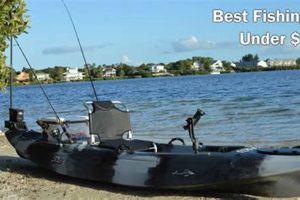
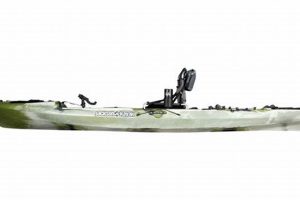
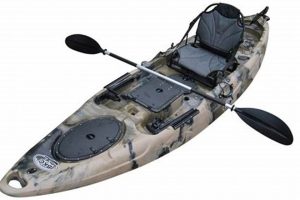
A top-performing saltwater kayak designed for angling should offer stability, ample storage for gear, and features conducive to a successful fishing experience. These specialized vessels often include rod holders, tackle compartments, and comfortable seating arrangements designed for long hours on the water. A hypothetical example might be a sit-on-top kayak constructed from durable, high-density polyethylene, equipped with multiple flush-mounted rod holders and a spacious rear cargo well.
Selecting the right watercraft for angling in the ocean is paramount for both safety and efficacy. A stable and well-equipped vessel allows anglers to focus on their technique and enjoy the experience, increasing the likelihood of a successful catch. The evolution of these specialized kayaks reflects advancements in materials and design, leading to lighter, more durable, and feature-rich options compared to earlier models. This progress has expanded access to and enjoyment of saltwater fishing from kayaks.
This article will explore the crucial aspects of selecting an appropriate saltwater fishing kayak, covering key features, materials, and design considerations. It will also delve into various models available, offering guidance to anglers of all experience levels. Furthermore, safety precautions and essential equipment for ocean kayaking will be discussed to ensure a safe and rewarding experience.
Tips for Choosing a Superior Ocean Fishing Kayak
Selecting an appropriate vessel for saltwater angling requires careful consideration of several key factors. The following tips offer guidance for making an informed decision.
Tip 1: Prioritize Stability. A stable platform is crucial, especially in choppy conditions. Wider kayaks and those with outriggers generally offer greater stability.
Tip 2: Consider Length and Weight Capacity. Longer kayaks track better in open water, while adequate weight capacity ensures the vessel can accommodate angler, gear, and potential catch.
Tip 3: Evaluate Storage Options. Ample storage space for tackle, safety equipment, and personal belongings is essential for longer trips.
Tip 4: Look for Fishing-Specific Features. Rod holders, paddle clips, and anchor trolleys are examples of features that enhance the angling experience.
Tip 5: Choose Durable Materials. High-density polyethylene (HDPE) and fiberglass are popular choices known for their durability and resistance to saltwater corrosion.
Tip 6: Consider Propulsion Systems. Pedal-powered kayaks offer hands-free operation, while traditional paddle kayaks offer a more affordable and exercise-oriented experience.
Tip 7: Test Before Buying (If Possible). Testing different models allows assessment of comfort, stability, and maneuverability prior to purchase.
Careful consideration of these factors contributes significantly to a positive and successful saltwater fishing experience. An appropriate vessel enhances safety, comfort, and overall effectiveness on the water.
By understanding these key elements and applying them to the selection process, anglers can acquire a suitable craft tailored to their individual needs and preferences. The following section concludes this guide with a summary of key takeaways and recommendations for further research.
1. Stability

Stability represents a critical factor in evaluating ocean fishing kayaks. A stable platform provides a secure foundation for casting, reeling, and landing fish, particularly in unpredictable ocean conditions. Compromised stability can lead to capsizing, jeopardizing both angler safety and equipment. The inherent instability of a kayak significantly amplifies the challenges presented by waves, currents, and wind, making stability paramount. For example, an angler battling a strong current while simultaneously fighting a fish requires a highly stable kayak to maintain balance and control. Conversely, a less stable kayak in the same scenario increases the risk of capsize.
Several design elements contribute to kayak stability. Width, hull shape, and weight distribution all play crucial roles. Wider kayaks generally offer greater initial stability, resisting tipping. Specific hull designs, such as pontoon hulls or catamaran hulls, further enhance stability. Proper weight distribution within the kayak also contributes to balance and prevents tipping. For instance, a kayak with a low center of gravity and evenly distributed weight exhibits greater stability than a kayak with a high center of gravity and uneven weight distribution. Understanding these design elements empowers informed decisions when selecting a kayak optimized for stability in ocean environments.
Prioritizing stability in an ocean fishing kayak directly correlates with increased safety and fishing effectiveness. A stable platform provides a secure and confident base for anglers to focus on fishing techniques and respond effectively to changing conditions. This enhanced stability translates to increased catch rates and a more enjoyable overall experience. While other factors contribute to a “best” ocean fishing kayak, stability remains a foundational requirement. Ignoring this crucial element can compromise safety and limit the angler’s ability to perform effectively in demanding ocean environments.
2. Storage Capacity

Adequate storage capacity directly impacts the efficacy and enjoyment of ocean kayak fishing. Anglers require space for essential gear, including tackle boxes, safety equipment, and personal items. Insufficient storage necessitates difficult choices regarding what to bring, potentially compromising safety or fishing success. For example, limited storage might force an angler to leave behind essential safety gear like a first-aid kit or signaling device, increasing risk. Conversely, ample storage allows anglers to carry a wider array of lures and tackle, increasing adaptability to changing fish behavior and water conditions. This adaptability directly translates to increased catch potential.
Various storage solutions exist in fishing kayaks, each with advantages and disadvantages. Open storage areas, like tank wells, offer easy access but limited protection from the elements. Hatches and sealed compartments provide waterproof storage for sensitive items like electronics and food. Specialized compartments designed for tackle boxes offer organized storage and quick access to lures and hooks. Consider, for instance, an angler targeting different species throughout the day. Ample, organized storage facilitates quick transitions between fishing setups, maximizing fishing time and efficiency. Conversely, inadequate storage can lead to tangled lines, lost lures, and wasted time searching for equipment.
Evaluating storage capacity requires careful consideration of anticipated trip length and fishing style. Longer expeditions necessitate greater storage for food, water, and camping gear. Specific fishing techniques also influence storage needs. Anglers targeting larger species require heavier tackle and specialized equipment, demanding more storage space. Ultimately, optimizing storage capacity enhances fishing efficiency and safety. It allows anglers to bring necessary gear without compromising stability or maneuverability, contributing significantly to a positive and successful ocean kayaking experience.
3. Durability

Durability represents a critical factor in selecting an ocean fishing kayak. The harsh marine environment, characterized by saltwater, UV exposure, and potential impacts, necessitates a robust and resilient vessel. A durable kayak withstands these rigors, ensuring longevity and minimizing the risk of failure in challenging conditions. Compromised durability can lead to leaks, structural damage, and ultimately, premature replacement, impacting both safety and financial investment.
- Material Selection
Kayak material significantly influences durability. High-density polyethylene (HDPE) offers excellent impact resistance and UV stability, making it a popular choice for ocean kayaks. Fiberglass kayaks provide greater rigidity and lighter weight but can be more susceptible to damage from impacts. Thermoformed ABS plastic offers a balance of durability and affordability. Choosing the appropriate material depends on the intended usage and environmental conditions. For example, an angler frequently navigating rocky shorelines might prioritize the impact resistance of HDPE over the lighter weight of fiberglass.
- Construction Quality
Construction techniques play a crucial role in overall durability. Well-constructed kayaks feature reinforced seams, robust hull designs, and high-quality hardware. Poorly constructed kayaks, conversely, may exhibit weak points prone to failure under stress. Examining weld quality in rotomolded kayaks or evaluating the layup of fiberglass kayaks can provide insights into construction quality and potential durability. For instance, a kayak with uneven welds or delamination in the fiberglass indicates potential weaknesses that could compromise longevity.
- UV Resistance
Prolonged exposure to ultraviolet radiation from sunlight can degrade kayak materials, leading to discoloration, brittleness, and reduced structural integrity. UV-resistant coatings and additives can mitigate these effects, prolonging the lifespan of the kayak. Storing the kayak out of direct sunlight when not in use further minimizes UV damage. Consider, for example, two identical kayaks, one stored indoors and the other left exposed to the elements. The outdoor kayak will likely exhibit signs of UV degradation sooner, requiring earlier replacement or repairs.
- Maintenance and Care
Proper maintenance practices contribute significantly to kayak longevity. Regular rinsing with fresh water after saltwater use removes corrosive salt deposits. Inspecting and addressing minor damage promptly prevents escalation into more significant structural issues. Proper storage practices, such as avoiding excessive heat and UV exposure, further extend the kayak’s lifespan. For instance, an angler who diligently rinses their kayak after each use and addresses minor scratches promptly will likely experience greater longevity than an angler who neglects routine maintenance.
Investing in a durable ocean fishing kayak ensures long-term performance and safety. Choosing appropriate materials, evaluating construction quality, considering UV resistance, and implementing proper maintenance practices all contribute to maximizing the kayak’s lifespan. Ultimately, a durable kayak provides a reliable platform for anglers to pursue their passion in demanding ocean environments, offering peace of mind and long-term value.
4. Maneuverability

Maneuverability constitutes a crucial attribute in the context of ocean kayak fishing. Efficient navigation through varying water conditions, including currents, waves, and wind, directly influences fishing success. Precise boat control enables anglers to position themselves strategically for optimal casting and retrieval. A highly maneuverable kayak allows for quick adjustments to changing conditions or fish behavior. Consider, for example, an angler pursuing agile pelagic fish. A responsive kayak enables swift changes in direction, maintaining pursuit and increasing the likelihood of a successful hookup. Conversely, a sluggish, less maneuverable kayak hinders the angler’s ability to react effectively, diminishing chances of success.
Several factors contribute to kayak maneuverability. Hull design plays a significant role, with shorter kayaks generally offering greater agility than longer, more stable designs. The presence of a rudder or skeg can enhance tracking and directional control, particularly in windy or choppy conditions. Paddle length and blade shape also influence maneuverability, with shorter, wider blades offering quicker turns but less forward momentum. For instance, a kayak with a shorter hull and a responsive rudder system allows for precise maneuvering in tight spaces, such as around reefs or kelp forests, providing access to prime fishing locations. Similarly, a kayak designed for open water might prioritize tracking and speed over tight turning capabilities, utilizing a longer hull and smaller rudder.
Understanding the relationship between maneuverability and successful ocean kayak fishing empowers informed decision-making. Balancing stability and maneuverability presents a key consideration. While stability remains paramount for safety, excessive stability can compromise agility. Anglers must assess their fishing style, target species, and typical water conditions to determine the optimal balance. Prioritizing maneuverability allows for efficient navigation, precise boat control, and ultimately, increased opportunities for successful fishing in dynamic ocean environments. Neglecting this critical aspect can limit access to prime fishing locations and hinder the angler’s ability to react effectively to changing conditions or fish behavior.
5. Fishing Features
Specialized features distinguish fishing kayaks from recreational models, directly contributing to angler effectiveness and overall experience. These features enhance functionality, improve safety, and streamline the fishing process. Rod holders, for example, secure rods while paddling or attending to other tasks, preventing loss or damage. Flush-mounted rod holders minimize line entanglement and interference with paddling. Recessed tackle storage compartments keep essential gear organized and readily accessible, streamlining lure changes and minimizing wasted time searching for equipment. An angler equipped with a well-organized kayak can quickly adapt to changing fish behavior or water conditions, maximizing fishing time and increasing the likelihood of success.
Further enhancing the fishing experience, features like anchor trolleys allow controlled drift fishing, maintaining optimal position relative to structure or current. Livewells provide temporary holding for caught fish, preserving freshness for later consumption or release. Paddle parks or leashes secure paddles while fishing, preventing accidental loss. Consider an angler fishing in strong currents. An anchor trolley allows precise positioning and drift control, maximizing fishing effectiveness in challenging conditions. Similarly, an angler targeting multiple species benefits from readily accessible, organized tackle storage, facilitating quick transitions between different fishing setups.
Careful consideration of fishing features contributes significantly to selecting the best ocean kayak for fishing. These features enhance functionality, safety, and overall fishing success. While hull design, stability, and maneuverability remain crucial, specialized fishing features distinguish a purpose-built fishing kayak from a recreational model. Investing in a kayak equipped with appropriate features empowers anglers to focus on their technique and maximize their time on the water. This targeted approach translates to increased efficiency, enhanced safety, and a more rewarding overall fishing experience. Failing to prioritize these features can compromise safety, limit adaptability, and ultimately diminish the enjoyment and success of ocean kayak fishing.
Frequently Asked Questions
This section addresses common inquiries regarding the selection and use of ocean fishing kayaks.
Question 1: What distinguishes an ocean fishing kayak from a recreational model?
Ocean fishing kayaks prioritize stability, storage, and specialized features like rod holders, tackle compartments, and anchor trolleys. Recreational kayaks generally prioritize speed and maneuverability over fishing-specific features.
Question 2: How crucial is stability for ocean kayak fishing?
Stability is paramount for safety and fishing effectiveness, particularly in challenging ocean conditions. It provides a secure platform for casting, reeling, and landing fish, reducing the risk of capsize.
Question 3: What materials are best suited for ocean fishing kayak construction?
High-density polyethylene (HDPE) and fiberglass are popular choices. HDPE offers excellent impact resistance and durability, while fiberglass provides lighter weight and rigidity. The optimal material depends on individual needs and preferences.
Question 4: What safety precautions should be taken when ocean kayak fishing?
Essential safety precautions include wearing a personal flotation device (PFD), carrying a signaling device, informing someone of the trip plan, and checking weather conditions before departure.
Question 5: How does one choose the correct size kayak for ocean fishing?
Kayak size should accommodate the angler’s weight, gear, and potential catch. Longer kayaks generally track better in open water, while wider kayaks offer greater stability. Weight capacity should be carefully considered.
Question 6: What essential gear should be carried on an ocean fishing kayak?
Essential gear includes a PFD, paddle leash, signaling device, first-aid kit, appropriate clothing, sun protection, navigation tools, and fishing equipment tailored to the target species.
Careful consideration of these frequently asked questions enhances understanding and facilitates informed decision-making regarding ocean kayak fishing. Prioritizing safety, selecting appropriate equipment, and acquiring necessary knowledge contribute significantly to a positive and successful experience.
For further information and in-depth analysis of specific kayak models, consult specialized resources and reviews available online and in print. Thorough research empowers informed choices, ensuring optimal selection of equipment tailored to individual needs and preferences.
Finding the Best Ocean Kayak for Fishing
Selecting a top-tier ocean fishing kayak requires careful evaluation of several interconnected factors. Stability ensures angler safety and effective casting, particularly in challenging ocean conditions. Ample storage accommodates essential gear and potential catches, contributing to a successful and enjoyable fishing experience. Durability ensures the kayak withstands the harsh marine environment, maximizing its lifespan. Maneuverability allows anglers to navigate effectively and position themselves strategically for optimal fishing. Purpose-built fishing features, such as rod holders, tackle storage, and anchor trolleys, further enhance functionality and efficiency on the water.
Ultimately, the “best” ocean kayak for fishing depends on individual angler needs, fishing style, and target species. Careful consideration of these factors, combined with thorough research and potentially hands-on testing, empowers informed decision-making. An appropriate vessel enhances not only fishing success but also safety and overall enjoyment on the water. This investment in a well-suited kayak provides a foundation for countless rewarding experiences in the dynamic and challenging environment of ocean kayak fishing.