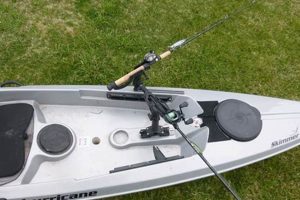
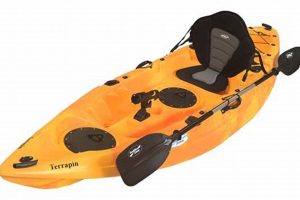
Choosing between a kayak designed for angling and one built for traversing distances involves understanding key differences in design and functionality. Angling kayaks prioritize stability and specialized features like rod holders and livewells, while vessels intended for longer journeys emphasize speed, efficiency, and storage capacity. This distinction reflects diverse paddling needs, from tranquil fishing excursions to extended explorations on open water.
Selecting the appropriate kayak type significantly enhances the paddling experience. A stable platform is crucial for casting and reeling in fish, while a streamlined hull allows for efficient long-distance travel. Historically, kayaks have evolved from hunting and transportation vessels to the specialized recreational craft available today. This specialization reflects the diverse range of activities kayaks facilitate, demanding designs that cater to specific performance requirements. Understanding these requirements leads to informed choices, ultimately maximizing safety and enjoyment on the water.
This article will delve deeper into the distinct characteristics of each kayak type, examining aspects such as hull design, storage options, seating comfort, and maneuverability. It will further explore the advantages and disadvantages of each design, enabling informed decisions based on individual paddling styles and intended uses.
Tips for Choosing Between an Angling and Touring Kayak
Selecting the appropriate kayak requires careful consideration of intended usage and individual needs. The following tips offer guidance in navigating the decision-making process.
Tip 1: Define Primary Activity: Clearly identify the kayak’s primary purpose. Frequent fishing trips necessitate features specific to angling, while extended journeys benefit from designs optimized for speed and storage.
Tip 2: Evaluate Hull Design: Consider hull characteristics. Wider, flatter hulls offer stability ideal for fishing, while longer, narrower hulls promote efficient tracking for touring.
Tip 3: Assess Storage Needs: Determine required storage capacity. Angling requires space for tackle and equipment, while touring necessitates ample room for gear and provisions.
Tip 4: Prioritize Seating Comfort: Evaluate seating configurations and adjustability. Long hours on the water demand comfortable seating, especially crucial for multi-day touring trips.
Tip 5: Consider Maneuverability: Assess maneuverability requirements. Fishing often involves navigating tight spaces, while touring typically occurs in open water.
Tip 6: Factor in Weight Capacity: Calculate total weight, including paddler, gear, and potential catch. Exceeding the kayak’s weight capacity compromises stability and performance.
Tip 7: Research and Compare Models: Thoroughly research different models, comparing features, specifications, and user reviews. This informed approach ensures optimal selection based on individual requirements.
Careful consideration of these factors facilitates informed decision-making. Selecting the appropriate kayak type enhances safety, improves performance, and ultimately maximizes enjoyment on the water.
By understanding the distinct characteristics of each kayak type and aligning them with individual paddling styles, one can make a confident and informed choice leading to a rewarding experience on the water.
1. Stability

Stability plays a crucial role in kayak selection, particularly when differentiating between fishing and touring models. A kayak’s stability directly impacts performance and safety, influencing casting, reeling, and overall balance on the water. Choosing the appropriate level of stability depends heavily on the intended activity and paddling environment.
- Primary Stability:
Primary stability refers to a kayak’s initial resistance to tipping. Wider, flatter hulls, common in fishing kayaks, exhibit higher primary stability, providing a secure platform ideal for casting lines and reeling in fish. This design prioritizes stability for stationary activities over maneuverability. A fishing kayak’s stable platform allows anglers to focus on fishing techniques without constantly adjusting balance.
- Secondary Stability:
Secondary stability describes a kayak’s resistance to tipping at greater angles of lean. Touring kayaks often feature rounded or V-shaped hulls, sacrificing some initial stability for enhanced secondary stability. This design enables efficient tracking in open water and provides a reassuring feel even when leaning into turns. While less stable initially, these kayaks offer support at higher lean angles, promoting confident maneuvering in various water conditions.
- Impact of Hull Design:
Hull design significantly influences both primary and secondary stability. Wider, flatter hulls maximize primary stability, while longer, narrower hulls enhance secondary stability and tracking. The choice between these hull designs depends on the primary use of the kayak: fishing or touring. Consider typical water conditions and paddling style when evaluating hull design in relation to stability requirements.
- Environmental Factors:
Environmental factors like wind and waves can significantly impact stability. Kayaks with higher primary stability perform well in calm conditions, while those with enhanced secondary stability handle rougher waters more effectively. Understanding anticipated paddling conditions informs appropriate stability requirements. Choosing a kayak with suitable stability features enhances safety and performance in varying environments.
Ultimately, the desired level of stability depends on the intended activity. Fishing kayaks prioritize primary stability for a secure casting platform, while touring kayaks balance initial stability with secondary stability for efficient tracking and maneuvering in open water. Carefully evaluating stability requirements alongside other factors ensures optimal kayak selection for a safe and enjoyable paddling experience.
2. Storage

Storage capacity and design represent critical differentiators between fishing and touring kayaks. Anglers require readily accessible compartments for tackle and gear, while tourers prioritize ample, secure storage for provisions and equipment necessary for multi-day expeditions. Understanding these distinct storage needs is paramount for selecting the appropriate kayak.
- Dedicated Compartments vs. Large Hatches:
Fishing kayaks often feature specialized compartments, including rod holders, tackle trays, and livewells, designed for organized storage and quick access to essential fishing gear. Touring kayaks, conversely, typically incorporate larger hatches and bulkheads, maximizing overall storage volume for clothing, camping gear, and food supplies needed for extended trips. This distinction reflects the different priorities of each activity: readily accessible fishing gear versus maximized capacity for touring provisions.
- Accessibility and Organization:
Storage accessibility significantly impacts on-the-water efficiency. Fishing kayaks prioritize easy access to frequently used items, allowing anglers to change lures or adjust tackle without disrupting their fishing flow. Touring kayaks, while potentially offering greater overall volume, may require more strategic packing and unpacking due to the nature of larger storage compartments. The degree of organization and accessibility directly influences the ease and efficiency of retrieving necessary items during paddling excursions.
- Waterproofing and Protection:
Protecting gear from water damage is crucial in both fishing and touring. Dry hatches and sealed compartments safeguard sensitive electronics, clothing, and other essential items. Fishing kayaks often incorporate specialized waterproof storage for electronics and tackle, while touring kayaks typically emphasize larger dry storage areas for keeping gear dry during extended trips in varied conditions. The level of waterproofing directly correlates with the preservation of valuable equipment and provisions.
- Weight Distribution and Impact on Performance:
Strategic weight distribution within storage compartments influences kayak performance. Evenly distributed weight enhances stability and tracking, particularly important for touring kayaks carrying heavier loads. Fishing kayaks benefit from balanced weight distribution to maintain stability while casting and reeling. Understanding proper weight management within storage areas contributes significantly to optimized performance and a more enjoyable paddling experience.
The storage requirements of fishing and touring differ substantially. Fishing kayaks emphasize specialized compartments and readily accessible storage for tackle and gear, while touring kayaks prioritize maximum capacity and secure storage for provisions and equipment needed for longer journeys. Careful consideration of storage needs and features ensures selection of the most suitable kayak type for a specific paddling purpose.
3. Speed
Speed requirements differ significantly between fishing and touring kayaks, reflecting the distinct nature of each activity. Fishing often involves slow, controlled movements, emphasizing stability over rapid displacement. Conversely, touring kayaks prioritize efficient movement across longer distances, making speed a crucial performance attribute. This fundamental difference influences hull design, waterline length, and overall kayak efficiency.
Hull design directly impacts speed. Fishing kayaks typically feature shorter, wider hulls optimized for stability, which inherently generate greater drag and reduce potential speed. Touring kayaks, conversely, employ longer, narrower hulls that minimize drag and maximize speed. This streamlined design facilitates efficient gliding through the water, allowing tourers to cover greater distances with less effort. The trade-off between stability and speed represents a core distinction between these kayak types. A fishing kayaks wide hull provides a stable platform for casting and reeling, while a touring kayaks sleek profile prioritizes efficient, high-speed travel.
Understanding the relationship between kayak design and speed enables informed decision-making. Anglers prioritizing stability and maneuverability in calmer waters may find a shorter, wider hull suitable. Paddlers embarking on longer journeys, however, benefit significantly from the speed and efficiency offered by a longer, narrower touring kayak. Recognizing this interplay between design and performance allows individuals to select the kayak best suited to their specific paddling needs and intended usage.
4. Maneuverability
Maneuverability represents a critical differentiating factor between fishing and touring kayaks, directly influencing paddling experience and suitability for specific environments. Fishing often necessitates navigating tight spaces, requiring a kayak responsive to subtle paddle strokes. Touring, while sometimes involving complex navigation, generally prioritizes straight-line tracking and efficient movement across open water. Understanding the nuances of maneuverability informs appropriate kayak selection.
- Turning Radius and Tracking:
Turning radius, the diameter of the circle a kayak makes when turning, directly impacts maneuverability. Shorter kayaks with wider hulls generally exhibit tighter turning radii, advantageous for navigating confined areas like shallow creeks or mangrove forests common in fishing environments. Conversely, longer, narrower touring kayaks prioritize tracking, maintaining a straight course with minimal effort, ideal for open water paddling. This design trade-off underscores the distinct priorities of each kayak type.
- Hull Design and its Influence:
Hull design significantly influences maneuverability. Flatter hulls, prevalent in fishing kayaks, enhance maneuverability in shallow water and tight spaces, though at the expense of tracking performance. Rounded or V-shaped hulls, common in touring kayaks, promote efficient tracking but may require more effort to turn sharply. Consideration of hull design is crucial when evaluating maneuverability requirements.
- Impact of Length and Width:
Kayak length and width directly correlate with maneuverability. Shorter kayaks are inherently more maneuverable, while longer kayaks offer increased speed and stability in open water. Wider kayaks provide greater initial stability but may feel sluggish when turning. Balancing length and width based on intended usage and paddling environment optimizes maneuverability and overall performance.
- Role of Rudders and Skegs:
Rudders and skegs influence tracking and directional control, particularly relevant for touring kayaks. Rudders, controlled by foot pedals, offer precise steering adjustments, while skegs, fixed or retractable fins, enhance straight-line tracking. These features are less common on fishing kayaks, which prioritize inherent maneuverability for navigating tight spaces. The presence and type of directional control mechanisms contribute significantly to a kayak’s handling characteristics.
Maneuverability considerations vary significantly between fishing and touring kayaks. Fishing kayaks prioritize nimble handling in confined spaces, while touring kayaks emphasize efficient tracking in open water. Understanding these distinct requirements, alongside hull design and other influencing factors, informs appropriate kayak selection based on intended usage and paddling environment.
5. Comfort

Comfort significantly influences paddling experiences, particularly during longer excursions. Choosing between a fishing kayak and a touring kayak necessitates careful consideration of comfort features, as design elements catering to anglers differ substantially from those prioritizing long-distance paddlers. Evaluating seat design, adjustability, and overall ergonomics contributes to a more enjoyable and less fatiguing experience on the water.
- Seat Design and Padding:
Seat design directly impacts comfort levels. Fishing kayaks often feature elevated, padded seats designed for casting and retrieving. These seats prioritize stability and a higher vantage point. Touring kayaks, conversely, frequently incorporate adjustable seats with enhanced back support, promoting comfort during extended paddling. Seat padding density and material also influence comfort, particularly during longer trips. Choosing a seat that provides adequate support and cushioning minimizes fatigue and enhances overall enjoyment.
- Adjustability and Ergonomics:
Adjustability plays a key role in achieving optimal comfort. Touring kayaks frequently offer adjustable backrests, foot braces, and thigh supports, allowing paddlers to customize their seating position for maximum comfort and efficiency. Fishing kayaks, while often featuring adjustable seats, may prioritize stability over a wide range of adjustability. Proper ergonomic positioning minimizes strain and promotes efficient paddling, particularly crucial during long-distance journeys. A comfortable and well-adjusted seating position reduces fatigue and enhances overall paddling performance.
- Legroom and Cockpit Design:
Cockpit design influences legroom and overall comfort. Fishing kayaks often feature open cockpits, facilitating easy entry and exit, and providing ample space for leg movement. Touring kayaks may have smaller cockpits designed for enhanced integration with the kayak, maximizing efficiency and control. The cockpit design should accommodate the paddler’s leg length and preferred seating position without causing restriction or discomfort. Adequate legroom promotes comfort and prevents cramping during extended paddling sessions.
- Standing Capabilities (Fishing Kayaks):
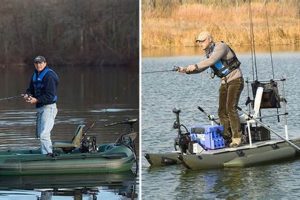
Some fishing kayaks incorporate designs that facilitate standing while casting and reeling. This feature offers enhanced visibility and casting range, though stability considerations become paramount. Standing platforms often feature non-slip surfaces and strategically placed footrests to ensure secure footing. The ability to stand comfortably and safely enhances the fishing experience, particularly in shallow water environments.
Comfort considerations play a significant role in kayak selection, particularly when distinguishing between fishing and touring models. Fishing kayaks often prioritize stability and open cockpits for ease of movement, while touring kayaks emphasize adjustable seating and ergonomic design for extended paddling comfort. Carefully evaluating comfort features alongside other performance characteristics ensures a more enjoyable and less fatiguing paddling experience, regardless of the chosen activity.
Frequently Asked Questions
This section addresses common inquiries regarding the distinctions between fishing and touring kayaks, providing concise and informative responses to facilitate informed decision-making.
Question 1: Can a touring kayak be used for fishing?
While possible, touring kayaks are not ideally suited for fishing. Their design prioritizes speed and long-distance travel over stability and specialized features found in fishing kayaks. Adapting a touring kayak for fishing may require significant modifications and compromise performance.
Question 2: Are fishing kayaks suitable for recreational paddling?
Fishing kayaks can be used for recreational paddling, particularly in calm waters. However, their wider, shorter hulls may feel less efficient and slower compared to touring kayaks designed for covering longer distances. Stability, however, remains a significant advantage for casual paddling.
Question 3: What is the typical price difference between fishing and touring kayaks?
Pricing varies significantly based on features, materials, and brand. Generally, fishing kayaks with specialized features may be slightly more expensive than basic touring kayaks. High-end models in both categories, incorporating advanced materials and technology, command premium prices.
Question 4: How important is hull design in choosing between these kayak types?
Hull design plays a crucial role. Wider, flatter hulls offer stability ideal for fishing, while longer, narrower hulls promote efficient tracking for touring. Understanding hull characteristics is paramount for selecting a kayak appropriate for intended usage.
Question 5: What safety considerations apply specifically to each kayak type?
Safety considerations vary based on activity and environment. Fishing kayaks require stability for casting and reeling, while touring kayaks demand seaworthiness for open water conditions. Appropriate safety gear and adherence to safe paddling practices remain essential for both.
Question 6: How does storage capacity influence kayak selection?
Storage needs differ significantly. Fishing requires dedicated compartments for tackle and gear, while touring necessitates ample space for provisions and equipment for multi-day trips. Evaluating storage capacity is crucial for ensuring sufficient space for essential items.
Careful consideration of these frequently asked questions facilitates informed decision-making, enabling individuals to select the kayak best suited to their specific paddling needs and intended usage.
By understanding the distinct characteristics of each kayak type and aligning them with individual paddling styles, informed choices lead to enhanced safety, improved performance, and ultimately, a more rewarding experience on the water.
Fishing Kayak vs Touring Kayak
Choosing between a fishing kayak and a touring kayak requires careful consideration of design, performance, and intended usage. This exploration has highlighted key distinctions, emphasizing the importance of aligning kayak selection with specific paddling activities. Fishing kayaks prioritize stability, specialized storage, and maneuverability for anglers, while touring kayaks emphasize speed, efficiency, and ample storage capacity for longer journeys. Hull design, storage options, seating comfort, and maneuverability represent critical differentiating factors, impacting overall paddling experience and suitability for specific environments.
Ultimately, informed decision-making hinges on a comprehensive understanding of individual needs and paddling priorities. Selecting the appropriate kayakwhether designed for tranquil fishing excursions or extended explorationsenhances safety, improves performance, and maximizes enjoyment on the water. Careful consideration of these factors empowers paddlers to make informed choices, leading to rewarding experiences tailored to their specific pursuits.