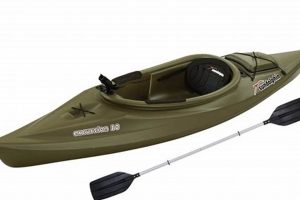
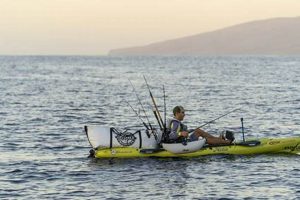
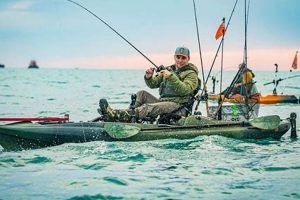
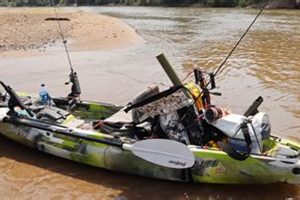
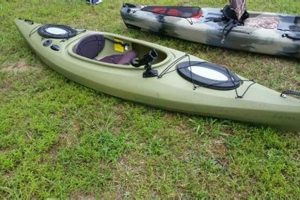
A system designed to secure kayaks, specifically those used for angling, to the roof or bed of a pickup truck facilitates convenient transport of these vessels to and from various bodies of water. Such systems typically involve a base structure attached to the truck, cradles or saddles to support the kayak’s hull, and straps or tie-downs to secure it during transit. Specialized features for angling kayaks might include rod holders integrated into the rack or tie-down points designed for fishing gear.
Transporting watercraft safely and efficiently is essential for anglers. This equipment enables access to remote fishing locations and eliminates the need for trailers, simplifying the overall logistical process. Historically, anglers relied on less specialized methods, often leading to damage or difficulty in transporting kayaks. Modern designs prioritize security, ease of loading and unloading, and the protection of both the kayak and the vehicle. This improved portability has expanded opportunities for fishing enthusiasts.
Further exploration of this topic will cover various types of these transport systems, factors to consider during selection, proper installation techniques, and essential safety precautions.
Tips for Transporting Fishing Kayaks
Proper transport ensures the safety of both the kayak and surrounding vehicles while maximizing the lifespan of the equipment. The following tips offer guidance for safe and efficient kayak transportation.
Tip 1: Choose the Right System. Consider truck bed length, kayak dimensions, and weight capacity when selecting a carrier. Roof-mounted systems are versatile, while bed-mounted options offer easier loading and unloading.
Tip 2: Prioritize Secure Mounting. Ensure the carrier is correctly installed according to manufacturer instructions. Double-check all connections and attachment points before each trip.
Tip 3: Use Quality Tie-Down Straps. Opt for durable, UV-resistant straps with cam buckles or ratchet straps for a secure hold. Avoid over-tightening, which can damage the kayak hull.
Tip 4: Protect the Kayak. Utilize padding or cradles to prevent scratches and abrasion during transport. Consider a bow and stern line for added stability, especially in windy conditions.
Tip 5: Distribute Weight Evenly. Center the kayak on the carrier and balance the load to prevent undue stress on the vehicle or the carrier itself.
Tip 6: Regularly Inspect Equipment. Before each outing, check the carrier, straps, and all hardware for signs of wear or damage. Replace any worn components promptly.
Tip 7: Practice Safe Driving Habits. Reduce speed, especially in adverse weather conditions. Be mindful of overhead clearances and avoid sudden stops or sharp turns.
Adhering to these guidelines ensures the safe and efficient transport of fishing kayaks, allowing anglers to focus on their passion.
By understanding and implementing these practices, anglers can ensure many successful fishing trips for years to come.
1. Truck Compatibility

Truck compatibility is paramount when selecting a fishing kayak transport system. The rack must integrate seamlessly with the truck’s specific design features, including bed length, cab configuration, and existing attachments. Ignoring compatibility can lead to instability, damage to both the kayak and truck, and potential safety hazards. For example, a rack designed for a short-bed truck won’t adequately support a kayak extending beyond the tailgate of a long-bed truck, creating an unbalanced load. Conversely, a rack designed for a tonneau cover might not fit a truck with a camper shell. Different truck models also have varying weight capacities, influencing the maximum load the truck can safely carry.
Several factors determine compatibility. Bed rails, tonneau covers, and camper shells all influence rack selection. Some racks clamp directly to the bed rails, while others require specific adapters. Tonneau covers often necessitate specialized racks that integrate with their design. Camper shells may require roof-mounted systems or specific bed-mounted adaptations. Understanding these nuances is crucial for choosing the appropriate rack. Furthermore, the truck’s suspension system plays a role in determining the maximum safe load. Overloading can lead to handling difficulties and potential suspension damage.
Choosing a compatible system ensures safe and efficient transport. This careful consideration safeguards both the kayak and truck from damage, preventing potential accidents caused by improper loading. Furthermore, a correctly fitted rack enhances overall transport efficiency, minimizing the risk of shifting or movement during transit. Ultimately, truck compatibility is a fundamental factor in successful kayak transport, enabling anglers to reach their destination safely and efficiently.
2. Kayak Dimensions

Kayak dimensions play a crucial role in selecting an appropriate fishing kayak truck rack. Length, width, and height influence the type of rack, cradles, and tie-down methods required for secure and damage-free transport. An improperly sized rack can lead to instability during transit, potentially damaging the kayak or posing a hazard to other vehicles. For instance, a short rack cannot adequately support a longer kayak, leading to overhang and increased susceptibility to wind forces. A narrow rack may not provide sufficient contact points for a wider kayak, compromising stability. Conversely, excessively large cradles can deform the hull of a smaller kayak over time. Weight capacity, directly related to kayak dimensions and construction materials, must also be considered to avoid overloading the rack system.
The interplay between kayak dimensions and rack selection impacts both safety and efficiency. Longer kayaks often necessitate the use of bow and stern tie-downs to minimize sway, especially at higher speeds. Wider kayaks might require specialized cradles or saddles designed to accommodate their shape, distributing weight evenly and preventing pressure points. Heavier kayaks necessitate stronger, more robust racks with higher weight capacities. For example, a sit-on-top fishing kayak, typically wider and heavier than a recreational kayak, requires a rack with wider cradles and a higher weight rating. Failure to account for these dimensional factors can lead to difficulties in loading and unloading, increasing the risk of damage during handling. Moreover, proper support and securement minimize wear and tear on the kayak during transit, extending its lifespan.
Understanding the relationship between kayak dimensions and rack selection ensures safe and efficient transport. Accurate measurements and careful consideration of weight capacity are essential for selecting a rack system that provides adequate support and security. This knowledge translates to a reduced risk of damage to the kayak and the vehicle, contributing to a more enjoyable and worry-free fishing experience. Ultimately, proper planning and selection based on kayak dimensions optimize transport efficiency, ensuring the kayak arrives at its destination safely and ready for use.
3. Secure Fastening

Secure fastening is paramount in fishing kayak transport, directly impacting safety and equipment longevity. A properly secured kayak minimizes the risk of damage during transit and prevents accidents caused by shifting loads or detachment. Effective securement involves a combination of appropriate tie-down points, quality straps, and proper techniques. Understanding these elements ensures safe and efficient transport, allowing anglers to focus on their destination rather than worrying about the security of their vessel.
- Tie-Down Points
Strategic tie-down points are essential for securement. These points, located on both the kayak and the truck rack, provide anchoring locations for straps. Factory-installed tie-down points on kayaks are typically reinforced for strength and durability. On the truck, tie-down points can be integrated into the bed rails, the rack system itself, or added using anchor points. Utilizing multiple tie-down points distributes the securing force, minimizing stress on any single area. For example, using both bow and stern tie-downs, in conjunction with straps securing the hull to the cradles, provides optimal stability.
- Straps and Tie-Downs
The quality and type of straps significantly influence securement effectiveness. Durable, UV-resistant straps with cam buckles or ratchet straps are preferred for their strength and ease of adjustment. Avoid using rope or bungee cords, as they lack the necessary strength and can stretch, potentially loosening during transit. Cam buckle straps offer quick and easy securement, while ratchet straps provide greater tensioning control. The number of straps used depends on the kayak’s size and weight, but a minimum of two straps for the hull and one each for the bow and stern is generally recommended. For example, using heavy-duty cam buckle straps with padded buckles protects the kayak’s finish while providing a secure hold.
- Proper Technique
Proper technique is essential for maximizing the effectiveness of tie-down points and straps. Straps should be tightened firmly but not excessively, as over-tightening can damage the kayak’s hull. Straps should be positioned to avoid rubbing against sharp edges or abrasive surfaces. The angle of the straps also plays a role in stability, with angled straps providing greater resistance to movement than perpendicular straps. For example, crossing the stern tie-down strap over the bow and vice versa creates a more secure connection, minimizing the risk of the kayak shifting during transit.
- Regular Inspection
Regular inspection of tie-down points and straps is crucial for maintaining securement integrity. Check for signs of wear, tear, or damage before each trip. Replace worn or damaged straps promptly to ensure continued safety and prevent potential failures during transport. Inspecting tie-down points for rust, corrosion, or loosening is equally important. For example, a frayed strap or a loose tie-down point can compromise the entire securement system, leading to potential instability or even detachment during transit. Regular maintenance and timely replacement of worn components ensure long-term securement effectiveness.
These facets of secure fastening collectively contribute to safe and efficient fishing kayak transport. By understanding the importance of tie-down points, utilizing appropriate straps and techniques, and performing regular inspections, anglers can significantly reduce the risk of damage and ensure their kayak arrives at its destination securely and ready for use. This attention to detail contributes not only to equipment longevity but also to peace of mind, allowing anglers to focus on the enjoyment of their fishing experience.
4. Loading/Unloading Ease

Loading and unloading ease is a critical factor influencing the overall practicality of a fishing kayak transport system. A system that simplifies these processes reduces physical strain, minimizes the risk of damage to both the kayak and vehicle, and contributes to a more efficient and enjoyable fishing experience. The design and features of the system directly impact loading/unloading ease. For example, a bed extender can facilitate loading a longer kayak onto a shorter truck bed, reducing the need for awkward lifting and maneuvering. Similarly, rollers or slide-out systems integrated into a truck bed rack can significantly simplify loading and unloading, particularly for heavier kayaks. Conversely, a poorly designed system requiring excessive lifting or awkward positioning can lead to back strain, scratches on the vehicle, and potential damage to the kayak itself. This can be particularly challenging for individuals with physical limitations or when dealing with heavier fishing kayaks equipped with gear and accessories.
Several design elements contribute to improved loading/unloading ease. Side-loading systems, where the kayak is loaded onto its side rather than overhead, are often easier for individuals to manage independently. J-style cradles, which hold the kayak at an angle, can facilitate loading by allowing the user to slide the kayak into position rather than lifting it fully. Gas-assisted shocks can aid in lifting heavier kayaks onto roof-mounted systems, reducing strain and improving control. Rollers or sliding mechanisms incorporated into truck bed racks minimize friction, enabling effortless loading and unloading. The height of the truck bed also plays a role; lower truck beds generally offer easier loading compared to taller trucks requiring significant overhead lifting. For instance, a roller system combined with a bed extender on a mid-sized truck allows a single user to easily load and unload a heavy fishing kayak, even after a long day on the water.
Prioritizing loading/unloading ease contributes significantly to the overall usability of a fishing kayak transport system. It minimizes the risk of injury and damage while maximizing efficiency. By carefully considering design elements such as loading style, cradle type, and the incorporation of assistive mechanisms, anglers can select a system tailored to their individual needs and physical capabilities. This careful consideration translates to a more streamlined and enjoyable fishing experience, allowing anglers to focus on their passion rather than the logistical challenges of transport. Furthermore, reduced strain and minimized risk of damage contribute to the longevity of both the kayak and the vehicle, representing a worthwhile investment in the long run.
5. Durability/Weather Resistance

Durability and weather resistance are critical factors in the efficacy and longevity of a fishing kayak truck rack system. Exposure to harsh environmental conditions, including UV radiation, rain, saltwater spray, and temperature fluctuations, necessitates a robust and resilient system. A durable rack maintains its structural integrity and functionality over time, ensuring safe and reliable kayak transport regardless of weather conditions. Investing in a weather-resistant rack safeguards against corrosion, material degradation, and premature failure, ultimately extending the lifespan of the system and protecting the kayak during transit.
- Material Selection
The materials used in the rack’s construction directly influence its durability and weather resistance. Aluminum offers a lightweight yet strong option with inherent corrosion resistance, making it suitable for saltwater environments. Steel provides superior strength but requires protective coatings, such as powder coating or galvanization, to prevent rust. Plastic components, while lightweight and often resistant to corrosion, can become brittle and susceptible to cracking under prolonged UV exposure. For example, marine-grade aluminum racks are preferred in coastal regions due to their superior resistance to saltwater corrosion, while powder-coated steel racks offer enhanced durability in areas with harsh winters.
- Protective Coatings and Finishes
Protective coatings and finishes play a crucial role in enhancing weather resistance. Powder coating creates a durable, protective layer on metal surfaces, resisting chipping, fading, and corrosion. Galvanization provides a sacrificial zinc coating that protects the underlying steel from rust. UV-resistant coatings on plastic components prevent fading and cracking caused by prolonged sun exposure. For example, a powder-coated steel rack with stainless steel hardware offers superior long-term protection against the elements compared to a painted steel rack with standard hardware.
- Hardware and Fasteners
The hardware and fasteners used in the rack assembly are equally important for overall durability. Stainless steel or corrosion-resistant coated fasteners resist rust and maintain their strength in harsh environments. Nylon or plastic hardware, while lightweight, may be less durable over time and susceptible to UV degradation. For instance, using stainless steel hardware throughout the rack system ensures long-term reliability and minimizes the risk of corrosion-related failures, particularly in saltwater environments.
- Construction Quality and Design
The overall construction quality and design of the rack contribute to its long-term durability. Welded joints provide superior strength and resistance to stress compared to bolted connections. Reinforced components in high-stress areas enhance structural integrity. Properly designed cradles or saddles distribute the kayak’s weight evenly, preventing excessive stress on any single point. For example, a rack with robust welded construction and reinforced cradles will withstand heavier loads and rougher handling compared to a lighter-duty rack with bolted connections and less robust cradles.
The durability and weather resistance of a fishing kayak truck rack directly influence its lifespan and the security of the kayak during transport. By carefully considering material selection, protective coatings, hardware, and overall construction quality, anglers can invest in a system that withstands the elements and provides years of reliable service. This translates to not only a safer transport experience but also long-term cost savings by avoiding frequent replacements due to weather-related damage. A durable and weather-resistant rack ensures that the focus remains on the enjoyment of fishing, rather than the challenges of transport.
Frequently Asked Questions
This section addresses common inquiries regarding fishing kayak truck rack systems, providing concise and informative responses to facilitate informed decision-making.
Question 1: What is the weight capacity of a typical fishing kayak truck rack system?
Weight capacity varies significantly depending on the rack’s design, materials, and mounting method. Always consult the manufacturer’s specifications for the specific weight limit. Exceeding this limit can lead to structural failure and potential accidents.
Question 2: Are roof-mounted racks suitable for all truck types?
Roof-mounted racks require compatible crossbars or roof rails. Not all trucks come equipped with these features, necessitating aftermarket installations. Compatibility with specific truck models should be confirmed before purchase.
Question 3: How does one choose between J-style and stacker-style kayak carriers?
J-style carriers cradle the kayak on its side, while stacker-style carriers allow multiple kayaks to be stacked vertically. J-style carriers are generally easier to load and unload, while stackers maximize carrying capacity. The choice depends on the number of kayaks being transported and individual preferences.
Question 4: What are the essential safety precautions for transporting kayaks on a truck rack?
Essential safety precautions include ensuring proper rack installation, using high-quality tie-down straps, distributing weight evenly, checking straps and hardware regularly for wear, and driving cautiously, especially in adverse weather conditions.
Question 5: Can a fishing kayak truck rack system be used to transport other types of kayaks?
Most fishing kayak racks can accommodate various kayak types, including recreational and touring kayaks. However, ensuring proper fit and securement based on the kayak’s dimensions and weight is crucial.
Question 6: What maintenance is required for a fishing kayak truck rack system?
Regular maintenance includes inspecting all components for wear and tear, tightening bolts and connections, cleaning the rack periodically, and lubricating moving parts as needed. Promptly replace any damaged or worn components to ensure continued safety and functionality.
Understanding these frequently asked questions empowers informed decisions regarding fishing kayak transport systems. Prioritizing safety, compatibility, and proper usage ensures efficient and damage-free transport, allowing for a focus on the enjoyment of angling.
Further sections will delve into specific rack types, installation procedures, and advanced securement techniques.
Conclusion
Effective and safe fishing kayak transport relies heavily on appropriate rack systems. Careful consideration of truck compatibility, kayak dimensions, secure fastening mechanisms, loading/unloading ease, and durability ensures efficient transport and equipment longevity. Understanding these elements allows anglers to select systems tailored to individual needs and prioritize both safety and practicality.
Investing in a suitable fishing kayak truck rack system contributes significantly to a seamless and enjoyable angling experience. Prioritizing these considerations not only protects valuable equipment but also enhances on-the-water experiences by minimizing transport-related challenges. Advancements in design and materials continue to improve transport solutions, further enabling anglers to pursue their passion with greater ease and confidence.