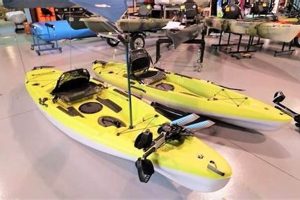
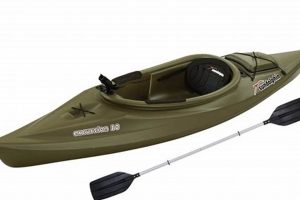
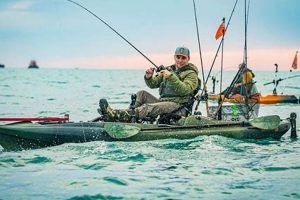
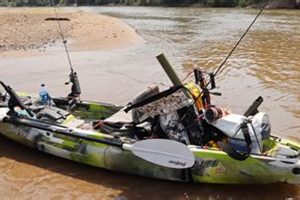
This specific type of watercraft designates a kayak designed for angling, measuring eleven feet in length. This size generally offers a balance between stability and maneuverability, making it suitable for various water conditions, from calm lakes and ponds to slow-moving rivers. Comparable vessels might include slightly longer or shorter kayaks, canoes, or small fishing boats, each with varying degrees of stability, speed, and storage capacity.
Vessels of this size frequently provide sufficient storage for fishing gear and accessories while remaining lightweight enough for easy transport and handling. Their popularity stems from the combination of portability, affordability, and specialized features like rod holders and anchor trolleys. Historically, fishing from small, human-powered watercraft represents a longstanding tradition across cultures, with modern materials and design evolving these vessels into highly specialized tools for the contemporary angler.
Further exploration will delve into specific features to consider when selecting such a vessel, including hull design, material construction, weight capacity, and available accessories. Additional topics may encompass recommended fishing techniques from this type of watercraft, safety considerations, and popular fishing locations suited to its capabilities.
Tips for Selecting and Using an Eleven-Foot Fishing Kayak
Careful consideration of several factors contributes to a successful and enjoyable fishing experience from this type of watercraft. These tips provide guidance for selecting and utilizing a vessel suited to individual needs and preferences.
Tip 1: Consider Hull Design. A flatter hull offers superior stability, while a V-shaped hull provides better tracking and speed. The chosen hull design should align with the intended fishing environment.
Tip 2: Evaluate Weight Capacity. Ensure the vessel’s weight capacity accommodates the combined weight of the angler, fishing gear, and potential catch. Exceeding capacity can compromise stability and safety.
Tip 3: Choose Appropriate Materials. Common materials include polyethylene, fiberglass, and composite materials. Each material presents different advantages and disadvantages related to durability, weight, and cost.
Tip 4: Inspect Available Features. Look for features such as rod holders, storage compartments, anchor trolleys, and comfortable seating to enhance the fishing experience.
Tip 5: Practice Paddling and Maneuvering. Before venturing into open water, practice basic paddling techniques and maneuvering in a controlled environment. This promotes confidence and safety.
Tip 6: Prioritize Safety Equipment. Always wear a personal flotation device and carry essential safety gear, including a whistle, signaling device, and first-aid kit.
Tip 7: Research Fishing Regulations. Familiarize oneself with local fishing regulations, including licensing requirements and catch limits.
Adhering to these guidelines promotes safety, efficiency, and overall enjoyment on the water. Selecting the appropriate vessel and employing prudent practices contributes significantly to a successful fishing excursion.
By understanding these factors, anglers can make informed decisions to enhance their fishing experience from their eleven-foot vessel.
1. Length

The eleven-foot length of a fishing kayak presents a compromise between maneuverability and tracking performance. This length influences how easily the kayak turns and maintains a straight course, impacting navigation in various water conditions. Understanding this interplay is crucial for effective angling.
- Maneuverability in Tight Spaces
Shorter kayaks generally offer greater maneuverability, allowing for easier turning in narrow creeks, rivers, and around obstacles. An eleven-foot kayak, while not as nimble as shorter models, retains reasonable maneuverability for navigating moderately confined areas. This length allows anglers to access fishing spots that might be challenging for longer kayaks while maintaining adequate stability.
- Tracking Performance in Open Water
Longer kayaks generally track more effectively in open water, maintaining a straight course with less effort. While an eleven-foot kayak may not track as efficiently as longer touring kayaks, it provides acceptable tracking for covering moderate distances on larger bodies of water. This length allows anglers to reach fishing grounds while retaining maneuverability for navigating closer to shore or structure.
- Impact of Hull Design
The kayak’s hull design also plays a significant role in both maneuverability and tracking. A flatter hull improves maneuverability but reduces tracking, while a V-shaped hull enhances tracking but compromises maneuverability. Eleven-foot fishing kayaks often feature a moderate V-hull to balance these characteristics.
- Influence of Water Conditions
Water conditions, including current and wind, also affect maneuverability and tracking. An eleven-foot kayak offers reasonable performance in moderate conditions but may require greater effort in strong currents or winds compared to shorter or longer kayaks with specific hull designs. Choosing the correct length and hull type is a key consideration based on the angler’s typical fishing environment.
The eleven-foot length, therefore, represents a balanced approach for fishing kayaks, providing acceptable maneuverability and tracking performance across a variety of fishing environments. Understanding the interplay of these factors alongside hull design and expected water conditions allows anglers to make informed decisions when selecting a kayak best suited to their specific needs.
2. Stability
Stability represents a critical performance attribute in fishing kayaks, directly impacting an angler’s ability to cast, reel, and land fish effectively. For an eleven-foot fishing kayak, stability influences not only comfort but also safety, particularly when standing to cast or when dealing with challenging water conditions or larger fish. A stable platform enables precise casting, controlled retrieves, and secure hooksets, maximizing angling success.
- Primary Stability: Resistance to Initial Tipping
Primary stability refers to a kayak’s resistance to tipping when sitting still. Wider kayaks generally exhibit greater primary stability, providing a secure feeling for anglers, especially beginners. An eleven-foot kayak with a wider beam offers enhanced initial stability, making it easier to maintain balance while preparing to cast or while fighting a fish.
- Secondary Stability: Resistance to Capsizing
Secondary stability describes a kayak’s resistance to completely capsizing when leaning or tilted. This characteristic is crucial for anglers who prefer to stand while fishing. An eleven-foot fishing kayak designed for stand-up fishing often features a wider hull and a lower center of gravity, maximizing secondary stability.
- Impact of Hull Design on Stability
Hull design plays a significant role in both primary and secondary stability. Flatter hulls offer greater initial stability, while rounded or pontoon-style hulls enhance secondary stability. An eleven-foot fishing kayak often incorporates a hull design that balances these characteristics to provide a stable platform for various fishing styles.
- Influence of Water Conditions on Perceived Stability
Water conditions such as wind and waves can significantly impact perceived stability. An eleven-foot kayak with good inherent stability performs better in choppy water compared to less stable designs. However, even stable kayaks require caution and appropriate safety measures in challenging conditions.
Therefore, stability serves as a foundational element influencing an angler’s success and safety when using an eleven-foot fishing kayak. Understanding the interplay of primary and secondary stability, hull design, and anticipated water conditions allows for informed selection and confident use on the water. Prioritizing stability contributes to an efficient and enjoyable fishing experience.
3. Capacity

Weight capacity represents a critical factor influencing the performance and safety of an eleven-foot fishing kayak. This specification dictates the maximum combined weight of the angler, gear, and potential catch the kayak can safely support. Exceeding this limit compromises stability, maneuverability, and freeboard, increasing the risk of capsizing or swamping. Understanding and adhering to weight limitations ensures safe and efficient operation.
- Maximum Load Capacity
Manufacturers specify a maximum load capacity for each kayak model. This figure represents the total weight the kayak can safely carry without compromising stability or performance. For eleven-foot fishing kayaks, this capacity typically ranges from 300 to 500 pounds, varying based on design and construction. Exceeding this limit significantly increases the risk of capsizing, particularly in challenging conditions.
- Angler Weight
The angler’s weight constitutes a significant portion of the total load. Selecting a kayak with a capacity exceeding the angler’s weight allows for additional gear and potential catch. Accurately assessing personal weight, including clothing and accessories, ensures sufficient capacity remains for other essential items.
- Gear and Equipment Weight
Fishing gear, including rods, reels, tackle boxes, and personal items, contribute to the overall load. Estimating the combined weight of all intended gear helps determine the required kayak capacity. Prioritizing essential gear and minimizing unnecessary items optimizes capacity utilization.
- Potential Catch Weight
While often overlooked, the potential weight of the catch must be factored into capacity calculations. Landing a large fish adds considerable weight, potentially exceeding the kayak’s limits if not accounted for. Selecting a kayak with ample capacity reserves safeguards against exceeding limits during successful fishing trips.
Careful consideration of weight capacity ensures safe and efficient operation of an eleven-foot fishing kayak. Accurately assessing the combined weight of the angler, gear, and potential catch prevents exceeding manufacturer-specified limits. Adhering to these limitations maximizes stability and performance, contributing to a safe and enjoyable fishing experience.
4. Features

Specialized features distinguish fishing kayaks from recreational models, enhancing their utility and angler efficiency. Within the context of an eleven-foot fishing kayak, rod holders and storage compartments represent essential components directly influencing angling success and overall experience. These features contribute to organization, accessibility, and hands-free operation, crucial aspects of effective fishing from a relatively compact vessel.
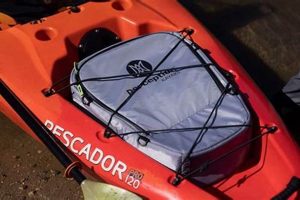
Rod holders, strategically positioned for easy access and secure rod placement, facilitate various fishing techniques. Flush-mounted rod holders offer streamlined profiles for paddling and navigating tight spaces, while adjustable rod holders accommodate different fishing styles and rod lengths. Multiple rod holders allow anglers to deploy multiple lines or quickly switch between different setups. Secure storage compartments safeguard essential gear and personal items from water damage while maintaining organization within the limited space of an eleven-foot kayak. Dedicated tackle storage, dry hatches, and bungee systems contribute to efficient retrieval and prevent gear loss. Ample storage capacity allows for extended trips with sufficient provisions and equipment.
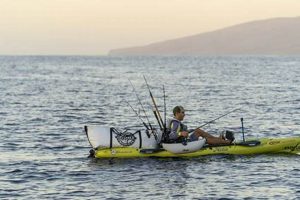
Consider an angler targeting different species requiring varied rod and lure setups. Integrated rod holders allow for hands-free trolling while paddling to a new location, and readily accessible storage compartments facilitate quick lure changes without disrupting fishing flow. Similarly, secure storage protects electronic devices, food, and safety gear from unexpected splashes or inclement weather. The strategic integration of these features within the confines of an eleven-foot hull optimizes space utilization, enhancing both functionality and enjoyment. Careful selection and effective use of rod holders and storage solutions contribute significantly to a successful and organized fishing experience. Neglecting these aspects can lead to frustration, lost gear, and potentially compromised safety. Therefore, understanding the function and importance of these integrated features contributes significantly to efficient angling practices and overall enjoyment on the water.
5. Material

Material selection significantly influences both the durability and weight of an eleven-foot fishing kayak, impacting its performance, lifespan, and portability. The chosen material dictates resistance to impact, abrasion, and environmental factors, while simultaneously affecting overall weight, influencing ease of transport and handling. Understanding this interplay allows for informed decisions aligned with individual needs and intended usage.
Polyethylene kayaks offer excellent impact resistance and affordability but are heavier than other options. This added weight can make transport and launching more challenging, particularly for individuals without assistance or specialized equipment. Fiberglass kayaks provide a balance of durability and weight, offering lighter construction than polyethylene while retaining good impact resistance. However, they are generally more expensive. Composite kayaks, utilizing materials like carbon fiber or Kevlar, offer the lightest weight and highest strength but come at a premium price. This reduced weight enhances portability and paddling efficiency, particularly beneficial for longer trips or challenging portages. For example, an angler frequently fishing remote locations requiring overland transport would benefit from the lighter weight of a composite or fiberglass kayak, while an angler fishing primarily from a dock or launch might prioritize the durability and affordability of polyethylene.
Material selection presents a trade-off between durability, weight, and cost. Prioritizing lightweight construction enhances portability and paddling efficiency but often comes at a higher price or potentially reduced durability. Conversely, prioritizing durability and affordability often results in a heavier kayak, potentially impacting transport and handling. Ultimately, the optimal material depends on individual priorities and intended usage. Careful consideration of these factors ensures selection of a kayak best suited to long-term performance expectations and individual needs.
6. Propulsion
Propulsion systems fundamentally influence the performance and fishing experience offered by an eleven-foot fishing kayak. The choice between paddle and pedal propulsion presents distinct advantages and disadvantages, impacting speed, maneuverability, fishing efficiency, and physical exertion. Understanding these trade-offs empowers informed decisions aligned with individual fishing styles and physical capabilities.
Paddle propulsion, the traditional kayaking method, offers simplicity, affordability, and full body engagement. Paddling provides excellent maneuverability in tight spaces, crucial for navigating complex shorelines or dense vegetation. However, paddling requires sustained physical effort, potentially limiting range and causing fatigue, particularly during longer fishing trips. Pedal propulsion, utilizing leg-powered drive systems, offers increased speed and reduced upper body strain. This system frees hands for fishing, enabling simultaneous casting and retrieval while maintaining boat control. Pedal drives excel in open water, covering greater distances efficiently. However, pedal-driven kayaks typically exhibit reduced maneuverability in tight spaces and carry a higher price tag. Consider an angler targeting offshore fishing grounds. A pedal-driven kayak enables efficient transit to distant locations, conserving energy for fishing. Conversely, an angler fishing narrow creeks or mangrove tunnels benefits from the precise maneuverability offered by paddle propulsion.
The choice of propulsion system directly influences fishing effectiveness and physical comfort. Paddle propulsion prioritizes maneuverability and affordability, while pedal propulsion prioritizes speed and reduced upper body exertion. Selecting the optimal system requires careful consideration of fishing environment, target species, physical limitations, and budget constraints. This informed decision contributes significantly to an efficient and enjoyable kayaking fishing experience.
7. Price

Price represents a significant factor influencing the accessibility and selection of an eleven-foot fishing kayak. Budgetary constraints often dictate the range of available options, impacting material selection, features, and overall performance. Understanding the relationship between price and kayak attributes empowers informed purchasing decisions aligned with individual financial limitations and desired performance characteristics. Navigating the market effectively requires careful evaluation of cost versus value.
- Entry-Level Kayaks
Entry-level eleven-foot fishing kayaks typically utilize less expensive materials like polyethylene and offer basic features. These kayaks provide a functional platform for fishing at a lower price point, often ranging from $500 to $1000. While suitable for casual anglers or those on a tight budget, these models may compromise performance and durability compared to higher-priced options. Examples include recreational kayaks adapted for fishing with basic rod holders and storage compartments.
- Mid-Range Kayaks
Mid-range options often incorporate higher-quality materials like fiberglass or composite construction and offer enhanced features like adjustable seating, multiple rod holders, and integrated track systems. These kayaks typically range from $1000 to $2000, providing a balance of performance, features, and price. Examples include kayaks designed specifically for fishing, often featuring specialized hull designs for improved stability and tracking.
- High-End Kayaks
High-end eleven-foot fishing kayaks utilize premium materials like carbon fiber and offer advanced features like pedal-drive systems, integrated fish finders, and premium seating. These kayaks can exceed $2000, representing top-tier performance and features. Examples include tournament-grade fishing kayaks designed for maximum speed, stability, and angler efficiency.
- Long-Term Costs
Beyond the initial purchase price, consider long-term costs associated with ownership, including maintenance, repairs, storage, and transportation. Higher-quality kayaks often require less maintenance and offer greater longevity, potentially offsetting higher initial costs. Factor these potential expenses into budgetary considerations for a comprehensive cost assessment.
Price significantly influences the available features, materials, and performance characteristics within the eleven-foot fishing kayak market. Establishing a realistic budget before exploring options helps narrow the field and facilitates informed decision-making. Balancing desired features against affordability ensures selection of a kayak that meets both performance expectations and financial constraints, maximizing value and long-term satisfaction.
Frequently Asked Questions
This section addresses common inquiries regarding eleven-foot fishing kayaks, providing concise and informative responses to facilitate informed decision-making and enhance understanding of this specialized watercraft.
Question 1: What are the advantages of an eleven-foot length for fishing kayaks?
Eleven feet represents a balance between maneuverability and tracking, making these kayaks suitable for various water conditions. This length offers adequate stability while remaining manageable for transport and storage.
Question 2: How does the weight capacity affect performance and safety?
Weight capacity dictates the maximum combined weight of the angler, gear, and catch the kayak can safely support. Exceeding this limit compromises stability and increases the risk of capsizing. Selecting a kayak with ample capacity ensures safe and efficient operation.
Question 3: What materials are commonly used in eleven-foot fishing kayaks, and how do they compare?
Common materials include polyethylene, fiberglass, and composites. Polyethylene offers durability and affordability but is heavier. Fiberglass balances durability and weight. Composites provide the lightest weight and highest strength but are more expensive.
Question 4: What key features should one look for in an eleven-foot fishing kayak?
Essential features include rod holders, storage compartments, adjustable seating, and a comfortable cockpit. Additional features like anchor trolleys, rudders, and integrated fish finders enhance functionality and convenience.
Question 5: What are the differences between paddle and pedal propulsion systems?
Paddle propulsion offers simplicity, affordability, and maneuverability but requires physical exertion. Pedal propulsion provides speed and hands-free operation but often comes at a higher cost and reduced maneuverability in tight spaces.
Question 6: How does price influence the quality and features of an eleven-foot fishing kayak?
Price often reflects material quality, features, and performance. Entry-level kayaks offer basic functionality at lower prices, while higher-end models offer premium materials, advanced features, and enhanced performance at higher price points. Long-term costs, including maintenance and repairs, should also be considered.
Careful consideration of these frequently asked questions empowers informed decision-making when selecting and utilizing an eleven-foot fishing kayak. Understanding these key aspects contributes to a safe, efficient, and enjoyable fishing experience.
The subsequent section will delve into specific techniques for fishing from an eleven-foot kayak, addressing strategies for various species and environments.
Conclusion
An eleven-foot fishing kayak represents a versatile platform for anglers seeking a balance of performance, portability, and affordability. Careful consideration of factors such as hull design, material construction, weight capacity, propulsion system, and integrated features significantly influences on-the-water effectiveness and overall enjoyment. Understanding these elements empowers informed decisions, aligning kayak selection with individual fishing styles, target species, and budgetary constraints. Prioritizing stability, maneuverability, and appropriate features contributes to efficient angling practices, maximizing success and safety on the water.
The selection and utilization of an eleven-foot fishing kayak represent an investment in both equipment and experience. Diligent research, informed decision-making, and adherence to safety guidelines unlock the full potential of this specialized watercraft, fostering rewarding fishing excursions and a deeper connection with the aquatic environment.