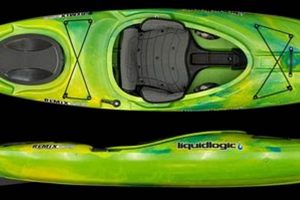
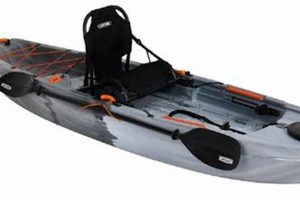
Specialized containers designed for kayaks used in angling provide a secure and organized way to transport tackle, tools, and personal items. These containers are typically crafted from durable, waterproof materials and are often integrated into the kayak’s design or readily attached to existing fixtures. They come in various sizes and configurations, from small compartments for lures and hooks to larger units capable of holding rods, reels, and safety gear. A typical example is a recessed compartment molded into the hull behind the seat, secured with a hinged lid.
Such dedicated compartments are essential for maintaining a clutter-free and efficient fishing platform. They safeguard valuable equipment from the elements and prevent loss or damage due to shifting or capsizing. The ability to organize gear within easy reach enhances angler efficiency and safety, allowing for quicker retrieval of necessary items and minimizing distractions. Historically, anglers relied on less specialized containers, often repurposed from other activities. The development of purpose-built kayak-specific storage reflects the growing popularity and specialization of kayak fishing.
This article will explore key considerations for selecting appropriate storage solutions for kayak angling, including materials, mounting systems, security features, and capacity. It will also discuss the advantages and disadvantages of different storage types and provide guidance on optimizing their use for a more productive and enjoyable fishing experience.
Tips for Optimizing Kayak Angling Storage
Effective storage is crucial for a successful kayak fishing trip. These tips offer guidance on maximizing available space and ensuring gear remains secure and accessible.
Tip 1: Prioritize Essential Gear: Carry only necessary items to avoid clutter and excess weight. Consider the target species and fishing techniques to determine essential tackle and tools.
Tip 2: Utilize Waterproof Containers: Protect sensitive electronics, documents, and other valuables by storing them in waterproof bags or boxes. This safeguards against splashes, rain, and accidental submersion.
Tip 3: Distribute Weight Evenly: Balance gear distribution throughout the kayak to maintain stability. Avoid concentrating heavy items in one area, which can negatively impact maneuverability.
Tip 4: Secure Loose Items: Use bungee cords, straps, or clips to secure loose items and prevent them from shifting or falling overboard during transit or while fishing.
Tip 5: Organize for Easy Access: Arrange frequently used items within easy reach to minimize disruption while fishing. Consider using clear containers to quickly identify contents without opening multiple compartments.
Tip 6: Regularly Inspect and Clean: Inspect storage compartments for wear and tear and clean them regularly to prevent the buildup of dirt, debris, and moisture, which can damage gear.
Tip 7: Consider Specialized Storage Solutions: Explore purpose-built kayak storage accessories such as tackle boxes, rod holders, and dry bags to enhance organization and efficiency.
By implementing these strategies, anglers can create a more organized, efficient, and ultimately more enjoyable fishing experience on the water.
These tips lay the groundwork for a safe and productive outing. The following section will further elaborate on specific storage solutions and their applications.
1. Material

Material selection significantly impacts the durability, functionality, and longevity of fishing kayak storage boxes. Common materials include high-density polyethylene (HDPE), acrylonitrile butadiene styrene (ABS) plastic, and various polymers. HDPE offers excellent impact resistance and UV stability, making it suitable for harsh marine environments. ABS plastic provides a rigid, lightweight solution but may be more susceptible to UV degradation over time. Polymer blends offer customizable properties, balancing weight, durability, and cost-effectiveness. Choosing the appropriate material depends on factors like intended use, budget, and storage needs. For instance, a kayak angler frequently navigating rocky terrain might prioritize a highly impact-resistant HDPE box, while someone fishing calmer waters might opt for a lighter ABS option.
Material properties influence not only structural integrity but also a storage box’s ability to protect contents. Waterproof and airtight seals often incorporate rubber or silicone gaskets to prevent water intrusion. Some materials offer inherent insulation properties, helping maintain stable temperatures within the box, crucial for preserving bait or sensitive electronics. Additionally, the material’s resistance to chemicals and UV radiation affects long-term performance. A box constructed from UV-stabilized HDPE, for example, resists fading and cracking, ensuring functionality over extended periods of exposure to sunlight. Selecting a material resistant to common fishing chemicals prevents degradation and extends the box’s lifespan.
Understanding the properties of different materials is crucial for selecting a fishing kayak storage box that meets specific needs and environmental conditions. Balancing durability, weight, cost, and specialized performance characteristics ensures optimal functionality and longevity. Ultimately, informed material selection contributes significantly to a positive and successful kayak fishing experience. Further consideration of factors such as mounting systems and security features, discussed in subsequent sections, will complete a comprehensive understanding of effective kayak storage solutions.
2. Size and Capacity

Appropriate size and capacity are critical factors when selecting a fishing kayak storage box. The chosen box must accommodate essential gear while maintaining the kayak’s stability and maneuverability. Balancing storage needs with the kayak’s weight capacity and available space ensures a safe and efficient fishing experience. Understanding the various facets of size and capacity helps anglers make informed decisions based on individual fishing styles and requirements.
- Internal Volume
Internal volume dictates the amount of gear a box can hold. Measured in liters or cubic inches, this measurement helps anglers assess compatibility with intended contents. A larger internal volume accommodates bulkier items like tackle boxes and safety gear, while smaller volumes suit essential tools and lures. Matching internal volume to anticipated storage needs prevents overcrowding and ensures easy access to individual items. For example, a larger volume box might be necessary for multi-day expeditions, whereas a smaller box suffices for shorter trips.
- External Dimensions
External dimensions determine how a box fits within the kayak’s designated storage areas. Length, width, and height measurements are crucial for assessing compatibility with existing compartments and ensuring a secure fit. A box with inappropriate external dimensions might interfere with paddling or other onboard activities. For instance, a box too tall might obstruct the angler’s view or movement. Careful consideration of external dimensions ensures efficient space utilization and prevents interference with the kayak’s operation.
- Weight Capacity
The box’s weight capacity dictates the maximum weight it can safely hold. Exceeding this limit risks structural failure and potential gear loss. Anglers must consider the combined weight of intended contents to avoid exceeding the box’s capacity. Heavier items like batteries and anchors necessitate boxes with higher weight capacities. Distributing weight evenly within the kayak also contributes to overall stability. Selecting a box with appropriate weight capacity and distributing weight evenly throughout the kayak minimizes strain and ensures safe operation.
- Shape and Configuration
The shape and configuration of a storage box influence how efficiently space is utilized. Rectangular boxes maximize storage volume for given external dimensions, while specialized shapes accommodate specific gear types. Compartmentalized boxes offer organizational benefits, separating lures, tools, and other items. For example, a long, narrow box might be ideal for storing fishing rods, while a box with multiple compartments keeps smaller items organized and prevents tangling. Choosing a shape and configuration that aligns with individual needs optimizes storage efficiency and facilitates quick access to essential gear.
Careful evaluation of these facets internal volume, external dimensions, weight capacity, and shape ensures optimal selection of a fishing kayak storage box. Matching these attributes to individual fishing styles and anticipated storage needs results in a well-organized and efficient kayak setup, contributing significantly to a successful and enjoyable fishing experience.
3. Mounting and Security

Secure mounting systems are essential for safeguarding gear stored within fishing kayak storage boxes, preventing loss or damage during transit or on the water. Properly secured boxes remain in place despite challenging conditions, including rough water, impacts, and accidental capsizing. Effective mounting and security measures not only protect valuable equipment but also contribute to overall kayak stability and angler safety. Understanding the various mounting options and security features available allows anglers to choose the most suitable system for their specific needs and kayak configuration.
- Integrated Mounting Systems
Integrated mounting systems, molded directly into the kayak’s hull, offer a streamlined and secure solution. These systems often incorporate dedicated compartments or recesses designed to accommodate specific box sizes and shapes. Kayaks equipped with integrated mounting systems provide a seamless and aesthetically pleasing storage solution, minimizing the need for additional hardware or modifications. For example, some kayaks feature recessed compartments behind the seat specifically designed for storage boxes, ensuring a secure and unobtrusive fit.
- Track-Based Mounting Systems
Track-based systems offer versatility in positioning and adjusting storage boxes along pre-installed tracks on the kayak’s deck. These tracks provide multiple attachment points, allowing anglers to customize the placement of boxes based on individual preferences and fishing styles. Track systems accommodate various box sizes and shapes, enhancing adaptability. An example includes adjustable mounts that slide along the track, allowing anglers to reposition boxes for optimal access to gear throughout the fishing trip.
- Strap and Buckle Systems
Strap and buckle systems provide a simple and cost-effective method for securing storage boxes to existing fixtures on the kayak. These systems utilize adjustable straps and buckles to firmly attach boxes to D-rings, handles, or other secure points. Strap systems offer flexibility in mounting locations but may require careful adjustment to ensure a stable and secure hold. An example includes using heavy-duty straps to secure a storage box to the kayak’s bow or stern, providing additional storage space.
- Locking Mechanisms
Locking mechanisms add an extra layer of security, protecting stored items from theft or accidental opening. These mechanisms can range from simple latches to more sophisticated locking systems integrated into the box’s design. Locking mechanisms provide peace of mind, particularly when storing valuable equipment or sensitive items. For example, a box with a keyed lock prevents unauthorized access to stored contents, while a latch with a secure closure mechanism prevents accidental opening during transit or rough conditions.
Selecting appropriate mounting and security measures for fishing kayak storage boxes is crucial for preserving valuable equipment, maintaining kayak stability, and ensuring angler safety. By considering the various mounting systems and security features available, anglers can create a customized storage solution tailored to individual needs and fishing preferences. This, combined with considerations regarding size, capacity, and material as discussed previously, ensures a comprehensive and effective approach to kayak storage optimization.
4. Accessibility and Organization

Efficient access to tackle and gear is paramount in kayak angling. A well-organized storage system minimizes disruptions, allowing anglers to focus on fishing rather than searching for misplaced items. Strategic organization within a fishing kayak storage box enhances both efficiency and safety, contributing significantly to a successful and enjoyable fishing experience. This section explores key facets of accessibility and organization within these specialized storage solutions.
- Clear Compartmentalization
Dividing storage space into distinct compartments facilitates efficient organization. Designated areas for specific items, such as lures, hooks, and tools, prevent tangling and simplify retrieval. Clear compartmentalization enables anglers to quickly locate necessary items without rummaging through a disorganized jumble. For instance, separating soft plastic lures from treble hooks prevents damage and maintains lure effectiveness. This targeted organization streamlines the fishing process, allowing for quick bait changes and minimizing wasted time.
- Easy-Access Design
Storage boxes featuring lids that open fully or slide smoothly provide unimpeded access to stored contents. Recessed compartments or angled openings facilitate retrieval without requiring anglers to reach deep into the box. Easy-access designs minimize time spent searching for gear and reduce the risk of dropping items overboard. A storage box located within arm’s reach, with a lid that opens effortlessly, exemplifies effective design. Such accessibility contributes to a seamless fishing experience, allowing anglers to maintain focus and react quickly to changing conditions.
- Labeling and Identification
Clear labeling systems facilitate quick identification of stored items. Labeling compartments with contents or using transparent containers eliminates guesswork and speeds up retrieval. This is particularly beneficial in low-light conditions or when time is of the essence. For example, labeling a compartment with “Topwater Lures” or using transparent containers for different hook sizes allows for immediate identification and selection. This systematic approach minimizes disruptions and keeps the angler focused on the task at hand.
- Modular Storage Solutions
Modular storage systems, such as removable trays or dividers, provide customizable organization within a storage box. These systems adapt to changing storage needs and allow anglers to tailor compartments to specific gear configurations. Modular systems enhance versatility and optimize space utilization. For instance, removable trays within a larger storage box can be configured to hold different tackle types based on the target species. This adaptable approach maximizes storage efficiency and ensures that gear remains organized and readily accessible.
Optimizing accessibility and organization within a fishing kayak storage box significantly enhances angling efficiency and enjoyment. By implementing clear compartmentalization, easy-access designs, labeling systems, and modular storage solutions, anglers create a streamlined and efficient system for managing their gear. This organized approach contributes to a more focused and productive fishing experience, allowing anglers to maximize their time on the water.
5. Water Resistance
Water resistance is a paramount consideration for fishing kayak storage boxes, given the inherent exposure to splashes, rain, and potential submersion. Protecting sensitive gear from moisture is crucial for maintaining its functionality and longevity. A thorough understanding of water resistance levels and related features enables informed decisions, ensuring valuable equipment remains dry and operational, contributing significantly to a successful and worry-free fishing experience.
- IP Ratings
Ingress Protection (IP) ratings provide a standardized measure of a product’s resistance to solids and liquids. The first digit represents protection against solids, while the second indicates liquid ingress protection. A higher second digit indicates greater water resistance. For instance, an IPX7 rating signifies protection against temporary submersion, while an IPX9 rating denotes resistance to high-pressure, high-temperature spray downs. Selecting a storage box with an appropriate IP rating ensures adequate protection against anticipated water exposure, safeguarding sensitive electronics and other vulnerable items.
- Construction and Sealing
Construction methods and sealing techniques contribute significantly to a storage box’s water resistance. Tightly sealed lids with rubber or silicone gaskets prevent water intrusion. Seamless construction, minimizing potential entry points for water, further enhances protection. For example, a box with a tongue-and-groove lid design and a robust gasket system provides superior water resistance compared to a box with a simple overlapping lid. Careful examination of construction details helps determine the box’s overall effectiveness in preventing water ingress.
- Material Properties
The material itself plays a crucial role in water resistance. Inherently waterproof materials, such as high-density polyethylene (HDPE), provide a barrier against moisture. Other materials might rely on coatings or treatments to enhance water repellency. For instance, a box constructed from HDPE offers intrinsic water resistance, while a fabric box might utilize a waterproof coating. Understanding the material’s properties and how they contribute to water resistance ensures appropriate selection based on anticipated conditions and storage needs.
- Drainage and Ventilation
While preventing water ingress is paramount, some storage boxes incorporate drainage or ventilation features to manage moisture that might accumulate internally. Small drainage holes allow water to escape, preventing pooling and potential damage to stored items. Ventilation features promote airflow, reducing condensation and mildew growth. For instance, a storage box with small drainage holes in the bottom allows water to escape if the box is splashed or briefly submerged. These features, while seemingly contradictory to water resistance, contribute to overall dryness and preservation of stored items, particularly in humid environments.
Careful consideration of these water resistance aspectsIP ratings, construction and sealing, material properties, and drainage/ventilationis essential for selecting a fishing kayak storage box that provides adequate protection for valuable gear. Understanding these elements ensures informed decisions, allowing anglers to choose the best solution based on anticipated conditions and individual needs. Ultimately, prioritizing water resistance contributes significantly to a more successful, enjoyable, and worry-free kayak fishing experience.
Frequently Asked Questions
This section addresses common inquiries regarding fishing kayak storage boxes, providing concise and informative responses to assist in selecting and utilizing these essential angling accessories.
Question 1: What are the primary advantages of using specialized storage boxes in a fishing kayak?
Specialized storage boxes offer several benefits, including organized tackle management, protection from the elements, and optimized space utilization within the kayak. These factors contribute to increased fishing efficiency and overall enjoyment on the water.
Question 2: How does one choose the appropriate size and capacity for a kayak storage box?
Selection depends on individual fishing styles, the types of gear typically carried, and the kayak’s available storage space. Careful consideration of these factors ensures optimal fit and functionality without compromising stability or maneuverability.
Question 3: What materials are commonly used in the construction of fishing kayak storage boxes, and what are their respective advantages?
Common materials include high-density polyethylene (HDPE), known for its durability and UV resistance, and acrylonitrile butadiene styrene (ABS) plastic, offering a lightweight yet rigid structure. Material choice influences a box’s durability, weight, and resistance to environmental factors.
Question 4: How are fishing kayak storage boxes typically secured to the kayak?
Securement methods vary and include integrated mounting systems, track-based systems, strap-and-buckle systems, and combinations thereof. Selection depends on the specific kayak model and individual preferences regarding adjustability and permanence.
Question 5: What features contribute to a storage box’s water resistance, and why is this crucial for kayak angling?
Water resistance features include sealed lids with gaskets, waterproof materials, and drainage systems. Protecting gear from moisture is critical for preserving its functionality and preventing damage, especially in a marine environment.
Question 6: How can storage within a fishing kayak storage box be optimized for accessibility and efficient tackle management?
Implementing organizational strategies such as compartmentalization, labeling systems, and modular storage solutions maximizes space utilization and facilitates quick retrieval of necessary items, enhancing overall fishing efficiency.
Careful consideration of these frequently asked questions facilitates informed decision-making when selecting and using fishing kayak storage boxes. Addressing these common concerns ensures optimal storage solutions tailored to individual angling needs and preferences.
The subsequent section delves further into specific storage solutions and their applications within various kayak fishing scenarios.
Conclusion
Effective organization and readily accessible equipment are essential for successful kayak angling. Specialized storage solutions designed for this purpose offer significant advantages in terms of gear protection, efficient space utilization, and overall angler performance. Careful consideration of material, size, mounting systems, accessibility features, and water resistance ensures optimal selection and contributes to a more streamlined and enjoyable fishing experience. From securing valuable rods and reels to organizing essential tackle and tools, purpose-built storage solutions play a crucial role in maximizing efficiency and enjoyment on the water.
Investing in appropriate storage solutions represents an investment in preparedness and long-term angling success. Optimized storage facilitates a more focused and productive fishing experience, allowing anglers to concentrate on the pursuit of their target species rather than contending with disorganized gear or worrying about equipment damage. Strategic storage choices enhance not only individual performance but also contribute to overall safety and enjoyment on the water, underscoring the significance of these specialized solutions within the broader context of kayak angling.