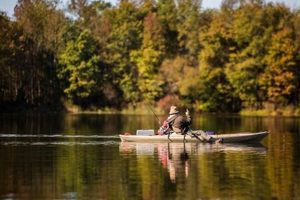
A system for storing and accessing fishing equipment while kayak fishing typically involves specialized containers, trays, and mounts designed to fit within the limited space of a kayak. These systems often incorporate features like water resistance, secure closures, and adjustable compartments to accommodate various lure types, lines, and tools. An example would be a crate system secured behind the kayak seat, providing easy access to frequently used items.
Efficient equipment management is crucial for successful kayak angling. A well-organized system streamlines the fishing process, allowing anglers to quickly locate and deploy the necessary gear without disrupting their balance or paddling rhythm. This is especially important in kayaks where space is limited and stability is paramount. Historically, kayak anglers relied on improvised storage solutions, but the increasing popularity of the sport has driven innovation in dedicated storage systems, enhancing both safety and fishing effectiveness.
This article will explore various storage solutions available to kayak anglers, considering factors such as kayak type, fishing style, and budget. Topics will include different types of organizers, mounting options, and tips for maximizing space and efficiency.
Tips for Effective Fishing Equipment Management in Kayaks
Proper organization is essential for a successful and enjoyable kayak fishing experience. These tips offer guidance on optimizing equipment storage and access.
Tip 1: Prioritize frequently used items. Keep lures, tools, and other regularly accessed items within easy reach, minimizing the need for disruptive movements.
Tip 2: Utilize vertical space. Employ vertical storage solutions like tackle bags or mounted racks to maximize limited kayak space.
Tip 3: Secure everything. Ensure all storage containers and individual items are securely fastened to prevent loss or damage in the event of capsizing or rough water.
Tip 4: Choose waterproof storage. Protect sensitive equipment from water damage by using waterproof containers and bags.
Tip 5: Label and categorize. Labeling storage compartments and organizing items by type facilitates quick identification and retrieval.
Tip 6: Consider kayak compatibility. Choose storage solutions designed to fit the specific dimensions and layout of the kayak.
Tip 7: Balance weight distribution. Distribute gear evenly throughout the kayak to maintain stability and optimal paddling performance.
By implementing these strategies, anglers can enhance safety, efficiency, and overall enjoyment on the water. A well-organized kayak allows for a more focused and productive fishing experience.
These organizational strategies contribute significantly to a safer and more productive fishing experience from a kayak. The following section will offer concluding remarks.
1. Space Optimization

Within the confined environment of a kayak, space optimization is crucial for efficient fishing. A well-organized tackle system maximizes usable space, allowing anglers to carry essential equipment without compromising stability or maneuverability. This is particularly relevant for kayak fishing, where limited storage necessitates strategic organization.
- Vertical Storage Solutions
Utilizing vertical space is paramount in kayaks. Vertical storage solutions, such as tackle bags designed to hang from kayak rails or rod holders, maximize storage potential without encroaching on deck space. This allows for more room for paddling, fighting fish, and other essential activities. For example, a vertically mounted tackle bag can hold numerous lures and tools, freeing up valuable horizontal space within the kayak.
- Modular Systems
Modular tackle organizers offer adaptable configurations. These systems allow anglers to customize their storage by adding or removing components based on specific needs. This adaptability is particularly beneficial in kayaks, as it allows anglers to tailor their setup to different fishing styles or target species. A modular system might include interchangeable trays, boxes, and dividers, optimizing space utilization for various tackle types.
- Compact Tackle Choices
Selecting compact and multi-functional tools and lures contributes to efficient space utilization. Smaller tackle boxes and streamlined lure designs maximize storage capacity. For example, opting for multi-tool pliers rather than carrying separate cutters and crimpers conserves valuable space within a tackle organizer. This careful selection of gear minimizes bulk and allows for a more streamlined kayak setup.
- Strategic Placement of Organizers
Careful consideration of organizer placement within the kayak is essential for both accessibility and balance. Positioning frequently used items within easy reach minimizes unnecessary movement and maximizes fishing efficiency. For instance, placing a small tackle box with essential lures within arm’s reach eliminates the need to constantly reach into larger storage compartments, thereby maintaining stability and focus while fishing.
By integrating these space optimization strategies, anglers can create a highly efficient and organized kayak fishing platform. This meticulous approach to tackle management contributes directly to a more enjoyable and productive fishing experience, allowing anglers to focus on the sport rather than managing their equipment.
2. Accessibility

Accessibility in kayak fishing tackle organization directly impacts angling efficiency and safety. Rapid access to necessary equipment, such as lures, tools, and safety gear, is crucial, especially in dynamic fishing situations. A well-designed organizer facilitates efficient retrieval without requiring extensive searching or disruptive movements that could compromise kayak stability. For example, readily accessible pliers are essential for quickly removing hooks, while a readily available first-aid kit is crucial for addressing injuries promptly.
Several factors contribute to accessibility. Placement of the organizer within the kayak is paramount. Positioning frequently used items within arm’s reach minimizes movement and maximizes fishing time. The organizer’s design also plays a crucial role. Clear compartments, labeled containers, and easily accessible closures facilitate quick identification and retrieval of specific items. Furthermore, the type of organizer chosen should align with the angler’s physical capabilities. Anglers with limited mobility, for instance, might benefit from organizers with larger compartments and easy-to-operate closures. An example would be a swing-arm organizer mounted within easy reach, allowing quick access to frequently used lures without requiring the angler to twist or reach extensively.
Prioritizing accessibility in tackle organization ultimately enhances both safety and fishing effectiveness. Reduced time spent searching for equipment translates to more time spent fishing. Furthermore, minimizing movement within the kayak contributes to stability, reducing the risk of capsizing, especially in challenging conditions. Well-designed organizers are an investment in both efficiency and safety, enabling anglers to focus on the sport with confidence and ease.
3. Water Resistance
Water resistance is a critical feature of kayak fishing tackle organizers, given the inherent exposure to water in this activity. Protecting tackle from moisture prevents corrosion of hooks, swivels, and other metal components, preserving their functionality and longevity. Electronics, such as fish finders and GPS devices, also require protection from water damage. Water-resistant organizers safeguard these investments, ensuring reliable performance throughout the fishing trip. For example, a tackle box with a tight-fitting gasket or a waterproof bag protects sensitive electronic equipment and prevents rust formation on metal tackle components, even in wet conditions.
Various levels of water resistance exist. Waterproof organizers offer the highest level of protection, typically achieved through sealed compartments and waterproof materials. Water-resistant organizers provide a degree of protection against splashes and light rain, but may not withstand full submersion. The choice depends on the specific fishing environment and the angler’s needs. Anglers fishing in calm, protected waters may find water-resistant organizers sufficient, while those venturing into rougher conditions or areas prone to capsizing should prioritize waterproof options. Using waterproof cases within a water-resistant bag provides an added layer of security for sensitive electronics and important documents.
Ultimately, prioritizing water resistance in tackle organizers safeguards valuable equipment, ensuring functionality and longevity. This consideration contributes significantly to the overall success and enjoyment of kayak fishing trips. Failure to protect tackle from moisture can lead to equipment malfunction, potentially jeopardizing safety and diminishing the fishing experience. Choosing appropriate levels of water resistance based on anticipated conditions is a crucial step in preparing for any kayak fishing outing. This proactive approach minimizes potential disruptions and maximizes the chances of a successful and enjoyable experience on the water.
4. Secure Storage

Secure storage is a fundamental aspect of kayak fishing tackle organization, directly impacting both safety and equipment preservation. A secure system prevents tackle loss due to accidental spills, capsizing, or rough water conditions. This is particularly crucial in kayak fishing, where the angler is in close proximity to the water and sudden movements or unexpected events can occur. Lost tackle not only represents a financial loss but also poses an environmental hazard, contributing to plastic pollution in waterways. A secure tackle organizer ensures that essential gear remains readily available, minimizing disruptions and maximizing fishing time. For example, a tackle box with secure latches and a non-slip base prevents spills even when the kayak is tilted or rocking, ensuring that lures and tools remain organized and accessible. Similarly, securing rods to the kayak with rod holders prevents them from being lost overboard during navigation or when fighting a fish.
Various methods contribute to secure tackle storage. Latches, straps, and tie-down points integrated into the organizer itself play a crucial role in preventing movement and spills. Additionally, the method of attaching the organizer to the kayak is equally important. Utilizing stable mounting points and robust attachment systems ensures the entire setup remains secure even in challenging conditions. Furthermore, the organization within the organizer contributes to overall security. Smaller compartments and dividers within the organizer help to prevent items from shifting during transport, minimizing the risk of damage and facilitating quick retrieval. For instance, using foam inserts within compartments to secure individual lures prevents them from tangling or rattling, reducing noise and enhancing organization.
Implementing secure storage solutions in kayak fishing offers significant practical advantages. It protects valuable equipment, minimizes environmental impact, and enhances safety. A well-secured tackle system allows anglers to focus on the fishing experience without worrying about equipment loss or disorganization. This contributes not only to a more productive outing but also to a more responsible and enjoyable interaction with the aquatic environment. Furthermore, the knowledge that essential gear is secure provides peace of mind, allowing anglers to confidently navigate various water conditions and focus on the task at hand.
5. Customization

Customization plays a crucial role in optimizing kayak fishing tackle organizers for individual anglers’ needs and preferences. Fishing styles, target species, and kayak configurations vary significantly, necessitating adaptable storage solutions. A customizable organizer allows anglers to tailor compartments, dividers, and mounting locations to accommodate specific gear and maximize efficiency on the water. For example, an angler targeting bass might configure their organizer with compartments for a variety of soft plastic baits, while a fly fisherman might prioritize compartments designed to hold fly boxes and tools. The ability to adjust the organizer’s layout based on the specific fishing trip enhances both organization and accessibility. Furthermore, different kayak models offer varying mounting options and available space. Customization ensures compatibility between the organizer and the kayak, maximizing space utilization and maintaining stability. This adaptability is essential given the diverse range of kayaks and fishing styles.
The practical implications of customization are significant. A well-customized organizer streamlines the fishing process, enabling anglers to quickly locate and deploy necessary gear. This reduces wasted time searching for equipment and minimizes disruptions to paddling rhythm and balance. Furthermore, customization contributes to safety by ensuring essential safety gear, such as a first-aid kit or signaling devices, is readily accessible in emergencies. By tailoring the organizer to individual needs, anglers can maintain a more organized and efficient fishing environment, enhancing both safety and enjoyment on the water. For instance, an angler frequently fishing in low-light conditions might incorporate a dedicated compartment for headlamps and glow sticks, ensuring these essential items are readily available when needed. Similarly, an angler fishing in areas with strong currents might prioritize secure mounting solutions to prevent gear loss in the event of a capsize.
In conclusion, customization is a key factor in maximizing the effectiveness of a kayak fishing tackle organizer. It allows for personalized setups that cater to individual fishing styles, target species, and kayak configurations. This adaptability translates to enhanced organization, improved accessibility, and increased safety on the water. Challenges may include the initial investment of time and effort required to configure the organizer effectively, as well as the potential cost of additional components or accessories. However, the benefits of a customized system ultimately outweigh these challenges, contributing significantly to a more productive and enjoyable kayak fishing experience. This approach fosters a more streamlined and efficient approach to tackle management, allowing anglers to focus on the sport itself.
Frequently Asked Questions
This section addresses common inquiries regarding tackle organization for kayak fishing.
Question 1: What are the primary advantages of using a dedicated kayak fishing tackle organizer?
Dedicated organizers maximize limited kayak space, enhance tackle accessibility, and offer protection from the elements, crucial factors for efficient and enjoyable kayak fishing.
Question 2: How does one choose the right organizer for a specific kayak and fishing style?
Consider kayak size and layout, target species, and preferred fishing techniques when selecting an organizer. Compatibility, storage capacity, and accessibility are key factors.
Question 3: Are waterproof organizers necessary for all kayak fishing environments?
While beneficial in all environments, waterproof organizers are essential in areas prone to rough water or frequent capsizing, safeguarding tackle from moisture damage.
Question 4: How can tackle organizers contribute to kayak stability and safety?
Proper weight distribution within the organizer and secure mounting to the kayak enhance stability. Quick access to essential safety gear contributes to overall safety.
Question 5: What are the key features to look for in a durable and effective tackle organizer?
Durable materials, robust construction, secure closures, and corrosion-resistant hardware are crucial for long-lasting performance in harsh aquatic environments.
Question 6: How does regular maintenance contribute to the longevity of a kayak fishing tackle organizer?
Regular cleaning, rinsing with fresh water after each use, and periodic inspection of hardware and closures ensure optimal performance and extend the lifespan of the organizer.
Careful consideration of these points contributes significantly to informed decisions regarding tackle organization for kayak fishing. Appropriate equipment choices enhance both efficiency and enjoyment on the water.
The subsequent section will delve into specific product recommendations.
Kayak Fishing Tackle Organizers
Effective management of fishing equipment is paramount for successful kayak angling. This article explored the crucial role of specialized storage solutions in optimizing space, enhancing accessibility, ensuring water resistance, promoting secure storage, and enabling customization. These factors contribute significantly to both efficiency and safety on the water. Strategic organization streamlines the fishing process, allowing for quick retrieval of essential gear without compromising stability or focus.
Investing in a well-designed kayak fishing tackle organizer is an investment in a more productive and enjoyable angling experience. Proper equipment management minimizes disruptions, maximizes fishing time, and enhances safety on the water. Careful consideration of individual needs and preferences, alongside an understanding of available options, empowers anglers to make informed decisions, ultimately leading to a more rewarding and fulfilling time on the water.