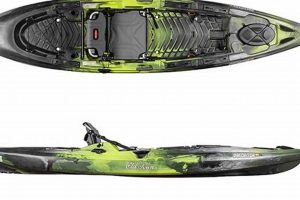
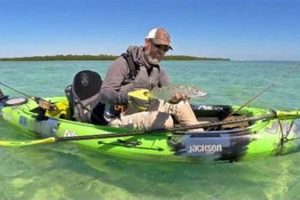
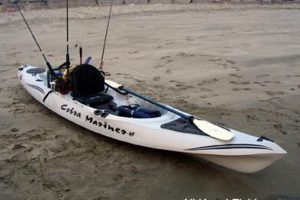
Designs for kayaks specifically intended for angling typically incorporate features like rod holders, tackle storage, and specialized seating arrangements. These designs can range from simple modifications of recreational kayak blueprints to highly detailed schematics for purpose-built fishing vessels. An example would be a blueprint detailing the construction of a sit-on-top kayak with integrated rod holders and a livewell.
Well-considered vessel designs are essential for a successful and enjoyable fishing experience. Having a stable and efficient platform customized to the angler’s needs allows for greater focus on the activity itself. Historically, anglers adapted existing watercraft for fishing. The development of specialized designs reflects a growing appreciation for the unique demands of angling and the benefits of a purpose-built vessel.
This article will delve into the different types of kayak designs suitable for fishing, exploring the advantages and disadvantages of each, and examining factors to consider when choosing or creating a suitable design. Topics covered will include hull design, material selection, and customization options.
Tips for Utilizing Kayak Designs for Fishing
Careful consideration of design elements can significantly enhance the fishing experience from a kayak. These tips offer guidance on maximizing functionality and enjoyment.
Tip 1: Stability is Paramount: Prioritize designs that offer inherent stability, especially for activities like stand-up fishing. Wider hulls and lower centers of gravity contribute to stability.
Tip 2: Storage Solutions: Adequate storage for tackle, rods, and safety gear is essential. Evaluate designs with integrated storage compartments and consider customization options.
Tip 3: Propulsion Matters: Consider the intended fishing environment when selecting a propulsion system. Pedal-driven kayaks offer hands-free operation, while traditional paddles provide maneuverability in shallow water.
Tip 4: Material Selection: Durable materials such as polyethylene and composites offer varying degrees of impact resistance and weight. Evaluate material properties against the demands of the intended fishing environment.
Tip 5: Comfort and Ergonomics: An uncomfortable seating arrangement can detract from the fishing experience. Prioritize designs with adjustable seating and ample legroom.
Tip 6: Customization Options: Consider designs that allow for customization and the addition of accessories like rod holders, fish finders, and anchors.
Tip 7: Research and Planning: Thoroughly research different designs and consider the specific needs of the angler before committing to a plan. Consulting experienced kayak anglers can provide valuable insights.
Implementing these tips during the planning phase ensures a kayak optimized for fishing success and enjoyment. A well-designed vessel contributes significantly to angler comfort, efficiency, and overall satisfaction.
By understanding the nuances of kayak design and incorporating these practical tips, anglers can create or select the perfect vessel for their specific needs and enhance their fishing experience.
1. Stability

Stability is a paramount concern in fishing kayak design, directly impacting angler safety and fishing effectiveness. A stable platform enables confident casting, hook setting, and landing fish, while minimizing the risk of capsizing. This section explores key facets contributing to kayak stability.
- Hull Design:
Hull design significantly influences stability. Wider hulls and flatter bottoms generally offer greater initial stability, resisting tipping. However, they can sacrifice maneuverability. Conversely, narrower, V-shaped hulls offer superior tracking and speed but compromise initial stability. Pontoon hulls provide exceptional stability, particularly for stand-up fishing, but can be cumbersome to paddle. Choosing the right hull design requires balancing stability, speed, and maneuverability based on intended fishing style and water conditions. For example, a wider, flatter hull suits calm lakes, while a narrower V-hull excels in rivers or open water.
- Center of Gravity:
A lower center of gravity enhances stability. Sitting lower in the kayak improves balance. Distributing weight evenly within the hull, avoiding excessive gear topside, further enhances stability. Kayaks designed specifically for fishing often feature lower seating positions and integrated storage compartments to facilitate weight management. An angler positioned higher in the kayak with gear piled high is more susceptible to capsizing.
- Water Conditions:
Calm water generally allows for the use of less stable kayak designs. However, rough conditions, strong currents, or wind necessitate prioritizing stability. Choosing a kayak design suited to the anticipated water conditions is crucial for safety and successful fishing. For instance, a stable pontoon hull is advantageous in choppy water, whereas a more agile design suits calmer environments.
- Angler Behavior:
Angler movements, such as casting, reeling, and landing fish, shift the kayak’s center of gravity and can compromise stability. Smooth, deliberate movements and avoiding sudden shifts in weight contribute to maintaining balance. Practicing techniques like bracing and recovering from a tipped position enhances angler confidence and safety. For example, leaning too far over the side while reaching for a fish can destabilize the kayak.
Careful consideration of these factors during kayak selection or design is essential for creating a stable and safe fishing platform. Achieving optimal stability enhances angler confidence, improves fishing effectiveness, and minimizes the risk of accidents. Prioritizing stability contributes significantly to a positive and productive fishing experience.
2. Storage Capacity
Storage capacity is a critical element in fishing kayak plans. Adequate storage directly impacts organization, efficiency, and overall fishing success. A well-designed storage system keeps essential gear readily accessible, minimizes clutter, and maximizes usable space within the kayak. Insufficient storage can lead to a disorganized and frustrating experience, hindering access to essential equipment and potentially compromising safety.
Kayak fishing necessitates carrying a variety of gear, including rods, reels, tackle boxes, safety equipment, and potentially fish-handling tools or coolers. Effective storage solutions accommodate this equipment securely and efficiently. Examples include integrated rod holders, dedicated tackle compartments, sealed hatches for dry storage, and bungee cord systems for securing larger items. The location and accessibility of storage compartments influence workflow and ease of use. For instance, readily accessible storage for frequently used items, like pliers or lures, optimizes efficiency, while secure storage for less frequently used items, like spare spools or first-aid kits, maintains order. The strategic placement of storage compartments minimizes disruptions to paddling and casting.
Balancing storage capacity with kayak size and stability presents a design challenge. Maximizing storage without compromising stability or maneuverability requires careful planning and consideration of the angler’s needs. Choosing appropriate storage solutions depends on the targeted species, fishing techniques employed, and the duration of typical fishing trips. Longer expeditions or techniques requiring specialized equipment demand greater storage capacity. Understanding these considerations allows for the development of fishing kayak plans optimized for individual angler requirements, maximizing both efficiency and enjoyment on the water. Failure to prioritize storage can result in a cluttered and inefficient fishing experience, hindering performance and potentially compromising safety.
3. Hull Design

Hull design plays a pivotal role in fishing kayak performance, dictating stability, maneuverability, speed, and tracking. Specific hull characteristics cater to diverse fishing styles and water conditions. Understanding the nuances of various hull designs empowers informed decision-making when selecting or creating a fishing kayak.
Several hull types are common in fishing kayaks. Flat-bottomed hulls offer excellent primary stability, ideal for calm waters and stand-up fishing, but sacrifice speed and tracking. Pontoon hulls provide maximum stability, well-suited for larger anglers and challenging conditions, but are less maneuverable. V-shaped hulls excel in tracking and speed, cutting through chop efficiently, but offer less initial stability. Rounded or shallow arch hulls offer a balance between stability and maneuverability, making them versatile choices for varied conditions. Multi-chine hulls, featuring multiple hard angles along the bottom, combine stability and tracking, often preferred for coastal fishing. For example, a kayak designed for river fishing benefits from a V-shaped hull for efficient current navigation, while a kayak intended for pond fishing might prioritize a flat-bottomed hull for maximum stability.
Selecting the appropriate hull design requires careful consideration of intended fishing environments and angler preferences. Prioritizing stability often necessitates compromising speed or maneuverability. Conversely, prioritizing speed might sacrifice stability. A thorough assessment of individual needs and target fishing conditions informs optimal hull design selection. Understanding the inherent trade-offs within different hull designs ensures a fishing kayak tailored for specific performance requirements. Choosing the correct hull design ultimately enhances fishing efficiency, comfort, and safety.
4. Propulsion System

The propulsion system chosen for a fishing kayak significantly impacts its performance and the angler’s experience. Efficient and appropriate propulsion enables anglers to cover greater distances, access desirable fishing spots, and conserve energy for the activity itself. Careful consideration of various propulsion methods within the context of fishing kayak plans is crucial for optimizing on-the-water effectiveness.
- Paddle Propulsion:
Traditional paddle propulsion remains a popular choice for its simplicity, affordability, and maneuverability. Paddle selection depends on factors like kayak width and angler preference. While effective for shorter distances and calm waters, paddling can become tiring over extended periods or in challenging conditions, potentially detracting from the fishing experience. Different paddle designs, such as feathered or asymmetrical blades, offer varying degrees of efficiency and control.
- Pedal Propulsion:
Pedal-powered kayaks utilize leg muscles, generally considered more powerful and less prone to fatigue than arm muscles. This system allows for hands-free fishing and precise boat control, beneficial for techniques requiring constant adjustments. However, pedal drives can be more expensive and complex than paddles, and may be less effective in very shallow water or areas with dense vegetation. Examples include propeller-based and fin-based pedal drives, each offering distinct performance characteristics.
- Motorized Propulsion:
Electric motors offer significant advantages in covering large distances, battling strong currents or winds, and accessing remote locations. However, motors add weight and complexity to the kayak, require battery management, and may be subject to regulations in certain areas. Integrating a motor into fishing kayak plans requires careful consideration of weight distribution, battery placement, and wiring. Motor selection involves assessing thrust, battery life, and intended usage patterns.
- Sail Propulsion:
While less common, sails offer a sustainable and efficient propulsion method for open water or downwind travel. Sail kits designed for kayaks typically involve lightweight, easily deployable sails. However, sails are less effective in confined spaces, upwind travel, or variable wind conditions. Integrating sails into fishing kayak plans requires considerations for sail area, mast placement, and kayak stability.
The choice of propulsion system directly influences the functionality and effectiveness of a fishing kayak. Balancing factors like speed, maneuverability, cost, and complexity against individual fishing styles and target environments ensures an optimized on-the-water experience. Selecting the appropriate propulsion system contributes significantly to maximizing fishing success and enjoyment.
5. Material Selection
Material selection significantly influences the performance, durability, and cost of a fishing kayak. Appropriate material choice hinges on balancing desired characteristics such as weight, impact resistance, UV resistance, and affordability. Careful consideration of material properties within the context of fishing kayak plans is crucial for constructing a vessel suited to the intended environment and usage patterns. Material selection directly impacts the kayak’s longevity, maintenance requirements, and overall performance.
Common materials used in fishing kayak construction include polyethylene, composites (fiberglass, carbon fiber, Kevlar), thermoformed ABS, and inflatable materials (PVC, Hypalon). Polyethylene kayaks are known for their durability and affordability, making them suitable for recreational use and handling impacts in rocky or shallow environments. However, they are heavier than composite kayaks. Composite kayaks offer superior performance in terms of speed and efficiency due to their lighter weight and stiffness, but are generally more expensive and susceptible to damage from impacts. Thermoformed ABS kayaks offer a balance between durability and weight, while inflatable kayaks provide portability and convenient storage, although they may be less durable than hard-shell kayaks. For example, a kayak intended for frequent use in rocky rivers would benefit from the robust nature of polyethylene, while a kayak designed for racing or long-distance touring might prioritize the lighter weight and performance advantages of composites.
Selecting the appropriate material requires a comprehensive understanding of its properties and how those properties align with intended usage. Factors such as fishing environment, transportation methods, storage limitations, and budget constraints all contribute to informed material selection. Choosing the right material ensures a fishing kayak that meets performance expectations, withstands the rigors of its intended environment, and provides years of reliable service. A well-informed material selection contributes directly to the overall success and longevity of a fishing kayak.
6. Customization Options
Customization options play a crucial role in optimizing fishing kayak plans for individual angler needs and preferences. Adapting a kayak to specific fishing styles, target species, and local conditions significantly enhances efficiency, comfort, and overall fishing success. Well-considered customizations transform a standard kayak platform into a personalized fishing machine.
- Rod Holders:
Rod holders are fundamental customizations, allowing anglers to secure rods while paddling, trolling, or handling other tasks. Various rod holder types exist, including flush-mount, adjustable, and rotating holders. Strategic placement of rod holders considers casting angles, accessibility, and line management. For example, a kayak angler targeting trolling might install multiple rod holders at varying angles along the gunwales, while a fly fisherman might prefer a single, easily accessible rod holder near the cockpit.
- Tackle Storage:
Customized tackle storage solutions maximize organization and efficiency. Modular tackle boxes, trays, and bags designed to fit specific kayak compartments keep lures, hooks, and other essentials readily accessible. Customizing tackle storage allows anglers to tailor their gear to the target species and fishing techniques. For instance, an angler specializing in bass fishing might organize tackle by lure type and color, while a saltwater angler might prioritize storage for larger, heavier tackle.
- Electronics Integration:
Integrating electronics like fish finders, GPS units, and transducers enhances fishing effectiveness. Custom mounts and wiring solutions ensure secure and convenient placement of these devices. Careful planning during the design phase accommodates wiring needs and optimizes screen visibility. For example, integrating a fish finder with GPS capabilities allows anglers to mark productive fishing spots and navigate efficiently.
- Comfort Enhancements:
Customizations like upgraded seating, adjustable footrests, and backrests improve comfort during long fishing trips. These modifications enhance angler endurance and minimize fatigue, allowing for extended time on the water. For instance, replacing a standard kayak seat with a high-back, adjustable seat significantly improves comfort and support, especially for anglers with back problems.
Strategic customization transforms a standard fishing kayak into a purpose-built platform tailored to individual needs and preferences. Considering these customization options during the planning phase of fishing kayak designs ensures a vessel optimized for specific fishing styles and target environments. By integrating these elements, anglers enhance their efficiency, comfort, and overall fishing success. A customized kayak reflects the angler’s unique approach to fishing and maximizes the enjoyment of time spent on the water.
Frequently Asked Questions
Addressing common inquiries regarding designs for kayaks intended for angling provides clarity and facilitates informed decision-making.
Question 1: What are the primary factors to consider when evaluating designs?
Key considerations include stability, storage capacity, hull design, propulsion method, material construction, and potential for customization. Each factor contributes to the overall performance and suitability of the vessel for specific fishing styles and environments.
Question 2: How does hull design influence performance?
Hull design dictates stability, maneuverability, speed, and tracking. Flat-bottomed hulls offer stability, while V-shaped hulls excel in speed and tracking. Selecting the appropriate hull depends on the intended fishing environment and angler preferences.
Question 3: What are the advantages of pedal-powered propulsion?
Pedal drives offer hands-free fishing, utilizing leg muscles for sustained power and allowing anglers to focus on fishing techniques. This propulsion method is particularly advantageous for techniques requiring frequent adjustments or precise boat control.
Question 4: What materials are commonly used in construction?
Common construction materials include polyethylene, composites (fiberglass, carbon fiber), and thermoformed ABS. Each material offers distinct advantages and disadvantages regarding weight, durability, cost, and maintenance.
Question 5: How can designs be customized for individual needs?
Customizations like rod holders, specialized storage solutions, electronics integration, and comfort enhancements tailor the kayak to specific fishing styles and preferences. These modifications enhance efficiency and enjoyment on the water.
Question 6: What are the safety considerations?
Prioritizing stability is crucial for safety. Understanding the limitations of the chosen design in various water and weather conditions is essential. Carrying appropriate safety gear, such as a personal flotation device (PFD) and signaling devices, is paramount.
Careful consideration of these frequently asked questions empowers informed decision-making regarding the selection, design, and customization of fishing kayaks. A thorough understanding of these elements contributes significantly to a safe, efficient, and enjoyable fishing experience.
Further sections will delve into specific design considerations and customization options in greater detail.
Conclusion
Careful consideration of design elements, from hull characteristics and propulsion systems to storage solutions and customization options, is paramount for creating a fishing kayak optimized for individual needs and target environments. Prioritizing stability, efficiency, and adaptability ensures a vessel capable of delivering a successful and enjoyable angling experience. Material selection significantly influences performance and longevity, requiring careful evaluation based on intended usage and environmental conditions. Understanding the interplay of these elements empowers informed decision-making and fosters a deeper appreciation for the crucial role of thoughtful design in kayak fishing success.
Effective design translates directly into enhanced fishing opportunities and a closer connection with the aquatic environment. The evolution of specialized kayak designs reflects a growing understanding of the unique demands of angling and a commitment to maximizing performance and enjoyment on the water. Continued exploration of innovative design solutions promises further advancements in kayak fishing technology, offering anglers increasingly refined tools for pursuing their passion.