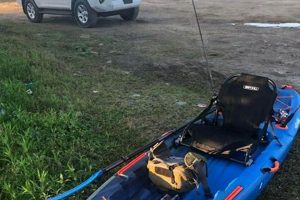
The dimensions of a paddle designed for use with a fishing kayak are crucial for efficient propulsion and comfortable maneuvering. A properly sized paddle considers factors such as the kayaker’s height, the kayak’s width, and the intended fishing style. For instance, a taller individual in a wider kayak might require a longer paddle than someone shorter in a narrower vessel. Likewise, anglers engaging in trolling or covering long distances might prefer a longer paddle with a larger blade surface area for more powerful strokes.
Appropriate paddle dimensions directly impact performance and enjoyment on the water. An overly long paddle can lead to shoulder fatigue and inefficient paddling, while one that is too short may require excessive effort and limit maneuverability. Historically, kayak paddles were often crafted from natural materials like wood, and sizing was based on traditional knowledge and individual needs. Modern paddles utilize advanced materials and designs, allowing for greater customization and efficiency. The correct dimensions contribute to a more stable and enjoyable fishing experience, enabling anglers to reach desired locations with less exertion and focus on the task at hand.
This article will delve further into the key factors influencing appropriate paddle selection, including kayak width, user height, paddling style, and blade design considerations. It will also explore the different materials and constructions available, providing a comprehensive guide to selecting the optimal tool for enhanced fishing kayak performance.
Tips for Determining Appropriate Paddle Dimensions
Selecting the correct paddle dimensions is essential for efficient and comfortable kayaking. The following tips provide guidance for determining the appropriate measurements.
Tip 1: Consider Kayak Width: Wider kayaks generally require longer paddles for effective propulsion. Measure the kayak’s width and consult manufacturer recommendations or paddle sizing charts.
Tip 2: Factor in User Height: Taller individuals typically benefit from longer paddles. Use height and kayak width in conjunction with sizing charts to find an appropriate range.
Tip 3: Account for Paddling Style: High-angle paddlers often prefer shorter paddles for quicker strokes, while low-angle paddlers may find longer paddles more efficient.
Tip 4: Evaluate Blade Shape and Size: Larger blades provide more power per stroke but require greater effort. Smaller blades are better suited for endurance paddling.
Tip 5: Test Before Purchasing: Whenever possible, try out different paddle lengths and blade shapes to determine the most comfortable and efficient fit.
Tip 6: Consider Adjustable Paddles: Adjustable paddles offer flexibility for different paddling styles and conditions, allowing adjustments in length and feather angle.
Tip 7: Account for Fishing Style: Anglers frequently casting or maneuvering in tight spaces might prefer a shorter paddle for increased control.
By considering these factors, one can select paddle dimensions that optimize performance, reduce fatigue, and enhance overall enjoyment on the water.
Through careful consideration of these tips, anglers can ensure optimal performance and comfort, maximizing their time on the water.
1. Kayak Width

Kayak width plays a pivotal role in determining appropriate fishing kayak paddle length. Wider kayaks require longer paddles to achieve efficient propulsion and prevent the paddle blades from striking the hull during strokes. This relationship stems from the increased distance between the paddler’s hands when positioned over a wider hull. A longer paddle ensures proper reach and leverage, facilitating effective power transfer to the water. For instance, a 36-inch wide fishing kayak generally requires a longer paddle than a 32-inch wide model, all other factors being equal. Conversely, using a paddle that is too short for a wide kayak results in inefficient, choppy strokes and potential contact with the hull, compromising stability and paddling efficiency.
The impact of kayak width on paddle length becomes especially significant in fishing scenarios. Anglers often carry additional gear and equipment, increasing the kayak’s overall width. This added width necessitates a slightly longer paddle to maintain optimal paddling mechanics. Furthermore, specific fishing techniques, such as trolling or drifting, may benefit from longer paddles for covering greater distances with fewer strokes. Understanding this relationship allows anglers to select a paddle length that maximizes efficiency and minimizes fatigue, particularly during long fishing trips.
In summary, kayak width is a critical factor influencing appropriate paddle length. Selecting a paddle that aligns with kayak width ensures efficient propulsion, prevents interference with the hull, and enhances overall paddling comfort. This consideration is paramount for anglers seeking to maximize performance and enjoyment on the water. Neglecting the interplay between kayak width and paddle length can lead to diminished efficiency and increased physical strain, hindering the overall fishing experience.
2. User Height

User height is a fundamental factor influencing appropriate fishing kayak paddle size. A properly sized paddle ensures efficient propulsion, minimizes strain, and maximizes comfort on the water. The relationship between user height and paddle length stems from biomechanics and the need for effective leverage during paddling. A paddle that is too short or too long for a given height can lead to inefficient strokes, reduced power transfer, and increased fatigue.
- Torso Length and Arm Span:
Torso length and arm span contribute significantly to the overall reach achievable during a paddle stroke. Individuals with longer torsos and arms generally require longer paddles to maintain proper form and leverage. For example, a paddler with a long torso might find a 230cm paddle comfortable, while someone with a shorter torso might find a 220cm paddle more suitable. This difference in reach impacts the efficiency of each stroke, influencing both speed and endurance. An improperly sized paddle can lead to overreaching or cramped strokes, compromising performance and increasing the risk of injury.
- Paddle Angle and Stroke Style:
User height influences the natural paddle angle and stroke style adopted by a kayaker. Taller individuals often employ a lower paddle angle, reaching further forward with each stroke. This lower angle necessitates a longer paddle to maintain efficient blade entry and exit points in the water. Conversely, shorter individuals may naturally adopt a higher paddle angle, requiring a proportionally shorter paddle. Matching paddle length to individual height and paddling style ensures optimal blade engagement and minimizes wasted effort.
- Kayak Stability and Control:
User height affects the center of gravity and balance within a kayak. Taller individuals often have a higher center of gravity, potentially impacting kayak stability. A properly sized paddle contributes to maintaining balance and control, especially in challenging conditions. A paddle that is too long can exacerbate instability, while one that is too short may require excessive leaning and compensatory movements, further compromising balance. Choosing an appropriate paddle length helps maintain equilibrium and enhances overall control of the kayak.
- Comfort and Fatigue Reduction:
Paddle length directly impacts comfort and fatigue levels during kayaking. A paddle that is too short forces the user to overexert, leading to premature fatigue and potential strain. Conversely, a paddle that is too long can cause awkward posture and shoulder discomfort. Properly matching paddle length to user height promotes efficient paddling mechanics, reducing strain and maximizing endurance. This is particularly crucial for longer fishing trips, where sustained paddling is essential.
In conclusion, selecting a fishing kayak paddle based on user height is paramount for efficient performance, comfort, and injury prevention. Considering torso length, arm span, paddling style, and the impact on kayak stability allows for informed paddle selection, enhancing the overall kayaking experience. By understanding these factors and utilizing resources like paddle sizing charts, individuals can choose a paddle that optimizes their time on the water.
3. Paddling Style

Paddling style significantly influences appropriate fishing kayak paddle size. Two primary styles, high-angle and low-angle paddling, dictate distinct paddle length requirements. High-angle paddling involves holding the paddle more vertically and taking shorter, quicker strokes. This style prioritizes maneuverability and rapid acceleration, often favored in tight spaces or swift currents. Shorter paddles are generally preferred for high-angle paddling, allowing for quicker stroke cycles and reduced shoulder strain. Low-angle paddling, conversely, involves holding the paddle closer to the water surface with longer, more deliberate strokes. This style emphasizes efficiency and speed over longer distances, commonly used for touring or open-water fishing. Longer paddles are generally preferred for low-angle paddling, maximizing reach and leverage with each stroke.
Choosing paddle length based on paddling style optimizes performance and reduces fatigue. A high-angle paddler using a paddle that is too long risks striking the kayak or experiencing shoulder discomfort due to the increased leverage. Conversely, a low-angle paddler using a paddle that is too short sacrifices potential power and efficiency, requiring more strokes to cover the same distance. For example, an angler frequently navigating narrow creeks or maneuvering through dense vegetation would benefit from a shorter paddle suited for high-angle paddling. An angler traversing large lakes or open coastal waters would benefit from a longer paddle optimized for low-angle paddling. Understanding these distinctions allows for informed paddle selection, enhancing paddling efficiency and overall comfort on the water.
In summary, paddling style is a critical factor in determining appropriate fishing kayak paddle size. Matching paddle length to the chosen paddling techniquehigh-angle for maneuverability or low-angle for efficiencymaximizes performance and minimizes physical strain. Recognizing the interplay between paddling style and paddle dimensions allows anglers to select the optimal tool for their specific needs and fishing environment, enhancing overall enjoyment and success on the water.
4. Blade Size
Blade size is a critical component of fishing kayak paddle size, directly impacting paddling efficiency and overall performance. Larger blades generate more power per stroke, propelling the kayak further with each effort. This increased power is advantageous for covering long distances, paddling against strong currents or wind, and maneuvering heavier kayaks laden with fishing gear. However, larger blades also require greater effort and can lead to fatigue more quickly. Smaller blades, conversely, require less effort per stroke, promoting endurance and reducing strain during extended paddling sessions. While smaller blades may not generate the same raw power as larger counterparts, they excel in scenarios requiring sustained paddling over longer periods. The choice between larger and smaller blades depends on individual paddling style, physical strength, and intended fishing environment.
Consider an angler targeting offshore fishing grounds. Paddling several miles to reach the desired location necessitates a paddle with larger blades to efficiently cover the distance, even against prevailing winds or currents. The increased power per stroke minimizes travel time and conserves energy for fishing. Conversely, an angler fishing in sheltered estuaries or slowly drifting along riverbanks might prioritize a paddle with smaller blades. The reduced effort required for each stroke allows for prolonged paddling without excessive fatigue, conserving energy for casting and reeling. Furthermore, smaller blades often offer enhanced maneuverability in tight spaces, facilitating precise boat control around submerged structures or overhanging vegetation.
Selecting the appropriate blade size requires careful consideration of individual needs and fishing style. Factors such as kayak width, user height, and paddling style also influence optimal blade size selection. Balancing power and endurance requirements is key to maximizing performance and enjoyment on the water. An improper blade size can lead to inefficiency, fatigue, and diminished overall fishing success. Understanding the interplay between blade size, paddling style, and fishing environment allows anglers to make informed decisions, optimizing their equipment for peak performance and a more rewarding fishing experience.
5. Fishing Style

Fishing style significantly influences appropriate fishing kayak paddle size. Different angling techniques demand varying degrees of maneuverability, stability, and endurance, impacting optimal paddle dimensions. Understanding this relationship allows anglers to select a paddle that complements their specific fishing approach, enhancing efficiency and overall enjoyment on the water.
- Stillwater Angling
Stillwater angling, encompassing techniques like casting for bass or panfish in lakes and ponds, often involves frequent repositioning and precise boat control. A shorter paddle, typically around 220-230cm, facilitates maneuverability in tight spaces, allowing for quick adjustments and precise casting. Shorter paddles also benefit anglers who frequently switch between paddling and fishing, minimizing interference with rods and reels.
- River Fishing
River fishing presents unique challenges, including currents, obstacles, and varying water depths. A slightly longer paddle, around 230-240cm, provides increased leverage for navigating currents and maneuvering around obstacles like rocks and submerged logs. The added length also aids in maintaining stability in moving water, contributing to a safer and more controlled fishing experience.
- Trolling
Trolling involves dragging lures or bait behind a moving kayak, covering larger areas and targeting specific fish species. A longer paddle, generally 240-260cm, is beneficial for trolling, allowing for efficient propulsion and maintaining consistent speed over longer distances. The extended reach of a longer paddle minimizes effort and conserves energy during extended trolling sessions.
- Surf Launching
Launching and landing through surf requires a different approach. A shorter, robust paddle with a wider blade provides the necessary power and control for navigating breaking waves. The shorter length also reduces the risk of paddle damage during surf entries and exits. The focus shifts from sustained paddling to short bursts of powerful strokes, necessitating a paddle designed for high-angle paddling and quick maneuvering.
Matching paddle size to fishing style directly impacts efficiency, comfort, and overall success on the water. An angler pursuing multiple fishing styles might consider an adjustable paddle, offering flexibility in length and feather angle to accommodate diverse paddling needs. Ultimately, understanding the interplay between fishing style and paddle dimensions empowers anglers to optimize their equipment, maximizing their time on the water and enhancing their fishing experience.
Frequently Asked Questions
This section addresses common inquiries regarding fishing kayak paddle dimensions, providing concise and informative responses to facilitate informed paddle selection.
Question 1: How is kayak width factored into paddle size selection?
Wider kayaks generally necessitate longer paddles to ensure efficient propulsion and prevent paddle blades from striking the hull. The increased distance between a paddler’s hands on a wider kayak requires a longer paddle for effective reach and leverage.
Question 2: Does user height influence appropriate paddle length?
User height directly correlates with appropriate paddle length. Taller individuals typically require longer paddles to maintain proper paddling posture and maximize reach, while shorter individuals benefit from proportionally shorter paddles.
Question 3: What is the difference between high-angle and low-angle paddling, and how does it affect paddle choice?
High-angle paddling, characterized by vertical paddle strokes, favors shorter paddles for maneuverability. Low-angle paddling, with a more horizontal paddle orientation, benefits from longer paddles for efficient long-distance travel.
Question 4: How does blade size impact paddle performance?
Larger blades generate more power per stroke but require greater effort. Smaller blades offer increased endurance for extended paddling sessions but may sacrifice some power. Blade size selection depends on individual needs and paddling conditions.
Question 5: Can fishing style influence ideal paddle dimensions?
Fishing style significantly impacts paddle choice. Maneuverability in tight spaces, navigating currents, or covering long distances for trolling each necessitates different paddle dimensions. Anglers should consider their primary fishing style when selecting a paddle.
Question 6: Are adjustable paddles beneficial for fishing kayaks?
Adjustable paddles offer versatility for varying fishing styles and conditions. They allow adjustments in length and feather angle, accommodating diverse paddling needs and enhancing overall adaptability on the water.
Careful consideration of these factors ensures optimal paddle selection, contributing to enhanced paddling efficiency, reduced fatigue, and a more rewarding kayaking experience. Selecting an appropriate paddle is essential equipment choice for anglers of all skill levels.
This information provides a comprehensive overview of key considerations influencing fishing kayak paddle selection. Consult sizing charts and manufacturer recommendations for further guidance.
Fishing Kayak Paddle Size
Appropriate fishing kayak paddle dimensions are essential for efficient propulsion, comfortable maneuvering, and overall enjoyment on the water. This article explored the multifaceted relationship between paddle size and various influencing factors, including kayak width, user height, paddling style, blade size, and fishing style. Each factor contributes significantly to optimal paddle selection, impacting performance, endurance, and comfort. Neglecting these considerations can lead to inefficient paddling, increased fatigue, and a diminished on-the-water experience. Proper paddle sizing empowers anglers to maximize their time and effectiveness on the water.
Ultimately, informed paddle selection elevates the fishing kayak experience. Careful consideration of these factors, combined with personal experimentation and consultation of manufacturer recommendations, empowers anglers to choose the appropriate paddle dimensions. This informed approach unlocks the full potential of each fishing expedition, contributing to enhanced performance, prolonged endurance, and a deeper connection with the aquatic environment.