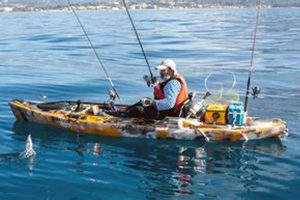
Specialized headwear designed for anglers in kayaks offers crucial protection from the elements, especially sun and water. This gear typically features wide brims for shade, quick-drying materials, and adjustable chin straps or other retention systems to prevent loss in windy conditions or during unexpected movements. Examples include caps constructed from breathable fabrics like nylon or polyester, often treated for water resistance and incorporating ventilation features.
Effective sun protection is paramount for anyone spending extended periods on the water. A brimmed head covering shields the face, ears, and neck from harmful ultraviolet rays, reducing the risk of sunburn and long-term skin damage. The retention features of specialized angling headwear also provide practical benefits, ensuring it remains secure in challenging on-the-water conditions. Historically, anglers have adapted various forms of headwear for sun protection, but the evolution of purpose-built designs reflects the increasing specialization of fishing gear and the growing popularity of kayak fishing.
This discussion will explore the key features to consider when selecting appropriate headwear for kayak angling, including material composition, brim design, ventilation, and retention systems. Additional topics will address the integration of other protective elements, such as neck gaiters or polarized lenses, to create a comprehensive system for on-the-water safety and comfort.
Tips for Selecting Appropriate Headwear for Kayak Angling
Choosing appropriate headwear significantly enhances safety and comfort during kayak fishing excursions. Careful consideration of several key factors ensures optimal performance and protection.
Tip 1: Prioritize Sun Protection: Opt for a wide-brimmed design offering substantial shade for the face, ears, and neck. A brim measuring at least 3 inches is recommended. Consider materials with a high UPF (Ultraviolet Protection Factor) rating for enhanced defense against harmful UV rays.
Tip 2: Ensure Secure Fit: Select headwear with an adjustable chin strap or other reliable retention system. This prevents loss in windy conditions or during sudden movements inherent to kayak fishing.
Tip 3: Choose Breathable and Quick-Drying Materials: Look for lightweight, breathable fabrics like nylon or polyester. Quick-drying properties are essential for maintaining comfort, especially in humid climates or after unexpected splashes.
Tip 4: Consider Ventilation: Headwear with mesh panels or ventilation eyelets promotes airflow, reducing heat buildup and enhancing comfort during extended periods on the water.
Tip 5: Evaluate Color and Visibility: Lighter colors reflect sunlight and heat, keeping the head cooler. Bright colors enhance visibility, a crucial safety factor in open water.
Tip 6: Integrate with Other Protective Gear: Consider pairing specialized headwear with a neck gaiter for additional sun and wind protection, and polarized sunglasses to reduce glare and improve underwater visibility.
Proper headwear selection contributes significantly to a safer and more enjoyable kayak fishing experience. Attention to these key factors ensures optimal protection, comfort, and functionality on the water.
By following these guidelines, anglers can focus on the enjoyment of the sport, knowing they are well-equipped to handle the elements.
1. Sun Protection

Sun protection is paramount in kayak fishing, given the prolonged exposure to direct sunlight and reflected glare from the water. Harmful ultraviolet (UV) radiation poses significant risks, including sunburn, premature aging, and skin cancer. A specialized kayak fishing hat serves as a primary defense against these risks. The wide brim, a defining feature of such hats, shields the face, ears, and neck from direct sunlight. This physical barrier significantly reduces UV exposure, mitigating potential harm. Effective sun protection is not merely a matter of comfort; it is a crucial safety precaution for anyone spending extended periods on the water.
The effectiveness of a kayak fishing hat for sun protection hinges on several factors. Brim width is critical; wider brims offer greater coverage and protection. Material composition also plays a role. Tightly woven fabrics provide better UV shielding than loosely woven materials. Some hats incorporate specialized materials or treatments that enhance their UPF (Ultraviolet Protection Factor) rating, further bolstering their protective capabilities. For instance, a hat with a UPF rating of 50 allows only 1/50th of the sun’s UV radiation to reach the skin. Furthermore, dark-colored fabrics generally offer higher UPF ratings compared to lighter colors.
Integrating a kayak fishing hat into a comprehensive sun protection strategy is essential. While the hat provides crucial shielding for the head and neck, other exposed areas require additional protection. Sunscreen with a high SPF rating should be applied liberally to all uncovered skin. Polarized sunglasses further protect the eyes from harmful UV rays and reduce glare, enhancing visibility on the water. Long-sleeved shirts and pants made from UV-protective fabrics offer another layer of defense, especially during extended fishing trips. A holistic approach to sun protection ensures a safe and enjoyable kayak fishing experience.
2. Secure Fit
A secure fit is paramount for kayak fishing headwear, directly impacting functionality and safety. The dynamic nature of kayak fishing, with its inherent movement and potential for unexpected shifts, necessitates headwear that remains firmly in place. Loss of a hat can be more than a mere inconvenience; it can create a safety hazard, particularly in challenging conditions. Obstructed vision during a critical moment, such as navigating through obstacles or landing a fish, poses considerable risks. Moreover, retrieving a lost hat in open water can be difficult and potentially dangerous, diverting attention from essential tasks and increasing the risk of capsizing or other accidents.
Several design features contribute to a secure fit in kayak fishing hats. Adjustable chin straps are a common and effective solution, allowing wearers to customize the fit to their head size and shape. These straps typically utilize a toggle or buckle closure for quick and easy adjustments, even with one hand. Alternative retention systems include drawstrings integrated into the hat’s band, offering a snug fit and added security. Some hats incorporate ear flaps or neck flaps, providing additional anchoring points and preventing the hat from lifting in windy conditions. The choice of retention system often depends on individual preferences and the anticipated fishing conditions. For example, a chin strap might be preferred in calmer waters, while a drawstring system could offer added security in windy or choppy conditions. Furthermore, the material and construction of the hat itself contribute to its overall fit and stability.
Ensuring a secure fit in a kayak fishing hat is a practical consideration with significant safety implications. A well-fitted hat remains in place during dynamic movements, protecting the angler from the elements and preventing vision obstruction. The choice of retention system, whether a chin strap, drawstring, or other design, should be carefully considered based on individual needs and the anticipated fishing environment. Prioritizing a secure fit enhances both safety and enjoyment during kayak fishing excursions.
3. Breathability

Breathability is a critical factor in kayak fishing headwear, directly influencing comfort and performance in warm or humid conditions. Physical exertion inherent to paddling and fishing generates body heat. Combined with high ambient temperatures and humidity, this can lead to overheating and discomfort. A breathable hat allows heat and moisture to escape, promoting ventilation and regulating head temperature. This enhanced comfort enables anglers to focus on the task at hand, rather than contending with discomfort from a hot and sweaty head. Conversely, a non-breathable hat traps heat and moisture, leading to discomfort, reduced concentration, and potentially even heat-related illnesses.
Several factors contribute to breathability in kayak fishing hats. Material selection is paramount. Synthetic fabrics like nylon and polyester are inherently more breathable than heavier materials like cotton. These fabrics allow air to circulate freely, promoting ventilation and evaporative cooling. Construction methods further influence breathability. Mesh panels incorporated into the hat’s crown or sides significantly enhance airflow. Ventilation eyelets, strategically placed around the hat, also promote ventilation. The combination of material choice and construction techniques determines a hat’s overall breathability. For example, a nylon hat with mesh panels offers superior breathability compared to a cotton hat with no ventilation features. Similarly, a hat with strategically placed ventilation eyelets will outperform a hat with a solid crown, even if both are made from the same breathable material.
Prioritizing breathability in a kayak fishing hat significantly contributes to on-the-water comfort and performance. Selecting a hat constructed from breathable materials and incorporating ventilation features allows for effective heat regulation, preventing overheating and discomfort. This focus on breathability enables anglers to maintain focus and enjoy their fishing experience, even in challenging weather conditions. The practical significance of breathability should not be underestimated; it is a crucial factor in optimizing performance and overall enjoyment during kayak fishing excursions.
4. Water Resistance
Water resistance is a crucial attribute in kayak fishing headwear, given the inherent exposure to splashes, spray, and occasional rainfall. Maintaining comfort and functionality in wet conditions hinges on the headwear’s ability to repel water and dry quickly. A water-resistant hat prevents saturation, maintaining its lightweight properties and avoiding discomfort from a soggy, heavy head covering. This characteristic becomes particularly important during extended trips or in inclement weather, where prolonged exposure to moisture is likely.
- Material Composition
The choice of material significantly influences a hat’s water resistance. Synthetic fabrics, such as nylon and polyester, are inherently water-repellent, shedding water more effectively than natural fibers like cotton. These synthetic materials also dry quickly, further enhancing comfort and functionality in wet conditions. Tightly woven fabrics offer greater water resistance compared to loosely woven alternatives.
- Water-Repellent Coatings
Many kayak fishing hats feature Durable Water Repellent (DWR) coatings. These specialized treatments enhance the fabric’s ability to shed water, causing droplets to bead and roll off the surface rather than soaking in. DWR coatings significantly improve a hat’s resistance to light rain and splashes, extending its usable lifespan and maintaining its performance in wet environments. However, DWR coatings are not entirely waterproof and may require reapplication after prolonged use or washing.
- Breathability vs. Water Resistance
Balancing water resistance and breathability presents a design challenge. Highly water-resistant materials may compromise breathability, trapping heat and moisture. Effective kayak fishing hats strike a balance between these two crucial properties. Utilizing breathable, water-repellent fabrics, combined with strategically placed ventilation features, optimizes both comfort and performance in various weather conditions.
- Maintenance and Care
Maintaining water resistance requires proper care. Frequent washing or harsh detergents can degrade DWR coatings. Following manufacturer’s instructions for cleaning and care helps preserve the hat’s water-repellent properties over time. Reapplying DWR treatments periodically can restore water resistance in older hats.
The level of water resistance required in a kayak fishing hat depends on the anticipated fishing conditions. For occasional light rain or splashes, a hat with a DWR coating and breathable fabric may suffice. However, for prolonged exposure to heavy rain or significant spray, a fully waterproof hat, potentially incorporating a waterproof membrane, may be necessary. Careful consideration of these factors ensures optimal performance and comfort during kayak fishing excursions.
5. Visibility

Visibility plays a crucial role in kayak fishing safety, impacting both angler safety and interactions with other vessels. Brightly colored headwear enhances angler visibility, reducing the risk of collisions with other boats, particularly in low-light conditions or congested waterways. This heightened visibility allows other boaters to identify and navigate around kayak anglers more easily, minimizing potential accidents. Conversely, low visibility, especially when wearing dark or camouflaged clothing, increases the risk of collisions and other safety hazards. For instance, a brightly colored orange or yellow hat significantly improves visibility compared to a dark green or blue hat, particularly in overcast conditions or near dawn and dusk.
Beyond collision avoidance, enhanced visibility aids in locating anglers in distress. Should an angler capsize or require assistance, a brightly colored hat serves as a readily identifiable marker, facilitating search and rescue efforts. This visibility factor can be critical in emergency situations, particularly in open water or remote locations. Furthermore, brightly colored hats can assist fellow anglers in maintaining visual contact within a group, especially when navigating through challenging or unfamiliar waters. This visual contact enhances group cohesion and safety, allowing anglers to monitor each other’s positions and respond quickly in case of unexpected events.
The practical significance of visibility in kayak fishing underscores the importance of selecting appropriate headwear. Bright colors, such as neon orange, yellow, or lime green, significantly improve visibility compared to darker or neutral tones. Incorporating reflective elements, such as strips or patches, further enhances visibility in low-light conditions. Considering visibility when choosing kayak fishing apparel, including hats, contributes significantly to overall safety on the water. This proactive approach to visibility enhances not only individual safety but also contributes to a safer environment for all water users.
Frequently Asked Questions
Addressing common inquiries regarding specialized headwear for kayak angling provides clarity for informed purchasing decisions.
Question 1: What are the key features to prioritize when selecting a kayak fishing hat?
Prioritize sun protection (wide brim, high UPF rating), secure fit (chin strap, drawstring), breathability (mesh panels, ventilation eyelets), water resistance (DWR coating), and visibility (bright colors, reflective elements).
Question 2: How does a kayak fishing hat differ from a standard baseball cap?
Key differences include brim width (wider for greater sun protection), retention systems (chin straps, drawstrings for secure fit), material composition (breathable, quick-drying fabrics), and design features (ventilation, water resistance). These specialized features cater specifically to the demands of kayak angling.
Question 3: Are all kayak fishing hats waterproof?
Not all kayak fishing hats are fully waterproof. Many feature water-repellent coatings (DWR) to shed light rain and spray. Fully waterproof hats typically incorporate a waterproof membrane but may compromise breathability.
Question 4: What brim size is recommended for optimal sun protection?
A brim measuring at least 3 inches is generally recommended for adequate sun protection, effectively shading the face, ears, and neck.
Question 5: How can one maintain the water resistance of a kayak fishing hat?
Following manufacturer’s care instructions is crucial. Avoid frequent washing and harsh detergents, which can degrade water-repellent coatings. Reapplying DWR treatments periodically can restore water resistance.
Question 6: Why are bright colors recommended for kayak fishing hats?
Bright colors significantly enhance visibility, reducing the risk of collisions with other vessels and aiding in locating anglers in distress. High visibility contributes to overall safety on the water.
Understanding these key aspects facilitates informed decisions regarding appropriate headwear for kayak fishing, optimizing both comfort and safety.
The next section delves further into specific hat recommendations and reviews, categorized by different fishing styles and budgets.
Conclusion
Specialized headwear designed for kayak angling provides essential protection and enhances on-the-water experiences. Key considerations encompass sun protection through wide brims and high UPF ratings, secure fit via chin straps or drawstrings, breathability facilitated by mesh panels and ventilation, water resistance achieved through DWR coatings, and enhanced visibility via bright colors and reflective elements. Understanding these features enables informed decisions tailored to individual needs and fishing conditions.
Prioritizing appropriate headwear contributes significantly to angler safety and comfort. Investing in quality, purpose-built designs allows for a more enjoyable and productive time on the water, enabling anglers to focus on the sport with enhanced protection from the elements. This focus on specialized gear reflects a broader trend in kayak fishing towards enhanced safety, performance, and overall enjoyment.