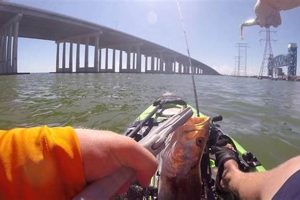
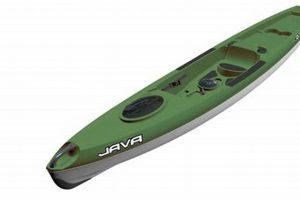
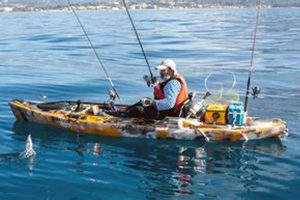
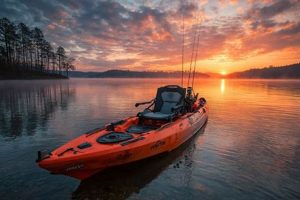
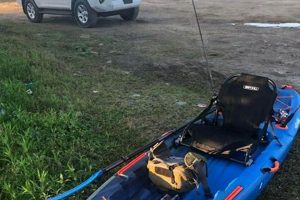
Small, maneuverable watercraft designed specifically for angling in flowing waters represent a specialized subset of recreational kayaks. These vessels typically feature open decks for easy casting, specialized storage for rods and tackle, and stability enhancements for navigating currents and shallows. Often, they also incorporate features like anchor trolleys, rod holders, and comfortable seating designed for extended periods on the water. A common example is the sit-on-top style, favored for its self-bailing properties and ease of entry and exit.
The increasing popularity of this type of specialized boat reflects a growing interest in blending outdoor recreation with a focused angling experience. Their compact size allows access to smaller tributaries and protected areas often unreachable by larger motorized boats. Additionally, the quiet operation inherent in paddle-powered craft provides an advantage in stealthily approaching fish. Historically, anglers have utilized various watercraft for river fishing, ranging from canoes to specialized jon boats. However, the modern evolution of these specific watercraft provides a unique combination of portability, stability, and fishability tailored to the demands of river environments.
The following sections delve deeper into the key features, selection criteria, and essential equipment associated with this rewarding pursuit. Topics will cover hull design, material considerations, propulsion options, and safety precautions specific to river environments. Further discussion will address the importance of proper outfitting, responsible angling practices, and the environmental considerations relevant to navigating and fishing in river ecosystems.
River Fishing Kayak Tips
Effective river fishing from a kayak requires careful planning and execution. These tips offer guidance for a safe and productive experience.
Tip 1: Understand River Dynamics: Current speed, depth fluctuations, and potential obstacles like rocks and submerged logs necessitate careful route planning. Consulting river maps and flow rate information is crucial before embarking.
Tip 2: Prioritize Stability: Wider, flatter-bottomed hulls generally offer greater stability in river currents compared to narrower, more performance-oriented designs. Consider the anticipated water conditions when selecting a kayak.
Tip 3: Master Basic Paddle Strokes: Efficient maneuvering in currents requires proficiency in forward, reverse, and sweep strokes. Practice in calm water before venturing into moving currents.
Tip 4: Employ Proper Anchoring Techniques: Utilizing a dedicated anchor trolley system allows controlled positioning within the current. Deploying the anchor from the bow or stern facilitates targeted fishing in specific areas.
Tip 5: Organize Tackle Strategically: Easy access to essential tackle is paramount. Utilize readily accessible storage compartments and consider employing a tackle tray or box designed for kayak fishing.
Tip 6: Dress Appropriately and Be Prepared for Changes in Weather: River conditions can change rapidly. Dressing in layers and carrying appropriate rain gear or sun protection is essential for comfort and safety.
Tip 7: Prioritize Safety Equipment: Wearing a personal flotation device (PFD) is paramount. Carrying a whistle, first-aid kit, and communication device enhances safety preparedness.
Implementing these strategies enhances angler safety and maximizes the potential for a successful fishing trip. Adherence to these guidelines promotes responsible enjoyment of river environments.
By considering these tips and implementing appropriate techniques, anglers can confidently navigate river systems and enjoy a rewarding fishing experience. The following section offers concluding remarks and reinforces the importance of responsible kayak fishing practices.
1. Stability

Stability represents a critical performance characteristic in river fishing kayaks, directly influencing angler safety and fishing effectiveness. Inherent instability necessitates constant adjustments and corrections, diverting focus from fishing and increasing the risk of capsizing, especially in moving water. A stable platform, conversely, allows anglers to focus on casting, retrieving, and landing fish, enhancing both enjoyment and success. The kayak’s inherent stability derives from hull design, width, and length. Wider, flatter hulls generally offer greater primary stability (resistance to initial tipping), while longer kayaks with defined chines (edges where the hull sides meet the bottom) enhance secondary stability (resistance to further tipping once leaned). For instance, a wider, flatter-bottomed kayak provides a more stable platform for standing casts in slow-moving rivers, whereas a longer, narrower kayak with pronounced chines offers better stability in rougher water and faster currents.
Several factors beyond hull design influence stability. Weight distribution plays a significant role; even weight distribution, both within the kayak and relative to the angler’s center of gravity, promotes optimal stability. High seating positions raise the center of gravity, potentially decreasing stability. External factors, such as wind and current, also impact stability. Strong winds can catch exposed surfaces, creating instability. River currents, particularly in combination with obstacles or uneven riverbeds, can destabilize a kayak. Understanding these influences allows anglers to make informed decisions regarding kayak selection, loading, and on-water techniques. Consider an angler fishing from a sit-on-top kayak in windy conditions; lowering the angler’s center of gravity by sitting closer to the waterline enhances stability.
Prioritizing stability significantly improves the river fishing experience. Enhanced stability promotes confident casting and hook setting, efficient fish fighting, and safe navigation through challenging river environments. While speed and maneuverability remain important considerations, stability serves as a foundational element for overall performance and safety. Neglecting stability compromises both fishing success and angler safety, potentially leading to capsizing, equipment loss, or injury. Therefore, carefully evaluating stability characteristics when selecting a river fishing kayak constitutes a crucial step toward a safe and rewarding angling experience.
2. Maneuverability

Maneuverability in river fishing kayaks represents a critical performance attribute, directly impacting an angler’s ability to navigate dynamic currents, access secluded fishing spots, and respond effectively to changing river conditions. A highly maneuverable kayak empowers anglers to precisely position themselves for optimal casting angles, negotiate tight bends and shallow areas, and avoid obstacles such as rocks, submerged logs, and overhanging branches. This agility translates to increased fishing opportunities and enhanced safety in challenging river environments. Consider a scenario where an angler needs to quickly maneuver around a submerged log in swift current; a highly maneuverable kayak allows for rapid course correction, preventing a collision and potential capsize.
Several design elements contribute to a kayak’s maneuverability. Shorter kayaks generally exhibit greater responsiveness to paddle input, facilitating quick turns and adjustments. A kayak’s hull design also plays a crucial role. Rocker, the curvature of the hull from bow to stern, influences turning performance. Kayaks with moderate rocker turn more easily, while those with less rocker track straighter. The shape of the hull, particularly the presence of a defined keel or tracking channels, affects directional stability. A prominent keel enhances tracking in a straight line but can reduce turning agility. Conversely, a flatter hull with minimal keel or tracking channels promotes maneuverability but may require more effort to maintain a straight course. For example, a shorter kayak with moderate rocker and a flatter hull excels in navigating tight, twisting streams, while a longer kayak with minimal rocker and a defined keel performs better in open water with consistent currents.
Understanding the relationship between kayak design and maneuverability enables informed decision-making during kayak selection. Anglers frequently fishing narrow, winding streams with numerous obstacles benefit from highly maneuverable kayaks, prioritizing turning agility over straight-line tracking. Conversely, those fishing larger rivers or open water with fewer obstacles might prioritize tracking and speed, accepting slightly reduced maneuverability. Balancing maneuverability with other performance characteristics, such as stability and speed, based on anticipated fishing conditions optimizes the angling experience. The choice between maneuverability and tracking often involves a trade-off, but carefully considering the intended fishing environment allows anglers to select the most suitable kayak for their needs.
3. Storage Capacity

Adequate storage capacity represents a critical factor in river fishing kayak selection, directly influencing angler efficiency and overall fishing success. River fishing often requires carrying a diverse array of gear, including tackle boxes, rods, reels, safety equipment, and personal items. Insufficient storage leads to cluttered decks, hindering casting, increasing the risk of equipment loss, and compromising safety. Conversely, ample and well-designed storage facilitates organized tackle management, efficient gear retrieval, and an uncluttered fishing platform, promoting a more focused and productive angling experience. For instance, a dedicated compartment for a tackle box keeps lures and tools organized and readily accessible, while rod holders secure rods during transit and while fighting fish. Consider an angler navigating a challenging rapid; readily accessible safety gear, like a throw rope stored in a dedicated compartment, becomes crucial in an emergency.
Several storage solutions cater specifically to the demands of river fishing. Recessed compartments offer protected storage for sensitive items like electronics and wallets. Bungee cord systems secure larger items on deck, ensuring quick access. Dedicated rod holders, either flush-mounted or adjustable, keep rods organized and prevent tangling. Tank wells, located at the bow or stern, accommodate larger items such as dry bags or coolers. The strategic placement and design of these storage features significantly impact their usability. Easily accessible compartments located within reach of the seated angler maximize efficiency, while secure closures prevent water ingress and gear loss. For example, a tank well with a secure hatch allows storage of a cooler and dry bag, keeping food and extra clothing dry and protected.
Evaluating storage capacity involves considering both quantity and accessibility. While maximum storage volume might seem appealing, prioritizing strategically located and easily accessible compartments often proves more practical. Anglers should assess their typical gear load and select a kayak with appropriate storage solutions for their specific needs. Prioritizing well-designed storage ultimately contributes to a more organized, efficient, and enjoyable river fishing experience. Neglecting this aspect can lead to frustration, wasted time searching for gear, and compromised safety. Therefore, careful consideration of storage capacity during kayak selection represents a crucial step toward maximizing fishing success and overall enjoyment on the water.
4. Comfort
Comfort plays a crucial role in the overall experience of river fishing from a kayak. Extended periods sitting in a confined space, often under varying weather conditions, necessitate a comfortable seating system. An uncomfortable seat can lead to fatigue, back pain, and a diminished focus on fishing, potentially shortening trips and reducing overall enjoyment. Conversely, a comfortable and supportive seat allows anglers to remain focused on the task at hand, maximizing fishing time and enhancing the overall experience. Consider a multi-day fishing trip; a comfortable, adjustable seat with adequate back support becomes essential for maintaining physical well-being and enjoying the extended time on the water. This can directly impact the angler’s ability to effectively fish throughout the duration of the trip.
Several factors contribute to seating comfort. Adjustable features, such as backrest angle and seat height, allow anglers to customize the seating position to their individual preferences and physical characteristics. Padding and breathable materials enhance comfort, especially during long hours on the water. The seat’s construction and materials also influence its durability and resistance to wear and tear from exposure to the elements. Higher-end kayaks often feature seats constructed from durable, weather-resistant materials with multiple adjustment points, allowing for a personalized and comfortable fit. For example, a seat with adjustable lumbar support can significantly reduce back strain during long paddling sessions, while breathable mesh fabric enhances comfort in warm weather. The practical implication of this is that anglers can remain comfortable and focused on fishing for longer durations, leading to a more productive and enjoyable experience.
Beyond the seat itself, other comfort-related features contribute to a positive river fishing experience. Footrests or adjustable foot braces provide essential support and leverage for paddling and maneuvering. Adequate legroom within the cockpit allows for comfortable positioning and reduces cramping during extended trips. The layout of the cockpit and deck, including the placement of hatches and rod holders, influences ease of movement and access to essential gear. A well-designed cockpit promotes efficient and comfortable operation, minimizing fatigue and maximizing fishing time. While comfort may sometimes be overlooked in favor of other performance characteristics, it represents a crucial element influencing the overall enjoyment and success of river fishing from a kayak. Prioritizing comfort enhances angler endurance, focus, and overall satisfaction, contributing significantly to a positive and productive on-the-water experience. Failing to consider comfort can lead to a shortened and less enjoyable outing, hindering the ability to fully appreciate the sport of river fishing.
5. Durability
Durability stands as a paramount consideration in river fishing kayaks, given the demanding environments these specialized vessels encounter. Rocks, submerged logs, and abrasive sandbars present constant threats to hull integrity. A durable kayak withstands these rigors, ensuring longevity and safe navigation in challenging river conditions. This translates to fewer repairs, reduced replacement costs, and enhanced safety on the water. This section explores key facets of durability in river fishing kayaks, highlighting their importance for a reliable and long-lasting vessel.
- Material Selection
Kayak hull materials directly influence durability. High-density polyethylene (HDPE) offers excellent impact resistance and abrasion resistance, making it a popular choice for river kayaks. Thermoformed ABS and composite materials like fiberglass and carbon fiber provide enhanced stiffness and lighter weight, but often at a higher cost and potentially reduced impact resistance. Choosing the right material depends on the specific river environments encountered and the angler’s budget. For example, an angler frequently navigating rocky rivers would prioritize the impact resistance of HDPE, while someone paddling primarily on calm rivers might opt for the lighter weight of a composite kayak.
- Construction Quality
Construction methods impact a kayak’s ability to withstand stress and strain. Robust hull construction, reinforced seams, and well-secured fittings contribute to overall durability. Properly installed bulkheads and hatches prevent water ingress, protecting internal components and maintaining buoyancy. Examining the quality of welds, rivets, and other joining methods provides insights into a kayak’s structural integrity. A kayak with tightly sealed seams and reinforced stress points will better withstand the rigors of river environments compared to one with poorly executed construction. Inspecting these details during kayak selection can prevent costly repairs and ensure long-term performance.
- UV Resistance
Exposure to sunlight degrades many plastics over time, leading to fading, cracking, and reduced strength. UV-resistant coatings and additives incorporated into the kayak’s construction mitigate these effects, preserving the hull’s integrity and extending its lifespan. Storing the kayak out of direct sunlight when not in use further protects against UV damage. This proactive approach preserves the kayak’s appearance and structural integrity over time, maximizing its value and lifespan. The practical implication is a kayak that maintains its color and strength, resisting the damaging effects of prolonged sun exposure.
- Maintenance and Care
Proper maintenance practices contribute significantly to a kayak’s longevity. Regular cleaning removes dirt, grime, and abrasive particles that can scratch and weaken the hull. Promptly addressing minor damage, such as scratches or cracks, prevents further deterioration. Storing the kayak properly, preferably out of direct sunlight and extreme temperatures, further protects it from damage. These practices, though seemingly simple, significantly extend the lifespan of a river fishing kayak, preserving its value and performance over time. For example, rinsing the kayak after each use removes sand and grit, preventing abrasion and preserving the hull’s finish.
By carefully considering these facets of durability, anglers can select river fishing kayaks capable of withstanding the demanding conditions inherent in river environments. Prioritizing durability ensures a safe and reliable vessel, maximizing time on the water and minimizing the need for repairs or replacements. This investment in a durable kayak ultimately enhances the overall fishing experience, allowing anglers to focus on their passion rather than equipment concerns. The long-term benefits of a durable kayak extend beyond mere cost savings; they translate to increased confidence on the water, enhanced safety, and more enjoyable fishing trips for years to come.
Frequently Asked Questions
This section addresses common inquiries regarding river fishing kayaks, providing concise and informative responses to assist in informed decision-making.
Question 1: What are the key differences between river fishing kayaks and recreational kayaks?
River fishing kayaks prioritize stability, maneuverability, and specialized features like rod holders and tackle storage. Recreational kayaks generally prioritize speed, tracking, and comfort for general paddling.
Question 2: How does one choose the appropriate length and width for a river fishing kayak?
Shorter kayaks offer enhanced maneuverability in tight spaces, while longer kayaks provide better tracking in open water. Wider kayaks offer increased stability, while narrower kayaks enhance speed.
Question 3: What safety precautions should be taken when fishing from a kayak in a river?
Essential safety measures include wearing a personal flotation device (PFD), carrying a whistle, informing someone of the planned route and estimated return time, and checking weather conditions before embarking.
Question 4: What are the advantages of sit-on-top kayaks for river fishing?
Sit-on-top kayaks offer inherent self-bailing capabilities, ease of entry and exit, and often feature open decks conducive to casting and retrieving.
Question 5: How does one transport a river fishing kayak?
Roof racks represent a common transportation method. Securing the kayak with appropriate straps and tie-down points ensures safe and stable transport.
Question 6: What essential gear should be carried on a river fishing kayak trip?
Essential gear includes appropriate fishing tackle, a paddle, a PFD, a first-aid kit, communication devices, navigation tools, and appropriate clothing for prevailing weather conditions.
Understanding these key aspects of river fishing kayaks facilitates informed choices regarding selection, usage, and safety precautions. Addressing these common questions empowers individuals to pursue river fishing with enhanced confidence and preparedness.
The following section delves further into specific kayak models and accessories suitable for diverse river environments.
Conclusion
Specialized watercraft designed for river fishing represent a significant advancement in angling technology, offering enhanced access to diverse river environments. Careful consideration of stability, maneuverability, storage, comfort, and durability ensures appropriate vessel selection for individual angler needs and targeted fishing locations. Understanding river dynamics, employing appropriate paddling techniques, and prioritizing safety precautions remain paramount for a successful and safe river fishing experience.
The continued evolution of these specialized vessels promises further enhancements in performance, comfort, and angler efficiency. Responsible use and respect for river ecosystems remain crucial for preserving these valuable natural resources and ensuring the sustainability of river fishing for future generations. Continued exploration of river environments with these specialized kayaks offers significant potential for enriching angling experiences and fostering a deeper appreciation for the natural world.