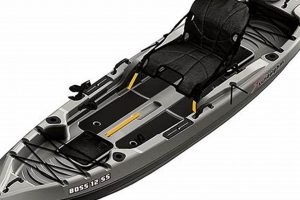
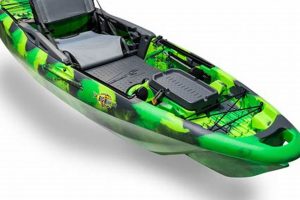
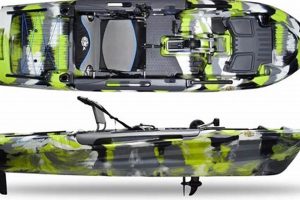
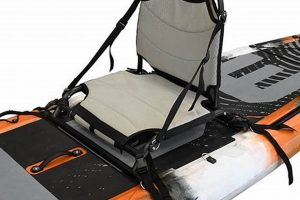
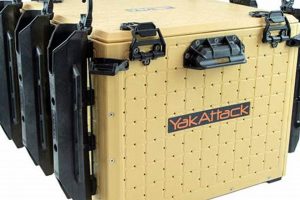
Small, human-powered watercraft designed for angling offer diverse options for accessing various fishing environments. These range from compact, maneuverable vessels ideal for navigating shallow rivers and creeks to larger, more stable platforms suited for open water or offshore excursions. Purpose-built features often include rod holders, tackle storage, and livewells, enhancing the angling experience.
The popularity of these specialized craft stems from their affordability, portability, and stealth. They provide an intimate connection with the water, allowing anglers to reach secluded spots often inaccessible to larger motorized boats. Historically, small boats have been used for fishing for millennia, but the modern iterations with specialized features for angling have emerged more recently in response to growing demand for personalized and eco-friendly fishing experiences. This increasing interest contributes to the ongoing development of innovative designs and materials.
This discussion will further explore the nuances of selecting the appropriate craft for specific fishing styles, water conditions, and individual needs. Topics covered will include design variations, propulsion methods, essential equipment, safety considerations, and the environmental impact of these vessels.
Tips for Choosing and Using Small Fishing Vessels
Selecting and utilizing a small watercraft for angling requires careful consideration of various factors to ensure safety, efficiency, and enjoyment. The following tips offer guidance for making informed decisions and maximizing the angling experience.
Tip 1: Match the Vessel to the Fishing Environment: Consider the target species, water conditions (calm lakes versus swift rivers), and typical fishing distance. Smaller, more maneuverable options excel in confined areas, while larger, more stable designs are preferred for open water.
Tip 2: Prioritize Stability and Capacity: Assess the desired level of stability, especially when standing to cast or land fish. Ensure adequate weight capacity for carrying gear, equipment, and potential catches.
Tip 3: Evaluate Propulsion Systems: Paddle propulsion offers quiet, eco-friendly operation, suitable for calm waters and shorter distances. Pedal-powered systems provide increased speed and range while maintaining stealth. Small motors offer greater range and power for challenging conditions.
Tip 4: Invest in Essential Safety Equipment: Personal flotation devices are paramount. Navigation lights, a whistle, and a first-aid kit are crucial, especially in low-light conditions or open water. A communication device (e.g., VHF radio or cell phone) can prove vital in emergencies.
Tip 5: Organize Tackle and Gear Efficiently: Optimize storage solutions within the vessel for quick and easy access to tackle, tools, and other essentials. Consider rod holders, tackle boxes, and dry storage compartments.
Tip 6: Practice Launching and Retrieval Techniques: Familiarize oneself with proper launching and retrieval procedures to avoid damage to the vessel or personal injury. This is especially important in challenging environments such as rocky shorelines or swift currents.
Tip 7: Respect the Environment: Adhere to local fishing regulations and practice responsible angling. Minimize environmental impact by properly disposing of waste and avoiding disturbance to wildlife and their habitats.
By considering these factors and implementing the provided guidance, anglers can enhance their fishing experience while ensuring safety and preserving the natural environment.
This information provides a foundation for informed decision-making. Further research and practical experience are encouraged to develop a comprehensive understanding of small vessel fishing.
1. Stability

Stability forms a critical foundation for successful angling from small watercraft. A stable platform allows anglers to cast effectively, fight fish securely, and perform essential tasks such as landing catches, changing tackle, and navigating varying water conditions. Lack of stability compromises safety and effectiveness, potentially leading to capsizing, lost gear, or missed opportunities. A stable vessel provides a confident base for anglers to focus on fishing rather than managing precarious balance. For example, an angler standing to cast in a stable kayak or boat has a greater range of motion and leverage, leading to more accurate casts and better hooksets. Conversely, in an unstable vessel, the angler must prioritize balance, hindering fishing performance and potentially creating a dangerous situation.
Several factors influence vessel stability. Hull design plays a significant role, with wider, flatter hulls generally offering greater initial stability than narrower, deeper designs. Weight distribution within the craft also impacts stability. Properly distributing gear and maintaining a low center of gravity significantly enhances stability. Environmental factors, such as wind and waves, also influence stability. Anglers must consider these factors and adjust their position and behavior accordingly. For instance, shifting weight to the leeward side in strong winds helps counteract the force and maintain balance. Similarly, avoiding sudden movements in choppy water helps prevent capsizing.
Understanding the factors influencing stability empowers anglers to make informed decisions regarding vessel selection and operation. Choosing a craft with appropriate stability characteristics for the intended fishing environment and maintaining proper weight distribution are crucial for a safe and successful angling experience. Recognizing the impact of external factors, such as wind and waves, allows anglers to adapt their techniques and maintain balance in dynamic conditions, ultimately optimizing their fishing performance while prioritizing safety. Failure to appreciate the importance of stability can lead to negative outcomes ranging from inconvenience and frustration to potentially dangerous situations.
2. Maneuverability

Maneuverability represents a critical performance attribute for small fishing watercraft, directly influencing access to prime fishing locations and overall angling effectiveness. The ability to navigate tight spaces, negotiate obstacles, and precisely position the vessel optimizes fishing opportunities and enhances angler success. Restricted maneuverability limits access to shallow waters, complex shorelines, and areas with dense vegetation or submerged structuresoften preferred habitats for target species. Consequently, understanding the factors affecting maneuverability enables informed decisions regarding vessel selection and operation.
- Hull Design and Length
Hull design significantly impacts maneuverability. Shorter hulls with a shallower draft generally turn more quickly and require less effort to navigate tight spaces. Longer, deeper hulls offer greater tracking and stability in open water but sacrifice maneuverability in confined environments. For example, a short, flat-bottomed kayak excels in navigating shallow creeks and maneuvering around fallen trees, while a longer, V-hulled boat is better suited for open lakes or coastal waters.
- Propulsion System
The chosen propulsion system directly influences maneuverability. Paddle propulsion offers excellent control and precise positioning, especially in tight quarters. Pedal drives provide increased speed and range but may sacrifice some maneuverability compared to paddles. Motorized propulsion offers greater power for navigating currents and covering larger distances but can limit access to very shallow areas or environmentally sensitive zones.
- Water Conditions
Prevailing water conditions, such as current, wind, and waves, significantly affect maneuverability. Strong currents require greater power and precise control to maintain desired positioning. Wind and waves can impact tracking and necessitate adjustments in steering and propulsion. A kayak’s low profile offers advantages in windy conditions compared to a higher-profile boat, which is more susceptible to wind drift.
- Vessel Load
The weight and distribution of gear within the vessel influence maneuverability. Excessive weight or uneven loading can reduce responsiveness and make precise maneuvering more challenging. Proper weight distribution, with heavier items positioned low and centrally, enhances stability and improves maneuverability. Overloading a small vessel can compromise both stability and maneuverability, making it difficult to control and potentially dangerous.
These factors collectively determine a vessel’s maneuverability. Selecting a craft with appropriate characteristics for the intended fishing environment and operational style is essential. Balancing maneuverability with other performance attributes, such as stability and load capacity, requires careful consideration. Matching the vessel to the specific fishing needs ensures optimal performance and enhances angling success.
3. Propulsion
Propulsion systems represent a crucial aspect of fishing kayak or boat design, significantly impacting performance, accessibility, and overall angling experience. The choice of propulsion directly influences speed, range, maneuverability, and stealth, impacting the types of fishing environments accessible and the effectiveness of various angling techniques. Selecting an appropriate propulsion system requires careful consideration of fishing style, target species, water conditions, and personal preferences. This discussion will explore the various facets of propulsion systems for small fishing watercraft.
- Paddle Propulsion
Paddle propulsion represents the traditional and most basic method for small watercraft. It offers excellent maneuverability, precise control, and inherent stealth, ideal for navigating tight spaces, stalking fish in shallow water, and accessing areas inaccessible to motorized vessels. Paddling provides a quiet, eco-friendly experience and allows anglers to maintain a close connection with the water. However, paddling can be physically demanding and limits range, particularly in challenging conditions such as strong currents or wind. Examples include traditional kayak paddles, canoe paddles, and stand-up paddleboard paddles. Each paddle type offers variations in blade shape, length, and material, influencing paddling efficiency and user comfort.
- Pedal Propulsion
Pedal-powered systems offer a compelling alternative to paddling, utilizing leg power for increased speed, efficiency, and reduced upper body fatigue. Pedal drives typically employ either propeller-based or fin-based systems, each offering distinct advantages and disadvantages. Propeller systems generate greater speed, while fin systems excel in shallow water and offer improved maneuverability over submerged obstacles. Pedal propulsion enables anglers to cover greater distances with less effort, freeing their hands for fishing. However, pedal drives can be more complex and expensive than paddle systems, and certain designs may limit maneuverability in very shallow or heavily vegetated areas.
- Motorized Propulsion
Motorized propulsion systems provide the greatest speed and range, allowing anglers to access distant fishing grounds and navigate challenging currents or open water conditions. Outboard motors, electric trolling motors, and even gas-powered engines are commonly used. While offering significant advantages in terms of range and power, motorized propulsion introduces noise and potential environmental impact. Additionally, fuel costs, maintenance requirements, and regulatory restrictions are important considerations. Specific examples include small outboard motors for bass boats, electric trolling motors for kayaks, and mud motors for navigating extremely shallow or marshy environments.
- Sail Propulsion
While less common for dedicated fishing vessels, sail propulsion offers a unique and environmentally friendly alternative, harnessing wind power for efficient travel. Sail-powered kayaks and small catamarans are available, providing a quiet and sustainable mode of transportation. However, sail propulsion is highly dependent on wind conditions and requires specialized knowledge and skills. Navigating against the wind or in calm conditions can be challenging. Sail propulsion is best suited for specific environments and experienced users comfortable with sailing principles.
The optimal propulsion system for a fishing kayak or boat depends on the specific fishing requirements and priorities. Balancing factors such as speed, range, maneuverability, stealth, cost, and environmental impact allows anglers to select the most suitable propulsion method for their needs. Understanding the nuances of each system empowers informed decision-making and enhances overall angling experience.
4. Storage Capacity

Storage capacity represents a critical factor influencing the functionality and practicality of small fishing watercraft. Adequate storage directly impacts an angler’s ability to carry essential gear, manage tackle effectively, and transport catches comfortably. Insufficient storage can lead to a disorganized and inefficient fishing experience, potentially compromising safety and reducing overall success. Conversely, well-designed storage solutions enhance organization, improve access to essential equipment, and contribute to a more productive and enjoyable angling outing. For instance, a kayak angler targeting multiple species requires sufficient storage for various rods, reels, lures, and tackle boxes, whereas a minimalist fly fisher might prioritize a smaller, lighter craft with less storage.
The type and configuration of storage solutions vary considerably among different watercraft designs. Dedicated compartments for tackle boxes, rod holders, dry storage for electronics and personal items, and integrated livewells for keeping bait or catches alive are common features. The size, location, and accessibility of these storage areas significantly influence their practicality. A well-designed kayak might feature a recessed tackle storage area within easy reach of the seated angler, while a larger boat might offer lockable storage compartments for securing valuable equipment. Evaluating storage capacity requires careful consideration of the intended fishing style, target species, and anticipated gear requirements. A bass angler frequently changing lures benefits from readily accessible storage, while a deep-sea angler might prioritize larger storage compartments for heavier tackle and potential large catches.
Optimizing storage capacity contributes significantly to efficient angling practices. Organized storage allows for quick and easy access to necessary equipment, minimizing time spent searching for specific items. This efficiency allows anglers to focus on fishing, maximizing time on the water and increasing the likelihood of success. Furthermore, secure storage protects valuable equipment from damage and loss, particularly in challenging conditions. Dry storage compartments safeguard electronics and personal items from water damage, while secure rod holders prevent rods from being lost overboard. Understanding the importance of storage capacity and selecting a watercraft with appropriate storage solutions enhances the overall angling experience, promoting organization, efficiency, and peace of mind.
5. Target Fishing Environment
The target fishing environment dictates the optimal choice of small fishing watercraft. Specific characteristics of the environment, such as water type, depth, current, and prevalent weather conditions, necessitate careful consideration when selecting a vessel. A mismatch between vessel and environment can compromise safety, limit access to fishing grounds, and negatively impact overall angling success. For instance, attempting to navigate a shallow, fast-flowing river in a large, deep-hulled boat proves impractical and potentially dangerous, whereas a compact, maneuverable kayak excels in such conditions. Conversely, venturing into open ocean waters in a small, unstable kayak poses significant safety risks, while a larger, more stable boat designed for offshore conditions provides the necessary security and seaworthiness. Therefore, aligning vessel choice with target environment represents a fundamental principle of responsible and successful angling.
Several key environmental factors influence vessel suitability. Water depth significantly impacts hull design considerations. Shallow-water environments necessitate shallow-draft vessels, allowing access to areas inaccessible to deeper-hulled craft. Current strength and direction influence propulsion choices. Strong currents require powerful propulsion systems, whether paddle, pedal, or motor, to maintain position and navigate effectively. Prevailing weather conditions, particularly wind and waves, impact vessel stability and handling. Open-water environments exposed to significant wind and wave action require stable, seaworthy vessels capable of handling challenging conditions. Protected bays and estuaries, on the other hand, allow for smaller, less stable craft. For example, a stable, self-bailing sit-on-top kayak performs well in surf zones and choppy coastal waters, while a sit-inside kayak, offering greater protection from the elements, might be preferred for calm lakes or slow-moving rivers. Furthermore, the presence of obstacles such as submerged rocks, fallen trees, or dense vegetation necessitates consideration of vessel maneuverability and durability.
Understanding the complex interplay between target fishing environment and vessel characteristics empowers informed decision-making. A careful assessment of environmental factors, combined with a realistic appraisal of personal skills and experience, ensures appropriate vessel selection. This informed approach optimizes angling opportunities, enhances safety, and contributes to a more rewarding and sustainable fishing experience. Failure to consider the target environment can lead to suboptimal performance, increased risk, and potentially negative environmental consequences. Therefore, prioritizing environmental considerations in vessel selection remains crucial for responsible and successful angling.
Frequently Asked Questions
Addressing common inquiries regarding the selection and utilization of small fishing watercraft provides clarity and facilitates informed decision-making. The following frequently asked questions offer practical guidance for prospective anglers.
Question 1: What are the primary advantages of human-powered fishing vessels compared to motorized boats?
Human-powered options offer distinct advantages, including affordability, enhanced stealth, access to shallow or restricted areas, and environmentally friendly operation. These vessels often require less maintenance and eliminate fuel costs, contributing to a more sustainable and accessible angling experience.
Question 2: How does one determine the appropriate size and type of small fishing watercraft?
Appropriate vessel size and type depend on several factors: target species, fishing environment (rivers, lakes, oceans), angler experience, and storage/transportation needs. Larger vessels offer increased stability and capacity but sacrifice maneuverability in tight spaces. Smaller craft excel in maneuverability and portability but may lack stability and storage for extended trips or larger catches.
Question 3: What safety precautions are essential when operating small fishing watercraft?
Essential safety precautions include wearing a personal flotation device, carrying a whistle and communication device (VHF radio, mobile phone), checking weather forecasts before departure, informing someone of planned fishing locations and estimated return time, and adhering to local boating regulations. Carrying a first-aid kit and navigation lights further enhances safety, particularly in low-light conditions or open water.
Question 4: What essential gear and equipment should be carried on small fishing vessels?
Essential gear includes appropriate fishing tackle (rods, reels, lines, lures, bait), appropriate clothing and footwear for prevailing weather conditions, sunscreen, polarized sunglasses, a hat, drinking water, and food. A landing net, pliers, and a knife prove beneficial for handling fish and tackle. Additional specialized gear might include a fish finder, GPS unit, or anchor.
Question 5: How does one maintain and store a small fishing watercraft properly?
Proper maintenance involves rinsing the vessel with fresh water after each use, especially in saltwater environments, inspecting for damage, and addressing any necessary repairs promptly. Storing the craft in a protected location, away from direct sunlight and extreme temperatures, prolongs its lifespan. Specific maintenance procedures vary depending on vessel construction material (e.g., fiberglass, plastic, inflatable).
Question 6: What are the potential environmental impacts of small fishing watercraft, and how can these impacts be minimized?
Potential environmental impacts include disturbing aquatic vegetation, disrupting wildlife habitats, and introducing pollutants (fuel, oil, litter) into the water. Minimizing impact involves adhering to designated launch and retrieval areas, avoiding sensitive habitats, properly disposing of waste, and using environmentally friendly cleaning products and fuels when applicable.
These frequently asked questions provide a starting point for understanding the nuances of fishing from small watercraft. Further research and practical experience enhance angler knowledge and contribute to safe, responsible, and successful angling endeavors.
The next section delves into specific watercraft types, exploring the advantages and disadvantages of each design.
Conclusion
Careful selection of a fishing kayak or boat significantly impacts angling success and overall experience. Factors such as stability, maneuverability, propulsion, storage capacity, and target fishing environment require thorough consideration. Balancing these elements ensures the chosen vessel aligns with individual angler needs and intended fishing style. Understanding the nuances of each characteristic empowers informed decision-making, leading to a safer, more efficient, and ultimately more rewarding time on the water.
The evolving landscape of small fishing watercraft design continues to offer innovative solutions for diverse angling pursuits. As technology advances and angler preferences evolve, the importance of informed decision-making regarding vessel selection remains paramount. A thoughtful approach to choosing a fishing kayak or boat unlocks new opportunities, enhances on-the-water experiences, and fosters a deeper appreciation for the sport of angling.