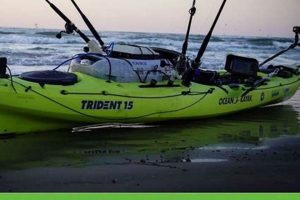
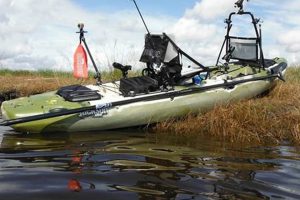
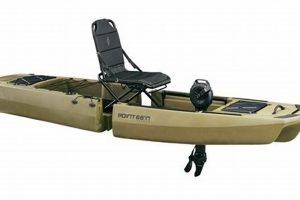
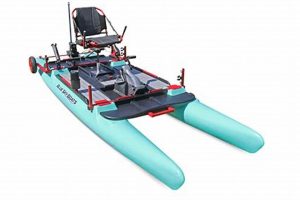
Elevated seating in a fishing kayak refers to a configuration where the seat is positioned higher above the waterline than in traditional kayak designs. This typically involves a specialized seat structure, often adjustable, that lifts the angler for improved visibility, comfort, and easier casting.
An elevated vantage point offers several key advantages for anglers. Improved sightlines facilitate better fish spotting and assessment of water conditions. The higher position also reduces strain on the back and legs, promoting comfort during long hours on the water. Furthermore, a higher seat position can make casting easier and more efficient, especially in situations involving overhead obstructions or when greater leverage is required. Historically, kayak anglers often resorted to makeshift solutions to gain height. The development of purpose-built elevated seating systems reflects a significant advancement in kayak fishing ergonomics and performance.
This article will further explore the various types of elevated kayak seating, their design considerations, and their impact on different fishing styles and environments.
Tips for Selecting Elevated Kayak Seating
Choosing appropriate elevated seating is crucial for maximizing comfort and effectiveness while kayak fishing. Consider these factors when making a selection.
Tip 1: Consider Seat Adjustability: Seats offering multiple adjustment points allow anglers to customize the height, angle, and back support for optimal comfort and fishing posture. Look for features like adjustable straps, levers, or sliding tracks.
Tip 2: Evaluate Seat Material and Construction: Durable, weather-resistant materials are essential for long-lasting performance. Look for UV-resistant fabrics, corrosion-resistant hardware, and robust frame construction. Breathable mesh panels can enhance comfort in warm weather.
Tip 3: Assess Compatibility with Kayak Model: Ensure compatibility between the chosen seat and the kayak model. Check mounting points, dimensions, and weight capacity to guarantee a secure and proper fit.
Tip 4: Factor in Fishing Style and Environment: Different fishing styles and environments may benefit from specific seat features. Anglers fishing in rougher waters might prioritize stability and secure seating, while those sight fishing might prefer a higher seat position.
Tip 5: Test Seat Comfort and Stability: If possible, test the seat’s comfort and stability before purchase. Sit in the kayak with the seat installed and simulate fishing movements to evaluate its support and ergonomics.
Tip 6: Consider Weight Capacity: Ensure the seat can comfortably support the angler’s weight, including gear and clothing. Exceeding the weight capacity could compromise stability and safety.
Tip 7: Think About Additional Features: Some seats offer additional features like built-in storage pouches, rod holders, or accessory mounting points. Consider which features would enhance fishing convenience and efficiency.
Careful consideration of these factors will contribute significantly to on-the-water comfort, efficiency, and overall fishing success. An appropriate seat enhances the kayak fishing experience, allowing for greater focus on the pursuit of targeted species.
By understanding the nuances of elevated seating and applying these tips, anglers can refine their kayak fishing setup and maximize their time on the water.
1. Elevated Sightlines

A primary advantage of high seats in fishing kayaks is the enhanced visibility they provide. Elevated sightlines offer a significant tactical advantage, impacting various aspects of the fishing experience.
- Improved Fish Spotting
A higher vantage point allows anglers to see deeper into the water and over vegetation, significantly improving the ability to spot fish, particularly in clear or shallow water. This is especially beneficial for sight fishing species like redfish or bonefish. Identifying subtle movements and changes in water clarity becomes easier, leading to more successful targeting.
- Better Assessment of Water Conditions
Elevated sightlines enable a wider perspective of the surrounding water, allowing anglers to assess conditions more effectively. Identifying current lines, structure, and depth changes becomes easier. This broader view is invaluable for navigation, strategic positioning, and understanding fish behavior.
- Enhanced Predator Sightings
The improved visibility extends to observing surface activity, allowing for quicker identification of feeding fish, baitfish schools, or predatory behavior. Reacting faster to these visual cues provides a competitive edge, increasing the chances of a successful hookup.
- Safer Navigation
Improved visibility from a high seat facilitates safer navigation, particularly in complex environments like shallow flats, rocky areas, or waters with submerged obstacles. Seeing further ahead allows for better route planning and avoidance of potential hazards.
The improved visibility afforded by a high seat translates directly to increased fishing effectiveness. From spotting fish and understanding water conditions to enhancing safety and reaction time, elevated sightlines contribute significantly to a successful and enjoyable kayak fishing experience.
2. Enhanced Casting

Elevated seating in fishing kayaks demonstrably enhances casting performance. The higher position allows for greater casting leverage and a wider range of motion, particularly for overhead casts. This is particularly advantageous when targeting species under overhanging cover or when navigating tight, vegetated areas. A kayak angler targeting bass in a cypress-lined swamp, for example, benefits significantly from the increased clearance a high seat provides, enabling accurate casts beneath branches without sacrificing line control. The improved casting dynamics afforded by elevated seating translates to greater accuracy, distance, and overall fishing efficiency.
The biomechanics of casting are fundamentally improved by the elevated position. The higher vantage point facilitates a more natural and fluid casting motion, reducing strain on the angler’s shoulders and back. This ergonomic advantage allows for longer fishing sessions without fatigue, contributing to sustained performance throughout the day. Additionally, the improved line management associated with a higher casting angle minimizes tangles and snags, common frustrations in lower seating positions. Consider a fly fisherman targeting trout in a fast-moving river; the elevated seat enables precise placement of delicate flies upstream, maximizing drift and presentation.
In summary, the enhanced casting capabilities afforded by elevated seating in fishing kayaks represent a significant advantage. From increased leverage and range of motion to improved ergonomics and line management, the higher position contributes significantly to casting accuracy, distance, and efficiency. This enhanced control translates directly to increased opportunities for successful hookups and ultimately, a more productive and enjoyable fishing experience. The connection between seat height and casting performance is a critical factor in kayak design and angler comfort, highlighting the importance of selecting appropriate seating for specific fishing styles and environments.
3. Improved Comfort

Comfort is paramount during extended kayak fishing trips. An uncomfortable seating position can lead to fatigue, back pain, and a diminished fishing experience. High seats play a crucial role in enhancing comfort, promoting better posture and reducing physical strain. This allows anglers to focus on fishing rather than discomfort, leading to increased enjoyment and productivity on the water.
- Reduced Lower Back Strain
Traditional, low-slung kayak seats often force anglers into a hunched posture, putting strain on the lower back. Elevated seating promotes a more natural, upright posture, minimizing pressure on the lumbar spine and reducing the risk of back pain. This is particularly beneficial during long hours on the water.
- Improved Leg Circulation
High seats facilitate better leg circulation by reducing pressure points and promoting blood flow. The improved ergonomics minimize numbness and tingling, common issues with lower seating positions. Proper circulation contributes to overall comfort and prevents fatigue, allowing for longer, more productive fishing sessions.
- Easier Entry and Exit
Entering and exiting a kayak can be challenging, especially for those with mobility limitations. High seats simplify this process by reducing the range of motion required. The higher position allows for a more controlled and less strenuous transition, enhancing safety and convenience on the water.
- Customization and Adjustability
Many high seats offer adjustable features, such as backrest angle, seat height, and lumbar support. This customization allows anglers to tailor the seat to their individual body type and preferences, maximizing comfort and support. Adjustable features are particularly important for accommodating different fishing styles and varying water conditions.
The improved comfort offered by high seats in fishing kayaks contributes significantly to an enhanced overall fishing experience. By reducing strain, promoting better posture, and facilitating easier entry and exit, high seats allow anglers to focus on what matters most enjoying their time on the water and pursuing their targeted species. This enhanced comfort translates directly into increased fishing time and overall enjoyment, highlighting the importance of prioritizing ergonomics in kayak fishing setups.
4. Stability Considerations

Elevated seating in fishing kayaks, while offering numerous advantages, introduces important stability considerations. Raising the center of gravity inherently impacts a kayak’s stability, increasing the potential for tipping, particularly in rough water or during dynamic movements like casting and landing fish. Understanding this relationship between seat height and stability is crucial for angler safety and a successful fishing experience. For example, an angler standing to cast in a high-seated kayak on a windy day significantly increases the risk of capsizing compared to a seated position in a lower-profile kayak. Therefore, careful consideration must be given to kayak design, seat selection, and individual angling practices.
Several factors influence stability in high-seat kayaks. Kayak width, hull design, and weight distribution all play significant roles. Wider kayaks generally offer greater initial stability, while specific hull designs, like those with pronounced chines or a flatter bottom, contribute to secondary stabilityresistance to tipping once leaned. Proper weight distribution within the kayak is also essential. Keeping heavier items low and centered enhances stability, counteracting the elevated center of gravity introduced by the higher seating position. Furthermore, anglers must adapt their movements and fishing techniques to maintain balance. Smooth, deliberate actions are preferable to sudden shifts in weight, especially when standing or casting.
Ultimately, choosing a fishing kayak with elevated seating requires careful evaluation of stability factors. Anglers should assess their individual needs, fishing style, and the anticipated water conditions. Prioritizing stability over extreme seat height might be necessary for anglers frequently fishing in rough waters or those prioritizing stand-up fishing. Conversely, anglers primarily fishing calm, protected waters might prioritize the enhanced visibility and casting advantages of a higher seat. Understanding the inherent trade-offs between seat height and stability is crucial for informed decision-making and ensuring a safe and enjoyable kayak fishing experience.
5. Adjustability Options
Adjustability options in fishing kayak high seats are crucial for optimizing comfort, performance, and overall fishing experience. A properly adjusted seat enhances ergonomics, reduces fatigue, and allows anglers to tailor their seating position to specific fishing styles and water conditions. Understanding the various adjustability features and their impact is essential for informed decision-making and maximizing on-the-water effectiveness.
- Seat Height Adjustment
The ability to adjust seat height is fundamental. Higher positions offer improved visibility and casting leverage, while lower positions enhance stability, particularly in rough conditions. An angler sight-fishing in calm waters might prefer a higher setting, while someone fishing in choppy conditions might opt for a lower position. Effective height adjustment mechanisms, such as lever-lock systems or sliding tracks, allow for quick and secure adjustments on the water.
- Backrest Angle Adjustment
Backrest angle adjustment is essential for lumbar support and overall comfort. Adjustable backrests accommodate individual preferences and body types, reducing strain during long fishing trips. Anglers can fine-tune the backrest angle to maintain a comfortable and supported posture, whether leaning forward for active paddling and casting or reclining for relaxed observation. Features like adjustable straps or ratcheting systems provide precise control over backrest positioning.
- Seat Forward/Backward Adjustment
The ability to adjust the seat’s fore and aft position impacts paddling efficiency and balance. Sliding the seat forward improves paddling leverage, while moving it back enhances stability, particularly when standing. This adjustability is crucial for adapting to different fishing scenarios and kayak configurations. Integrated track systems or adjustable mounting points facilitate easy seat positioning adjustments.
- Lumbar Support Adjustment
Adjustable lumbar support provides crucial lower back support, minimizing fatigue and discomfort during long fishing trips. This feature allows anglers to customize the level of support based on individual needs and preferences. Inflatable bladders, adjustable straps, or contoured seat backs can provide varying degrees of lumbar support, contributing significantly to overall comfort and long-term spinal health.
The range and effectiveness of adjustability options significantly influence the overall comfort and performance of a fishing kayak high seat. Consideration of these features, in conjunction with individual fishing styles and anticipated water conditions, is essential for selecting a seat that maximizes both comfort and on-the-water effectiveness. A well-designed, adjustable high seat enhances the kayak fishing experience, allowing anglers to maintain optimal posture, reduce fatigue, and focus on the pursuit of their target species.
Frequently Asked Questions
This section addresses common inquiries regarding elevated seating in fishing kayaks.
Question 1: How does seat height affect kayak stability?
Elevated seating raises the center of gravity, potentially impacting stability, particularly in rough water or during dynamic movements. Wider kayaks and those with specific hull designs can mitigate this effect, as can proper weight distribution and controlled movements.
Question 2: What are the primary advantages of a high seat?
Key advantages include enhanced visibility for fish spotting and navigation, improved casting leverage, and increased comfort, reducing strain during long fishing trips. These features contribute to a more efficient and enjoyable fishing experience.
Question 3: Are high seats suitable for all kayak fishing styles?
While beneficial in many scenarios, high seats might not be ideal for all fishing styles. Anglers prioritizing stability in rough conditions or frequently engaging in stand-up fishing might find a lower seat more suitable. Individual needs and fishing styles should dictate seat selection.
Question 4: How does one choose the right high seat for a kayak?
Consider factors like kayak compatibility, adjustability options, material durability, weight capacity, and additional features like storage or rod holders. Compatibility with the specific kayak model is paramount for safety and proper installation.
Question 5: Can high seats be retrofitted to existing kayaks?
Many high seats are designed for retrofitting, but compatibility with existing mounting points and kayak design must be verified. Consulting manufacturer specifications or seeking expert advice ensures proper fit and safe installation.
Question 6: How does one maintain and care for a high kayak seat?
Regular cleaning with mild soap and water, followed by thorough drying, prolongs seat lifespan. Inspecting hardware for corrosion and tightening loose components ensures continued functionality and safety. Storing the seat out of direct sunlight when not in use minimizes UV damage and material degradation.
Careful consideration of these frequently asked questions assists anglers in making informed decisions regarding elevated seating in fishing kayaks. Understanding the benefits, limitations, and practical considerations associated with high seats contributes to a safer, more comfortable, and ultimately, more productive fishing experience.
This concludes the FAQ section. The subsequent section will provide a comprehensive review of several leading high-seat fishing kayak models available on the market.
Fishing Kayak High Seat
Elevated seating systems in fishing kayaks offer significant advantages, impacting key aspects of the angling experience. From enhanced visibility and casting performance to improved comfort and ergonomic benefits, choosing a high seat significantly influences on-the-water effectiveness. However, careful consideration of stability implications and proper integration with kayak design remains crucial. Understanding the interplay between seat height, stability, and individual fishing styles allows for informed decisions and optimized kayak configuration.
As kayak fishing continues to evolve, advancements in seating technology will likely yield further improvements in comfort, performance, and customization. Anglers are encouraged to prioritize ergonomic considerations and explore the diverse range of high-seat options available to enhance their fishing experience. Careful selection and proper utilization of elevated seating contribute significantly to a more comfortable, efficient, and ultimately, more rewarding time on the water. Appropriate seating transforms a simple kayak into a personalized fishing platform, optimized for individual needs and angling pursuits.