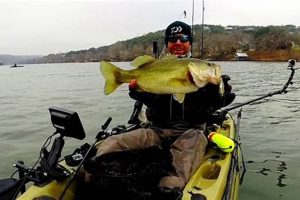
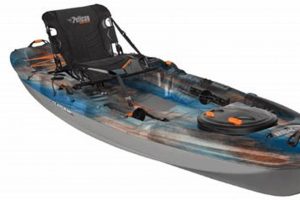
A method for securing a small, human-powered watercraft in a desired location utilizes a weighted object connected to the vessel by a rope or chain. This setup typically includes specialized components designed for ease of use and stowage within limited space. For example, a retractable anchor trolley system allows for controlled deployment and retrieval from various points on the kayak, while a folding grapnel anchor minimizes storage bulk.
Maintaining a stable position in currents or wind is essential for successful angling from a kayak. This stability allows for precise bait or lure presentation and reduces drift, maximizing fishing effectiveness. Historically, anglers relied on simple weights or improvised anchors. Modern advancements in materials and design have led to highly efficient, compact systems specifically tailored for kayak fishing, enhancing both safety and performance.
The following sections will delve into the diverse types of anchors suitable for kayak fishing, the advantages and disadvantages of various anchor trolley systems, and best practices for safe and effective deployment and retrieval in different aquatic environments.
Tips for Effective Kayak Anchor Deployment
Proper anchoring techniques are essential for a safe and productive kayak fishing experience. These tips offer guidance for selecting and utilizing an appropriate anchoring setup.
Tip 1: Match Anchor Type to Bottom Conditions. Sand and mud bottoms benefit from a fluked or claw-style anchor, while rocky terrain requires a grapnel anchor. A mushroom anchor is best suited for calm, weedy environments.
Tip 2: Consider Anchor Weight. Heavier anchors provide greater holding power but add to the overall load. Select an anchor weight appropriate for the kayak’s size and anticipated conditions.
Tip 3: Utilize an Anchor Trolley System. This allows adjustment of the anchor’s position relative to the kayak, facilitating optimal boat control in wind or current.
Tip 4: Deploy Anchor from the Bow or Stern. Positioning the anchor at either end maximizes stability and minimizes swinging. Lateral anchoring can be employed in specific scenarios but requires careful consideration of wind and current.
Tip 5: Use Adequate Anchor Line. The length of the anchor line should be several times the water’s depth, typically 5:1 or 7:1 ratio, allowing for variations in water level and tidal changes.
Tip 6: Secure Anchor Line Properly. Ensure the anchor line is fastened securely to a designated point on the kayak and is easily accessible for quick release in emergencies.
Tip 7: Retrieve the Anchor Slowly and Carefully. Avoid sudden jerking motions that can damage the kayak or anchor system. Take note of the surrounding environment to prevent entanglement.
By following these guidelines, anglers can improve their on-the-water experience and ensure safe and effective anchoring practices. A well-chosen and properly deployed anchor is paramount for maximizing fishing opportunities and overall enjoyment.
In conclusion, understanding the nuances of kayak anchoring techniques contributes significantly to a more productive and enjoyable fishing experience.
1. Anchor Type

Anchor selection is a critical component of a comprehensive fishing kayak anchor system. The type of anchor significantly influences holding power and suitability for varying bottom conditions, impacting the overall effectiveness and safety of the angling experience. Choosing the correct anchor ensures stability and precise boat control, maximizing fishing success.
- Fluke/Claw Anchors
Fluke or claw anchors excel in sand and mud substrates. Their hinged flukes dig deep into the bottom, providing substantial holding power. Examples include the Danforth and Fortress anchors. These types are well-suited for kayak fishing in moderately flowing water or sheltered bays where these bottom types are prevalent. Their reliable grip minimizes drift, enabling focused fishing.
- Grapnel Anchors
Grapnel anchors feature multiple tines that snag onto rocks, vegetation, and other irregular surfaces. Their design makes them ideal for rocky or weedy environments where fluke anchors struggle. Folding grapnel anchors are particularly popular among kayak anglers due to their compact storage profile. While effective in challenging terrain, they can be difficult to retrieve if snagged firmly.
- Mushroom Anchors
Mushroom anchors rely on their weight and shape to provide holding power in soft bottoms like mud or silt. They are best suited for calm water conditions due to their relatively low holding capacity compared to fluke or grapnel anchors. While effective in specific environments, mushroom anchors are less versatile for diverse kayaking scenarios.
- River/Stake-Out Anchors
These specialized anchors are designed for use in rivers or areas with strong currents. They typically feature long, slender poles that are driven into the bottom substrate, providing a secure hold. While effective in flowing water, their use is limited to shallow areas with suitable bottom conditions for penetration.
Effective anchor selection is paramount for optimizing a fishing kayak anchor system. Matching the anchor type to the prevalent bottom conditions significantly contributes to angler safety and fishing success. Understanding the strengths and limitations of each anchor type empowers informed decisions, enhancing the overall kayaking experience.
2. Anchor Weight

Appropriate anchor weight is a critical factor in a successful fishing kayak anchor system. An anchor must provide adequate holding power to counter the effects of wind, current, and tidal changes, yet remain manageable within the kayak’s weight capacity and storage limitations. Selecting the correct weight directly impacts stability, maneuverability, and overall safety.
- Holding Power vs. Kayak Capacity
Sufficient holding power is paramount, particularly in challenging conditions. However, excessive weight can negatively affect the kayak’s performance and stability. A careful balance must be struck between holding capability and the kayak’s overall load capacity, including gear and the angler’s weight. Overloading can lead to instability and reduced freeboard, increasing the risk of capsizing.
- Environmental Factors
Current strength, wind speed, and water depth all influence the required anchor weight. Stronger currents necessitate heavier anchors to maintain position. Similarly, increased windage on the kayak due to exposed surfaces or elevated seating requires additional holding power. Greater depths also demand longer anchor lines, which can further amplify the forces acting on the anchor.
- Anchor Type and Weight Interplay
The type of anchor impacts the effective holding power for a given weight. For instance, a fluke-style anchor generally provides more holding power per pound than a mushroom anchor due to its ability to dig into the bottom. Therefore, anchor type should be considered in conjunction with weight to achieve optimal performance in specific environments.
- Practical Considerations
Heavier anchors are more challenging to deploy and retrieve, particularly from a small kayak. Storage space is also a limiting factor. Folding grapnel anchors offer a compromise, providing reasonable holding power in a compact and relatively lightweight package. Anchor weight should be practical for the individual angler to handle and stow efficiently.
Careful consideration of anchor weight within the broader context of the fishing kayak anchor system is essential. Balancing holding power with kayak capacity and environmental factors ensures optimal stability and maneuverability, enhancing safety and overall fishing effectiveness. Choosing the correct weight, in conjunction with the appropriate anchor type and deployment strategy, contributes significantly to a successful and enjoyable on-the-water experience.
3. Trolley System
A kayak anchor trolley system significantly enhances the control and versatility of a fishing kayak anchor system. It comprises a line or track running along the length of the kayak, typically from bow to stern, allowing the anchor’s attachment point to be adjusted laterally. This adjustability offers several key advantages. By shifting the anchor point, the kayak’s angle relative to the current or wind can be controlled, minimizing swing and maintaining a desired fishing position. This is particularly beneficial in moving water or when fishing structure like shorelines or weed beds. For example, an angler fishing a riverbank can position the anchor at the bow and adjust the trolley to hold the kayak parallel to the bank, preventing excessive drift and optimizing line presentation. Conversely, anchoring from the stern allows for controlled drift fishing with the current.
Beyond positional control, a trolley system contributes to stability. In windy conditions, offsetting the anchor point from the centerline creates a stabilizing force, reducing the kayak’s tendency to turn broadside into the wind. This enhances stability, particularly important in challenging conditions or when standing to fish. Furthermore, the trolley system simplifies anchor retrieval. By bringing the anchor line closer to the kayak, the retrieval process becomes easier and safer, reducing the risk of capsizing or entanglement. Various trolley designs exist, from simple rope and ring setups to more sophisticated track-based systems. Choosing the appropriate system depends on the kayak’s design, fishing style, and budget. While a basic system may suffice for casual fishing, dedicated anglers often prefer more robust and adjustable options.
In conclusion, a well-designed trolley system is integral to an effective fishing kayak anchor system. Its capacity for controlled positioning and enhanced stability contributes significantly to angler success and safety. While seemingly a minor component, the trolley systems influence on boat control and maneuverability underscores its practical significance for any serious kayak angler. Understanding its functionality and selecting an appropriate system are crucial steps in optimizing the overall kayak fishing experience.
4. Anchor Line

The anchor line forms a crucial link between the anchor and kayak within a fishing kayak anchor system. Its properties and proper management significantly influence anchoring effectiveness and safety. Selecting the correct type, length, and implementing appropriate handling procedures are essential for a secure and efficient system.
- Material and Construction
Anchor line materials range from traditional nylon ropes to more specialized braided polyethylene and polypropylene lines. Each material offers distinct characteristics regarding strength, durability, stretch, and buoyancy. Nylon, while strong and relatively inexpensive, tends to absorb water and can lose strength when wet. Braided polyethylene lines, like Spectra or Dyneema, offer superior strength and minimal stretch, but come at a higher cost. Floating polypropylene rope prevents the line from sinking and potentially snagging on underwater obstructions. The construction, whether twisted, braided, or plaited, further influences the line’s handling characteristics and resistance to abrasion.
- Length and Depth Ratio
Adequate anchor line length is crucial for effective anchoring. A common rule of thumb suggests a line length 5 to 7 times the water depth. This ratio accommodates variations in water level, wave action, and tidal changes, ensuring the anchor remains firmly planted on the bottom. Insufficient line can cause the anchor to drag, while excessive length can lead to tangling and difficulties in retrieval. Determining the appropriate length requires consideration of the specific fishing location and anticipated conditions.
- Securing and Managing the Line
Properly securing the anchor line to the kayak is essential. Dedicated anchor cleats or tie-off points provide secure attachment locations. Using a quick-release mechanism, such as a carabiner or specialized anchor trolley clip, allows for rapid detachment in emergencies. Proper line management prevents tangling and ensures efficient deployment and retrieval. Cleats, fairleads, and line organizers help maintain order and prevent the line from interfering with other fishing activities.
- Maintenance and Inspection
Regular inspection and maintenance of the anchor line are vital for safety. Checking for fraying, abrasion, or damage from UV exposure can prevent unexpected line failure. Rinsing the line with fresh water after each use helps remove salt, sand, and other debris that can accelerate wear. Proper storage, away from direct sunlight and excessive heat, prolongs the line’s lifespan. Replacing worn or damaged lines promptly ensures continued reliability and angler safety.
The anchor line, while seemingly a simple component, plays a critical role in the overall effectiveness and safety of a fishing kayak anchor system. Selecting the appropriate material and length, combined with proper securing and maintenance procedures, ensures a secure and reliable connection between the kayak and the anchor, enabling successful and worry-free fishing experiences.
5. Deployment Strategy

Deployment strategy is integral to maximizing the effectiveness of a fishing kayak anchor system. Proper deployment directly influences boat positioning, stability, and ultimately, fishing success. Factors such as wind direction, current flow, water depth, and target fishing location must be considered collectively to formulate an effective anchoring plan. A well-defined strategy ensures the kayak remains securely positioned in the desired location, minimizing drift and allowing for precise bait or lure presentation.
For example, when fishing in a river with a moderate current, deploying the anchor upstream of the target area allows the kayak to drift naturally into position. The anchor line should form a slight angle downstream, creating a stable hold against the current. Conversely, in still water with prevailing wind, deploying the anchor from the bow or stern into the wind minimizes swing and maintains a consistent fishing angle. In tidal areas, accounting for water level changes is crucial. Sufficient anchor line must be deployed to accommodate rising or falling tides, preventing the anchor from becoming dislodged. Understanding the interplay between these environmental factors allows anglers to adapt their deployment strategy accordingly.
Deploying an anchor effectively contributes to a more productive and enjoyable kayak fishing experience. A sound strategy enhances boat control, allowing anglers to focus on fishing rather than constantly adjusting position. This strategic approach minimizes disruption to the underwater environment, improving stealth and increasing the likelihood of attracting fish. Furthermore, a well-executed deployment strategy contributes to angler safety by ensuring the kayak remains stable and predictable in varying conditions, reducing the risk of capsizing or entanglement.
6. Safety Mechanisms
Safety mechanisms are integral to a responsible and effective fishing kayak anchor system. They mitigate risks inherent in on-the-water activities, safeguarding both the angler and the environment. These mechanisms provide crucial safeguards against equipment failure, unexpected changes in conditions, and potential entanglement hazards, contributing to a more secure and enjoyable fishing experience.
- Quick-Release Mechanisms
Quick-release mechanisms provide a crucial safety link in an anchor system. These devices, typically integrated into the anchor trolley system or anchor line itself, enable rapid detachment of the anchor in emergencies. Examples include carabiners, specialized anchor clips, or even a simple loop of rope secured with a slip knot. Rapid anchor release becomes critical in situations such as sudden changes in weather, entanglement with underwater obstructions, or the need for a swift maneuver. Easy access and familiarity with the quick-release mechanism are paramount for effective emergency response.
- Anchor Line Management
Proper anchor line management contributes significantly to overall safety. Organized line storage and deployment prevent tangles that could interfere with paddling or other onboard activities. Utilizing cleats, fairleads, or line organizers keeps the line tidy and minimizes the risk of entanglement. Proper management also ensures the line remains clear of the kayak’s propulsion system, preventing potential interference or damage. Consistent line management practices contribute to a safer and more efficient fishing experience.
- Floatation and Visibility
Adding a buoyant marker to the anchor line enhances both safety and retrievability. A brightly colored float attached near the anchor serves as a visual indicator of the line’s location, reducing the risk of entanglement with other vessels or fishing gear. The float also assists in locating and retrieving the anchor, particularly in deeper water or challenging conditions. Enhanced visibility improves overall situational awareness and contributes to a safer operating environment.
- Emergency Procedures and Practice
Establishing clear emergency procedures and practicing anchor deployment and retrieval are essential safety measures. Anglers should familiarize themselves with the operation of their specific anchor system and quick-release mechanism. Practicing deployment and retrieval in calm conditions builds proficiency and muscle memory, crucial for effective response in emergencies. Understanding and rehearsing procedures for various scenarios, such as entanglement or capsizing, prepares anglers for unexpected situations, enhancing their ability to react safely and efficiently.
Integrating these safety mechanisms into a fishing kayak anchor system significantly enhances angler safety and preparedness on the water. While the primary focus of an anchor system is to secure the kayak, prioritizing safety mechanisms ensures a more enjoyable and responsible approach to kayak fishing. These measures, while seemingly simple, contribute significantly to mitigating potential hazards and promoting a positive on-the-water experience.
Frequently Asked Questions
Addressing common queries regarding kayak fishing anchor systems provides clarity for informed decision-making and safe anchoring practices. The following FAQs offer insights into various aspects of these systems, from anchor selection to safety considerations.
Question 1: What type of anchor is most suitable for kayak fishing?
Anchor suitability depends on bottom conditions. Fluke anchors excel in sand or mud, grapnel anchors are ideal for rocky or weedy bottoms, and mushroom anchors suit calm, soft bottoms. Specialized river anchors are designed for strong currents and penetrable substrates.
Question 2: How much anchor weight is necessary for a kayak?
Anchor weight must balance holding power with kayak capacity. Environmental factors like current, wind, and water depth influence the required weight. Heavier anchors offer greater holding power but impact maneuverability and storage.
Question 3: What are the benefits of using an anchor trolley system?
Anchor trolley systems enhance boat control by allowing lateral adjustment of the anchor’s attachment point. This facilitates precise positioning in current or wind, minimizes swing, and simplifies anchor retrieval.
Question 4: What type of anchor line is recommended for kayak fishing?
Recommended anchor line materials include nylon, braided polyethylene, and polypropylene. Nylon offers a balance of strength and affordability, while polyethylene provides superior strength and minimal stretch. Polypropylene floats, preventing snags.
Question 5: How much anchor line is needed for kayak fishing?
Anchor line length should typically be 5 to 7 times the water depth. This ratio accounts for water level fluctuations, wave action, and tidal changes, ensuring the anchor maintains a secure hold.
Question 6: What essential safety mechanisms should be included in a kayak anchor system?
Essential safety mechanisms include a quick-release system for emergencies, organized line management to prevent tangles, a buoyant marker for visibility and retrieval, and established emergency procedures.
Understanding these key aspects of kayak fishing anchor systems allows for safer and more effective anchoring practices, contributing to a more enjoyable on-the-water experience. Prioritizing safety and selecting appropriate equipment ensures successful and responsible kayak fishing.
Beyond these frequently asked questions, further exploration of specific anchoring techniques and advanced strategies can enhance proficiency and adaptability in diverse fishing environments.
Fishing Kayak Anchor System
Effective deployment of a fishing kayak anchor system is paramount for successful angling. This comprehensive exploration has highlighted the critical interplay between anchor selection, weight considerations, trolley system utilization, anchor line management, deployment strategies, and essential safety mechanisms. Each component contributes significantly to overall system performance, influencing boat control, stability, and angler safety. Matching anchor type to bottom conditions, balancing anchor weight with kayak capacity, and utilizing a trolley system for precise positioning all contribute to optimized fishing effectiveness.
Strategic anchor deployment, informed by environmental factors like wind and current, maximizes boat control and minimizes disruption to the underwater environment. Prioritizing safety through quick-release mechanisms, organized line management, and established emergency procedures ensures a responsible and prepared approach to kayak fishing. Continued exploration of advanced anchoring techniques and adaptation to specific fishing scenarios will further enhance on-the-water proficiency and contribute to a more rewarding and secure angling experience.