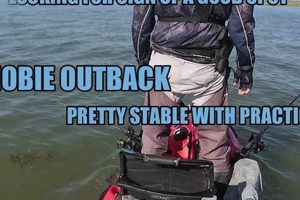
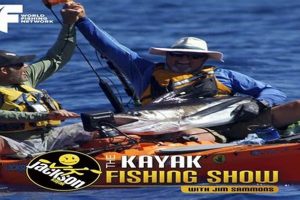
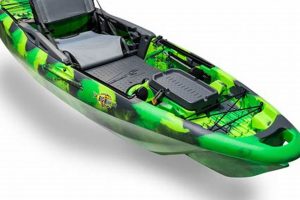
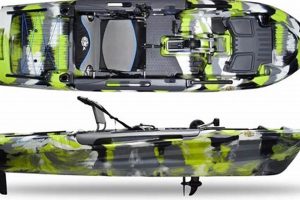
The practice involves angling from a small, human-powered watercraft. This method offers access to shallow or otherwise difficult-to-reach fishing grounds. Imagine casting a line near a secluded cove or navigating a winding river, all while enjoying the tranquility and closeness to nature that only a kayak can provide. This approach contrasts sharply with fishing from larger, motorized boats, offering a distinct experience and set of advantages.
This specialized approach provides numerous advantages. The quiet operation of kayaks allows anglers to get remarkably close to fish without disturbing them, increasing the chances of a successful catch. Furthermore, the compact size and maneuverability of these vessels grant access to shallow waters and confined areas inaccessible to larger craft. Historically, kayaks have been used for fishing for centuries by indigenous cultures. The modern adaptation of this traditional practice combines time-honored techniques with contemporary materials and equipment, resulting in a popular and effective method of sport and subsistence angling.
This article will further explore various aspects of this popular activity, covering topics such as essential equipment, suitable kayak types, effective techniques, popular fishing locations, and important safety considerations.
Tips for Kayak Angling
Proper preparation and technique are essential for a safe and successful kayak fishing experience. The following tips offer valuable guidance for anglers of all skill levels.
Tip 1: Choose the Right Kayak: Kayak selection depends on individual needs and fishing conditions. Sit-on-top kayaks offer stability and ease of re-entry after a capsize, while sit-inside kayaks provide better protection from the elements. Pedal-driven kayaks free up hands for fishing, but can be heavier and more expensive.
Tip 2: Prioritize Safety Equipment: A personal flotation device (PFD) is crucial and should be worn at all times. A whistle, signaling mirror, and communication device are also essential for emergencies. Carrying a first-aid kit and appropriate clothing for varying weather conditions is highly recommended.
Tip 3: Plan and Share Your Trip: Always inform someone of the intended fishing location and estimated return time. Checking weather forecasts and water conditions before departure is critical. Carrying a map or chart of the area is also advisable.
Tip 4: Distribute Weight Evenly: Proper weight distribution in the kayak is crucial for stability. Gear should be distributed evenly throughout the vessel, with heavier items placed low and centrally. Avoid overloading the kayak, as this can compromise stability and maneuverability.
Tip 5: Practice Paddle Strokes and Maneuvers: Mastering basic paddle strokes allows for efficient movement and precise boat control. Practicing maneuvering the kayak in calm water before venturing into more challenging conditions is highly beneficial.
Tip 6: Employ Appropriate Anchoring Techniques: A properly set anchor prevents drifting and maintains position in desired fishing locations. Using an anchor trolley system allows for adjustment of the anchor position based on wind and current.
Tip 7: Respect Wildlife and the Environment: Practice catch-and-release whenever possible to conserve fish populations. Avoid disturbing wildlife and sensitive habitats. Pack out all trash and leave the fishing area cleaner than it was found.
Adhering to these guidelines promotes a safe and enjoyable experience, allowing anglers to focus on the thrill of the catch and the tranquility of the water.
By understanding and implementing these strategies, individuals can enhance their skills and maximize their success on the water. This foundational knowledge paves the way for a more fulfilling and rewarding kayak angling experience.
1. Specialized Equipment

The unique demands of angling from a kayak necessitate specialized equipment designed for efficiency, safety, and effectiveness. Standard fishing gear often proves cumbersome and impractical in the confined space of a kayak. Consider rod holders, for instance. Conventional rod holders designed for larger boats are often too large or positioned inappropriately for kayak use. Specialized kayak rod holders are designed to be compact, adjustable, and strategically placed for easy access and retrieval. This allows anglers to manage multiple rods and maintain a balanced center of gravity, critical for stability in a kayak. Similarly, tackle storage solutions designed specifically for kayaks prioritize compactness and accessibility, ensuring essential gear is readily available without cluttering the limited space. The use of specialized equipment is not merely a matter of convenience, but a factor that directly impacts safety and success on the water.
Further enhancing the experience, specialized equipment addresses the challenges specific to kayak angling. Anchor trolleys, for example, allow for precise anchor adjustments based on wind and current, crucial for maintaining position in desired fishing locations. Fish finders designed for kayaks integrate seamlessly with the vessel’s power supply and offer compact transducer mounts, providing valuable underwater insights without adding unnecessary bulk. Even fishing nets are adapted, often featuring retractable handles and compact designs for efficient fish landing in a confined cockpit. These adaptations highlight the crucial role specialized equipment plays in optimizing the kayak fishing experience. Choosing equipment tailored to this activity not only increases efficiency but also minimizes potential risks and complications associated with using ill-suited gear.
In conclusion, the connection between specialized equipment and the success of kayak angling is undeniable. From rod holders and tackle storage to anchor trolleys and fish finders, each piece of specialized equipment contributes to a safer, more efficient, and ultimately more rewarding experience. Understanding the specific demands of kayak angling and selecting appropriate gear is paramount for both novice and experienced anglers. This attention to detail transforms a potentially challenging endeavor into a streamlined and enjoyable pursuit.
2. Kayak Selection
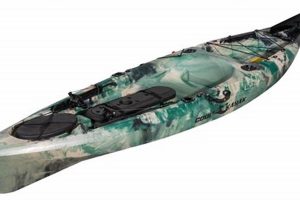
Kayak selection is paramount for a successful and enjoyable fishing experience. The vessel’s characteristics significantly influence stability, maneuverability, and accessibility to fishing grounds, impacting both safety and catch rates. Choosing the appropriate kayak type hinges on factors such as the intended fishing environment (calm lakes versus moving rivers), target fish species, and individual angler preferences.
- Hull Design
Hull design directly impacts stability and maneuverability. Wider, flatter hulls offer greater stability, ideal for calm waters and stand-up fishing. Narrower, V-shaped hulls enhance speed and tracking, suited for traversing longer distances and handling choppy conditions. A pontoon-style hull offers exceptional stability, allowing anglers to stand and cast with confidence, but sacrifices maneuverability in tight spaces. Understanding hull design trade-offs is essential for choosing a kayak tailored to specific fishing conditions.
- Length and Weight Capacity
Kayak length and weight capacity influence tracking, speed, and storage space. Longer kayaks track better in open water, while shorter kayaks offer enhanced maneuverability in tight quarters. Weight capacity dictates the amount of gear and angler weight the kayak can safely carry. Exceeding the weight capacity can compromise stability and safety. A longer kayak with higher weight capacity may be suitable for extended trips with ample gear, while a shorter, lighter kayak is preferable for quick outings in confined areas.
- Propulsion System
Kayak propulsion systems range from traditional paddles to pedal drives and even motorized options. Paddle kayaks offer affordability and simplicity, while pedal drives free up hands for fishing but add complexity and cost. Motorized kayaks provide speed and range but require additional maintenance and safety considerations. The choice of propulsion system depends on individual preferences, fishing style, and physical capabilities. A pedal-driven kayak might be ideal for trolling or covering large areas, while a paddle kayak may suffice for shorter trips focused on casting and retrieving.
- Features and Accessories
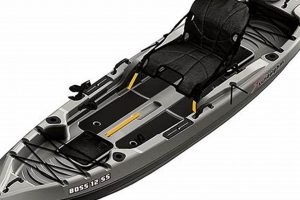
Features like rod holders, storage compartments, and anchor systems are crucial for kayak angling. Built-in rod holders keep rods organized and accessible. Ample storage accommodates tackle, safety gear, and personal items. Anchor systems, including anchor trolleys, allow for precise boat positioning in currents or wind. Evaluating these features alongside the kayak’s core characteristics ensures optimal functionality and convenience on the water. A well-equipped kayak simplifies gear management, enhances fishing efficiency, and ultimately contributes to a more enjoyable experience.
Careful consideration of these facets of kayak selection is essential for maximizing fishing success and ensuring a safe and enjoyable experience. The ideal kayak aligns with the specific demands of the fishing environment, target species, and angler preferences. Matching these factors results in a well-balanced and efficient fishing platform, allowing anglers to focus on the pursuit of their catch and the enjoyment of the sport.
3. Safety Procedures

Safety procedures are paramount when fishing from kayaks. The inherent risks associated with on-water activities are amplified by the small size and relative instability of kayaks. Ignoring safety protocols significantly elevates the likelihood of accidents and can have severe consequences, ranging from equipment loss to serious injury. Implementing appropriate safety measures mitigates these risks and ensures a more enjoyable and worry-free fishing experience.
- Personal Flotation Devices (PFDs)
PFDs are essential safety equipment for any kayak angler. A properly fitted PFD provides buoyancy and helps prevent drowning in the event of a capsize. Inflatable PFDs offer greater comfort and freedom of movement, while traditional foam PFDs provide immediate flotation. Selecting a PFD approved by relevant authorities and ensuring a proper fit are crucial for maximizing its effectiveness. Neglecting to wear a PFD dramatically increases the risk of drowning, especially in cold water or challenging conditions.
- Communication Devices
Carrying a reliable communication device is crucial for summoning assistance in emergencies. A waterproof VHF radio allows direct communication with the Coast Guard and other boaters. Mobile phones, while convenient, may have limited reception in remote areas. Satellite messengers provide reliable communication even beyond cellular coverage, but come at a higher cost. Choosing an appropriate communication method based on the fishing location and potential hazards is critical for ensuring a timely response in emergencies. A lack of communication capability can severely delay rescue efforts and exacerbate the consequences of accidents.
- Weather Awareness and Trip Planning
Checking weather forecasts before embarking on a kayak fishing trip is essential. Sudden changes in weather conditions, such as strong winds or thunderstorms, can create dangerous situations on the water. Informing someone of the intended fishing location and estimated return time provides an additional layer of safety. Planning for potential delays and carrying emergency supplies, such as extra food and water, further enhances preparedness. Failure to adequately plan and monitor weather conditions can lead to unexpected emergencies and expose anglers to unnecessary risks.
- Navigation and Awareness of Surroundings
Maintaining awareness of the surrounding environment is crucial for kayak anglers. Navigating in congested waterways or near larger vessels requires extra caution. Understanding local boating regulations and navigation markers helps prevent collisions and ensures safe passage. Carrying a chart or map of the area and a compass provides backup navigation in case of electronic failures. Ignoring navigation best practices and failing to pay attention to surroundings can lead to collisions, grounding, or becoming lost, especially in unfamiliar waters.
Adhering to these safety procedures significantly reduces the risks inherent in kayak fishing. These measures are interconnected and contribute to a comprehensive safety strategy, transforming potential hazards into manageable challenges. Prioritizing safety not only protects anglers from harm but also fosters a more relaxed and enjoyable fishing experience, allowing full focus on the sport and the surrounding natural environment.
4. Location Scouting

Effective location scouting is a critical precursor to successful kayak angling. Unlike fishing from larger vessels, kayaks offer unique access to shallow, secluded areas, making location choice paramount. Strategic scouting maximizes fishing opportunities by identifying areas likely to hold target species and providing insights into optimal approaches and techniques. Thorough pre-fishing reconnaissance transforms a simple outing into a targeted pursuit, significantly increasing the chances of a productive and rewarding experience.
- Habitat Identification
Identifying suitable fish habitats is the cornerstone of location scouting. Different species gravitate towards specific structures and environmental conditions. For example, predatory fish like bass often ambush prey near submerged logs, weed beds, or rocky outcrops. Understanding these preferences and locating such features during scouting significantly increases the probability of encountering target species. This targeted approach contrasts sharply with random exploration, optimizing fishing time and effort.
- Water Depth and Current Assessment
Assessing water depth and current patterns is crucial for selecting appropriate fishing techniques and ensuring kayak control. Shallow flats may be ideal for sight fishing or topwater presentations, while deeper channels or drop-offs might necessitate bottom fishing or trolling. Understanding current flow allows anglers to position the kayak effectively for drift fishing or to avoid being swept into hazardous areas. This pre-trip evaluation helps avoid wasted time and ensures a safe and efficient approach to fishing from a kayak.
- Accessibility and Launch Points
Scouting potential launch points and assessing accessibility is essential for a smooth and efficient start to a kayak fishing trip. Factors like shoreline terrain, parking availability, and potential obstacles, such as dense vegetation or shallow water, should be considered. Identifying suitable launch sites minimizes logistical challenges and ensures quick access to the chosen fishing grounds. This pre-emptive approach avoids delays and frustrations, allowing more time for actual fishing.
- Observation and Local Knowledge
Observing the environment and leveraging local knowledge enhances location scouting effectiveness. Noting signs of fish activity, such as baitfish schools or bird activity, provides valuable clues about potential fishing hotspots. Consulting local fishing reports, bait shops, or experienced anglers can provide insights into recent catches and productive techniques. This combination of direct observation and information gathering maximizes the chances of locating productive fishing areas and enhances the overall scouting process.
By understanding and implementing these location scouting strategies, kayak anglers transform opportunistic fishing into a strategic pursuit. The connection between pre-fishing reconnaissance and on-the-water success is undeniable. Thorough location scouting, coupled with appropriate kayak selection and safety procedures, unlocks the full potential of kayak fishing, leading to more frequent catches and a deeper appreciation for the sport.
5. Fishing Techniques

Fishing techniques employed from a kayak differ significantly from those used in larger vessels or from shore. The kayak’s unique properties, such as its maneuverability, low profile, and quiet operation, influence the effectiveness of various techniques. Adapting techniques to leverage these characteristics is crucial for maximizing catch rates and achieving a successful fishing experience from a kayak.
- Casting and Retrieving
Casting and retrieving lures or bait is a fundamental technique readily adapted to kayak fishing. The kayak’s maneuverability allows anglers to position themselves precisely for targeted casts to specific structures or cover. Its low profile minimizes disturbance to the water, enhancing stealth and increasing the likelihood of attracting fish. Kayak anglers often utilize shorter rods and specialized casting techniques to accommodate the confined space and maintain balance. Accuracy and precision in casting are paramount due to the limited space and the need to avoid snags and tangles.
- Trolling
Trolling involves dragging lures or bait behind a moving kayak. This technique covers a wider area than casting and retrieving, effectively searching for active fish. Kayaks offer a quieter and more subtle trolling presentation compared to motorized boats, often attracting wary fish that might be spooked by engine noise. The use of specialized trolling motors designed for kayaks allows for controlled speed and precise depth adjustments, maximizing lure presentation and enhancing the chances of attracting strikes. Speed control and maintaining a consistent depth are crucial factors in successful trolling.
- Drift Fishing
Drift fishing utilizes the natural movement of water current to present bait or lures. Kayaks are well-suited for drift fishing, allowing anglers to cover water efficiently while maintaining a natural presentation. Using an anchor or drift sock controls the kayak’s drift speed and maintains position in productive areas. This technique is particularly effective in rivers, streams, or tidal flows where current carries bait naturally. Precise boat control and maintaining a natural drift are essential for successful drift fishing.
- Jigging and Vertical Fishing
Jigging and vertical fishing are effective techniques for targeting fish holding near the bottom or suspended in the water column. Kayaks provide a stable platform for vertical presentations, allowing anglers to feel subtle bites and maintain direct contact with the lure or bait. Specialized jigging rods and reels designed for kayak use enhance sensitivity and control. This technique is particularly effective in deeper water or near structures where fish concentrate. Precise boat control and maintaining vertical contact with the lure are crucial for success.
Adapting these fishing techniques to the unique characteristics of a kayak enhances their effectiveness and unlocks the full potential of kayak angling. Understanding the interplay between the kayak’s maneuverability, stability, and quiet operation and the chosen fishing technique is crucial for maximizing catch rates and enjoying a rewarding experience on the water. The nuanced approach required for kayak fishing highlights the skill and adaptability needed to succeed in this specialized angling discipline. By mastering these adapted techniques, anglers transform the kayak into a versatile and effective fishing platform.
Frequently Asked Questions
This section addresses common inquiries regarding angling from kayaks, providing concise and informative responses to clarify potential uncertainties and misconceptions.
Question 1: What are the primary advantages of fishing from a kayak?
Kayaks offer unparalleled access to shallow, secluded waters inaccessible to larger boats, enhancing fishing opportunities. Their quiet operation minimizes disturbance to fish, increasing catch potential. Kayaks are also cost-effective and environmentally friendly compared to motorized vessels.
Question 2: What type of kayak is best suited for fishing?
The optimal kayak depends on individual needs and fishing environments. Sit-on-top kayaks offer stability and ease of re-entry. Sit-inside kayaks provide better protection from the elements. Pedal-driven kayaks free up hands for fishing, but come at a higher cost. Careful consideration of these factors ensures the selected kayak aligns with the angler’s specific requirements.
Question 3: What essential safety equipment is required for kayak fishing?
A personal flotation device (PFD) is paramount. A whistle, signaling mirror, and communication device (VHF radio, mobile phone, or satellite messenger) are crucial for emergencies. A first-aid kit and appropriate clothing for varying weather conditions are also highly recommended.
Question 4: What are the essential fishing gear considerations for kayak anglers?
Rods and reels designed for kayak fishing are generally shorter and more manageable than conventional tackle. Specialized kayak rod holders, tackle storage solutions, and landing nets are essential for efficient gear management in a confined space.
Question 5: How does one locate productive fishing spots from a kayak?
Effective location scouting involves identifying suitable fish habitats, such as submerged structures or vegetation. Assessing water depth, current patterns, and accessibility are also crucial. Leveraging local knowledge and observing signs of fish activity, such as baitfish or bird activity, further enhance scouting efforts.
Question 6: Are there specific fishing regulations or licensing requirements for kayak anglers?
Regulations and licensing requirements vary depending on the fishing location. Anglers are responsible for obtaining the necessary licenses and adhering to all applicable fishing regulations, including size and catch limits, as well as permitted fishing methods. Consulting local authorities or fishing organizations provides detailed information on specific regulations.
Understanding these common inquiries enhances preparedness and promotes a safer, more enjoyable kayak fishing experience. Thorough preparation and adherence to safety guidelines are essential for maximizing fishing success and minimizing potential risks.
The subsequent sections will delve into advanced techniques and specialized strategies for optimizing angling performance from a kayak.
Conclusion
This exploration of angling from kayaks has highlighted the unique blend of skill, preparation, and adaptability required for success. From equipment selection and safety procedures to location scouting and specialized fishing techniques, each aspect contributes to a rewarding experience. The advantages of kayaks their maneuverability, stealth, and access to secluded waters become apparent when combined with a thorough understanding of fish behavior and habitat. The discussion encompassed not only the practical elements of kayak angling but also the importance of respecting the environment and adhering to responsible fishing practices. This holistic approach ensures the sustainability of the sport and preserves the natural beauty of the aquatic ecosystems explored.
The future of angling from kayaks appears promising, driven by advancements in kayak design, fishing technology, and a growing appreciation for the unique connection with nature this activity provides. As more individuals discover the rewards of this specialized pursuit, continued emphasis on safety, environmental stewardship, and ethical fishing practices remains crucial. The potential for growth and innovation within this specialized angling discipline is significant, promising continued evolution and refinement of techniques and equipment. Ultimately, the allure of angling from kayaks lies in the harmonious convergence of human ingenuity, respect for nature, and the timeless pursuit of a rewarding fishing experience.