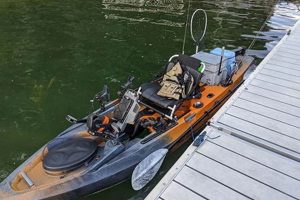
A specialized storage container designed for use in kayaks, typically made from durable, waterproof materials, provides organized storage for tackle, tools, and other fishing essentials. These containers come in various sizes and configurations, often featuring compartments, trays, and attachment points compatible with kayak rigging systems. A common example includes a waterproof tackle box secured within a kayak’s tank well.
Organized storage contributes significantly to a successful and enjoyable kayaking fishing experience. Efficient access to equipment minimizes time spent searching and maximizes time spent fishing. Furthermore, protecting gear from water damage preserves its longevity and functionality. While traditional tackle boxes existed long before kayaks were adapted for fishing, the development of specialized storage solutions designed specifically for kayak angling reflects the growing popularity and specialization of this sport.
This article will explore various aspects of kayak fishing storage, including selecting the right container, maximizing space efficiency, popular features, and recommended practices for maintaining equipment organization.
Tips for Selecting and Using Kayak Fishing Storage
Proper storage is essential for a successful kayak fishing trip. These tips offer guidance on choosing and utilizing storage solutions effectively.
Tip 1: Consider Kayak Compatibility: Ensure chosen storage solutions are compatible with the kayak’s design and rigging system. Measure available space and consider attachment points before purchasing.
Tip 2: Prioritize Waterproofing: Opt for waterproof or water-resistant containers to protect tackle and gear from splashes and submersion. Sealed lids and airtight closures are crucial.
Tip 3: Organize Tackle Strategically: Utilize compartments, trays, and dividers within storage containers to organize tackle by type and size. This facilitates quick access and minimizes searching while on the water.
Tip 4: Secure Loose Items: Employ bungee cords, straps, or clips to secure storage containers and other loose items within the kayak, preventing shifting or loss during transit or rough water.
Tip 5: Balance Weight Distribution: Distribute weight evenly within the kayak, considering the combined weight of storage containers and their contents. This promotes stability and maneuverability.
Tip 6: Regularly Inspect and Maintain: Periodically inspect storage containers for damage or wear and tear. Clean and dry them thoroughly after each use to prevent mold or mildew growth and extend their lifespan.
Tip 7: Minimize Unnecessary Gear: Carefully assess essential gear and avoid carrying excess items. This reduces weight and maximizes available storage space.
Implementing these tips ensures readily accessible and well-protected equipment, contributing significantly to an efficient and enjoyable fishing experience.
By incorporating these practical storage strategies, anglers can focus on fishing, enhancing their overall experience on the water.
1. Size and Capacity

Appropriate size and capacity are critical factors when selecting a fishing box for kayak use. The chosen container must accommodate necessary gear while remaining compatible with the kayak’s limited space and weight restrictions. Careful consideration of storage needs and available kayak space ensures optimal functionality and balance.
- Available Kayak Space
Kayaks offer varying storage capacities. Smaller recreational kayaks have limited space, necessitating compact storage solutions. Larger fishing kayaks often feature dedicated storage wells and compartments, accommodating larger containers. Accurately measuring available space before selecting a fishing box is essential.
- Fishing Style and Target Species
Fishing style and target species influence required tackle and gear, thus impacting storage needs. Anglers targeting smaller species may require less equipment than those pursuing larger game fish. Consider the types and quantities of tackle typically carried to determine appropriate box capacity.
- Trip Duration and Location
Longer trips or remote locations may necessitate carrying additional gear, requiring larger storage capacity. Shorter trips closer to shore may allow for smaller, more streamlined solutions. Evaluating trip duration and location informs appropriate box size and capacity.
- Weight and Balance Considerations
Excessive weight negatively impacts kayak performance and stability. A larger box, while offering greater capacity, adds more weight. Balancing storage needs with weight limitations is crucial for optimal kayak handling. Distributing weight evenly within the kayak also contributes to stability and maneuverability.
By carefully assessing these factors, anglers can select a fishing box that optimizes storage capacity while maintaining kayak performance and stability. The right balance ensures efficient gear organization and contributes to a successful and enjoyable fishing experience.
2. Material and Durability

Material and durability are paramount considerations for kayak fishing boxes due to the demanding marine environment. Exposure to saltwater, UV radiation, and physical impacts necessitates robust construction. Durable materials ensure long-term performance and protect stored gear. Common material choices include high-impact plastics, such as polyethylene and polypropylene, known for their strength, UV resistance, and waterproof properties. These materials withstand harsh conditions, protecting contents from water damage and impact. For example, a high-impact plastic box can endure accidental drops or collisions with rocks without cracking or compromising its waterproof seal, preserving valuable tackle.
Material selection influences not only durability but also weight and cost. While heavier-duty materials like roto-molded polyethylene offer superior impact resistance, they increase overall weight. Lighter options, like injection-molded plastics, offer a compromise between durability and weight, often at a lower cost. Choosing the right material involves balancing these factors based on individual needs and budget. A lightweight box may suffice for calm-water fishing, while a heavier-duty option is preferable for challenging environments. Understanding the properties of different materials empowers informed decision-making.
Ultimately, investing in a durable fishing box constructed from high-quality materials protects valuable tackle and ensures long-term functionality, contributing to a more productive and enjoyable kayak fishing experience. The added cost of durable materials often outweighs the expense of replacing damaged gear or a compromised storage solution. Careful material selection reflects a commitment to both equipment protection and sustainable angling practices.
3. Organization and Compartments

Effective organization within a kayak fishing box is crucial for maintaining efficient access to tackle and maximizing fishing time. Compartments and dividers play a significant role in this organizational strategy, separating various items and preventing entanglement. This structured approach promotes streamlined retrieval and prevents wasted time searching through a disorganized jumble of equipment.
- Adjustable Dividers
Adjustable dividers within a fishing box offer customizable organization, accommodating various tackle sizes and types. These dividers can be configured to create compartments specifically sized for hooks, lures, sinkers, and other small items, preventing them from mixing and tangling. This adaptability is crucial for maintaining order and facilitating quick access to specific items when needed. For instance, an angler can configure separate compartments for different lure types, ensuring quick retrieval based on fishing conditions.
- Dedicated Compartments for Tools and Accessories
Designated compartments for tools and accessories, such as pliers, line cutters, and knot-tying tools, maintain order and prevent these essential items from becoming lost or damaged amidst tackle. These dedicated spaces also contribute to overall safety by ensuring sharp tools are securely stored and readily accessible when required. Storing pliers in a designated compartment prevents them from snagging fishing line or puncturing soft plastic lures.
- Clear Lids and Trays
Clear lids or trays within a fishing box allow for quick visual identification of contents without the need to open each compartment. This feature streamlines tackle selection, saving valuable time on the water. A clear lid allows an angler to quickly locate a specific lure without rummaging through multiple compartments, maximizing fishing time.
- Removable Trays and Inserts
Removable trays and inserts provide versatility in organizing and accessing tackle. These components allow anglers to customize the internal layout of their fishing box based on specific needs. Small trays can be used to organize hooks and weights, while larger trays can hold bulkier items like spools of line. Removable trays also facilitate cleaning and drying, promoting hygiene and preventing corrosion.
Strategic use of compartments and dividers within a kayak fishing box significantly enhances angling efficiency. Organized storage promotes quick access to essential gear, minimizing time spent searching and maximizing time spent fishing. This organized approach translates directly to a more productive and enjoyable fishing experience.
4. Mounting and Security
Secure mounting is a critical aspect of kayak fishing box selection, ensuring that valuable equipment remains stable and accessible while navigating various water conditions. A well-secured box prevents unwanted movement, minimizing the risk of damage, loss, and interference with paddling. Effective mounting solutions also contribute to an organized and efficient fishing experience, allowing anglers to focus on the task at hand.
- Integration with Kayak Rigging Systems
Many fishing kayaks feature integrated track systems, providing convenient mounting points for accessories. Boxes designed to interface with these systems offer secure attachment and easy adjustability. For example, a track-mounted box can be positioned within easy reach, optimizing ergonomics and efficiency.
- Straps and Bungee Cords
Straps and bungee cords offer versatile mounting solutions for various box types and kayak configurations. These simple yet effective methods secure the box within the kayak, preventing shifting during paddling and maneuvering. Ensuring straps and cords are properly tensioned and strategically placed maximizes stability.
- Non-Slip Surfaces and Secure Lids
Non-slip surfaces on the bottom of the fishing box enhance stability, preventing sliding within the kayak. Securely latched lids safeguard contents, minimizing the risk of spillage or water damage. A tight-fitting lid also prevents accidental opening during transport or rough water conditions.
- Locking Mechanisms and Theft Deterrents
In certain situations, locking mechanisms or theft deterrents offer added security, particularly when leaving the kayak unattended. Lockable boxes or cable locks deter opportunistic theft, protecting valuable tackle and equipment. This added security provides peace of mind, particularly in public areas or during multi-day excursions.
Effective mounting and security measures contribute significantly to a positive kayak fishing experience. A secure and accessible fishing box facilitates efficient tackle management, reduces the risk of equipment loss or damage, and ultimately allows anglers to focus on enjoying their time on the water. Choosing appropriate mounting solutions tailored to specific kayak configurations and fishing styles ensures a safe, organized, and productive angling experience.
5. Portability and Access

Portability and access are essential considerations for kayak fishing boxes, directly impacting on-the-water efficiency and overall fishing experience. Kayak anglers operate within a confined space, requiring readily accessible gear without compromising stability or maneuverability. A portable and easily accessible fishing box allows for efficient tackle retrieval and storage, maximizing fishing time and minimizing disruption.
Several factors influence portability and access. Lightweight construction, incorporating materials like high-impact plastics, reduces overall weight, facilitating transport to and from the kayak. Compact dimensions allow for convenient storage within the kayak’s limited space, preventing interference with paddling. Ergonomic design, including strategically placed handles and latches, further enhances portability and ease of use. For example, a lightweight box with a comfortable carrying handle simplifies transport from vehicle to launch site, while a compact design ensures it fits snugly within the kayak’s cockpit without obstructing movement. Furthermore, a well-designed latch system allows quick one-handed access to frequently used items, streamlining lure changes and tackle adjustments.
Prioritizing portability and access contributes significantly to a positive kayak fishing experience. A well-designed system minimizes time spent searching for gear, allowing anglers to focus on fishing. Convenient access to essential tools and tackle enhances efficiency, leading to increased productivity and overall enjoyment. Conversely, a cumbersome or inaccessible storage system can disrupt fishing flow, leading to frustration and wasted time. Therefore, careful consideration of portability and access is crucial when selecting a fishing box for kayak angling, ensuring a streamlined and productive experience on the water.
Frequently Asked Questions
This section addresses common inquiries regarding kayak fishing boxes, providing concise and informative responses to assist anglers in making informed decisions.
Question 1: What size fishing box is recommended for a kayak?
Appropriate size depends on kayak dimensions, fishing style, and gear requirements. Smaller kayaks necessitate compact boxes, while larger vessels accommodate larger options. Assess available space and typical tackle load to determine optimal size.
Question 2: What materials are best suited for kayak fishing boxes?
Durable, waterproof materials are essential. High-impact plastics, such as polyethylene and polypropylene, offer excellent resistance to impacts, UV radiation, and saltwater corrosion. Consider weight and cost when selecting a material.
Question 3: How are fishing boxes typically mounted in a kayak?
Mounting options vary. Many kayaks feature integrated track systems compatible with specialized mounts. Straps, bungee cords, and dedicated attachment points also provide secure mounting solutions. Ensure compatibility with the specific kayak model.
Question 4: Are waterproof fishing boxes necessary for kayak fishing?
Waterproof boxes are highly recommended. Kayak fishing involves potential exposure to water splashes, rain, and even submersion. Protecting tackle and gear from moisture prevents damage and ensures functionality.
Question 5: How can tackle be organized effectively within a fishing box?
Utilize compartments, dividers, and trays to organize tackle by type and size. Adjustable dividers offer customizable configurations. Clear lids and trays facilitate quick identification of contents. Strategic organization maximizes efficiency on the water.
Question 6: What factors contribute to a portable and accessible fishing box?
Lightweight materials, compact dimensions, and ergonomic design enhance portability. Strategically placed handles, secure latches, and easy-access compartments contribute to convenient access. Prioritizing these features optimizes on-the-water efficiency.
Careful consideration of these frequently asked questions empowers anglers to choose the most suitable fishing box for their specific kayak fishing needs, contributing to a more organized, efficient, and enjoyable experience.
This concludes the frequently asked questions section. The subsequent section will provide practical tips for maintaining and organizing kayak fishing tackle.
Conclusion
Specialized storage solutions designed for kayak angling, exemplified by the fishing box for kayak, significantly enhance organization, efficiency, and overall enjoyment on the water. Key considerations include compatibility with kayak dimensions and rigging systems, durable and waterproof construction, efficient compartmentalization, secure mounting mechanisms, and convenient portability. Strategic selection and utilization of appropriate storage solutions contribute directly to a more productive and enjoyable kayak fishing experience.
Prioritizing effective storage practices fosters a seamless and productive fishing experience, allowing anglers to focus on the sport itself. As kayak fishing continues to evolve, advancements in storage solutions will undoubtedly further enhance on-the-water organization and efficiency. Adoption of these principles promotes responsible angling practices and ensures equipment readiness, contributing to a rewarding and sustainable pursuit of this popular sport.