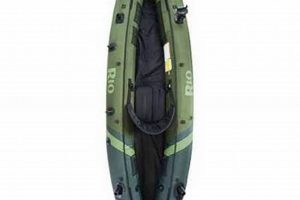
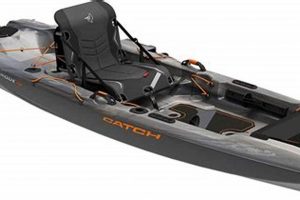
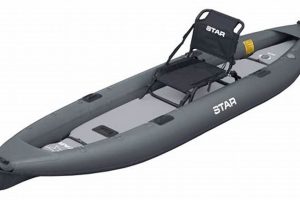
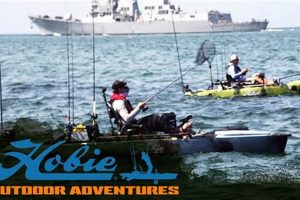
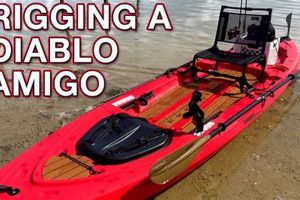
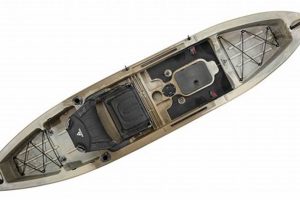
A small, stable watercraft, often flat-bottomed and designed for use in calm waters, has become increasingly popular among anglers seeking a versatile and affordable fishing platform. This type of vessel offers a blend of portability and stability, allowing access to shallow areas often unreachable by larger boats while providing sufficient space for gear and comfortable movement.
The appeal of this fishing platform stems from its blend of simplicity, affordability, and adaptability. Its compact size and lightweight nature make transport and launch relatively easy, expanding fishing opportunities beyond shore-bound limitations. The stable design provides a secure platform for casting and landing fish, contributing to a relaxing and enjoyable fishing experience. Furthermore, these vessels can be customized with accessories like rod holders, fish finders, and even small trolling motors, enhancing their fishing functionality. This evolving approach to angling reflects a desire for closer contact with nature and a simpler, more personalized fishing experience.
The following sections will delve into specific vessel types suitable for fishing, discuss essential gear and accessories, and offer practical advice for choosing the right setup based on individual needs and fishing styles. Subsequent topics will cover safety precautions, responsible fishing practices, and techniques for maximizing success on the water.
Tips for Small Boat Fishing
Careful planning and preparation contribute significantly to a successful and enjoyable fishing experience from a small, human-powered vessel. The following tips provide valuable insights for maximizing both comfort and effectiveness on the water.
Tip 1: Prioritize Stability: Vessel stability is paramount. Weight should be distributed evenly, and sudden movements avoided. Low centers of gravity enhance stability. Consider outriggers or stabilizers for added security, especially in windy conditions.
Tip 2: Minimize Gear: Space is often limited. Essential gear should be prioritized, and unnecessary items left ashore. Organize tackle and equipment efficiently using waterproof storage solutions.
Tip 3: Choose Appropriate Paddles/Oars: Correctly sized and styled paddles or oars are crucial for efficient propulsion and maneuverability. Lightweight, durable options reduce fatigue and enhance control.
Tip 4: Research Fishing Locations: Advance research helps identify suitable fishing spots accessible by small craft. Consider water depth, currents, and potential hazards. Local fishing regulations should be reviewed.
Tip 5: Practice Safety First: A personal flotation device (PFD) should always be worn. Carry a whistle, signaling device, and basic first-aid kit. Inform someone of fishing plans, including location and expected return time.
Tip 6: Respect the Environment: Practice catch-and-release whenever possible. Avoid disturbing natural habitats and dispose of waste responsibly. Adhere to local fishing regulations and licensing requirements.
Tip 7: Master Basic Navigation: Familiarize oneself with basic navigation principles, including chart reading and compass use. GPS devices and smartphone apps can provide valuable assistance but should not be solely relied upon.
By adhering to these guidelines, anglers can enhance safety, improve fishing success, and cultivate a deeper appreciation for the sport and the environment. Preparation and mindful practices are key to a rewarding experience.
The concluding section will offer additional resources for enhancing fishing knowledge and skills, and reiterate the importance of responsible angling practices.
1. Stability

Stability is a critical factor influencing the safety and effectiveness of small fishing vessels, particularly those designed for calm waters. A stable platform allows anglers to cast, retrieve, and land fish efficiently while minimizing the risk of capsizing or accidental entry into the water. Various design elements and operational practices contribute to vessel stability, impacting the overall fishing experience.
- Center of Gravity
A low center of gravity is fundamental to vessel stability. Weight distribution significantly impacts the center of gravity. Keeping weight low and centered minimizes rocking and swaying. Anglers should avoid sudden movements and distribute gear evenly within the vessel. For example, positioning heavier items like batteries and tackle boxes close to the bottom of the boat enhances stability.
- Hull Design
Hull design significantly influences stability. Flat-bottomed hulls generally offer excellent primary stability (initial resistance to tipping), making them suitable for calm waters. However, they may be less stable in rougher conditions compared to vessels with deeper V-shaped hulls or multi-hull designs. The wider the beam (width) of the vessel, the greater the initial stability.
- Environmental Conditions
Environmental factors like wind and current significantly impact stability. Strong winds can create instability, especially for smaller, lighter vessels. Currents can also affect stability, particularly when maneuvering in shallow water or near obstacles. Anglers should be mindful of prevailing conditions and adjust their positioning and movements accordingly. Adding features like drift anchors or outriggers can further enhance stability in windy conditions.
- Angler Behavior
Angler behavior plays a crucial role in maintaining stability. Sudden movements, shifting weight, or leaning over the side can compromise stability and increase the risk of capsizing. Anglers should maintain a balanced posture and avoid abrupt shifts in weight. Practicing proper boarding and exiting techniques also contributes to overall safety.
Understanding the factors influencing stability allows anglers to make informed decisions regarding vessel selection, operational practices, and equipment choices. Prioritizing stability ensures a safe and enjoyable fishing experience, allowing anglers to focus on the sport rather than worrying about balance and potential hazards.
2. Maneuverability

Maneuverability is a crucial aspect of small fishing vessel design, directly influencing the angler’s ability to navigate diverse water environments and access desirable fishing locations. Effective maneuverability allows for precise boat control, enabling anglers to position themselves strategically for optimal casting, presentation, and fish retrieval. This characteristic becomes particularly important when fishing in confined spaces, navigating complex shorelines, or targeting specific structures like fallen logs or weed beds. The interplay between hull design, propulsion systems, and water conditions significantly impacts a vessel’s maneuverability, impacting overall fishing effectiveness.
Several factors contribute to the maneuverability of small fishing craft. Shorter vessels, typically under 14 feet, generally offer enhanced maneuverability compared to longer counterparts. Their reduced length allows for quicker turns and easier navigation through tight spaces. Hull shape also plays a significant role. Flat-bottomed hulls, common in jon boats and certain kayak designs, provide excellent stability but can be less responsive to turning compared to vessels with more pronounced keels or rounded hulls. The choice of propulsion system paddles, oars, or small electric motors also impacts maneuverability. Paddles offer precise control and are well-suited for navigating shallow or obstructed areas. Oars provide greater power for covering longer distances. Small electric motors enhance mobility and allow anglers to hold position effortlessly against currents or wind. Water conditions also play a role; strong currents or winds can significantly challenge maneuverability, requiring skillful boat handling and potentially specialized equipment like drift anchors or drogues.
The practical significance of maneuverability in small fishing vessels is readily apparent. Consider a scenario where an angler wishes to target a specific pocket of water beneath overhanging branches along a riverbank. A highly maneuverable vessel allows for precise positioning within the targeted area, maximizing casting opportunities. Conversely, a less maneuverable vessel might struggle to access such a confined space, limiting fishing potential. Understanding the factors influencing maneuverability, coupled with appropriate vessel selection and skilled operation, empowers anglers to navigate diverse water environments effectively, maximizing fishing success and overall enjoyment.
3. Portability

Portability represents a defining characteristic of small fishing vessels, significantly influencing their appeal and practical application. The ease with which these vessels can be transported and launched expands fishing access to a wider range of locations, including remote ponds, small streams, and shallow coastal areas often inaccessible to larger boats. This inherent portability stems from a combination of factors, including lightweight construction, compact dimensions, and adaptable transport methods.
Lightweight construction materials, such as aluminum, fiberglass, or various polymers, contribute significantly to portability. Reduced weight simplifies handling and allows for easier transport using readily available vehicles, including small cars, trucks, or even rooftop racks. Compact dimensions further enhance portability, enabling vessels to fit within standard truck beds or be easily carried short distances by one or two individuals. This ease of transport eliminates the need for specialized trailers or launching facilities, opening up fishing opportunities in areas previously beyond reach. Consider, for example, accessing a secluded mountain lake reachable only by a narrow dirt road; a portable fishing vessel allows anglers to transport their craft easily to the water’s edge, expanding fishing horizons beyond the constraints of traditional boat ramps and marinas.
The practical implications of portability extend beyond mere access. Reduced transport complexity translates to more time spent fishing and less time devoted to logistical challenges. This efficiency is particularly appealing to anglers seeking quick fishing trips during limited free time or those venturing into remote areas where access infrastructure is minimal. Furthermore, the portability of these vessels contributes to their affordability, eliminating the costs associated with trailer ownership, storage fees, and access to boat ramps. This accessibility makes small, portable fishing vessels an attractive option for anglers of varying budgets and experience levels. The ability to quickly and easily transport and deploy a fishing vessel significantly enhances the overall fishing experience, maximizing time on the water and minimizing logistical barriers.
4. Affordability
Affordability represents a significant advantage of small, simple fishing vessels, often making them an attractive entry point for individuals new to angling or those seeking a cost-effective approach to the sport. The lower initial investment, coupled with reduced operational and maintenance costs, allows a broader range of individuals to experience the joys of fishing without significant financial barriers. This accessibility contributes to the popularity of these vessels, particularly among recreational anglers and those prioritizing practical value.
- Initial Purchase Price
The initial purchase price of basic, small fishing vessels is generally significantly lower than that of larger, more complex boats. This lower entry cost makes them accessible to a wider range of budgets, eliminating a substantial financial barrier to entry for aspiring anglers. For example, a basic jon boat or fishing kayak can often be purchased for a fraction of the cost of a motorized fishing boat, making them an appealing option for budget-conscious individuals.
- Operating Costs
Operating costs are typically minimal for human-powered vessels. They require no fuel, reducing recurring expenses associated with motorized craft. This translates to significant long-term savings, making them an attractive option for individuals seeking an economical approach to fishing. Furthermore, smaller vessels often require less storage space, potentially reducing or eliminating storage fees.
- Maintenance
Maintenance requirements are generally less demanding and less expensive for small, simple fishing vessels. They often require minimal upkeep, such as occasional cleaning and inspections. Unlike motorized boats with complex engines and systems, these simpler vessels involve fewer parts and less specialized maintenance, contributing to lower overall ownership costs. Simple repairs, when needed, can often be performed by the owner, further reducing expenses.
- Accessories and Gear
While specialized fishing accessories can add to the overall cost, many basic fishing setups for small vessels require minimal additional gear. Essential items like rods, reels, and tackle are relatively affordable, and the compact nature of these vessels often means less gear is needed compared to larger boats. This can make outfitting a small fishing craft a relatively economical endeavor.
The affordability of these vessels extends beyond the initial purchase. Lower operating and maintenance costs contribute to long-term savings, making them a sustainable option for budget-conscious anglers. This combination of affordability and practicality contributes significantly to the popularity of these vessels, democratizing access to fishing and encouraging participation across a broader spectrum of individuals.
5. Adaptability

Adaptability constitutes a significant advantage of small, versatile fishing vessels, allowing them to function effectively across diverse fishing environments and cater to various angling styles. This inherent adaptability stems from their modular nature and the potential for customization through accessories and modifications. This flexibility enhances their utility, making them suitable for a broader range of fishing scenarios compared to more specialized watercraft.
The adaptability of these vessels manifests in several ways. Consider the mounting of rod holders, fish finders, and small trolling motors. These additions transform a basic vessel into a specialized fishing platform tailored to individual preferences. Further modifications might include anchor systems, livewells, or even specialized storage compartments for tackle and gear. This modularity allows anglers to configure their vessels according to specific fishing needs, whether targeting bass in a shallow lake or trolling for trout in a slow-moving river. Adaptability also extends to environmental variations. A lightweight, portable vessel can be readily transported and launched in diverse locations, from small ponds and creeks to larger lakes and coastal waters. This flexibility allows anglers to exploit various fishing opportunities, unconstrained by the limitations of larger, less portable craft.
The practical significance of adaptability is evident in its contribution to angler effectiveness and enjoyment. A customizable vessel allows for optimization of fishing techniques and equipment deployment. Consider an angler transitioning from still-fishing to trolling; a readily adaptable vessel accommodates the addition of a trolling motor and associated gear, facilitating this shift in approach. Such flexibility enhances fishing versatility and maximizes the potential for success in diverse environments. Furthermore, adaptability allows these vessels to serve multiple recreational purposes beyond fishing, potentially accommodating activities like nature observation or leisurely paddling. This multi-functionality enhances their overall value and appeal.
6. Shallow Water Access
Shallow water access represents a defining advantage of small, human-powered fishing vessels, enabling anglers to exploit productive fishing grounds often inaccessible to larger, deeper-draft boats. This capability stems from the shallow draft inherent in these vessels’ design, allowing navigation in minimal depths where traditional motorboats cannot venture. This access opens opportunities to target species that frequent shallow-water habitats, such as bass, panfish, and various inshore saltwater species.
The shallow draft of these vessels allows navigation through mere inches of water, granting access to backwater channels, shallow flats, and protected coves where larger boats risk grounding. These shallow areas often serve as nurseries for juvenile fish and attract larger predators seeking prey. Consider, for example, a shallow, weedy bay in a lake, teeming with insect life and small baitfish; this environment becomes readily accessible to a shallow-draft vessel, providing anglers an opportunity to target predatory species attracted to the abundant food source. This access translates directly into increased fishing opportunities, expanding the range of potential fishing locations and species within reach.
Exploiting shallow water access effectively requires careful consideration of vessel design and operational practices. Flat-bottomed designs, common in jon boats and certain kayaks, excel in shallow environments, minimizing draft and maximizing stability. However, navigating extremely shallow areas requires careful attention to weight distribution and trim, ensuring minimal hull contact with the bottom. Furthermore, utilizing appropriate propulsion systems, such as paddles or poles designed for shallow water use, enhances maneuverability and minimizes disturbance of the bottom, reducing the risk of spooking fish. Understanding the relationship between vessel design, operational techniques, and shallow-water access empowers anglers to maximize their effectiveness in these productive fishing environments. This understanding translates into a significant advantage, opening doors to fishing experiences unavailable to those limited by deeper-draft vessels.
7. Fishing Platform Customization

Fishing platform customization plays a crucial role in optimizing small, versatile vessels like jon boats and fishing kayaks for specific angling needs. These craft, due to their relatively simple and open design, offer a high degree of adaptability, allowing anglers to tailor their setup for diverse fishing styles and target species. Customization options range from simple additions like rod holders and anchor systems to more complex modifications involving electronics, livewells, and specialized storage solutions.
The ability to customize a fishing platform directly impacts angling effectiveness. Consider a jon boat configured for bass fishing in shallow, weedy environments. The addition of a trolling motor allows precise maneuvering through vegetation, while mounted rod holders keep multiple rods readily accessible. A depth finder aids in locating underwater structure and fish concentrations, and a livewell ensures the health of captured fish until release or weigh-in. Conversely, a kayak customized for fly fishing might prioritize lightweight portability and feature specialized storage for fly boxes and lines, along with anchor systems suitable for river currents. These examples illustrate how customization transforms a basic vessel into a specialized tool tailored to a particular angling approach.
Effective fishing platform customization requires careful consideration of target species, fishing environment, and individual angler preferences. An angler targeting larger saltwater species from a kayak might prioritize stability and incorporate outriggers or stabilizers. Similarly, an angler fishing in cold climates might add insulated compartments for storing food and beverages. Careful planning and selection of appropriate accessories contribute significantly to maximizing on-the-water effectiveness, comfort, and overall fishing success. Furthermore, customization allows anglers to adapt their vessels to changing conditions or evolving fishing interests, extending the lifespan and utility of their investment.
Frequently Asked Questions
This section addresses common inquiries regarding the use of small, versatile vessels for fishing, offering practical insights and clarifying potential misconceptions.
Question 1: What are the key advantages of using a small, human-powered vessel for fishing?
Key advantages include affordability, portability, access to shallow waters, and a closer connection with nature. These vessels offer a cost-effective and versatile approach to angling, particularly in environments inaccessible to larger boats.
Question 2: How does one choose between a jon boat and a fishing kayak?
Selection depends on individual needs and preferences. Jon boats offer greater stability and carrying capacity, while kayaks provide enhanced maneuverability and portability. Fishing style, target species, and typical fishing environment should influence the decision.
Question 3: What safety precautions are essential when fishing from a small vessel?
Wearing a personal flotation device (PFD) is paramount. Informing someone of fishing plans, including location and expected return time, is crucial. Carrying a whistle, signaling device, and basic first-aid kit enhances safety preparedness. Checking weather conditions before departure is essential.
Question 4: What essential gear should be carried on a small fishing vessel?
Essential gear includes appropriate fishing tackle, a PFD, signaling devices, basic tools, and navigation aids. Additional items might include sunscreen, insect repellent, a first-aid kit, and waterproof storage for personal belongings.
Question 5: How does one maximize stability while fishing from a small vessel?
Maintaining a low center of gravity and distributing weight evenly within the vessel promotes stability. Avoiding sudden movements and minimizing gear contribute to a more stable fishing platform. Outriggers or stabilizers can further enhance stability.
Question 6: Are there specific regulations regarding small vessel fishing?
Regulations vary by location and jurisdiction. Consulting local authorities or relevant agencies provides information on licensing requirements, catch limits, and permitted fishing areas. Adhering to these regulations is crucial for responsible angling.
Careful consideration of these frequently asked questions enhances angler preparedness, promoting safe and enjoyable fishing experiences. Understanding vessel characteristics, safety protocols, and relevant regulations contributes significantly to a positive and productive time on the water.
The following section provides further resources and concludes this guide to small vessel fishing.
Conclusion
Small, versatile watercraft provide distinct advantages for anglers seeking accessible and adaptable fishing experiences. Their portability, affordability, and maneuverability open doors to diverse fishing environments, particularly shallow-water habitats often inaccessible to larger boats. Careful consideration of vessel characteristics, including stability, customization options, and suitability for specific fishing styles, empowers informed decision-making. Understanding relevant safety regulations and practicing responsible angling techniques ensure enjoyable and sustainable fishing practices.
The future of angling increasingly embraces versatile, adaptable approaches. Embracing these evolving trends empowers anglers to explore new waters, refine techniques, and deepen connections with the natural world. Responsible stewardship and informed participation contribute to the preservation of aquatic ecosystems, ensuring future generations can continue to enjoy the rewards of fishing.