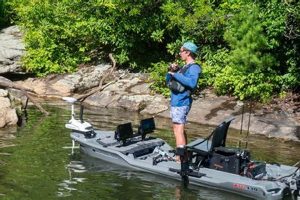
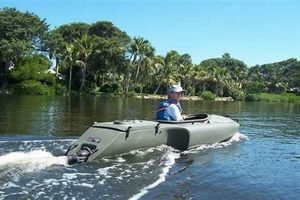
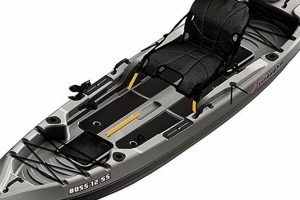
Angling from a small, human-powered watercraft offers a unique approach to the sport. This method involves utilizing a kayak as a stable platform for casting lines and reeling in catches. Imagine the tranquility of a morning paddle culminating in the thrill of a hooked fish.
This approach provides distinct advantages, including access to shallow or otherwise difficult-to-reach fishing grounds. The quiet movement of a kayak minimizes disturbance to aquatic life, potentially increasing catch rates. Historically, small boats have played a significant role in sustenance fishing, and the modern adaptation with kayaks adds a recreational dimension. This quiet, efficient method resonates with a growing movement towards eco-conscious outdoor pursuits.
The following sections will delve into specific techniques, equipment recommendations, safety considerations, and ideal locations for maximizing the experience. Further exploration will also cover the environmental impact and responsible practices associated with this activity.
Tips for Kayak Angling
Optimizing angling excursions from a kayak involves careful planning and execution. The following tips offer guidance for a successful and enjoyable experience.
Tip 1: Stability is Paramount: Choose a kayak designed for stability, especially in conditions with potential for waves or currents. Wider hulls generally offer greater stability than narrower designs.
Tip 2: Essential Gear Within Reach: Organize rods, reels, tackle boxes, and other necessary equipment for easy access. Utilize specialized kayak storage solutions and mounts to prevent gear from shifting or falling overboard.
Tip 3: Safety First: Always wear a personal flotation device (PFD) and carry essential safety equipment, including a whistle, signaling device, and first-aid kit. Inform someone of the planned fishing location and estimated return time.
Tip 4: Paddle and Rod Management: Practice efficient paddle strokes and rod handling techniques to maintain balance and control of the kayak. Learning to cast and retrieve with one hand while controlling the kayak with the other is crucial.
Tip 5: Respect Wildlife and the Environment: Adhere to catch-and-release practices whenever possible. Properly dispose of fishing line and other waste materials. Avoid disturbing nesting areas or other sensitive habitats.
Tip 6: Weather Awareness: Check weather forecasts before embarking on any kayak fishing trip. Avoid venturing out in strong winds, lightning storms, or other hazardous conditions.
Tip 7: Navigation and Planning: Familiarize oneself with the intended fishing area, including water depths, currents, and potential hazards. Utilize charts, maps, or GPS devices for navigation.
Adhering to these guidelines will enhance safety and enjoyment while maximizing the potential for a successful outing. Preparation and responsible practices are crucial for a rewarding kayak angling experience.
By incorporating these strategies, anglers can confidently enjoy the unique benefits of kayak fishing. The subsequent section will offer guidance on selecting appropriate fishing locations.
1. Stable Kayak Platform

A stable kayak platform is fundamental to successful angling from a kayak. The inherent instability of a small watercraft presents challenges for casting, retrieving, and landing fish. A stable platform minimizes unwanted movement, allowing for precise casts and controlled retrieval. Without stability, the angler risks capsizing, losing equipment, or spooking fish. Consider the scenario of hooking a large fish: a stable kayak enables the angler to manage the fight effectively, whereas an unstable platform could easily result in an overturned vessel. Kayak design, including hull width and shape, plays a critical role in platform stability. Furthermore, proper weight distribution within the kayak and the angler’s body position contribute significantly to overall balance.
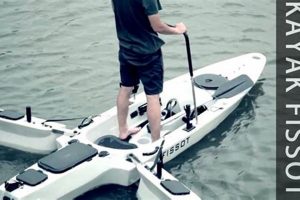
The importance of a stable kayak platform extends beyond simply staying afloat. It directly impacts the effectiveness of fishing techniques. For example, fly fishing requires delicate presentations and precise line control, both of which are compromised by excessive kayak movement. Similarly, trolling requires consistent speed and direction, difficult to maintain without a stable platform. Consider the difference between fishing in calm, flat water versus choppy conditions. A stable kayak platform mitigates the impact of these external factors, allowing for a more consistent and productive fishing experience. Specialized features, such as outriggers or stabilizers, can further enhance stability, particularly in challenging environments.
In summary, a stable kayak platform is an essential prerequisite for successful and safe kayak angling. It influences casting accuracy, fish-fighting capability, and overall control of the vessel. Understanding the factors that contribute to stability, including kayak design, weight distribution, and body positioning, allows anglers to optimize their platform and maximize their chances of success. This foundational element underpins the entire kayak fishing experience, enabling anglers to confidently and effectively pursue their quarry from a unique and rewarding vantage point.
2. Specialized Equipment

Effective angling from a kayak necessitates specialized equipment tailored to the unique challenges and opportunities presented by this fishing platform. Standard fishing gear often proves inadequate or cumbersome in a kayak environment. The following facets explore essential specialized equipment that enhances both safety and efficacy.
- Rod Holders:
Rod holders secure fishing rods, freeing hands for paddling, maneuvering, and other essential tasks. Flush-mount, adjustable, and rotating rod holders accommodate various fishing styles and rod types. Without secure rod storage, valuable equipment risks being lost overboard, especially during unexpected movements or encounters with strong currents. Different rod holders cater to specific fishing techniques, such as trolling, jigging, or fly fishing. Properly positioned rod holders optimize line retrieval and minimize interference with paddling strokes.
- Anchor Trolley System:
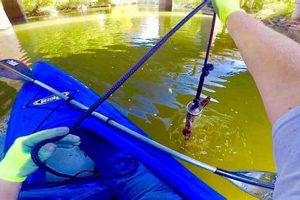
Anchor trolley systems allow for controlled anchoring and positioning of the kayak. These systems enable anglers to maintain desired positions in currents or wind, maximizing fishing effectiveness in specific locations. Imagine fishing a drop-off or structure an anchor trolley allows precise placement and adjustment to the current, keeping the kayak aligned with the target area. Without an anchor trolley, maintaining position becomes challenging, reducing fishing efficiency and potentially leading to entanglement in lines or other hazards.
- Kayak Fish Finders:
Kayak fish finders provide crucial underwater insights, revealing water depth, bottom structure, and fish locations. These compact, portable units offer valuable information for locating productive fishing areas and targeting specific species. Consider navigating unfamiliar waters a fish finder helps identify promising areas, saving time and increasing the likelihood of success. Modern fish finders integrate GPS and mapping capabilities, enhancing navigation and marking productive spots for future excursions.
- Tackle Storage and Organization:
Specialized tackle storage solutions maximize space efficiency and organization within the limited confines of a kayak. Waterproof tackle boxes, trays, and bags protect essential gear from moisture and facilitate quick access to lures, hooks, and other necessities. Fumbling through disorganized tackle wastes valuable fishing time and can lead to tangles or lost equipment. Efficient tackle storage maintains order, allowing anglers to focus on fishing rather than searching for misplaced items.
These specialized equipment adaptations significantly enhance the kayak angling experience. By optimizing organization, stability, and access to essential tools, these adaptations contribute to a safer and more productive fishing excursion. The selection and utilization of appropriate specialized equipment directly impacts the angler’s ability to effectively and enjoyably fish from a kayak.
3. Accessible Fishing Spots
Kayaks unlock access to fishing grounds often inaccessible to larger, motorized boats. This expanded reach represents a significant advantage of kayak angling, opening opportunities to exploit diverse habitats and target specific species. Shallow-water estuaries, secluded coves, and upstream stretches of rivers often harbor abundant fish populations yet remain beyond the reach of traditional powerboats. Kayaks, with their shallow drafts and maneuverability, navigate these areas with ease, offering anglers an exclusive window into these productive ecosystems. Consider a small, overgrown pond choked with vegetation inaccessible to motorized craft, yet readily navigable by kayak. Such locations frequently harbor prized species like bass or panfish, providing a unique angling experience unavailable from the shore or larger boats.
The connection between accessible fishing spots and kayak angling extends beyond mere physical access. Kayaks offer a stealthy approach, minimizing disturbance to fish in these often-shallow environments. The quiet operation of a kayak, compared to the noise and vibrations of a motorboat, reduces the likelihood of spooking fish, especially in clear, shallow water. This advantage allows anglers to approach fish more closely and present lures or bait with greater precision. For example, stalking bonefish in shallow flats requires a stealthy approach, and the quiet operation of a kayak offers a significant advantage compared to a motorized skiff. Furthermore, the low profile of a kayak minimizes shadows and reflections on the water’s surface, further reducing the chance of detection by wary fish.
The ability to access secluded and productive fishing spots represents a defining characteristic of kayak angling. This access expands angling opportunities and allows for targeted approaches to specific species and habitats. The quiet, non-intrusive nature of kayak fishing enhances the angler’s ability to approach fish effectively within these environments. Understanding the relationship between kayak accessibility and fishing spot selection enables anglers to maximize their success and appreciate the unique advantages offered by this method of angling. The subsequent section will explore effective techniques for maximizing catch rates within these accessible environments.
4. Quiet Approach
Kayak angling offers a significant advantage: a quiet approach. Unlike motorized boats, kayaks produce minimal noise and vibration, reducing disturbance to aquatic life. This stealth allows closer approaches to fish, particularly in shallow or clear waters where fish are easily spooked. The following facets delve into the components, examples, and implications of this quiet approach within the context of kayak angling.
- Reduced Noise Pollution:
The absence of a combustion engine eliminates the loud noises and vibrations that typically accompany motorized watercraft. Electric motors, while quieter than gasoline counterparts, still generate detectable noise underwater. Kayaks, powered solely by human paddle strokes, produce minimal sound, allowing anglers to approach fish without alerting them to their presence. This reduction in noise pollution increases the likelihood of fish remaining in their natural feeding patterns, undisturbed by the angler’s approach. Consider fishing in a shallow, clear stream; the quiet approach of a kayak allows observation of fish behavior without causing alarm, increasing the chances of a successful presentation.
- Minimized Disturbance of the Water Surface:
Kayaks displace less water than larger boats, creating smaller wakes and ripples. This minimized surface disturbance reduces the visual cues that might alert fish to an approaching angler. Larger vessels create pressure waves and turbulent wakes that can easily spook fish in shallow areas. Kayaks, however, glide through the water with minimal disruption, preserving the natural environment and increasing the chances of an undetected approach. Imagine stalking redfish tailing in shallow flats; the subtle movement of a kayak allows the angler to get within casting range without creating disruptive ripples that would scatter the fish.
- Stealthy Maneuvering in Shallow Waters:
The shallow draft of a kayak permits navigation through shallow areas inaccessible to larger boats. This maneuverability, combined with the quiet operation, provides access to prime fishing habitats often teeming with fish. Navigating through tight channels, around submerged vegetation, or over shallow flats becomes feasible and unobtrusive in a kayak. Consider accessing a secluded backwater area filled with lily pads; a kayak allows quiet and precise maneuvering through the vegetation, reaching fish holding in the cover without alarming them.
- Enhanced Wildlife Observation:
The quiet nature of kayak angling enhances not just fishing opportunities but also wildlife observation. The minimal disturbance allows for closer and more prolonged encounters with birds, turtles, and other aquatic life without altering their natural behaviors. Imagine paddling through a marsh teeming with birdlife; the quiet passage of a kayak allows observation of nesting behaviors, feeding patterns, and other natural interactions without causing disturbance or flight. This quiet interaction with the ecosystem enhances the overall outdoor experience beyond the pursuit of fish.
The quiet approach offered by kayak angling significantly enhances fishing effectiveness and enriches the overall experience. By minimizing noise pollution, surface disturbance, and visual presence, kayaks allow anglers to integrate seamlessly into the aquatic environment. This stealthy approach maximizes opportunities for close encounters with fish and other wildlife, transforming the act of fishing into a more immersive and rewarding connection with nature.
5. Environmental Awareness

Kayak angling, while offering a unique and rewarding connection with nature, requires a heightened sense of environmental awareness. The act of fishing from a kayak places anglers in close proximity to fragile ecosystems, demanding responsible practices to minimize impact and preserve these natural resources for future generations. Understanding and mitigating potential environmental impacts ensures the sustainability of both the sport and the ecosystems it interacts with.
- Leave No Trace Principles:
Adhering to Leave No Trace principles is paramount in kayak angling. Packing out all trash, minimizing campfire impacts (if applicable), respecting wildlife, and traveling on durable surfaces minimize the angler’s footprint on the environment. Discarded fishing line, hooks, and other debris pose significant threats to aquatic life and water quality. Proper disposal ensures the preservation of the natural environment and prevents harm to wildlife. Consider the impact of a single discarded plastic lure; it can persist for decades, potentially entangling birds, fish, or other animals. Responsible waste management practices minimize these risks and maintain the integrity of the ecosystem.
- Respect for Aquatic Habitats:
Kayaks provide access to sensitive shallow-water habitats, such as seagrass beds, mangrove forests, and spawning grounds. Avoiding disturbance of these areas is crucial for maintaining healthy fish populations and ecosystem function. Seagrass beds, for example, provide essential nursery grounds for many fish species. Disturbing these areas can damage the vegetation and displace juvenile fish, impacting future fish populations. Respectful angling practices, such as avoiding dragging anchors through seagrass or disturbing sediment in spawning areas, contribute to the long-term health of these vital habitats.
- Catch-and-Release Practices:
Practicing catch-and-release fishing promotes sustainable fish populations. Handling fish with care, using appropriate hooks and tackle, and minimizing air exposure contribute to post-release survival rates. Consider the stress placed on a fish during the capture and release process; proper handling techniques, such as using wet hands or a landing net, minimize physical damage and reduce stress, increasing the likelihood of the fish surviving after release. Selective harvesting, where only a few fish are kept for consumption, represents a balanced approach that allows for some harvest while minimizing impact on overall fish populations.
- Invasive Species Awareness:
Anglers must be vigilant in preventing the spread of invasive species. Cleaning kayaks, paddles, and fishing gear thoroughly after each trip removes any attached organisms or plant fragments that could introduce non-native species into new environments. Invasive plants and animals can disrupt entire ecosystems, outcompeting native species and altering habitat structure. Imagine transporting a fragment of invasive milfoil on a kayak to a pristine lake; the milfoil could rapidly spread, choking out native vegetation and disrupting the entire aquatic food web. Careful cleaning practices mitigate this risk and protect the integrity of local ecosystems.
Environmental awareness is an integral component of responsible kayak angling. By integrating these principles into their fishing practices, anglers contribute to the long-term health and sustainability of aquatic ecosystems. The quiet, low-impact nature of kayak fishing provides a unique opportunity to connect with nature while minimizing disturbance to the environment. Embracing these environmentally conscious practices ensures that future generations can continue to enjoy the rewards of kayak angling in healthy, thriving ecosystems.
6. Safety Precautions

Safety precautions are paramount when fishing from a kayak. The inherent instability of a small watercraft, combined with the dynamic environment of open water, presents inherent risks. Neglecting safety protocols can lead to serious consequences, ranging from equipment loss to life-threatening situations. Understanding and implementing appropriate safety measures is crucial for a successful and incident-free angling experience. Consider the scenario of encountering unexpected strong winds or currents; a lack of preparation, such as neglecting to wear a personal flotation device (PFD), could quickly escalate a manageable situation into a life-threatening emergency. Therefore, safety precautions form an inseparable component of responsible kayak angling.
Several key safety precautions warrant careful consideration. Wearing a PFD is non-negotiable. Even in calm conditions, unforeseen circumstances, such as capsizing due to an unexpected wave or entanglement with fishing gear, necessitate the buoyancy provided by a PFD. Carrying a communication device, such as a waterproof VHF radio or a mobile phone in a waterproof case, allows for summoning assistance in emergencies. Informing someone of the planned fishing location and estimated return time provides an additional layer of security. Checking weather forecasts before embarking on a trip helps avoid hazardous conditions. Furthermore, understanding basic self-rescue techniques, such as re-entering a capsized kayak, equips anglers to manage challenging situations effectively.
Integrating safety precautions into kayak angling practices transforms the activity from potentially hazardous to responsibly managed. Preparation and awareness mitigate risks, allowing anglers to focus on the enjoyment of the sport. Understanding the potential hazards and implementing appropriate safety measures demonstrates a commitment to responsible angling and enhances the overall experience. This proactive approach safeguards not only the angler but also contributes to the safety of others on the water. A culture of safety within the kayak angling community fosters a positive and sustainable environment for all participants.
7. Proper Techniques
Proper techniques are essential for successful and safe kayak angling. They bridge the gap between simply being on the water and effectively leveraging the kayak’s unique advantages for fishing. These techniques encompass efficient paddling, precise casting, effective fish fighting, and safe handling of equipment within the confined space of a kayak. Mastering these techniques maximizes angling success while minimizing risks and environmental impact. Consider the difference between an angler struggling to maintain position and cast accurately versus one who effortlessly maneuvers and presents lures with precision; the latter exemplifies the impact of proper technique.
- Paddle Control and Maneuvering:
Efficient paddle strokes and maneuvering techniques are fundamental. Understanding how to position the kayak effectively for casting, maintaining position in currents, and navigating through obstacles maximizes fishing opportunities. Consider approaching a promising fishing spot near a submerged log; precise paddle control allows the angler to position the kayak upstream, minimizing disturbance and maximizing casting angles. Conversely, clumsy paddling can spook fish, create entanglement hazards, and impede effective presentation of lures or bait.
- Casting and Retrieval in a Confined Space:
Casting from a kayak requires adaptations to traditional casting techniques. The limited space and potential for instability necessitate controlled movements and shorter casts. Practicing casting with one hand while maintaining balance and kayak control is crucial. Imagine casting a fly rod from a seated position; precise movements and an understanding of the kayak’s balance point are essential for accurate presentations without capsizing. Furthermore, efficient retrieval techniques, such as managing slack line and maintaining appropriate rod angles, become even more critical within the confines of a kayak.
- Fish Fighting and Landing:
Fighting a fish from a kayak presents unique challenges. The angler must manage the fish while maintaining balance and control of the kayak. Adjusting drag settings, using appropriate rod angles, and employing proper reeling techniques minimize stress on both the angler and the fish. Consider hooking a large, powerful fish; proper technique, including adjusting the kayak’s position relative to the fish and using the kayak’s leverage to advantage, becomes crucial for successfully landing the catch without capsizing or losing equipment. Furthermore, landing techniques must be adapted to the kayak environment, utilizing landing nets or careful hand-grasping to secure the fish safely.
- Equipment Management and Safety:
Proper equipment management is crucial in the limited space of a kayak. Securing rods, reels, and tackle boxes prevents loss or entanglement. Understanding how to deploy and retrieve anchors safely minimizes hazards and environmental impact. Consider the scenario of changing lures or rigging a new setup; proper organization and secure storage prevent equipment from falling overboard or creating entanglement hazards. Furthermore, safe handling of hooks and sharp objects minimizes the risk of injury within the confined space of the kayak.
Mastering proper techniques is essential for maximizing the advantages of kayak angling. These techniques transform the kayak from simply a mode of transportation into a specialized fishing platform, allowing anglers to access prime fishing locations, approach fish stealthily, and manage the catch effectively. The synergy between proper techniques and the kayak’s capabilities unlocks the full potential of this unique angling experience. This proficiency translates to increased catch rates, enhanced safety, and a deeper connection with the aquatic environment. Through dedicated practice and an understanding of the principles underlying these techniques, anglers can truly elevate their kayak fishing experience from novice to expert.
Frequently Asked Questions
This section addresses common inquiries regarding angling from a kayak, providing concise and informative responses to clarify potential uncertainties and misconceptions.
Question 1: What type of kayak is best suited for fishing?
Kayaks designed specifically for fishing offer enhanced stability, specialized storage, and features like rod holders and anchor trolleys. Sit-on-top kayaks are generally preferred for their self-bailing capabilities and ease of re-entry after a capsize. However, sit-inside kayaks offer greater protection from the elements and can be suitable for colder climates.
Question 2: Is specialized fishing equipment necessary?
While standard fishing gear can be adapted for kayak use, specialized equipment enhances both safety and effectiveness. Rod holders, anchor trolleys, kayak fish finders, and specialized tackle storage optimize organization and functionality within the limited space of a kayak.
Question 3: What safety precautions should one take when fishing from a kayak?
Wearing a personal flotation device (PFD) is paramount. Carrying a communication device, informing someone of the fishing plan, checking weather forecasts, and understanding basic self-rescue techniques are essential safety measures.
Question 4: What are the advantages of fishing from a kayak compared to shore fishing or using a motorized boat?
Kayaks offer access to shallow and secluded fishing spots often inaccessible to larger boats. The quiet approach minimizes disturbance to fish, increasing angling opportunities. Compared to shore fishing, kayaks provide greater mobility and access to a wider range of fishing locations.
Question 5: What environmental considerations are relevant to kayak angling?
Minimizing environmental impact is crucial. Adhering to Leave No Trace principles, respecting aquatic habitats, practicing catch-and-release fishing, and preventing the spread of invasive species ensure sustainable angling practices.
Question 6: What basic techniques improve kayak fishing success?
Mastering efficient paddling and maneuvering techniques, adapting casting and retrieval methods for a confined space, and understanding proper fish-fighting and landing techniques from a kayak are essential for maximizing success.
Careful consideration of these frequently asked questions equips individuals with essential knowledge for safe, effective, and environmentally responsible kayak angling. Understanding these aspects ensures a rewarding and sustainable approach to this unique fishing experience.
The subsequent section offers a deeper dive into specific techniques for various fish species.
Conclusion
Angling from a kayak represents a distinctive approach to sport fishing, offering unique advantages and challenges. This exploration has highlighted the importance of a stable platform, specialized equipment, accessibility to secluded fishing spots, the benefits of a quiet approach, environmental stewardship, essential safety precautions, and the mastery of proper techniques. Each of these facets contributes to a safe, effective, and environmentally responsible angling experience. From navigating shallow estuaries to fighting powerful fish from a compact vessel, kayak angling demands adaptability, skill, and a deep respect for the aquatic environment.
The future of kayak angling rests upon a foundation of responsible practices and continued innovation. Embracing sustainable techniques, respecting fragile ecosystems, and promoting safety awareness ensures the longevity of this rewarding pursuit. As technology advances and angler knowledge expands, the potential for further enhancing the kayak angling experience remains vast. Ultimately, the convergence of angler skill, environmental consciousness, and technological innovation will shape the future of this unique and evolving sport.