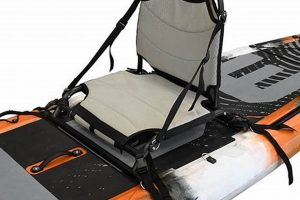
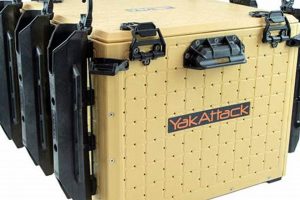
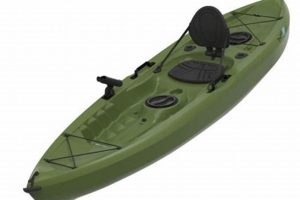
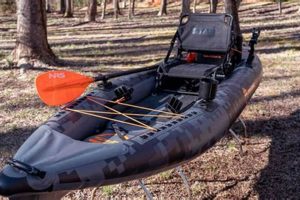
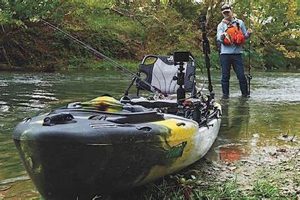
This sit-on-top vessel is designed for anglers seeking stability and performance on the water. Its features typically include ample storage for fishing gear, dedicated rod holders, and a comfortable, adjustable seat. Such crafts are often constructed from durable, UV-resistant polyethylene for extended lifespan and resilience against impacts and abrasion.
Anglers benefit from enhanced stability and maneuverability, allowing them to access shallow waters and navigate diverse fishing environments with ease. The design prioritizes comfort during extended fishing trips, minimizing fatigue and maximizing enjoyment. The evolution of fishing kayak design has led to increasingly specialized vessels, catering to specific angling styles and preferences, with features like integrated fish finders and live wells becoming more common.
Further exploration will cover key features, performance characteristics, user experiences, and comparisons with similar angling platforms. This detailed analysis will assist prospective buyers in making informed decisions based on their individual needs and fishing styles.
Tips for Utilizing a Fishing Kayak
Maximizing the angling experience requires careful consideration of preparation and technique. The following tips offer guidance for a safe and productive outing.
Tip 1: Prioritize Safety Gear: Always wear a personal flotation device (PFD). Carry a whistle, signaling mirror, and waterproof communication device for emergencies. Inform someone of the planned fishing location and estimated return time.
Tip 2: Balance and Stability: Distribute weight evenly within the vessel to maintain stability. Practice entering and exiting the kayak in shallow water before venturing into deeper areas. Avoid sudden movements that could compromise balance.
Tip 3: Paddle Selection and Technique: Choose a paddle appropriate for individual height and kayaking style. Utilize proper paddling techniques to conserve energy and maximize efficiency.
Tip 4: Fishing Gear Organization: Organize fishing gear strategically within easy reach to minimize movement and maintain balance. Utilize rod holders and tackle storage compartments efficiently.
Tip 5: Weather Awareness: Check weather forecasts before embarking on any fishing trip. Avoid kayaking in strong winds, lightning storms, or rough water conditions.
Tip 6: Respect Wildlife and the Environment: Adhere to local fishing regulations and practice catch-and-release principles whenever possible. Minimize environmental impact by properly disposing of fishing line and other waste.
Tip 7: Navigation and Planning: Utilize a map, compass, or GPS device to navigate effectively. Plan fishing routes and identify potential hazards or areas of interest beforehand.
Adherence to these guidelines enhances safety and enjoyment on the water, contributing to a successful and rewarding fishing experience.
The following section concludes this overview with final recommendations and considerations for prospective anglers.
1. Sit-on-Top Design

The sit-on-top design is a defining characteristic of the Evoke Navigator 120, differentiating it from traditional sit-inside kayaks and significantly influencing its functionality for fishing. This design choice directly impacts stability, comfort, and accessibility, key considerations for anglers.
- Enhanced Stability:
The wider, flatter hull inherent in sit-on-top kayaks contributes to increased primary stability, reducing the likelihood of tipping, especially important for anglers casting lines or reeling in fish. This design allows for greater freedom of movement and makes recovery easier if the kayak does capsize.
- Self-Bailing System:
Sit-on-top kayaks feature scupper holes that allow water to drain out of the cockpit, preventing water accumulation and maintaining buoyancy. This is crucial for anglers fishing in rougher conditions or when encountering waves and splashes.
- Ease of Entry and Exit:
The open design simplifies entering and exiting the kayak, particularly beneficial for anglers who may need to quickly adjust their position, enter the water for a short period, or re-enter after an accidental capsize. This accessibility also makes it easier for anglers with mobility limitations.
- Gear Accessibility and Storage:
Sit-on-top designs often provide more readily accessible storage options for fishing gear. Anglers can easily reach rods, tackle boxes, and other equipment without being confined by a closed cockpit. This open deck space allows for customization and the addition of accessories like fish finders and rod holders.
The sit-on-top design of the Evoke Navigator 120 directly contributes to its suitability for fishing, offering advantages in stability, water drainage, accessibility, and gear management. These features combine to create a fishing platform designed for both comfort and practicality on the water. The open design, while offering numerous benefits, also means anglers and their gear are more exposed to the elements, a factor to consider when planning fishing trips.
2. Stability

Stability is a critical performance characteristic for fishing kayaks, directly impacting angler safety, comfort, and fishing effectiveness. The Evoke Navigator 120 prioritizes stability through its hull design and features, aiming to provide a secure and balanced platform for various on-the-water activities. A stable kayak allows anglers to focus on fishing rather than constantly correcting balance, enabling confident casting, reeling, and landing of fish, even in challenging conditions.
The Navigator 120s wide, flat-bottom hull design provides inherent primary stability, resisting initial tipping. This design element creates a stable base, especially beneficial in calm water conditions. Secondary stability, the kayaks ability to recover from leaning or tilting, is also enhanced by the hulls shape and the positioning of the seat. This combination allows the angler to lean and shift weight for casting or retrieving gear without compromising the kayak’s balance. Consider, for instance, an angler standing to cast in shallow water a stable kayak is crucial for maintaining balance during this maneuver. Similarly, the ability to remain stable while fighting a strong fish contributes significantly to a successful angling experience.
While stability enhances angler comfort and safety, it can sometimes come at the expense of maneuverability. However, the Navigator 120 aims to balance these attributes, offering a stable platform without significantly sacrificing responsiveness. Understanding the stability characteristics of this kayak empowers anglers to make informed decisions about its suitability for their intended fishing environments and techniques. This knowledge contributes to a safer and more enjoyable fishing experience, fostering confidence and maximizing on-the-water performance.
3. Maneuverability

Maneuverability is a critical aspect of fishing kayak performance, influencing an angler’s ability to navigate diverse water environments effectively. For the Evoke Navigator 120, maneuverability contributes to accessing tight fishing spots, navigating currents and obstacles, and overall on-the-water agility. Understanding its maneuverability characteristics helps anglers assess its suitability for specific fishing locations and techniques.
- Tracking and Turning Performance:
The Navigator 120’s hull design influences its tracking (ability to maintain a straight course) and turning responsiveness. While its length and flatter hull may provide inherent stability, it can also impact turning speed. The inclusion of a skeg or rudder can improve tracking performance, while paddling techniques play a significant role in efficient turning. For example, navigating narrow creeks or swiftly changing river currents requires responsive turning capabilities.
- Influence of Water Conditions:
Maneuverability can vary depending on prevailing water conditions. Calm lakes or slow-moving rivers allow for predictable handling, while wind, currents, and waves can significantly impact the kayak’s responsiveness. Understanding how the Navigator 120 performs in different conditions is essential for angler safety and effective fishing. Strong winds, for instance, can challenge the kayak’s tracking and require more active paddling adjustments.
- Impact of Kayak Length and Width:
The Navigator 120’s length and width dimensions directly influence its maneuverability. Longer kayaks generally track better in a straight line, while shorter kayaks turn more easily. The width of the kayak impacts stability, but wider kayaks may turn slower than narrower ones. The Navigator 120’s specific dimensions contribute to its balance of stability and maneuverability.
- Role of Paddling Technique:
Effective paddling technique significantly enhances maneuverability. Proper stroke technique and efficient paddle use contribute to precise turning, efficient forward movement, and overall control. Experienced kayakers can leverage advanced paddling techniques to maximize the Navigator 120’s responsiveness and maneuverability in various water conditions.
The maneuverability of the Evoke Navigator 120, influenced by its design, water conditions, and paddling technique, plays a crucial role in overall fishing performance. Understanding these factors empowers anglers to choose appropriate fishing locations, utilize effective paddling strategies, and maximize their on-the-water experience.
4. Storage Capacity

Storage capacity is a defining feature of the Evoke Navigator 120, directly influencing its practicality as a fishing platform. Ample and well-designed storage allows anglers to carry essential gear, including tackle boxes, rods, safety equipment, and personal items, enhancing both efficiency and enjoyment on the water. Insufficient storage can lead to a cluttered cockpit, hindering movement and potentially compromising safety. Conversely, well-planned storage facilitates organized gear access, promoting efficient lure changes, tackle retrieval, and overall fishing workflow.
The Navigator 120 typically features a combination of storage solutions. A large rear tankwell, often bungee-corded, accommodates larger items like crates or tackle bags. Dedicated rod holders, either flush-mounted or adjustable, secure fishing rods while paddling or during hands-free fishing. Smaller compartments, often located within reach of the seating area, provide convenient storage for frequently accessed items like pliers, line cutters, and leader material. Some models also include dry storage hatches for protecting sensitive electronics or personal belongings from water damage. Consider, for example, a multi-day fishing trip; sufficient storage capacity allows anglers to bring necessary supplies, camping gear, and additional clothing, expanding fishing range and enhancing overall trip enjoyment. Conversely, limited storage restricts the amount of gear carried, potentially limiting fishing options and overall trip duration.
Effective utilization of available storage space contributes significantly to an organized and efficient fishing experience. Strategic placement of gear based on frequency of use and weight distribution enhances stability and minimizes on-the-water adjustments. Understanding the storage capacity and layout of the Navigator 120 empowers anglers to plan and pack efficiently, maximizing fishing time and overall trip satisfaction. Furthermore, considering specific fishing needs and anticipated gear requirements during the kayak selection process ensures the chosen vessel aligns with individual angling preferences and objectives.
5. Fishing Features
Specialized fishing features distinguish the Evoke Navigator 120 from recreational kayaks, optimizing its performance for angling activities. These features enhance angler efficiency, comfort, and overall fishing success. The inclusion of these specialized features directly addresses the unique needs of anglers, transforming a general-purpose kayak into a dedicated fishing platform.
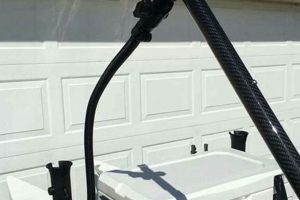
Common fishing features found on the Navigator 120 and similar kayaks often include integrated rod holders, strategically positioned to secure rods while paddling or trolling. Flush-mounted rod holders offer a streamlined profile, minimizing line entanglement, while adjustable rod holders provide flexibility for different fishing techniques. Tackle storage compartments, often located within easy reach of the seating area, keep essential gear organized and readily accessible. These compartments accommodate tackle boxes, tools, and other small items, reducing clutter and maximizing fishing efficiency. Some models may also include specialized features like fish finder mounts or transducer scuppers, facilitating integration of electronic fish-finding equipment. For example, mounting a fish finder provides real-time depth and fish location data, enhancing angling effectiveness. Similarly, readily accessible rod holders allow anglers to quickly switch between different rods or techniques, maximizing fishing opportunities. Consider a scenario where an angler needs to change lures quickly; readily accessible tackle storage becomes crucial, minimizing disruption and maximizing time spent fishing.
The presence and design of these fishing features significantly impact the kayak’s overall utility for angling. Careful consideration of these features during the kayak selection process allows anglers to choose a vessel tailored to their specific fishing styles and preferences. Understanding the functionality and benefits of each feature contributes to a more informed purchase decision and a more productive and enjoyable fishing experience. An angler targeting specific species, for example, might prioritize a kayak with specialized rod holders suited to that fishing style. Ultimately, the effectiveness of these features relies on thoughtful integration into the kayak’s overall design, ensuring they contribute seamlessly to an enhanced on-the-water fishing experience.
6. Durability
Durability is a paramount consideration for fishing kayaks, directly influencing their lifespan and resilience against the rigors of on-the-water use. For the Evoke Navigator 120, durability translates to sustained performance and long-term value, ensuring the kayak withstands impacts, abrasions, and environmental exposure. A durable kayak provides a reliable platform for anglers, minimizing maintenance needs and maximizing time spent fishing.
- Material Selection and Construction:
The Navigator 120 typically utilizes high-density polyethylene (HDPE) for its construction. HDPE offers a balance of impact resistance, UV protection, and affordability. Rotational molding, a common manufacturing process for kayaks, creates a seamless, one-piece hull with uniform wall thickness, enhancing overall structural integrity. The chosen material and construction method directly influence the kayak’s ability to withstand impacts from rocks, logs, or other obstacles encountered in various fishing environments.
- UV Resistance and Environmental Protection:
Exposure to sunlight and other environmental factors can degrade kayak materials over time. UV-resistant additives in the HDPE construction help protect the Navigator 120 from sun damage, preserving its color and structural integrity. This resistance to fading and cracking extends the kayak’s lifespan and maintains its aesthetic appeal. Consider, for instance, a kayak stored outdoors; UV resistance becomes crucial for preventing premature degradation and maintaining long-term performance.
- Impact and Abrasion Resistance:
Fishing kayaks often encounter impacts from rocks, logs, or other underwater obstacles. The Navigator 120’s HDPE construction provides inherent impact resistance, minimizing damage from such encounters. Similarly, abrasion resistance protects the hull from scratches and wear caused by dragging the kayak across shorelines or loading it onto vehicle racks. These protective qualities contribute to the kayak’s long-term durability, preserving its functionality and aesthetic appeal.
- Hardware and Fittings:
The durability of a fishing kayak extends beyond its hull material. Corrosion-resistant hardware, such as stainless steel or brass fittings, ensures long-term functionality of components like rod holders, carrying handles, and drainage plugs. Durable hardware maintains structural integrity and prevents premature failure, contributing to the overall lifespan and reliability of the kayak.
The durability of the Evoke Navigator 120, encompassing material selection, UV resistance, impact and abrasion protection, and hardware quality, significantly impacts its long-term value and performance. A durable kayak provides anglers with a reliable platform for years of fishing enjoyment, minimizing maintenance concerns and maximizing time spent on the water. Investing in a durable kayak, like the Navigator 120, ultimately contributes to a more rewarding and sustainable fishing experience.
7. Portability
Portability significantly influences the practicality and accessibility of a fishing kayak, impacting transportation and launch site options. For the Evoke Navigator 120, portability considerations encompass factors such as weight, dimensions, and available carrying methods. These factors directly affect an angler’s ability to transport the kayak to various fishing locations, influencing access to remote or otherwise difficult-to-reach waters. Understanding these aspects allows anglers to assess the kayak’s suitability for their individual transportation capabilities and preferred fishing environments.
- Weight and Dimensions:
The Navigator 120’s weight and dimensions directly impact its portability. Heavier kayaks require more physical exertion to lift and carry, while longer kayaks may present challenges for transport and storage. The specific weight and dimensions of the Navigator 120 influence its suitability for individual anglers based on their physical capabilities and available transport methods. For example, transporting a heavier kayak on a roof rack requires appropriate lifting strength and secure tie-down methods.
- Carrying Methods:
Several carrying methods exist for transporting kayaks, each with varying degrees of convenience and practicality. Common methods include roof racks, trailers, and carrying handles integrated into the kayak’s hull. The Navigator 120’s design typically incorporates molded handles, facilitating carrying by hand for short distances. Longer distances or challenging terrain may necessitate alternative transport methods like roof racks or trailers, influencing vehicle compatibility and overall transport logistics.
- Launch Site Accessibility:
Portability influences accessible launch sites. Kayaks easily transported by hand allow anglers to access remote fishing spots or areas inaccessible to larger watercraft. Conversely, heavier kayaks or those requiring specialized transport methods limit launch site options to areas with suitable access ramps or infrastructure. Consider, for instance, a remote lake accessible only by a narrow trail; a lightweight, easily carried kayak significantly expands fishing opportunities compared to a heavier, less portable vessel.
- Storage Considerations:
Portability extends beyond transportation to storage considerations. Compact kayaks or those designed for easy disassembly simplify storage in garages, sheds, or apartments. Larger kayaks may require dedicated storage space or specific racking systems, influencing storage practicality and overall convenience. The Navigator 120’s dimensions and design influence storage requirements, impacting its suitability for individuals with limited storage space.
The portability of the Evoke Navigator 120, influenced by its weight, dimensions, carrying methods, and storage considerations, significantly impacts its accessibility and versatility for various fishing scenarios. Careful consideration of these factors during the kayak selection process empowers anglers to choose a vessel aligned with their individual transportation capabilities, preferred fishing locations, and storage limitations. Ultimately, portability directly contributes to the overall enjoyment and practicality of the kayaking experience, allowing anglers to explore diverse fishing environments and maximize time on the water.
Frequently Asked Questions
This section addresses common inquiries regarding the Evoke Navigator 120 fishing kayak, providing concise and informative responses to assist prospective buyers and current owners.
Question 1: What is the weight capacity of the Evoke Navigator 120?
Weight capacity typically ranges between 300-400 lbs depending on the model year. Consulting official manufacturer specifications is recommended for precise figures.
Question 2: Is the Navigator 120 suitable for use in saltwater environments?
The kayak’s construction from high-density polyethylene (HDPE) provides inherent resistance to saltwater corrosion. Thorough rinsing with freshwater after each use is recommended to maximize lifespan.
Question 3: What is the purpose of the scupper holes in the hull?
Scupper holes comprise the self-bailing system, allowing water to drain from the cockpit and preventing water accumulation. This feature enhances stability and safety, particularly in rougher water conditions.
Question 4: Can a rudder or skeg be added to the Navigator 120?
Many models include pre-installed rudder or skeg systems. Compatibility for aftermarket installations should be confirmed with the manufacturer or authorized dealers.
Question 5: How does the Navigator 120 perform in windy conditions?
The kayak’s wider hull provides inherent stability, minimizing wind drift in moderate conditions. Strong winds can impact tracking, potentially necessitating adjustments in paddling technique or the use of a rudder or skeg if equipped.
Question 6: What maintenance is required for the Evoke Navigator 120?
Regular rinsing with fresh water after each use, especially after saltwater exposure, is essential. Periodic inspection of hardware and hull integrity helps ensure long-term performance. Storage in a sheltered environment, protected from prolonged sun exposure, is recommended.
Addressing these common questions provides valuable insights into the Evoke Navigator 120’s key features and performance characteristics. Consulting official product documentation or contacting authorized dealers is recommended for the most accurate and up-to-date information.
Further sections will delve into user reviews, offering practical perspectives on the kayak’s on-the-water performance.
Conclusion
This exploration has provided a comprehensive overview of the Evoke Navigator 120 fishing kayak, encompassing key design elements, performance characteristics, and practical considerations for anglers. From its stable sit-on-top design and ample storage capacity to specialized fishing features and durability, the Navigator 120 presents a compelling option for anglers seeking a dedicated fishing platform. Maneuverability considerations, portability assessments, and frequently asked questions further contribute to a well-rounded understanding of this kayak’s capabilities and limitations within diverse fishing environments.
Ultimately, the suitability of the Evoke Navigator 120 depends on individual angler needs, fishing styles, and target environments. Careful consideration of these factors, coupled with thorough research and, ideally, on-the-water testing, empowers informed purchasing decisions and contributes to enhanced on-the-water experiences. The evolution of fishing kayak design continues, promising further advancements in performance, features, and angler-focused innovation.