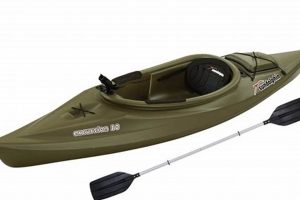
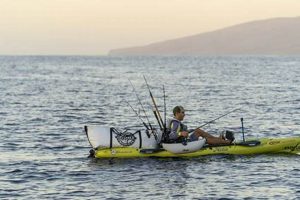
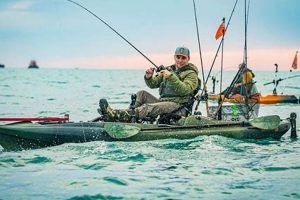
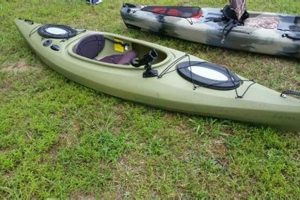
Retailer Dunham’s Sports offers a selection of kayaks designed for fishing. These specialized vessels typically feature design elements like rod holders, storage compartments for tackle, and comfortable seating arrangements conducive to long hours on the water. They may range from smaller, sit-on-top models ideal for calmer waters to larger, sit-inside kayaks built for stability and tackling more challenging conditions.
The availability of specialized watercraft at sporting goods retailers allows a broader audience access to the sport of fishing. Anglers benefit from purpose-built designs that enhance their experience and efficiency on the water. The development and increasing popularity of this specialized equipment reflect a growing interest in kayak fishing. This trend combines the tranquility and exercise of paddling with the challenge and reward of angling.
This article will delve into specific features to consider when selecting a fishing kayak, discuss various models available at Dunham’s Sports, and provide guidance for making informed purchasing decisions.
Tips for Selecting a Fishing Kayak
Choosing the right fishing kayak requires careful consideration of several factors. Matching vessel characteristics to individual needs and intended fishing environments leads to a more productive and enjoyable experience.
Tip 1: Consider Hull Design: Hull design significantly impacts stability and maneuverability. Wider, flatter hulls offer greater stability, ideal for calmer waters and stand-up fishing. Longer, narrower hulls provide better tracking and speed, suited for covering larger distances and paddling in currents.
Tip 2: Evaluate Weight Capacity: Ensure the kayak’s weight capacity accommodates the angler’s weight, plus gear, and any potential catch. Exceeding the capacity compromises stability and performance.
Tip 3: Assess Storage Options: Adequate storage is crucial for fishing gear, tackle boxes, and personal items. Consider the size, location, and accessibility of storage compartments.
Tip 4: Prioritize Seating Comfort: Long hours on the water necessitate a comfortable seating arrangement. Look for adjustable seats with good back support and ample legroom.
Tip 5: Examine Rod Holders and Other Fishing-Specific Features: Dedicated rod holders, paddle clips, and anchor trolleys enhance fishing efficiency. Evaluate their placement and functionality.
Tip 6: Factor in Transportation and Storage: Consider the kayak’s size and weight relative to available transportation and storage space. Roof racks, trailers, or compact, inflatable models offer various solutions.
Tip 7: Set a Budget: Fishing kayaks range in price based on features and materials. Establishing a budget helps narrow down the options and prioritize essential features.
Careful consideration of these factors ensures the selection of a fishing kayak that optimizes performance, comfort, and overall fishing experience.
By understanding these essential tips, potential buyers can make informed decisions and select the ideal kayak for their individual needs and fishing preferences. The subsequent sections will provide a more detailed examination of specific kayak models and features.
1. Retailer Availability

Retailer availability significantly influences consumer access to fishing kayaks. Understanding distribution networks and retail strategies is essential for evaluating the market reach and potential purchasing convenience associated with a specific brand or product, such as those offered by Dunham’s Sports.
- Geographic Reach
The geographic distribution of a retailer dictates consumer access. A retailer with a broad national presence, like Dunham’s Sports, offers greater purchasing convenience compared to smaller, regional retailers. This widespread availability simplifies acquisition for a larger customer base. However, specific models may have limited availability within certain regions.
- Online Presence
E-commerce platforms expand retail reach beyond physical store locations. Online availability allows consumers to browse and purchase kayaks regardless of proximity to a physical store. This expands market reach and potentially offers more competitive pricing. However, factors like shipping costs and assembly requirements may influence the online purchase decision. Dunham’s Sports utilizes both brick-and-mortar stores and online platforms.
- Inventory Management
Effective inventory management ensures product availability when and where consumers demand it. Balancing supply with demand minimizes lost sales opportunities. Retailers like Dunham’s Sports often adjust inventory based on seasonal demand and regional fishing preferences. This can influence the availability of specific models at different times of the year.
- Retail Partnerships and Distribution Networks
Strategic partnerships and distribution agreements expand retail availability. Collaborations with other retailers or specialized dealers broaden market reach and potentially tap into new customer segments. This diversified distribution network can increase the visibility and accessibility of fishing kayaks.
Analyzing retailer availability provides valuable context for evaluating purchasing options for fishing kayaks. Factors such as geographic reach, online presence, inventory management, and retail partnerships contribute to overall accessibility and consumer convenience. Evaluating these aspects alongside product features and pricing empowers consumers to make informed decisions aligned with their individual needs and preferences.
2. Specialized Kayak Models

Specialized kayak models cater to specific activities and user needs. Within the context of Dunham’s Sports fishing kayaks, specialization focuses on enhancing angling performance and comfort. Examining these specialized features provides valuable insights for informed purchasing decisions.
- Sit-On-Top vs. Sit-Inside Kayaks
Sit-on-top kayaks offer superior stability and ease of entry/exit, beneficial for anglers fishing in calm waters and frequently entering/exiting the kayak. Sit-inside kayaks provide better protection from the elements and enhanced paddling efficiency in challenging conditions, advantageous for longer trips and open water fishing. Dunham’s Sports likely offers both styles, catering to diverse fishing preferences.
- Hull Design and Stability
Hull design directly impacts stability and maneuverability. Wider, flatter hulls offer increased stability ideal for stand-up fishing, while longer, narrower hulls prioritize speed and tracking, suitable for covering larger distances. Specialized fishing kayaks available at Dunham’s Sports likely incorporate various hull designs to accommodate different fishing styles and water conditions.
- Fishing-Specific Features
Integrated features like rod holders, tackle storage compartments, and anchor trolleys differentiate fishing kayaks from recreational models. These specialized features enhance angling efficiency and convenience. The presence and configuration of these features within Dunham’s Sports offerings likely vary across models and price points.
- Weight Capacity and Size
Weight capacity dictates the maximum load a kayak can safely carry, including angler weight, gear, and potential catch. Size influences maneuverability and storage requirements. Dunham’s Sports likely offers fishing kayaks with varying weight capacities and sizes to accommodate diverse angler needs and transportation considerations.
Understanding the nuances of specialized kayak models empowers informed decision-making. Considering factors like sit-on-top vs. sit-inside design, hull characteristics, fishing-specific features, weight capacity, and size allows anglers to select a kayak from Dunham’s Sports that aligns with their individual fishing preferences and needs. This tailored approach optimizes on-the-water performance, comfort, and overall fishing experience.
3. Targeted Fishing Features
Targeted fishing features differentiate specialized fishing kayaks from recreational models, directly impacting angling efficiency and overall experience. These features, offered within Dunham’s Sports fishing kayak selection, represent design considerations tailored to angler needs. Understanding their functionality and benefits informs purchasing decisions.
Rod Holders: Flush-mounted, adjustable, and rotating rod holders secure fishing rods, freeing hands for paddling, baiting, and landing fish. Multiple rod holders allow anglers to switch between different setups efficiently. The quantity, positioning, and adjustability of rod holders influence fishing versatility. For example, a kayak with adjustable rod holders caters to trolling, casting, and still-fishing techniques.
Tackle Storage: Dedicated storage compartments, including dry hatches, waterproof bags, and recessed trays, organize tackle and keep essential gear readily accessible. Ample and strategically positioned storage minimizes clutter and maximizes fishing efficiency. A well-designed storage system, like a sealed compartment for electronics, ensures equipment protection in wet conditions.
Anchor Trolleys: Anchor trolleys allow controlled anchor positioning, crucial for maintaining position in current or wind. This feature enables precise boat control, optimizing fishing presentation and maximizing time spent in productive areas. An easily adjustable trolley system facilitates quick adjustments to changing conditions.
Paddle Holders/Clips: Secure paddle storage frees hands for fishing and prevents accidental paddle loss. Conveniently located paddle clips or leashes maintain a clear deck and ensure easy paddle retrieval. This seemingly small feature enhances safety and efficiency on the water.
Other Specialized Features: Additional features like fish finders, GPS mounts, and livewells further enhance the fishing experience. Integrating these technologies directly into the kayak optimizes functionality and streamlines the angling process. For instance, a pre-installed transducer mount simplifies fish finder installation.
The presence, quality, and configuration of these targeted fishing features directly influence a kayak’s suitability for specific angling styles and environments. Careful consideration of these features within the context of Dunham’s Sports offerings empowers informed purchase decisions, aligning kayak selection with individual fishing needs and preferences.
4. Varying Price Points

Price points for fishing kayaks at Dunham’s Sports reflect a range of factors, including material, features, and construction quality. Entry-level models typically utilize less expensive materials like high-density polyethylene (HDPE), offer basic features, and employ simpler construction methods. These kayaks provide an accessible entry point for recreational anglers. Mid-range models may incorporate higher-grade materials, enhanced features like adjustable seating and multiple rod holders, and more refined construction techniques. These options cater to anglers seeking improved performance and comfort. High-end models often feature premium materials like fiberglass or carbon fiber, advanced features like integrated fish finders and rudder systems, and meticulous construction. These kayaks prioritize performance, durability, and specialized functionality. For example, an entry-level kayak might offer molded-in rod holders, while a high-end model might include adjustable, rotating rod holders with integrated track systems.
This tiered pricing structure allows anglers to select kayaks aligned with their budget and performance expectations. Understanding the correlation between price and features facilitates informed purchasing decisions. While a higher price point often correlates with enhanced performance and durability, careful evaluation of individual needs and fishing style remains crucial. For instance, an angler primarily fishing calm, shallow waters might find an entry-level kayak perfectly suitable, while an angler targeting larger bodies of water or requiring specialized features might benefit from investing in a mid-range or high-end model. Considering long-term value and potential resale value also contributes to a comprehensive cost-benefit analysis.
The availability of varying price points at Dunham’s Sports democratizes access to kayak fishing, catering to a broad spectrum of budgets and angling preferences. This approach allows individuals to enter the sport at a comfortable price point while offering upgrade pathways as skills and needs evolve. The key lies in carefully evaluating features, materials, and construction quality relative to price to ensure optimal value and a satisfying fishing experience.
5. Potential Trade-offs

Selecting a fishing kayak from Dunham’s Sports, or any retailer, involves navigating inherent trade-offs between various features, price, and performance characteristics. Understanding these compromises allows for informed decisions aligned with individual angler priorities and fishing styles.
- Weight vs. Maneuverability
Lighter kayaks offer enhanced maneuverability and easier transport, advantageous for navigating shallow waters and transporting kayaks on vehicle rooftops. However, lighter construction may compromise stability, especially in challenging conditions. Heavier kayaks provide increased stability, beneficial in open water or rough conditions, but sacrifice maneuverability and ease of transport. This trade-off necessitates careful consideration of intended fishing environments and transportation limitations.
- Stability vs. Speed
Wider, more stable kayaks provide a secure platform for stand-up fishing and inspire confidence in novice anglers. However, this stability comes at the expense of speed and efficient paddling. Longer, narrower kayaks prioritize speed and tracking, advantageous for covering greater distances, but may feel less stable, particularly for less experienced paddlers. Anglers must prioritize based on fishing style and personal comfort levels.
- Features vs. Price
Feature-rich kayaks offer enhanced convenience and specialized functionality, such as integrated rod holders, ample storage, and advanced seating systems. However, these features often come at a premium price. More basic models sacrifice some features to maintain affordability, requiring anglers to prioritize essential features within their budget. This trade-off necessitates careful evaluation of feature utility relative to cost and fishing needs.
- Durability vs. Weight
Durable kayaks constructed from robust materials withstand impacts and abrasion, essential for navigating rocky shorelines or encountering submerged obstacles. However, these materials often contribute to increased weight, impacting portability and maneuverability. Lighter materials enhance portability but may compromise long-term durability. Anglers must balance durability needs with transportation and handling considerations.
Recognizing these potential trade-offs empowers informed decision-making when selecting a fishing kayak from Dunham’s Sports. Balancing competing priorities based on individual fishing styles, target environments, and budget constraints ensures a kayak choice that maximizes on-the-water performance, comfort, and overall fishing satisfaction. No single “perfect” kayak exists; the optimal choice depends on a careful assessment of individual needs and priorities within the context of these inherent trade-offs.
6. Customer Reviews and Ratings
Customer reviews and ratings offer valuable insights into the real-world performance and perceived value of Dunham’s Sports fishing kayaks. These evaluations, generated by individuals with firsthand experience, provide perspectives beyond manufacturer descriptions and marketing materials. Analyzing these reviews allows potential buyers to make more informed purchasing decisions, anticipating potential advantages and disadvantages associated with specific kayak models.
- Performance Feedback
Reviews often detail on-the-water performance characteristics, including stability, tracking, maneuverability, and speed. Anglers may comment on how a specific kayak handles in various conditions, such as calm lakes versus flowing rivers. This information complements manufacturer specifications, providing practical insights into real-world performance. For instance, a review might reveal that a specific model, despite its advertised stability, tends to become unstable in windy conditions.
- Durability Assessment
Long-term durability assessments emerge from customer reviews over time. Users comment on the kayak’s resistance to scratches, impacts, and UV degradation. This information provides valuable insights into the kayak’s construction quality and expected lifespan. A pattern of reviews mentioning hull cracking, for example, would raise concerns about long-term durability.
- Feature Evaluation
Customer reviews offer practical evaluations of specific features, such as the comfort and adjustability of seating systems, the effectiveness of rod holders, and the accessibility of storage compartments. These evaluations often highlight strengths and weaknesses not readily apparent from product descriptions. A review might reveal that a particular storage compartment, while advertised as waterproof, leaks in heavy rain.
- Value Perception
Reviews often reflect the perceived value of a kayak relative to its price. Customers assess whether the features, performance, and durability justify the cost. This information assists potential buyers in determining whether a specific kayak represents a worthwhile investment. For example, numerous reviews praising a kayak’s performance and durability despite its lower price point suggest excellent value.
By considering customer reviews and ratings alongside manufacturer information, potential buyers gain a more comprehensive understanding of Dunham’s Sports fishing kayaks. These real-world perspectives illuminate potential strengths and weaknesses, facilitating informed purchasing decisions aligned with individual needs, fishing styles, and budget considerations. This combination of objective data and subjective experiences empowers consumers to select kayaks that maximize their on-the-water enjoyment and fishing success.
Frequently Asked Questions
This section addresses common inquiries regarding fishing kayaks available at Dunham’s Sports, providing concise and informative responses to facilitate informed purchasing decisions.
Question 1: What types of fishing kayaks does Dunham’s Sports typically offer?
Dunham’s Sports generally offers a selection of sit-on-top and sit-inside fishing kayaks. Specific models and availability may vary by location and season.
Question 2: What features should one consider when choosing a fishing kayak at Dunham’s Sports?
Essential considerations include hull design (stability vs. speed), weight capacity, storage options, seating comfort, rod holders, and other fishing-specific features. Individual fishing styles and preferences influence optimal feature selection.
Question 3: What is the typical price range for fishing kayaks at Dunham’s Sports?
Fishing kayak prices at Dunham’s Sports typically range from entry-level options suitable for recreational use to higher-end models with advanced features and materials. Budget considerations play a significant role in the selection process.
Question 4: Does Dunham’s Sports offer kayak accessories like paddles and life vests?
Dunham’s Sports typically offers a range of kayak accessories, including paddles, life vests, storage solutions, and fishing gear. Availability may vary by location.
Question 5: What is the warranty policy for fishing kayaks purchased at Dunham’s Sports?
Warranty policies for fishing kayaks vary depending on the manufacturer. It is advisable to inquire about specific warranty details at the time of purchase or consult the manufacturer’s website.
Question 6: How can one determine the appropriate kayak size and weight capacity?
Kayak size and weight capacity should accommodate the angler’s weight, plus gear, and any potential catch. Exceeding the recommended capacity compromises stability and performance. Manufacturer specifications provide guidance on appropriate sizing.
Careful consideration of these frequently asked questions, combined with thorough product research, empowers informed purchasing decisions aligned with individual angling needs and preferences.
For further inquiries or specific product details, consulting with Dunham’s Sports customer service or visiting a local store is recommended. This personalized assistance ensures optimal kayak selection and a satisfying on-the-water experience.
Conclusion
Dunham’s Sports fishing kayaks represent an accessible pathway to the increasingly popular sport of kayak angling. Careful consideration of factors such as hull design, features, price points, and potential trade-offs empowers informed purchasing decisions. Understanding the diverse range of available models, coupled with insights gleaned from customer reviews and ratings, allows anglers to select kayaks aligned with individual needs and preferences.
The pursuit of kayak fishing offers a unique blend of outdoor recreation, angling challenge, and connection with nature. Selecting the right equipment enhances this experience. Thorough research and informed decision-making ensure a rewarding and enjoyable pursuit on the water, maximizing both angling success and overall satisfaction.