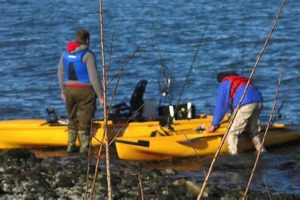
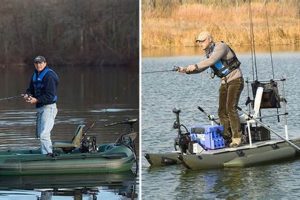
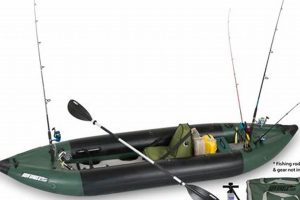
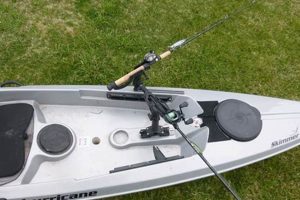
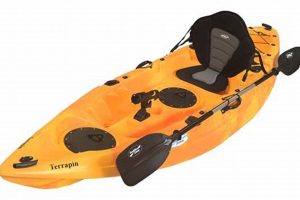
Budget-friendly, portable vessels designed for angling offer an accessible entry point into kayak fishing. These inflatable watercraft typically feature specialized components like rod holders, storage compartments, and anchor points. For instance, an angler might choose such a vessel for its ease of transport and storage compared to a traditional hard-shell kayak.
The affordability and portability of these inflatable fishing platforms have significantly broadened participation in the sport. Their compact nature allows anglers to access remote fishing locations previously unreachable with larger, less portable boats. Furthermore, advancements in materials and construction have improved the durability and performance of these inflatable kayaks, making them increasingly popular alternatives to traditional fishing boats. This evolution has led to greater affordability and a wider range of options for anglers of all skill levels.
The following sections will delve deeper into selecting the appropriate inflatable fishing kayak, essential safety considerations, and recommended accessories to enhance the angling experience.
Tips for Selecting and Using Budget-Friendly Inflatable Fishing Kayaks
Careful consideration of several factors ensures a safe and enjoyable fishing experience with a portable, inflatable watercraft. These tips provide guidance on choosing and utilizing these vessels effectively.
Tip 1: Prioritize Capacity and Weight Limits: Match the kayak’s capacity to the anticipated combined weight of the angler, fishing gear, and any potential catch. Exceeding weight limits compromises stability and performance.
Tip 2: Evaluate Material Durability and Construction: Opt for durable, puncture-resistant materials such as reinforced PVC or Hypalon. Examine seam construction for robust stitching and airtight seals.
Tip 3: Consider Fishing-Specific Features: Look for integrated rod holders, adjustable seats, storage compartments, and anchor points designed specifically for angling activities.
Tip 4: Assess Portability and Ease of Inflation: Ensure the chosen model packs down compactly for transport and storage. A high-quality pump and efficient inflation/deflation valves streamline setup and takedown.
Tip 5: Understand Performance Characteristics: Research the kayak’s tracking, stability, and maneuverability in different water conditions. Some models are better suited to calm lakes, while others handle moving water effectively.
Tip 6: Prioritize Safety Equipment: Always wear a personal flotation device (PFD) and carry essential safety gear, including a whistle, signaling device, and repair kit. Check local regulations regarding required safety equipment.
Tip 7: Practice Proper Inflation and Setup: Inflate the kayak to the recommended pressure and ensure all valves are securely closed. Proper setup contributes significantly to stability and performance on the water.
Adhering to these guidelines promotes a positive experience on the water. Careful selection and proper utilization of these inflatable platforms can enhance fishing enjoyment while maximizing safety.
By incorporating these recommendations, anglers can confidently choose and effectively utilize a budget-friendly inflatable fishing kayak, leading to a rewarding experience on the water.
1. Affordability

Affordability represents a primary driver in the increasing popularity of inflatable fishing kayaks. Lower price points compared to traditional hard-shell kayaks open up the sport to a wider audience. This accessibility removes a significant financial barrier, enabling more individuals to experience the enjoyment and benefits of kayak fishing. For example, an angler on a limited budget can acquire a functional inflatable fishing kayak for a fraction of the cost of a comparable hard-shell model, thus expanding participation in the sport.
The affordability factor influences purchasing decisions at multiple levels. Entry-level anglers benefit from the lower initial investment, enabling them to explore the sport without a substantial financial commitment. Even experienced anglers might choose an inflatable option as a secondary vessel for accessing difficult-to-reach fishing spots, supplementing their existing equipment without significant expense. The practical implications are substantial, as affordability directly translates to increased opportunities for individuals to engage with nature and pursue their recreational interests.
While affordability remains a key advantage, it is crucial to balance cost with quality and safety. Excessively low prices may indicate compromises in materials, construction, or features. Careful evaluation of materials, construction, and features remains critical to ensuring a safe and enjoyable experience on the water. Understanding the relationship between cost and quality empowers informed purchasing decisions, aligning budget considerations with performance expectations and safety requirements.
2. Portability

Portability significantly contributes to the appeal of budget-friendly inflatable fishing kayaks. Unlike rigid hard-shell kayaks, inflatable models deflate and pack down into compact sizes, facilitating convenient transport and storage. This characteristic eliminates the need for specialized roof racks or trailers, allowing transport in the trunks of most vehicles. Anglers gain access to remote fishing locations previously inaccessible with bulkier watercraft, expanding fishing opportunities. For instance, an inflatable kayak easily transported in a backpack opens up hiking trails leading to secluded mountain lakes or rivers.
The practical implications of portability extend beyond transport. Compact storage in apartments, garages, or limited storage spaces eliminates the constraints often associated with owning larger, rigid kayaks. This ease of storage makes inflatable kayaks a viable option for individuals lacking ample storage capacity. Further, the reduced physical footprint simplifies handling, making launching and retrieving the kayak from the water less strenuous. Consider an angler living in an urban apartment; the ability to easily store and transport an inflatable kayak allows for spontaneous fishing trips without logistical hurdles.
The portability factor strengthens the overall value proposition of budget-friendly inflatable fishing kayaks. Combining affordability with ease of transport and storage enhances the accessibility of kayak fishing. This combination significantly broadens participation in the sport by overcoming logistical barriers. While portability remains a significant advantage, considerations such as inflation time and the need for a pump should be factored into pre-fishing preparations. Understanding the nuances of portability empowers informed decisions, aligning practical needs with the benefits of owning an inflatable fishing kayak.
3. Durability
Durability represents a critical factor influencing the long-term value and performance of budget-friendly inflatable fishing kayaks. While affordability remains a significant advantage, compromises in material quality and construction can negatively impact a kayak’s lifespan and resistance to damage. A thorough understanding of durability considerations empowers informed purchasing decisions, balancing cost-effectiveness with reliable performance and longevity on the water.
- Material Selection
Material selection plays a pivotal role in determining an inflatable kayak’s resistance to punctures, abrasion, and UV degradation. Reinforced PVC and Hypalon represent common materials, each offering distinct performance characteristics. Reinforced PVC offers a balance of affordability and durability, suitable for recreational use in calm waters. Hypalon exhibits superior resistance to abrasion and UV damage, making it a preferred choice for more demanding conditions, but typically comes at a higher price point. Choosing a kayak constructed with appropriate materials for intended use ensures long-term performance and value.
- Construction Quality
Construction quality significantly impacts an inflatable kayak’s structural integrity and resistance to leaks. Robust seam construction, reinforced stress points, and airtight valves contribute to overall durability. Inspecting seams for tight stitching, reinforced patches, and quality valves provides insights into a kayak’s construction quality. For example, double- or triple-stitched seams provide enhanced resistance to tearing compared to single-stitched seams. Prioritizing kayaks with robust construction ensures reliable performance and minimizes the risk of leaks or structural failures during use.
- Environmental Factors
Environmental factors, such as exposure to sunlight, extreme temperatures, and saltwater, can influence the lifespan of inflatable kayaks. UV radiation can degrade materials over time, leading to reduced strength and increased susceptibility to punctures. Extreme temperatures can affect air pressure within the kayak, potentially causing stress on seams and valves. Saltwater exposure can accelerate corrosion of metal components and degrade certain materials. Proper care and storage, including rinsing with fresh water after use and storing the kayak out of direct sunlight, mitigate the impact of environmental factors and prolong its lifespan.
- Maintenance and Care
Proper maintenance and care contribute significantly to an inflatable kayak’s durability. Regular inspections for damage, prompt repairs of minor punctures, and proper cleaning after each use extend the kayak’s lifespan. Storing the kayak deflated in a cool, dry place prevents mold growth and material degradation. For example, applying a UV protectant spray to the kayak’s exterior can mitigate the damaging effects of sunlight. Adhering to recommended maintenance practices maximizes the kayak’s lifespan and ensures optimal performance over time.
By carefully considering these aspects of durability, anglers can make informed purchasing decisions aligned with their budget and intended use. Balancing affordability with material quality, construction techniques, and proper care ensures a budget-friendly inflatable fishing kayak provides reliable performance and enjoyment for years to come.
4. Stability

Stability represents a critical performance attribute in budget-friendly inflatable fishing kayaks, directly influencing angler safety and fishing effectiveness. A stable platform enables anglers to cast, retrieve, and land fish without compromising balance or risking capsizing. Conversely, instability can lead to difficulties in maneuvering the kayak, hindering fishing activities and potentially creating hazardous situations, especially in challenging water conditions. Consider an angler attempting to hook a large fish in a wobbly kayak; the instability could easily lead to a lost catch or even a capsize.
Several factors contribute to an inflatable kayak’s stability. Width and hull design play significant roles. Wider kayaks generally offer greater initial stability, resisting tipping. A flat hull provides enhanced primary stability, ideal for calm waters, while a V-shaped hull delivers improved secondary stability, beneficial in choppy conditions. Inflatable kayaks often incorporate multiple air chambers, enhancing buoyancy and stability even if one chamber is punctured. Proper inflation pressure is crucial for maintaining optimal hull shape and rigidity, contributing directly to stability. Furthermore, weight distribution within the kayak significantly influences balance and overall stability. Distributing gear evenly and maintaining a low center of gravity enhance stability, allowing anglers to confidently navigate various water conditions. For example, placing heavier items closer to the center of the kayak and avoiding excessive weight at either end promotes balance and reduces the risk of tipping.
Understanding the factors influencing stability empowers informed purchasing decisions. Evaluating kayak width, hull design, and construction features helps anglers select models suited to their intended fishing environments and individual needs. Prioritizing stability enhances safety and fishing effectiveness, contributing to a more positive and productive on-the-water experience. While stability features may vary in budget-friendly models, careful consideration of these factors ensures anglers select a kayak providing a safe and stable platform for fishing. Compromising stability can limit fishing effectiveness and potentially create dangerous situations, highlighting the crucial connection between stability and overall kayak performance.
5. Fishing Features
Dedicated fishing features distinguish specialized inflatable kayaks from general-purpose recreational models. These features enhance angling effectiveness and overall on-the-water experience. While budget-friendly inflatable kayaks may not offer the same level of sophistication as high-end models, certain key features significantly improve fishing functionality and convenience. Understanding these features empowers informed purchasing decisions, aligning specific angling needs with available options.
- Rod Holders
Integrated rod holders provide secure mounting points for fishing rods, freeing up hands for other tasks like paddling, baiting hooks, or landing fish. Multiple rod holders allow anglers to employ different fishing techniques simultaneously or carry spare rods. Adjustable rod holders offer further customization, accommodating various rod lengths and angling styles. For example, flush-mounted rod holders minimize interference while paddling, while adjustable holders allow for trolling or still-fishing setups. The presence and configuration of rod holders significantly influence fishing versatility and efficiency.
- Storage Options
Ample storage capacity is crucial for carrying essential fishing gear, tackle boxes, and personal items. Dedicated storage compartments, including dry bags or waterproof hatches, protect sensitive equipment from water damage. Bungee cords or D-rings offer additional lashing points for securing larger items like coolers or tackle crates. For instance, a spacious rear storage well can accommodate a tackle crate and dry bag, while smaller compartments near the seat provide easy access to frequently used items. Adequate storage solutions contribute to organized and efficient fishing excursions.
- Anchor Systems
Integrated anchor systems or anchor trolley setups maintain kayak position in desired fishing locations, preventing drift in currents or wind. Anchor trolleys allow for controlled anchor deployment and retrieval, enabling precise positioning adjustments. A well-designed anchor system is particularly important for still-fishing techniques or targeting specific structures. For example, anchoring near a submerged reef or drop-off allows anglers to focus on fishing without constantly adjusting position. The inclusion of an anchor system expands fishing possibilities, particularly in moving water or areas requiring precise boat control.
- Fishing-Specific Accessories
While not always integrated, compatibility with fishing-specific accessories expands a kayak’s functionality. Mounting points for fish finders, GPS units, or camera mounts enhance angling precision and data collection. Tracks or rails provide attachment points for aftermarket accessories, customizing the kayak to individual preferences. Consider an angler utilizing a track system to mount a fish finder and rod holder, optimizing their fishing setup. The ability to integrate accessories enhances fishing efficiency and overall experience.
The availability and quality of fishing features directly influence an inflatable kayak’s suitability for angling. While budget-friendly options may prioritize essential features like rod holders and basic storage, understanding the range of available options helps anglers select a kayak aligned with their fishing style and target species. The presence of dedicated fishing features enhances versatility, efficiency, and overall fishing success, differentiating specialized fishing kayaks from general-purpose recreational models. Evaluating these features alongside cost considerations empowers informed decisions, maximizing on-the-water performance within budget constraints.
6. Safety Considerations

Safety considerations are paramount when using budget-friendly inflatable fishing kayaks. While affordability expands access to the sport, potential compromises in material quality or construction in less expensive models underscore the importance of prioritizing safety. Neglecting these considerations can lead to dangerous situations on the water, jeopardizing angler well-being. For example, a kayak with inadequate weight capacity or substandard seam construction could fail under stress, leading to capsizing or rapid deflation, particularly in adverse conditions. A thorough understanding of safety protocols and careful product selection are crucial for mitigating risks associated with less expensive inflatable kayaks.
Several key safety considerations apply specifically to budget-friendly inflatable fishing kayaks. Closely adhering to manufacturer-specified weight limits prevents overloading, which can compromise stability and increase the risk of capsizing. Regularly inspecting the kayak for wear and tear, including checking seams, valves, and the hull for damage before each use, is crucial for identifying potential weaknesses that could lead to failure. Using a properly fitted and Coast Guard-approved personal flotation device (PFD) remains non-negotiable. Carrying essential safety gear, such as a whistle, signaling device, and repair kit, further enhances preparedness for unforeseen circumstances. Understanding and adhering to local boating regulations, including navigation rules and required safety equipment, ensures compliance and promotes overall safety on the waterway. Furthermore, checking weather forecasts before embarking on a fishing trip and avoiding hazardous conditions, such as strong winds or storms, minimizes exposure to potentially dangerous situations.
Prioritizing safety considerations mitigates inherent risks associated with budget-friendly inflatable fishing kayaks. Careful product selection, diligent pre-trip inspections, and adherence to safety guidelines significantly reduce the likelihood of accidents. Informed decision-making empowers anglers to enjoy the sport safely and responsibly, balancing affordability with essential safety precautions. Failing to prioritize safety can lead to severe consequences, highlighting the direct relationship between responsible practices and a positive on-the-water experience. Understanding and addressing these considerations ensures that pursuing affordable kayak fishing does not compromise personal safety.
Frequently Asked Questions
This section addresses common inquiries regarding budget-friendly inflatable fishing kayaks, providing concise and informative responses to facilitate informed purchasing decisions and safe usage.
Question 1: How durable are less expensive inflatable fishing kayaks compared to their pricier counterparts?
Durability varies significantly based on materials and construction. While some budget-friendly models utilize robust materials like reinforced PVC, others may employ less durable materials susceptible to punctures or abrasion. Careful examination of product specifications and customer reviews provides insights into a kayak’s expected lifespan and resistance to damage.
Question 2: Can budget-friendly inflatable kayaks handle larger fish or rougher water conditions?
Performance characteristics, including weight capacity and stability, vary among models. Some budget-friendly kayaks possess sufficient capacity and stability for handling moderate-sized fish and calmer waters. However, challenging larger fish or navigating rough conditions necessitates careful model selection, prioritizing stability, weight capacity, and robust construction. Exceeding manufacturer-specified limits is strongly discouraged.
Question 3: How much storage space can one realistically expect in a budget-friendly inflatable fishing kayak?
Storage capacity differs among models. While some budget-friendly options offer surprisingly ample storage for tackle boxes and gear, others may provide limited space. Reviewing product specifications and examining images or videos helps assess storage capabilities and determine suitability for individual needs.
Question 4: Are budget-friendly inflatable fishing kayaks difficult to inflate and deflate?
Most include a high-volume pump facilitating relatively quick inflation and deflation. However, inflation time can vary depending on kayak size and pump efficiency. Manual pumps typically require more effort than electric pumps. Practicing setup and takedown before heading to the water streamlines the process.
Question 5: What essential safety precautions should be taken when using a less expensive inflatable fishing kayak?
Adhering to manufacturer-specified weight limits, wearing a PFD, carrying essential safety gear (whistle, signaling device, repair kit), and checking weather conditions before venturing out are crucial safety practices applicable to all inflatable kayaks, regardless of price point. Regularly inspecting the kayak for damage further mitigates risks.
Question 6: Can these kayaks accommodate additional accessories like fish finders or GPS units?
Compatibility with accessories varies among models. Some budget-friendly options feature integrated mounting points or accessory tracks. Others may require aftermarket adaptations. Researching specific models and reviewing product descriptions clarifies compatibility with desired accessories before purchase.
Careful consideration of these frequently asked questions aids in evaluating budget-friendly inflatable fishing kayaks. Balancing cost considerations with performance expectations and safety requirements ensures a positive and safe on-the-water experience.
The following section explores recommended accessories to enhance functionality and enjoyment while kayak fishing.
Conclusion
Budget-friendly inflatable fishing kayaks offer an accessible entry point into the sport, balancing cost-effectiveness with functionality. Careful consideration of factors like durability, stability, fishing features, and safety considerations ensures informed purchasing decisions. While affordability remains a primary advantage, compromises in material quality or construction can influence performance and longevity. Prioritizing safety considerations, adhering to manufacturer guidelines, and understanding the limitations of budget-friendly models are crucial for a positive and safe on-the-water experience. Thorough product research, including reviewing specifications and customer feedback, empowers informed choices aligning individual needs and budgetary constraints.
The evolving landscape of inflatable kayak technology continues to improve affordability and performance. As materials and construction techniques advance, budget-friendly options offer increasingly viable alternatives to traditional fishing platforms. The accessibility provided by these inflatable vessels expands participation in the sport, fostering greater appreciation for aquatic environments. Continued emphasis on safety awareness and responsible usage ensures the sustainable growth and enjoyment of kayak fishing for future generations.