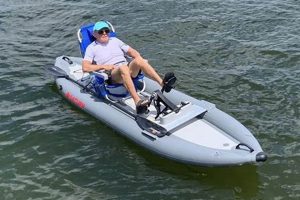
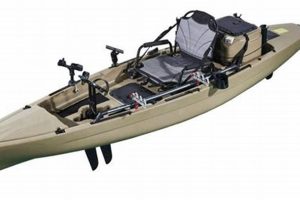
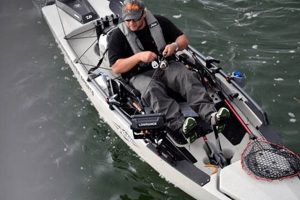
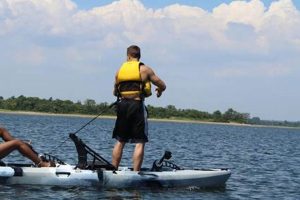
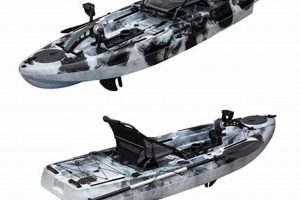
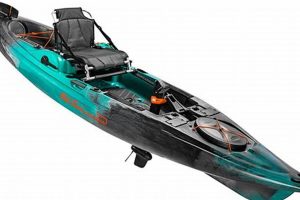
Budget-friendly kayaks designed for angling and propelled by foot pedals offer an accessible entry point into hands-free fishing. These vessels typically feature specialized seating, rod holders, and storage compartments tailored to the needs of anglers. An example would be a pedal-driven kayak constructed from high-density polyethylene, retailing for under $1000, equipped with adjustable footrests and integrated rod holders.
Pedal-powered kayaks provide several advantages for fishing. Maintaining a hands-free position allows for continuous casting and retrieval, significantly improving angling efficiency. The ability to maneuver quietly and precisely with foot pedals, rather than a paddle, allows anglers to approach fish stealthily and maintain optimal positioning in currents or wind. This method of propulsion also leaves the upper body free for other tasks, such as adjusting tackle or landing fish. The relatively lower cost of these kayaks compared to motorized boats makes them an attractive option for many. Historically, fishing kayaks relied solely on paddles, but the introduction of pedal drives has revolutionized the sport, providing a more efficient and convenient experience.
This article will delve further into selecting the right budget-friendly pedal fishing kayak by exploring key features, comparing popular models, and discussing essential accessories.
Tips for Selecting Budget-Friendly Pedal Fishing Kayaks
Choosing an affordable pedal-driven fishing kayak requires careful consideration of various factors to ensure optimal performance and value. The following tips offer guidance for navigating the selection process.
Tip 1: Prioritize Stability and Hull Design: Wider, flatter hulls generally offer greater stability, especially beneficial for stand-up fishing. A longer kayak often tracks better, crucial for maintaining course in currents. Consider the intended fishing environment (calm lakes vs. choppy rivers) when selecting a hull design.
Tip 2: Evaluate Pedal Drive Systems: Different pedal systems offer varying degrees of efficiency and durability. Fin-driven systems are often preferred in shallow water, while propeller systems can provide greater speed. Research the maintenance requirements and potential repair costs associated with each system.
Tip 3: Assess Storage Capacity and Layout: Ample storage is crucial for fishing gear, tackle boxes, and personal items. Consider the placement and accessibility of storage compartments, ensuring they are conveniently located for quick access while on the water.
Tip 4: Examine Seating Comfort and Adjustability: A comfortable and adjustable seat is essential for long hours on the water. Look for features like adjustable backrests, breathable fabric, and ample padding. Consider the ability to stand comfortably while fishing.
Tip 5: Inspect Construction Quality and Materials: Durability is a key factor in a kayak’s longevity. Examine the quality of welds, fittings, and materials used in construction. High-density polyethylene (HDPE) offers good impact resistance and affordability.
Tip 6: Consider Weight and Portability: The kayak’s weight impacts transportation and launching. Consider the availability of transportation assistance, such as a kayak cart or roof rack, if the kayak is heavy. Folding kayaks offer an alternative for easier transport.
Tip 7: Research Manufacturer Reputation and Warranty: Opt for reputable manufacturers with established track records and reliable customer service. A comprehensive warranty provides peace of mind against potential defects or issues.
By carefully considering these tips, anglers can select a budget-friendly pedal fishing kayak that meets their specific needs and preferences, enabling them to enjoy productive and comfortable fishing experiences.
The following section will offer concluding remarks and a summary of key considerations for purchasing an affordable pedal fishing kayak.
1. Affordability

Affordability represents a critical factor driving the popularity of budget-friendly pedal-powered fishing kayaks. The lower price point compared to motorized boats or high-end kayaks opens up the sport of kayak fishing to a wider audience. This accessibility allows individuals with budget constraints to experience the benefits of hands-free fishing and on-the-water mobility. Cost savings can be substantial, considering the combined expenses of a motorized boat, fuel, and maintenance, compared to the one-time purchase of a budget-friendly kayak. For example, an angler might acquire a suitable pedal kayak for under $1500, whereas a small fishing boat with a motor and trailer could easily exceed $10,000. This cost difference significantly impacts purchasing decisions, making pedal kayaks an attractive alternative.
Several factors contribute to the lower cost of these kayaks. Materials like high-density polyethylene (HDPE) offer durability at a lower price than higher-end composites. Simplified designs and manufacturing processes further reduce production costs. While some features might be less refined than those found on premium models, these budget-friendly options still provide adequate performance for recreational anglers. For instance, a basic pedal drive system may not be as smooth or efficient as a top-of-the-line model, but it still delivers the core functionality of hands-free propulsion. This allows manufacturers to offer a functional product at a lower price point, appealing to cost-conscious consumers.
Understanding the role of affordability requires acknowledging potential trade-offs. Budget-friendly kayaks may sacrifice certain features or refinements found in more expensive models. Weight capacity, storage space, and seat comfort may differ. Recognizing these potential compromises enables informed decisions aligned with individual needs and budget constraints. Focusing on essential features and accepting potential limitations allows anglers to access the sport without excessive financial burden. This ultimately expands participation in kayak fishing and provides opportunities for individuals to enjoy the outdoors and pursue their angling passions.
2. Pedal Propulsion

Pedal propulsion represents a defining characteristic of this specific kayak category, directly influencing its appeal and functionality. Distinct from paddle-powered kayaks, pedal propulsion liberates hands for fishing activities, enhancing angling efficiency. This hands-free operation proves invaluable for techniques requiring constant lure manipulation or frequent casting. The angler remains poised to react to strikes instantaneously, maximizing hook-up ratios. For instance, when trolling or bottom fishing, pedal propulsion allows continuous line control without the interruptions inherent in paddling. This continuous engagement enhances sensitivity to bites, crucial for detecting subtle takes. Pedal-driven systems also enable precise maneuvering in challenging environments. Navigating tight spots, holding position against currents, or approaching fish stealthily becomes significantly easier, demonstrating the practical significance of this propulsion method in diverse fishing scenarios.
Several types of pedal drive systems exist within this kayak category, each exhibiting distinct characteristics. Fin-driven systems, often resembling bicycle pedals, utilize underwater fins to propel the kayak. These systems generally excel in shallow water and offer weedless operation, reducing entanglement issues. Propeller-driven systems, on the other hand, often provide greater speed and efficiency in open water, making them suitable for covering larger distances. The choice between these systems hinges upon the intended fishing environment and individual preferences. Budget considerations often influence the selection process, with simpler, more affordable pedal systems appearing on less expensive kayaks. For example, a rotational pedal system might be more budget-friendly compared to a more complex, high-performance fin system. Understanding these variations informs purchasing decisions, ensuring alignment between functionality, budget, and intended use.
Pedal propulsion, therefore, constitutes a crucial element within the context of budget-friendly fishing kayaks. It provides a practical, affordable alternative to motorized propulsion, enabling hands-free fishing and enhanced maneuverability. The diverse range of available pedal systems caters to various needs and budgets. Recognizing the nuances of different propulsion systems empowers informed decision-making, aligning kayak selection with individual angling styles and financial constraints. This fundamental understanding underscores the significance of pedal propulsion within this category and its contribution to accessible and efficient fishing experiences.
3. Fishing Features

Specialized features distinguish fishing kayaks from recreational models, enhancing angling effectiveness and convenience. In the context of budget-friendly pedal-powered fishing kayaks, these features contribute significantly to the overall value proposition. Integrated rod holders, strategically positioned for easy access, allow anglers to keep multiple rods rigged and ready. This facilitates quick transitions between different fishing techniques or lures. Flush-mounted rod holders minimize line entanglement and interference with paddling or pedaling. Recessed tackle storage compartments keep essential gear organized and protected from the elements. Such compartments, often located within easy reach of the seated angler, minimize disruptions during fishing. For example, a well-designed storage compartment might accommodate tackle boxes, leader spools, and other small items, ensuring they remain readily accessible without hindering casting or retrieval. These dedicated fishing features transform a basic kayak into a specialized fishing platform, increasing efficiency and enjoyment on the water.
Further enhancing practicality, many budget-friendly pedal fishing kayaks incorporate additional features designed for anglers. These may include built-in fish finders or transducer mounts, facilitating electronic fish location. Anchor trolleys simplify anchor deployment and retrieval, crucial for maintaining position in currents or wind. Some models offer specialized seating designed for both comfort and stability while casting or reeling. Adjustable footrests improve pedaling efficiency and comfort during long fishing trips. For instance, a kayak equipped with an anchor trolley system allows the angler to control anchor position from the seated position, simplifying drift fishing techniques. These additional features, although sometimes considered optional, significantly impact the overall fishing experience, particularly in specialized angling situations. Manufacturers often prioritize incorporating these features to cater specifically to the needs of anglers seeking a comprehensive and practical fishing platform within a budget-friendly price range.
The presence of dedicated fishing features directly influences the practicality and effectiveness of budget-friendly pedal fishing kayaks. These features enhance organization, efficiency, and overall fishing performance. While specific features may vary between models and price points, prioritizing essential elements like rod holders and storage compartments contributes significantly to a positive angling experience. Understanding the role and functionality of these features allows for informed purchasing decisions, ensuring that the selected kayak aligns with individual fishing styles and preferences. This targeted approach maximizes the value proposition of budget-friendly pedal kayaks, enabling anglers to access essential functionality without incurring excessive costs. The thoughtful integration of fishing-specific features ultimately empowers anglers to optimize their time on the water and enhance their chances of success.
4. Stability

Stability constitutes a critical performance attribute in fishing kayaks, particularly those propelled by pedals. A stable platform enables anglers to cast, reel, and land fish effectively, enhancing safety and confidence on the water. Budget-friendly options often necessitate careful consideration of stability due to design and material constraints. The following facets explore key elements influencing stability in these kayaks.
- Hull Design
Hull design significantly influences kayak stability. Wider, flatter hulls generally provide greater primary stability, resisting initial tipping. However, they may compromise secondary stability the ability to recover from larger leans. Longer kayaks tend to track straighter but can be less maneuverable. Shorter, wider hulls excel in stability but may sacrifice tracking performance. For instance, a pontoon-style hull offers exceptional primary stability, ideal for stand-up fishing, while a V-shaped hull prioritizes speed and tracking over initial stability. Budget-friendly kayaks often utilize wider, flatter hull designs to maximize stability within cost constraints. Understanding the trade-offs between primary and secondary stability within different hull designs empowers informed purchasing decisions.
- Center of Gravity
A lower center of gravity contributes significantly to kayak stability. The seated angler’s position, combined with the distribution of weight within the kayak, impacts overall balance. Lower seating positions and strategically placed gear storage contribute to a lower center of gravity, enhancing stability. Conversely, higher seating positions or uneven weight distribution can compromise stability, increasing the risk of capsizing. Budget-friendly kayaks may feature simpler seating systems that influence the angler’s center of gravity. Careful consideration of weight distribution and seating position becomes crucial for maintaining optimal stability in these kayaks.
- Materials and Construction
Materials and construction techniques influence both weight and stiffness, indirectly affecting stability. Lighter kayaks tend to be more susceptible to wind and waves, potentially compromising stability. Stiff construction enhances responsiveness and reduces flex, contributing to a more stable feel. Budget-friendly kayaks often utilize less expensive materials like high-density polyethylene (HDPE), which can be heavier than composite materials but offer sufficient stiffness for recreational use. Understanding the interplay between material choice, weight, and stiffness allows for informed evaluation of stability characteristics in budget-friendly options.
- Water Conditions
Prevailing water conditions significantly influence kayak stability. Calm lakes and ponds present fewer challenges compared to rivers with currents or coastal areas with waves. Wind also plays a role, potentially destabilizing kayaks, especially lighter models. Matching kayak stability characteristics to anticipated water conditions is essential for safe and enjoyable paddling. A kayak designed for calm water might exhibit inadequate stability in rough conditions, while an overly stable kayak designed for open water might feel sluggish and less maneuverable in calm environments. Considering intended usage scenarios when evaluating stability requirements becomes paramount, particularly for budget-friendly kayaks where design compromises might exist.
Evaluating stability in budget-friendly pedal fishing kayaks requires careful consideration of hull design, center of gravity, materials, and anticipated water conditions. Understanding these interconnected factors empowers informed purchasing decisions, ensuring a balance between affordability and performance. A stable platform enhances not only fishing effectiveness but also overall safety and enjoyment on the water. Recognizing the trade-offs inherent in budget-friendly designs allows anglers to prioritize stability characteristics within their financial constraints, optimizing the angling experience.
5. Durability
Durability represents a critical factor influencing the long-term value and performance of fishing kayaks, especially within the budget-friendly pedal-driven segment. Balancing cost with longevity requires careful consideration of materials, construction techniques, and potential wear points. The following facets explore key elements impacting the durability of these kayaks.
- Materials
Material selection significantly influences kayak durability. Budget-friendly options often utilize high-density polyethylene (HDPE), a robust and impact-resistant thermoplastic. HDPE offers good UV resistance and can withstand typical wear and tear, making it suitable for recreational use. However, HDPE can be susceptible to deep scratches and gouges. Higher-end kayaks might employ more durable materials like cross-linked polyethylene or composites, offering increased impact and abrasion resistance, but at a higher cost. Material choice reflects a balance between affordability and long-term durability. For example, an HDPE kayak might show scratches from dragging over rocks, while a composite kayak might better resist such damage. Material selection ultimately dictates the kayak’s ability to withstand environmental factors and regular usage.
- Construction Quality
Construction quality plays a vital role in overall durability. Well-executed welds, securely fastened fittings, and reinforced stress points contribute to a robust structure. Manufacturing processes influence the long-term integrity of the kayak. Rotational molding, a common technique for HDPE kayaks, creates a uniform, durable hull. Inferior construction techniques can lead to weak points, leaks, or structural failures over time. Examining weld quality and hardware robustness provides insights into potential long-term durability issues. For instance, poorly sealed seams can allow water intrusion, compromising buoyancy and structural integrity. Thorough inspection of construction details is crucial for assessing long-term reliability.
- Pedal Drive System Durability
The pedal drive system constitutes a critical component requiring careful consideration of durability. Moving parts, including gears, chains, and bearings, are subject to wear and tear. Corrosion resistance in saltwater environments is crucial. Sealed bearings and stainless steel components enhance longevity and reduce maintenance requirements. Different pedal drive systems exhibit varying degrees of durability. For example, fin-driven systems might be more susceptible to damage in shallow, rocky environments compared to propeller systems. Understanding the maintenance needs and potential failure points of different pedal drive systems contributes to informed decision-making.
- UV Resistance and Storage
Ultraviolet (UV) radiation from sunlight can degrade kayak materials over time, causing fading, cracking, and reduced structural integrity. Proper storage practices, including covering the kayak when not in use, mitigate UV damage. HDPE offers good UV resistance, but prolonged exposure can still lead to degradation. Storing the kayak in a shaded area or utilizing a UV-resistant cover extends its lifespan. For example, a kayak consistently left exposed to direct sunlight might exhibit surface cracking and fading after a few seasons, while a covered kayak might remain in good condition for a longer period. Proper storage practices contribute significantly to maintaining the kayak’s appearance and structural integrity over time.
Durability in budget-friendly pedal fishing kayaks represents a complex interplay between material selection, construction quality, pedal drive system robustness, and environmental factors. While affordability often necessitates compromises in material choice or features, prioritizing durable construction and proper maintenance practices can significantly extend the lifespan of these kayaks. Understanding the potential wear points and adopting preventative measures allows anglers to maximize their investment and enjoy years of reliable performance. Careful consideration of these durability factors empowers informed purchasing decisions, balancing cost-effectiveness with long-term value.
6. Maneuverability
Maneuverability represents a critical performance characteristic in fishing kayaks, particularly those equipped with pedal drives. The ability to position the kayak precisely and efficiently influences fishing effectiveness, especially in challenging environments. Within the context of budget-friendly pedal-powered fishing kayaks, maneuverability often involves balancing performance with cost constraints. The following facets explore key elements influencing maneuverability in these kayaks.
- Hull Design and Length
Hull design significantly impacts kayak maneuverability. Shorter kayaks generally turn more quickly, enabling agile navigation in tight spaces or around obstacles. Longer kayaks, while offering better tracking in open water, can be less responsive in confined areas. Hull shape also plays a role; a flatter hull allows for quicker turns, while a more rounded or V-shaped hull prioritizes tracking and speed. Budget-friendly kayaks often prioritize stability over maneuverability, potentially utilizing wider, flatter hulls that sacrifice turning responsiveness. For example, navigating a narrow, winding creek requires a highly maneuverable kayak, while traversing open water benefits from a kayak that tracks well. Understanding the relationship between hull design, length, and turning radius informs purchasing decisions.
- Pedal Drive System Responsiveness
The responsiveness of the pedal drive system influences maneuverability. Systems allowing for quick and precise speed adjustments, including reverse pedaling capabilities, enhance control. The gear ratio of the pedal drive influences both speed and the force required for pedaling. A lower gear ratio provides more power for maneuvering against currents or wind but sacrifices top-end speed. Budget-friendly kayaks might utilize simpler pedal drive systems that offer basic forward and reverse functionality but may lack the fine-tuned responsiveness of higher-end systems. For instance, a pedal drive with instant reverse capability allows for quick corrections in position, a valuable feature in dynamic fishing environments. The responsiveness of the pedal drive contributes significantly to the kayak’s overall agility on the water.
- Rudder and Steering Systems
Rudder systems significantly enhance maneuverability, particularly in kayaks with longer hulls. A rudder allows for precise course adjustments and counteracts the effects of wind or current. The size and design of the rudder blade influence its effectiveness. Some budget-friendly kayaks may omit rudder systems to reduce cost, while others offer them as optional add-ons. Kayaks without rudders rely primarily on paddling or leaning for turning, which can be less efficient, especially in challenging conditions. For example, a rudder proves invaluable when maintaining a desired course in strong winds or navigating a swift river current. The presence and effectiveness of a rudder system contribute significantly to precise directional control.
- Water Conditions and Wind Effects
Prevailing water conditions and wind influence kayak maneuverability. Currents and wind can create resistance, requiring greater effort to maintain or adjust course. A kayak’s tracking ability and responsiveness to steering inputs become crucial in these conditions. Lighter kayaks are more susceptible to wind drift, potentially impacting maneuverability. Understanding the intended fishing environment, including typical wind and current conditions, is essential for assessing maneuverability requirements. A kayak designed for calm lakes might exhibit reduced maneuverability in windy or current-prone areas. Considering the anticipated operating environment informs kayak selection and ensures suitable performance characteristics.
Maneuverability in budget-friendly pedal fishing kayaks involves a complex interplay between hull design, pedal drive responsiveness, steering systems, and environmental factors. While cost considerations often influence design choices, prioritizing essential maneuverability characteristics enhances fishing effectiveness and safety. Understanding the trade-offs between different design elements and anticipated operating environments empowers informed purchasing decisions, allowing anglers to select a kayak that balances affordability with performance on the water. A maneuverable kayak provides the angler with greater control, enabling precise positioning for optimal fishing presentations and efficient navigation in diverse water conditions. This control translates directly to increased fishing opportunities and a more rewarding angling experience.
7. Storage Capacity
Storage capacity represents a critical consideration in fishing kayaks, particularly those designed for affordability and pedal propulsion. Effective storage solutions directly impact organization, accessibility, and overall fishing efficiency. Balancing storage needs with cost constraints requires careful evaluation of available options and their impact on kayak performance. The following facets explore key elements related to storage capacity in budget-friendly pedal-powered fishing kayaks.
- Types of Storage Compartments
Various storage compartments exist within fishing kayaks, each serving specific purposes. Open storage wells, often located at the bow or stern, accommodate larger items like tackle crates or coolers. Smaller, enclosed compartments, typically found near the seating area, secure valuable items like phones or wallets. Specialized compartments designed for specific gear, such as rod holders or paddle parks, enhance organization and minimize clutter. Budget-friendly kayaks may prioritize open storage areas over enclosed compartments due to manufacturing cost considerations. For example, a large open well might hold a fishing crate and a small cooler, while a sealed hatch protects electronics from water damage. The availability and configuration of storage compartments directly influence how anglers organize and access their gear.
- Storage Capacity and Kayak Size
Kayak size directly influences overall storage capacity. Longer kayaks generally offer more storage space than shorter models. However, larger kayaks can be heavier and less maneuverable. Balancing storage needs with desired kayak size requires careful consideration of intended fishing locations and transportation logistics. A smaller kayak might suffice for short trips with minimal gear, while longer expeditions necessitate greater storage capacity. For example, a compact kayak might accommodate a small tackle box and a few rods, while a larger kayak could hold multiple tackle boxes, a cooler, and additional fishing accessories. Matching storage capacity to fishing style and trip duration optimizes on-the-water efficiency.
- Weight Capacity and Storage Considerations
Kayak weight capacity limits the combined weight of the angler, gear, and any additional equipment. Exceeding the weight capacity compromises stability and performance. When evaluating storage needs, anglers must consider the weight of their gear and ensure it falls within the kayak’s specified limits. Distributing weight evenly within the kayak is crucial for maintaining balance and preventing tipping. For example, overloading the stern of the kayak can create instability, especially in rough water. Budget-friendly kayaks often have lower weight capacities than premium models, requiring careful planning and weight management.
- Accessibility and Organization
Accessibility of stored gear significantly impacts fishing efficiency. Conveniently located compartments and readily accessible storage areas minimize disruptions during fishing. Well-designed storage systems allow anglers to retrieve essential items quickly and easily without compromising balance or focus. For example, readily accessible compartments near the seating area keep frequently used lures and tools within easy reach. Budget-friendly kayaks might prioritize basic storage solutions over complex organizational systems, requiring anglers to adapt their gear storage strategies accordingly. Optimizing gear placement and organization enhances on-the-water efficiency.
Storage capacity in budget-friendly pedal fishing kayaks requires careful consideration of available compartment types, overall kayak size, weight capacity limitations, and accessibility of stored items. Balancing these factors ensures efficient gear organization and accessibility without compromising performance or stability. Understanding the inherent trade-offs associated with affordability allows anglers to make informed decisions regarding storage solutions, optimizing their on-the-water experience within budget constraints. Effectively managing storage contributes significantly to a more productive and enjoyable fishing trip.
Frequently Asked Questions
This section addresses common inquiries regarding budget-friendly pedal-powered fishing kayaks, providing concise and informative responses.
Question 1: How does the performance of a less expensive pedal kayak compare to higher-priced models?
Performance differences often manifest in speed, tracking, and pedal drive system efficiency. Less expensive models might utilize simpler drive mechanisms and materials, potentially impacting overall performance. However, they still provide adequate functionality for recreational anglers.
Question 2: What are the typical materials used in the construction of budget-friendly pedal kayaks?
High-density polyethylene (HDPE) prevails as the dominant material due to its cost-effectiveness and durability. Some manufacturers might incorporate additional materials for reinforcement or specific features, but HDPE remains the core construction material.
Question 3: Are these kayaks suitable for use in saltwater environments?
While HDPE itself resists saltwater corrosion, hardware components, such as pedal drive systems, require attention. Rinsing the kayak and pedal drive with fresh water after each use mitigates corrosion and prolongs lifespan. Selecting models with corrosion-resistant hardware is recommended for saltwater use.
Question 4: What weight capacity can one typically expect from a budget-friendly pedal fishing kayak?
Weight capacities vary depending on kayak size and design, but generally range from 300 to 500 pounds. It’s crucial to select a kayak with a weight capacity exceeding the combined weight of the angler, gear, and any anticipated additional load.
Question 5: What are the primary maintenance requirements for these kayaks?
Regular rinsing, especially after saltwater use, is essential. Periodic inspection and lubrication of the pedal drive system, including chains, gears, and bearings, ensures smooth operation and prolongs its lifespan. Checking for and addressing any damage promptly prevents further deterioration.
Question 6: Do budget-friendly pedal kayaks typically include a warranty, and what does it cover?
Warranties vary between manufacturers, but most offer coverage for manufacturing defects or material failures within a specified timeframe. Warranty terms typically exclude damage resulting from misuse, neglect, or normal wear and tear. Reviewing warranty details before purchase clarifies coverage specifics.
Understanding these commonly addressed concerns provides valuable insights for prospective buyers considering budget-friendly pedal fishing kayaks. Careful evaluation of individual needs and priorities alongside available options empowers informed purchase decisions.
The next section will delve into specific product recommendations and comparisons within the budget-friendly pedal kayak market.
Cheap Fishing Kayaks with Pedals
Budget-friendly pedal-driven fishing kayaks offer anglers an accessible entry point into the world of hands-free fishing. This article explored crucial aspects of these kayaks, including affordability considerations, the advantages of pedal propulsion, essential fishing features, stability factors, durability concerns, maneuverability characteristics, and storage capacity solutions. Balancing cost with performance remains paramount. While compromises might exist compared to higher-priced models, careful consideration of individual needs and priorities allows for informed selection within budget constraints.
The evolution of fishing kayak technology continues to expand angling opportunities. As manufacturers refine designs and incorporate innovative features, the accessibility and performance of budget-friendly pedal fishing kayaks will likely improve. Potential buyers are encouraged to thoroughly research available options, compare specifications, and prioritize features aligned with their fishing style and budget. Careful selection ensures a rewarding and productive on-the-water experience for years to come.