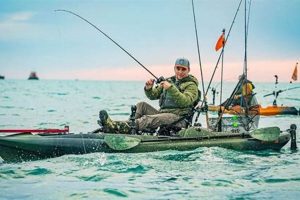
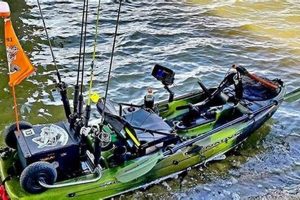
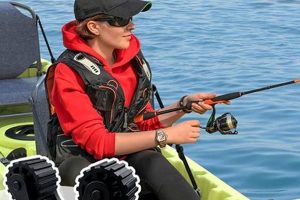
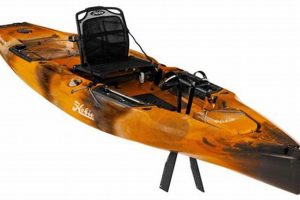
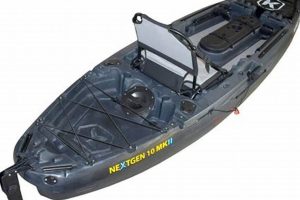
Anglers often face the decision of whether to fish from a powered vessel or a smaller, human-powered craft. This choice impacts factors like accessibility, target species, required gear, and overall fishing experience. One option offers speed, range, and stability, facilitating access to deeper waters and larger fish. The alternative provides a stealthier, closer-to-nature experience, often preferred in shallow waters or areas with limited access.
The selection of fishing platform influences not only the catch but also the environmental impact and the physical demands of the activity. Historically, smaller, non-motorized vessels were the primary means of fishing, evolving from simple rafts and canoes. Technological advancements led to the development of motorized boats, expanding the range and possibilities for anglers. Understanding the distinct advantages and disadvantages of each option allows for informed decisions tailored to individual preferences and fishing goals.
This article will delve deeper into the specifics of each approach, examining factors such as cost, required equipment, suitable fishing styles, and the advantages and disadvantages of each. It will also explore the ecological considerations and best practices associated with each fishing method, providing readers with a comprehensive understanding to guide their angling pursuits.
Tips for Choosing a Fishing Platform
Selecting the appropriate fishing platform requires careful consideration of various factors. These tips offer guidance for making informed decisions tailored to individual needs and fishing goals.
Tip 1: Consider the target species. Larger, faster vessels are often necessary for pursuing offshore species like tuna or marlin. Smaller, more maneuverable craft are better suited for targeting species in shallow waters or protected bays.
Tip 2: Evaluate the fishing environment. Strong currents, large waves, and extensive distances necessitate a stable, powered vessel. Calm lakes, rivers, and sheltered coastlines are often ideal for smaller, human-powered options.
Tip 3: Factor in physical limitations and experience. Maneuvering and launching smaller craft can be physically demanding. Larger vessels may require specialized knowledge of navigation and boat handling.
Tip 4: Assess budget constraints. Smaller craft are generally less expensive to purchase and maintain than larger, motorized boats. Factor in fuel, storage, and potential maintenance costs.
Tip 5: Prioritize safety. Ensure all required safety equipment is readily available and in good working order, regardless of the chosen vessel. Familiarize oneself with local regulations and boating practices.
Tip 6: Research accessibility and launch points. Certain areas may have limited access or require specific permits for launching larger vessels. Smaller craft offer greater flexibility in accessing remote or shallow areas.
Tip 7: Reflect on desired fishing style. Anglers seeking a quiet, close-to-nature experience may prefer smaller, less intrusive platforms. Those prioritizing speed, range, and comfort may find larger vessels more suitable.
Careful consideration of these factors will lead to a more enjoyable and successful fishing experience. Choosing the right platform enhances safety, maximizes efficiency, and minimizes environmental impact.
By understanding the nuances of each option, anglers can confidently choose the vessel best suited to their individual needs and desired fishing experience.
1. Accessibility

Accessibility plays a crucial role in determining the suitability of a fishing platform. Reaching desired fishing spots involves considering launch points, navigable waters, and potential obstacles. The choice between a boat and a kayak significantly impacts the angler’s ability to access specific locations and pursue target species.
- Launch Sites and Transportation
Boats often require designated boat ramps and trailers for transport, limiting access to areas with suitable infrastructure. Kayaks, due to their portability, can be launched from various locations, including shorelines, banks, and even carried over short distances, expanding access to remote or less developed areas. This portability offers greater flexibility in exploring diverse fishing environments.
- Navigable Waters
Boats, particularly those with deeper drafts, are restricted by water depth and potential underwater hazards. Kayaks, with their shallow drafts, can navigate shallow waters, estuaries, and areas dense with vegetation inaccessible to larger vessels. This allows anglers to target species inhabiting these unique ecosystems.
- Physical Limitations
Boarding and maneuvering larger boats can present challenges for individuals with physical limitations. Kayaks, while requiring upper body strength for paddling, offer adaptable seating and specialized equipment catering to diverse physical abilities. Proper training and appropriate equipment can make kayaking accessible to a wider range of individuals.
- Permitting and Regulations
Operating motorized boats often requires licenses, registrations, and adherence to specific waterway regulations. Kayaks generally face fewer regulatory hurdles, simplifying access to public waters. Understanding local regulations is crucial for ensuring legal and responsible fishing practices.
The differing accessibility of boats and kayaks directly influences fishing opportunities. Anglers should carefully evaluate their physical capabilities, target fishing locations, and local regulations to choose the platform best suited to their individual needs and desired fishing experience. Prioritizing accessibility ensures a safe, enjoyable, and productive angling experience.
2. Target Species

Target species significantly influence the choice between boat and kayak fishing. Each platform offers distinct advantages and disadvantages depending on the desired catch. Boats, with their speed and range, excel in pursuing pelagic species inhabiting open waters. Targeting marlin, tuna, or sailfish often necessitates the capabilities of a larger vessel equipped for offshore excursions. Conversely, kayaks offer superior access to shallow-water habitats, making them ideal for targeting species like bass, panfish, or inshore redfish. The stealth and maneuverability of a kayak allow anglers to approach fish in these environments with minimal disturbance.
Consider the practical example of pursuing largemouth bass in a densely vegetated lake. A kayak allows anglers to navigate through narrow channels and approach areas inaccessible to larger boats, increasing the likelihood of encountering bass. Conversely, targeting tuna requires a boat capable of traversing long distances and withstanding open ocean conditions. Matching the fishing platform to the target species maximizes efficiency and increases the chances of a successful catch. Furthermore, understanding the habitat preferences of target species informs decisions regarding fishing techniques, tackle, and bait selection.
Selecting the appropriate fishing platform based on target species optimizes the angling experience. Boats provide the stability and power required for offshore fishing, while kayaks offer maneuverability and stealth in shallow waters. Recognizing this connection ensures anglers utilize the most effective platform for their specific fishing goals, enhancing both the probability of success and the overall enjoyment of the experience. Choosing the correct platform contributes to responsible fishing practices by minimizing environmental impact and promoting sustainable angling.
3. Cost of Equipment

Cost of equipment represents a significant factor in the boat versus kayak fishing debate. Initial purchase price, ongoing maintenance, and necessary accessories contribute to the overall financial commitment associated with each platform. Kayaks typically represent a lower initial investment compared to boats. A basic kayak setup, including paddle and essential safety gear, can be acquired at a fraction of the cost of a comparable motorized boat. Boat purchases necessitate considerations beyond the hull, encompassing trailers, engines, electronic equipment, safety gear, and registration fees, accumulating substantial upfront expenses. Furthermore, ongoing maintenance, including fuel, storage, and repairs, adds to the long-term cost of boat ownership.
For example, a new fishing kayak can be purchased for between $500 and $2,000, while a new motorized boat suitable for fishing can range from $10,000 to well over $100,000. This substantial difference underscores the financial implications inherent in the choice of fishing platform. Beyond the initial purchase, recurring costs such as fuel, insurance, and maintenance further differentiate the two options. Kayak maintenance typically involves minor repairs and occasional replacements of paddles or accessories, representing significantly lower expenditures compared to boat maintenance, which can include engine servicing, hull repairs, and electronic upgrades. Storage costs also differ substantially; kayaks can often be stored at home, minimizing expenses, while boats frequently require marina slips or dedicated storage facilities, adding to the overall cost.
Understanding the financial implications associated with each fishing platform facilitates informed decision-making. Anglers must weigh the initial investment, recurring costs, and potential resale value against their budget and fishing frequency. While kayaks present a lower barrier to entry, boats offer greater range, capacity, and comfort. Evaluating these factors against individual needs and financial resources allows for a balanced decision that aligns with long-term fishing goals. Careful financial planning ensures sustainable and enjoyable angling pursuits regardless of the chosen platform.
4. Fishing Style

Fishing style significantly influences the choice between a boat and a kayak. Each platform caters to different angling preferences, techniques, and target species. Understanding these nuances allows for a more informed decision, ensuring a compatible and enjoyable fishing experience. The following facets highlight the diverse fishing styles facilitated by each platform.
- Trolling
Trolling involves dragging lures or bait behind a moving vessel. Boats excel in this technique due to their speed and stability, covering larger areas and attracting pelagic species. Kayak trolling, while possible, limits speed and range, restricting its effectiveness to smaller bodies of water or specific species. A deep-sea fishing boat trolling for marlin exemplifies the advantages of a larger vessel for this technique. Conversely, a kayak angler slowly trolling for trout in a small lake demonstrates the platform’s adaptability to a more confined environment.
- Casting and Spinning
Casting and spinning are versatile techniques adaptable to both boats and kayaks. Boats provide a stable casting platform, accommodating multiple anglers and specialized equipment. Kayaks, while requiring more balance and precision, offer a stealthy approach, allowing anglers to get closer to fish in shallow waters. An angler casting from the bow of a bass boat demonstrates the stability and spaciousness offered by larger vessels, while a kayak angler sight-casting to redfish in shallow flats highlights the maneuverability and intimate experience provided by a smaller craft.
- Still Fishing and Drifting
Still fishing involves anchoring or positioning the vessel in a specific location, while drifting utilizes natural currents or wind to move the bait. Both techniques are feasible in boats and kayaks. Boats offer greater comfort and stability during extended still-fishing sessions, particularly in deeper waters. Kayaks provide a less intrusive presence while drifting, effectively targeting species in rivers or shallow areas. An angler bottom fishing from an anchored boat exemplifies the stability offered for this technique, whereas a kayak angler drifting a river demonstrates the platform’s adaptability to moving water.
- Fly Fishing
Fly fishing presents unique considerations regarding platform choice. While specialized boats exist for fly fishing, kayaks offer a growingly popular alternative. Their maneuverability and shallow draft allow access to prime fly-fishing locations often inaccessible to larger vessels. However, boats provide greater stability and casting space, advantageous in challenging conditions. A fly angler wading in a river while casting from a kayak showcases the platform’s adaptability to this specialized technique, while a dedicated fly-fishing boat navigating a larger river system highlights the benefits of stability and storage capacity.
The selected fishing style significantly impacts the choice between a boat and a kayak. Matching the platform to the desired fishing technique optimizes efficiency, comfort, and overall angling success. Understanding the nuances of each approach empowers anglers to make informed decisions tailored to their specific preferences and target species. This alignment of fishing style and platform contributes to a more fulfilling and productive angling experience.
5. Physical Exertion
Physical exertion levels differ significantly between boat and kayak fishing, impacting accessibility and overall angling experience. Understanding the physical demands associated with each platform allows anglers to make informed decisions aligned with their physical capabilities and preferences. Factors such as paddling, launching, and maneuvering contribute to the overall physical strain involved in each fishing method.
- Paddling and Propulsion
Kayak fishing relies primarily on human-powered paddling, engaging upper body muscles and requiring sustained physical effort, particularly in challenging conditions like strong currents or wind. Boat fishing, utilizing motorized propulsion, minimizes physical strain during travel, allowing anglers to conserve energy for fishing. Paddling a kayak across a large lake presents a significant physical challenge compared to navigating the same distance using a motorized boat.
- Launching and Landing
Launching and landing a kayak often involve carrying the vessel to and from the water’s edge, requiring physical strength and balance. Boat launching typically occurs at designated ramps, minimizing physical exertion. However, maneuvering larger boats in tight spaces or during challenging weather conditions can present its own set of physical demands. Launching a kayak from a remote shoreline requires more physical effort compared to launching a boat from a designated ramp.
- Maneuvering and Stability
Kayaks, being smaller and more responsive, demand constant adjustments and balance, engaging core muscles and requiring physical dexterity. Boats offer greater stability, reducing physical strain during fishing activities. Maneuvering a kayak through tight spaces or strong currents requires more physical effort compared to maintaining position in a stable boat.
- Gear and Equipment Handling
Transporting gear and equipment in a kayak often necessitates careful packing and weight distribution, potentially adding to the physical demands. Boats offer ample storage space, simplifying gear management and reducing physical strain. Loading and unloading fishing gear from a kayak can be more physically demanding compared to the same task on a boat with dedicated storage compartments.
The level of physical exertion associated with each fishing platform significantly influences accessibility and overall angling experience. Kayak fishing, while physically demanding, offers a closer connection with nature and access to remote locations. Boat fishing, requiring less physical exertion, provides comfort and stability, facilitating longer trips and accommodating diverse physical abilities. Evaluating these factors against personal physical capabilities and fishing preferences ensures a safe, enjoyable, and productive experience on the water. Choosing the appropriate platform maximizes angling opportunities while respecting individual physical limitations.
Frequently Asked Questions
This section addresses common inquiries regarding the choice between boat and kayak fishing, providing concise and informative responses to facilitate informed decision-making.
Question 1: Which option is safer, boat fishing or kayak fishing?
Both options present inherent risks. Safety depends on factors like weather conditions, operator experience, and adherence to safety regulations. Smaller vessels are more susceptible to capsizing, while larger vessels require more knowledge of navigation and boat handling. Appropriate safety equipment and responsible operation are crucial regardless of the chosen platform.
Question 2: Is kayak fishing suitable for beginners?
Kayak fishing can be suitable for beginners, but requires foundational knowledge of paddling, self-rescue techniques, and water safety. Starting in calm, protected waters and gradually progressing to more challenging environments is recommended. Professional instruction can significantly enhance safety and skill development.
Question 3: What type of fish can be caught from a kayak?
A wide variety of fish can be caught from a kayak, including bass, panfish, trout, and even some inshore saltwater species. The specific species accessible depends on the fishing location and angler skill level. Adapting fishing techniques and tackle to the target species and environment maximizes success.
Question 4: What are the advantages of boat fishing over kayak fishing?
Boat fishing offers advantages in speed, range, stability, and carrying capacity. Larger vessels access deeper waters and distant fishing grounds, facilitating diverse fishing styles and accommodating multiple anglers. Increased storage space and comfort enhance the overall fishing experience, particularly for extended trips.
Question 5: Are there specific physical limitations to consider for kayak fishing?
Kayak fishing requires a certain level of physical fitness and upper body strength for paddling and maneuvering. Individuals with specific physical limitations should consult medical professionals and explore adaptive equipment options to ensure a safe and enjoyable experience.
Question 6: What are the environmental considerations associated with each fishing method?
Both boat and kayak fishing require responsible environmental practices. Minimizing noise and water pollution, adhering to catch and release guidelines, and respecting aquatic ecosystems are essential for sustainable angling regardless of the chosen platform. Educating oneself on local regulations and best practices promotes responsible fishing behavior.
Careful consideration of these frequently asked questions allows for a more comprehensive understanding of the factors influencing the choice between boat and kayak fishing. Prioritizing safety, environmental responsibility, and personal preferences ensures a rewarding and sustainable angling experience.
The following sections will further explore specific aspects of each fishing method, providing detailed insights into equipment selection, fishing techniques, and location considerations.
Conclusion
The choice between boat and kayak fishing presents anglers with distinct advantages and disadvantages. Careful consideration of factors such as target species, fishing environment, budget, physical capabilities, and desired fishing style informs this decision. Boats offer speed, range, stability, and capacity, excelling in offshore pursuits and accommodating multiple anglers. Kayaks provide affordability, maneuverability, stealth, and access to shallow or restricted areas, fostering a closer-to-nature experience. Each platform caters to specific angling preferences and presents unique opportunities for exploration and connection with aquatic environments.
Ultimately, the optimal choice depends on individual needs and priorities. Understanding the nuances of each platform empowers anglers to make informed decisions, maximizing both enjoyment and success on the water. Responsible angling practices, regardless of platform, remain paramount for preserving aquatic ecosystems and ensuring the sustainability of this cherished pastime. Continuous learning and adaptation to evolving fishing conditions and personal preferences will further refine the decision-making process, fostering a deeper appreciation for the diverse world of angling.