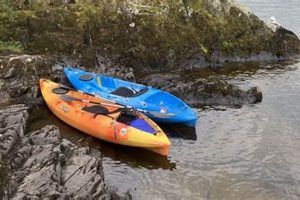
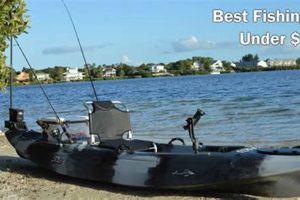
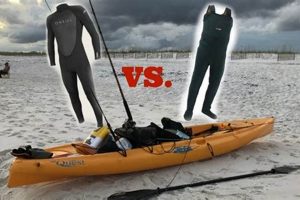
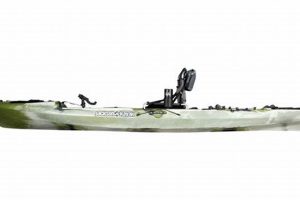
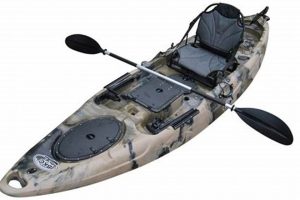
A high-quality kayak designed for fishing in exposed waters like oceans, large bays, or substantial lakes prioritizes stability, durability, and specialized features. Such kayaks typically include a longer hull for tracking in currents and chop, ample storage for fishing gear, and features like rod holders, fish finders, and anchor trolleys. A well-chosen vessel of this type offers a stable and efficient platform for anglers to pursue their passion in challenging conditions.
Selecting an appropriate watercraft for offshore angling significantly enhances safety and fishing success. Stability in rough water is paramount, reducing the risk of capsizing. Dedicated storage and specialized features improve efficiency and allow anglers to focus on fishing rather than managing gear. Historically, open-water fishing relied heavily on larger, motorized boats. Kayaks designed for this purpose offer a more affordable, maneuverable, and environmentally friendly alternative, opening up new possibilities for anglers.
This article will further explore critical factors to consider when selecting a kayak for open water fishing, including hull design, materials, essential features, and safety considerations. Specific recommendations based on various needs and budgets will also be provided.
Tips for Open Water Kayak Fishing
Safe and successful open water kayak fishing requires careful planning and consideration of several key factors. The following tips provide guidance for anglers venturing into more exposed waters.
Tip 1: Prioritize Stability: A wider, longer kayak generally offers greater stability in rough conditions. Consider kayaks specifically designed for open water with features like a flatter hull and pronounced chines.
Tip 2: Choose Appropriate Materials: Durable, impact-resistant materials like high-density polyethylene (HDPE) or fiberglass composites are recommended for open water kayaks to withstand potential impacts and harsh conditions.
Tip 3: Check Weight Capacity: Ensure the kayak’s weight capacity comfortably accommodates the angler’s weight, plus all gear and potential catch.
Tip 4: Invest in Essential Safety Gear: A personal flotation device (PFD), a whistle, a signaling device, and a bilge pump are mandatory safety items for open water kayaking.
Tip 5: Understand Water Conditions: Thoroughly research weather forecasts, tides, and currents before heading out. Be aware of potential hazards like boat traffic and changing weather patterns.
Tip 6: Plan Your Route and Inform Someone: Share a float plan, including your intended route and estimated return time, with a responsible person on shore.
Tip 7: Practice Self-Rescue Techniques: Knowing how to re-enter a kayak in the event of a capsize is a crucial skill for open water paddling.
By adhering to these tips, anglers can significantly enhance their safety and enjoyment while kayak fishing in open water. Preparation and awareness are paramount for a successful and enjoyable experience.
This guidance provides a foundation for safe and effective open water kayak fishing. The following sections will offer further insights into specific kayak models and outfitting options.
1. Stability

Stability forms the cornerstone of a successful open-water fishing kayak. Inherent stability influences not only angler safety but also fishing effectiveness. A stable platform provides a secure base for casting, fighting fish, and maneuvering in challenging conditions like chop, currents, and wind. Compromised stability can lead to capsizing, lost gear, and potentially dangerous situations. Therefore, understanding the factors contributing to kayak stability is crucial for informed decision-making.
- Hull Design
Hull design plays a critical role in determining a kayak’s stability. Wider hulls and flatter bottoms generally offer greater initial stability, resisting tipping. However, they may compromise maneuverability and speed. Longer kayaks tend to track better in waves and currents but can be less responsive to turning. Specialized hull designs, such as those with pronounced chines (the angled edges where the hull meets the sides), enhance secondary stability the resistance to tipping once the kayak is leaned. A carefully considered hull design balances initial and secondary stability for optimal performance in open water.
- Center of Gravity
The center of gravity significantly impacts stability. A lower center of gravity enhances stability by reducing the likelihood of tipping. Sitting lower in the kayak, using a seat designed for stability, and distributing weight evenly contribute to a lower center of gravity. Adding weight higher on the kayak, such as with overhead storage, can raise the center of gravity and negatively impact stability.
- Water Conditions
Environmental factors like wind, waves, and currents directly influence stability. Larger waves and stronger currents require a kayak with greater inherent stability. Wind can significantly impact stability, particularly for kayaks with higher profiles. Understanding the prevailing water conditions and choosing a kayak with appropriate stability characteristics are crucial for safe and effective open-water fishing.
- Angler Behavior
Angler movements and actions directly influence stability. Sudden movements, leaning too far to one side, or standing up in the kayak can compromise stability and lead to a capsize. Practicing good balance and maintaining a smooth, controlled center of gravity are essential for maximizing kayak stability in open water. Anglers should understand their kayak’s limits and avoid exceeding them, especially in challenging conditions.
Considering these facets of stability, anglers can select a kayak optimized for open-water conditions. Prioritizing stability ensures not only a safer experience but also enhances fishing effectiveness by providing a secure and predictable platform for casting, retrieving, and landing fish. A proper understanding of stability, combined with informed decision-making, ultimately contributes to a more rewarding and enjoyable open-water fishing experience.
2. Tracking

Tracking, the ability of a kayak to maintain a straight course with minimal corrective strokes, is a critical performance attribute, especially in open water environments. Efficient tracking directly influences paddling efficiency, conserves energy over long distances, and allows anglers to focus on fishing rather than constantly correcting course deviations. Several factors contribute to a kayak’s tracking performance, including hull design, length, and water conditions. A kayak with superior tracking capabilities minimizes lateral drift caused by wind and currents, enhancing overall fishing effectiveness.
Longer kayaks generally track better than shorter kayaks due to their increased waterline length. A longer waterline provides more directional stability, reducing the tendency to yaw (swing back and forth). Specific hull designs, such as those with a pronounced keel or tracking fins, further enhance directional stability. For example, a kayak designed for open-water fishing might feature a V-shaped hull that helps it maintain a straight course in challenging conditions. Conversely, a shorter, wider kayak designed for recreational use in calm waters might prioritize maneuverability over tracking performance. The impact of current and wind resistance becomes more pronounced in open water; therefore, efficient tracking becomes even more crucial for maintaining course and conserving energy.
Understanding the relationship between tracking and kayak performance empowers informed decision-making. Selecting a kayak with appropriate tracking characteristics for intended open-water conditions significantly improves paddling efficiency, reduces fatigue, and enhances overall fishing success. Prioritizing tracking, alongside other key performance attributes, contributes to a more enjoyable and productive open-water fishing experience.
3. Storage Capacity

Ample storage capacity is a defining characteristic of a best open water fishing kayak. Open water angling often necessitates carrying a significant amount of gear, including rods, reels, tackle boxes, safety equipment, and potentially fish-finding electronics. Insufficient storage can lead to a cluttered deck, hindering movement and casting, and increasing the risk of gear loss or damage. Dedicated storage compartments, such as waterproof hatches, tank wells, and rod holders, keep equipment organized, secure, and readily accessible. For instance, a kayak with a large rear tank well can accommodate a crate or cooler for storing catches, while strategically placed rod holders allow for hands-free trolling or drifting. Furthermore, specialized storage solutions contribute to a more efficient and enjoyable fishing experience, allowing anglers to focus on fishing rather than managing gear.
Consider the scenario of an angler targeting pelagic species offshore. This type of fishing often involves multiple rods rigged with different lures or baits, requiring substantial storage space. A kayak with insufficient storage would force the angler to make difficult choices about what gear to bring, potentially limiting fishing versatility. Conversely, a kayak with ample and well-designed storage allows the angler to carry a wider array of tackle, increasing the chances of success. Practical considerations extend beyond simply the volume of storage. The accessibility and organization of storage compartments also contribute significantly to fishing efficiency. Easily accessible hatches and compartments allow for quick retrieval of essential gear, while specialized storage for smaller items, like pliers and leader material, minimizes time spent searching through tackle boxes.
In conclusion, adequate storage capacity is integral to the functionality and effectiveness of a best open water fishing kayak. It directly impacts safety, organization, and overall fishing success. Anglers should carefully evaluate their storage needs based on their target species, fishing style, and typical trip duration. Prioritizing storage capacity during kayak selection contributes to a more streamlined, efficient, and ultimately more rewarding open-water fishing experience.
4. Durability

Durability is a paramount consideration when selecting a kayak for open water fishing. The marine environment presents unique challenges, including exposure to saltwater, UV radiation, and potential impacts from rocks, submerged debris, or even the target species themselves. A durable kayak withstands these rigors, ensuring longevity and minimizing the risk of costly repairs or replacements. This translates to more time on the water and fewer interruptions due to equipment failure.
- Material Selection
The choice of material significantly influences a kayak’s durability. High-density polyethylene (HDPE) offers excellent impact resistance and UV resistance, making it a popular choice for open-water kayaks. Fiberglass composite kayaks provide higher strength-to-weight ratios, resulting in enhanced performance and lighter weight, but may be more susceptible to damage from impacts. Thermoformed ABS plastic offers a balance of durability and affordability. Evaluating the trade-offs between material properties, cost, and performance is essential for informed decision-making.
- Construction Quality
Construction quality directly impacts long-term durability. Robust hull construction, reinforced seams, and quality hardware contribute to a kayak’s ability to withstand stress and strain. Examining the kayak’s construction details, such as the quality of welds or the reinforcement around critical areas like hatches and handles, can provide insights into its overall durability. A well-constructed kayak will exhibit consistent quality throughout, indicating attention to detail and a commitment to longevity.
- UV Resistance
Prolonged exposure to ultraviolet (UV) radiation can degrade kayak materials, leading to fading, cracking, and reduced structural integrity. Kayaks constructed from UV-resistant materials and treated with UV-inhibiting coatings better withstand the damaging effects of sunlight, prolonging their lifespan. Storing the kayak out of direct sunlight when not in use further mitigates UV damage.
- Impact Resistance
Open water environments often present potential hazards that could impact a kayak’s hull. Collisions with rocks, submerged debris, or even aggressive fish can cause damage. Kayaks constructed from impact-resistant materials, such as HDPE or reinforced composites, better withstand such impacts, minimizing the risk of punctures or cracks. Careful navigation and awareness of potential hazards further reduce the likelihood of impact damage.
Prioritizing durability ensures a kayak can withstand the demands of open-water fishing, providing years of reliable service. Selecting a kayak constructed from durable materials with robust construction techniques ultimately contributes to a safer, more enjoyable, and more cost-effective open-water fishing experience. Balancing durability with performance characteristics and budget constraints allows anglers to make informed decisions that align with their individual needs and fishing styles.
5. Specialized Features

Specialized features distinguish a purpose-built open water fishing kayak from recreational models, enhancing angler efficiency, safety, and overall fishing success. These features cater specifically to the demands of open water environments and the unique requirements of angling, contributing to a more productive and enjoyable experience. Careful consideration of these features is crucial when selecting a kayak for open water fishing.
- Rod Holders
Rod holders are essential for open-water kayak fishing, providing secure storage for rods while paddling, trolling, or drifting. Flush-mounted rod holders integrate seamlessly with the deck, minimizing interference while paddling. Adjustable rod holders offer flexibility for different fishing techniques and rod lengths. Multiple rod holders allow anglers to carry a variety of rods rigged for different target species or fishing styles. Secure rod storage prevents rod loss or damage and allows for hands-free operation of the kayak.
- Anchor Trolley System
An anchor trolley system allows anglers to control kayak position and drift in open water. This system typically consists of a line running along the length of the kayak, with an attachment point for the anchor. By adjusting the anchor position along the trolley line, anglers can control the angle of drift relative to wind or current. This is particularly useful for fishing specific structures or maintaining an optimal presentation while drifting. An effective anchor trolley system enhances fishing precision and control.
- Fish Finder Mounts/Transducer Scuppers
Fish finders provide valuable information about water depth, bottom structure, and fish location, significantly improving fishing success in open water. Dedicated mounts or transducer scuppers (pre-cut holes designed for transducer installation) facilitate easy installation and optimal transducer placement. Integrated fish finder systems streamline the electronics setup, reducing clutter and enhancing fishing efficiency. Access to real-time underwater data empowers informed decision-making and increases the likelihood of locating fish.
- Paddle Holders/Leashes
Paddle holders or leashes provide secure storage for the paddle when not in use, preventing loss or interference while fishing. Secure paddle storage is particularly important in open water, where losing a paddle could create a hazardous situation. Paddle holders or leashes free the angler’s hands for fishing activities and prevent the paddle from drifting away. This seemingly minor feature contributes significantly to safety and convenience.
These specialized features, when integrated into a well-designed kayak, transform it into a highly effective fishing platform. By carefully considering these features, anglers can select a kayak optimized for open-water conditions and their specific fishing style. The combination of these features contributes significantly to enhanced fishing efficiency, increased safety, and ultimately, a more rewarding open-water fishing experience.
6. Comfort
Comfort is a critical factor often overlooked when selecting a kayak, especially for open water fishing. Extended periods on the water, often in challenging conditions, necessitate a comfortable and supportive seating system to minimize fatigue and maximize fishing effectiveness. Discomfort can detract from the overall experience, leading to premature fatigue, reduced focus, and a diminished enjoyment of the fishing trip. A comfortable kayak allows anglers to remain focused on fishing, enhancing endurance and overall success.
- Seat Design and Adjustability
A well-designed seat provides crucial support and cushioning, reducing pressure points and promoting proper posture. Adjustable features, such as backrest angle and seat height, allow for customization based on individual preferences and body types. High-quality padding and breathable materials enhance comfort during long hours on the water. A comfortable and supportive seat minimizes fatigue and allows anglers to maintain focus and effectiveness throughout the fishing trip. For example, a kayak with a poorly designed seat can lead to back pain and discomfort, hindering an angler’s ability to cast and reel effectively.
- Legroom and Footrests
Adequate legroom and adjustable footrests contribute significantly to comfort and paddling efficiency. Proper leg positioning allows for efficient power transfer during paddling and reduces leg cramps and fatigue. Adjustable footrests accommodate different leg lengths and paddling styles, ensuring optimal comfort and biomechanics. Sufficient legroom allows for stretching and shifting positions, promoting circulation and reducing discomfort during long periods on the water. Restricted legroom can lead to discomfort and hinder paddling performance.
- Deck Layout and Accessibility
A well-designed deck layout with easy access to essential gear and equipment contributes to both comfort and fishing efficiency. Strategically placed hatches, storage compartments, and rod holders minimize the need for excessive reaching or bending, reducing strain and maximizing comfort. A clutter-free deck enhances safety and allows for easy movement within the kayak. For example, a kayak with readily accessible storage compartments for tackle and gear allows anglers to quickly retrieve items without having to contort themselves into uncomfortable positions.
- Stability and Confidence
While not strictly a comfort feature, stability indirectly contributes to comfort by fostering a sense of security and confidence on the water. A stable kayak reduces anxiety and allows anglers to relax and focus on fishing. This sense of stability contributes to a more comfortable and enjoyable experience, particularly in challenging open-water conditions. Knowing the kayak is stable allows anglers to focus on fishing rather than worrying about balance or potential capsize.
Prioritizing comfort when selecting a best open water fishing kayak significantly enhances the overall fishing experience. A comfortable kayak allows anglers to focus on fishing, maximizing endurance, efficiency, and enjoyment on the water. By carefully considering seating, legroom, deck layout, and stability, anglers can select a kayak that provides the comfort and support needed for long hours of productive open-water fishing.
Frequently Asked Questions
This section addresses common inquiries regarding kayaks designed for open water fishing, providing concise and informative responses to facilitate informed decision-making.
Question 1: What key features distinguish open water fishing kayaks from recreational models?
Open water fishing kayaks typically feature enhanced stability, increased storage capacity for gear, specialized features like rod holders and anchor trolleys, and durable construction to withstand challenging conditions. These features prioritize fishing functionality and safety in exposed waters.
Question 2: How does hull design impact performance in open water?
Hull design significantly influences stability, tracking, and speed. Longer kayaks with a defined keel or tracking fins generally track better in currents and wind. Wider hulls offer increased stability, while a V-shaped hull can improve performance in chop but may compromise initial stability.
Question 3: What materials are best suited for open water kayak construction?
High-density polyethylene (HDPE) offers excellent impact resistance and durability, while fiberglass composites provide a lighter weight and enhanced performance. Thermoformed ABS plastic offers a balance of durability and affordability. Material selection involves trade-offs between performance, durability, and cost.
Question 4: What safety precautions should one take when fishing in open water?
Essential safety precautions include wearing a personal flotation device (PFD), carrying a whistle and signaling device, checking weather forecasts and water conditions, informing someone of the planned route and return time, and practicing self-rescue techniques.
Question 5: How does one choose the right size and weight capacity for an open water fishing kayak?
Kayak size and weight capacity should accommodate the angler’s weight, plus all gear and potential catch. Longer kayaks generally offer better tracking and speed, while wider kayaks provide enhanced stability. Weight capacity should not be exceeded for optimal performance and safety.
Question 6: What are the benefits of using an anchor trolley system for open water fishing?
An anchor trolley system allows anglers to control kayak position and drift in open water, enabling precise positioning for fishing specific structures or maintaining optimal bait presentation in currents or wind. This system enhances fishing effectiveness and control.
Careful consideration of these frequently asked questions, combined with thorough research and informed decision-making, ensures selection of the most suitable kayak for individual open water fishing needs.
This FAQ section provides a foundational understanding of key considerations. The following section delves into specific kayak recommendations based on varying budgets and fishing styles.
Conclusion
Selecting a kayak optimized for open water fishing requires careful consideration of various factors. Stability, tracking, storage capacity, durability, specialized features, and comfort all contribute significantly to on-the-water performance, safety, and overall fishing success. Understanding the interplay of these elements empowers informed decision-making, ensuring the chosen vessel aligns with individual angler needs and fishing styles. Prioritizing these key attributes ensures a safe, efficient, and enjoyable open-water fishing experience.
Investing in a suitable kayak unlocks the potential of open-water fishing, providing access to new fishing grounds and opportunities. Informed selection leads to enhanced fishing experiences, increased safety, and a deeper appreciation for the sport. Choosing a well-equipped, appropriately designed kayak represents an investment in long-term enjoyment and success in open-water angling. The exploration of these key factors provides anglers with the knowledge necessary to embark on their open-water fishing journeys with confidence and preparedness.