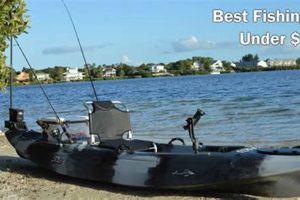
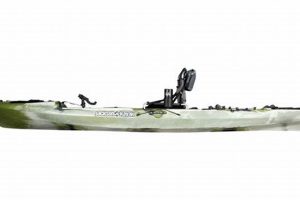
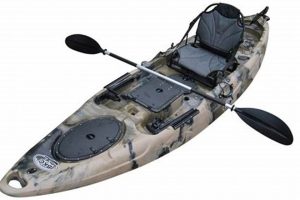
A high-quality, lightweight fishing kayak represents the optimal balance between portability, performance, and stability on the water. Such vessels are designed to be easily transported and maneuvered, often by a single person, while still providing sufficient capacity for fishing gear and a stable platform for casting and reeling. These kayaks are typically constructed from lightweight materials like high-density polyethylene or composites, contributing to their ease of handling both on and off the water.
The demand for easily transportable watercraft suitable for angling has grown significantly. Lightweight kayaks provide convenient access to diverse fishing locations, from small ponds and rivers to larger lakes and coastal waters. This portability allows anglers to explore areas otherwise difficult to reach with heavier, bulkier boats. Additionally, the reduced weight often translates to improved fuel efficiency when transported by motorized vehicles. Historically, kayak fishing relied on heavier, traditional designs. The development of advanced materials and construction techniques has revolutionized the industry, creating a niche for lightweight kayaks specifically tailored for fishing.
Key factors in selecting a suitable lightweight fishing kayak include material, length, weight capacity, storage options, and features like rod holders and comfortable seating. An in-depth exploration of these considerations will follow.
Tips for Choosing a Lightweight Fishing Kayak
Selecting a lightweight fishing kayak requires careful consideration of several factors to ensure optimal performance and angler satisfaction. The following tips provide guidance for navigating the selection process.
Tip 1: Prioritize Stability: While lightweight design is desirable, stability remains paramount. A stable platform is crucial for casting, reeling, and landing fish, particularly in challenging conditions. Consider kayaks with wider beams or pontoon-style hulls for enhanced stability.
Tip 2: Evaluate Weight Capacity: Carefully assess the combined weight of the angler, fishing gear, and any potential catch. Exceeding the kayak’s weight capacity compromises stability and performance.
Tip 3: Consider Transportation: Factor in how the kayak will be transported. Roof racks, trailers, or even carrying the kayak by hand may influence the ideal size and weight.
Tip 4: Examine Storage Options: Adequate storage space for fishing gear, tackle boxes, and personal items is essential. Evaluate the size, placement, and accessibility of storage compartments.
Tip 5: Assess Seating Comfort: Long hours on the water demand a comfortable seat. Look for adjustable seating systems with ample back support and cushioning.
Tip 6: Inspect Fishing-Specific Features: Consider features designed for anglers, such as rod holders, paddle clips, anchor trolleys, and fish finders mounts. These features enhance the fishing experience.
Tip 7: Choose Durable Materials: Opt for kayaks constructed from durable, UV-resistant materials that can withstand the rigors of fishing environments.
By carefully evaluating these factors, anglers can select a lightweight fishing kayak that balances portability with performance, comfort, and fishing functionality. A well-chosen kayak will significantly enhance enjoyment on the water.
Armed with these tips, prospective buyers are now better equipped to make an informed decision. The following section concludes with a summary of key takeaways and a final recommendation.
1. Weight

Weight is a critical factor in determining the portability and overall performance of a fishing kayak, especially when seeking the “best light” option. Lower weight translates to easier transportation, launching, and maneuvering, particularly beneficial for solo anglers or those accessing remote fishing locations. Understanding the nuances of weight as it relates to kayak fishing involves examining its various facets.
- Hull Weight:
The inherent weight of the kayak’s hull significantly impacts overall weight. Hull materials like high-density polyethylene (HDPE) offer durability at a moderate weight, while lighter composites like fiberglass or carbon fiber provide significant weight reduction but often at a higher cost. For instance, an HDPE kayak might weigh between 50 and 80 pounds, whereas a comparable composite model might weigh 10-20 pounds less. This difference becomes noticeable during transport and portage.
- Gear Capacity:
Weight capacity, distinct from hull weight, dictates how much gear and angler weight the kayak can safely support. This capacity directly influences stability and performance. A kayak with insufficient weight capacity can become unstable and difficult to control when fully loaded. A higher capacity generally correlates with a larger, and potentially heavier, kayak.
- Transportability:
The overall weight, including gear, affects how easily the kayak can be transported. Loading a heavier kayak onto a vehicle roof rack or carrying it across uneven terrain presents challenges. Lightweight kayaks, often under 50 pounds fully loaded, are significantly easier to manage, particularly for individuals. A lighter kayak expands access to fishing locations otherwise inaccessible with heavier craft.
- On-Water Performance:
While lightweight kayaks offer portability advantages, they can be more susceptible to wind and currents. Heavier kayaks tend to track better in challenging conditions, offering increased stability. However, lighter kayaks generally accelerate and maneuver more quickly, beneficial for navigating tight spaces or quickly changing fishing spots.
The “best light fishing kayak” isn’t simply the lightest available; it’s the one that optimizes the balance between a manageable weight, sufficient capacity, and on-water performance. Anglers must carefully consider their individual needs and fishing style to determine the ideal weight range for their perfect kayak. A lightweight kayak that compromises stability or capacity defeats the purpose, while an excessively heavy kayak negates the benefits of portability.
2. Stability

Stability is a paramount consideration when selecting a lightweight fishing kayak. A stable platform is essential for various on-the-water activities, including casting, reeling, landing fish, and even entering or exiting the kayak. Compromised stability negatively impacts fishing effectiveness and angler safety. The relationship between stability and a lightweight design often presents a challenge: reducing weight can sometimes come at the expense of stability. Therefore, understanding the factors influencing kayak stability is crucial for informed decision-making.
Several design elements contribute to kayak stability. Hull width plays a significant role; wider hulls generally offer greater initial stability, resisting tipping. Hull shape also influences stability; flat-bottomed hulls provide excellent initial stability, while rounded or V-shaped hulls offer greater secondary stability, recovering more easily from larger leans. Features like outriggers or pontoons can significantly enhance stability but may add weight and complexity. Weight distribution within the kayak also affects stability; keeping the center of gravity low enhances stability. For example, a kayak with a wide, flat bottom will feel very stable when sitting still, but might feel less secure when leaning over to retrieve a lure. Conversely, a narrower kayak with a rounded hull might feel less stable initially, but recover more easily from a lean, making it suitable for more dynamic fishing styles.
Finding the optimal balance between lightweight design and stability requires careful consideration of these factors. Anglers must assess their intended fishing environment and style. Calm, protected waters allow for greater prioritization of lightweight design, potentially accepting a slight decrease in stability. Conversely, fishing in open water or challenging conditions necessitates prioritizing stability, even if it means accepting a slightly heavier kayak. Understanding the interplay between these factors empowers anglers to select the kayak that best meets their specific needs, ensuring a safe and productive fishing experience. Neglecting stability in the pursuit of lightness can compromise both safety and fishing effectiveness, ultimately detracting from the overall experience.
3. Maneuverability

Maneuverability represents a critical performance attribute in the context of a “best light fishing kayak.” Efficient navigation through diverse water conditions, including tight spaces, shallow areas, and swift currents, directly impacts fishing success. A highly maneuverable kayak allows anglers to access prime fishing spots, position themselves effectively, and respond quickly to changing fish behavior. Examining the factors contributing to kayak maneuverability provides insights into its significance in selecting the ideal lightweight fishing vessel.
- Hull Design:
Hull design significantly influences maneuverability. Shorter kayaks generally turn more quickly than longer ones, making them ideal for navigating confined spaces. Wider kayaks, while offering stability, tend to be less maneuverable. The hull’s profile also plays a role; kayaks with a pronounced keel track straighter but turn less easily, while flatter hulls sacrifice tracking for enhanced maneuverability. For instance, a shorter, flatter hull excels in small creeks and ponds, while a longer, keeled hull performs better in open lakes or coastal waters.
- Waterline Length:
The length of the kayak’s hull in contact with the water directly impacts turning performance. A shorter waterline length corresponds to increased maneuverability. Factors such as kayak width and the angler’s weight influence waterline length dynamically.
- Paddle Length and Technique:
Paddle length and paddling technique also contribute to maneuverability. A properly sized paddle allows for efficient strokes and precise control. Skilled paddling techniques, such as sweep strokes and draws, enable quick turns and adjustments in direction.
- Rudder or Skeg:
Some kayaks feature rudders or skegs to enhance tracking and control. Rudders provide active steering control, while skegs improve straight-line tracking, particularly in windy conditions. These features, while potentially adding weight, can significantly improve maneuverability in specific environments.
Optimizing maneuverability in a “best light fishing kayak” requires careful consideration of these factors. Balancing hull design, length, and paddling dynamics allows anglers to select a kayak that provides both efficient movement and precise control. A kayak that excels in maneuverability enhances fishing effectiveness by allowing anglers to navigate diverse waterways, access optimal fishing locations, and react quickly to changing fishing conditions. Prioritizing maneuverability, alongside other critical factors like stability and portability, ultimately leads to a more rewarding and successful fishing experience.
4. Storage Capacity
Storage capacity plays a vital role in determining the suitability of a kayak for fishing, particularly when striving for the “best light” designation. Effective storage solutions allow anglers to carry essential gear, including tackle boxes, rods, safety equipment, and personal items, without compromising stability or maneuverability. The interplay between storage capacity and lightweight design requires careful consideration, as maximizing storage can sometimes add weight and bulk. Understanding this relationship is crucial for selecting a kayak that balances functionality with portability.
Several factors influence the effectiveness of kayak storage. The volume and accessibility of storage compartments are key considerations. Large, easily accessible hatches facilitate loading and retrieving gear. Dedicated compartments for specific items, such as rod holders or tackle storage, enhance organization and efficiency. The placement and distribution of storage compartments also impact the kayak’s balance and trim. For example, a rear storage well might be suitable for larger items like a cooler or crate, while smaller hatches near the cockpit provide convenient access to frequently used items. Weight distribution within storage compartments also influences stability. Distributing heavier items low and evenly within the kayak enhances balance and reduces the risk of tipping. A well-designed storage system contributes significantly to an organized and efficient fishing experience, minimizing clutter and maximizing time on the water.
Optimizing storage capacity in a lightweight fishing kayak involves careful planning and consideration of individual fishing needs. Anglers must assess the type and quantity of gear they typically carry and select a kayak with sufficient storage volume and appropriately designed compartments. Prioritizing storage without compromising weight or performance requires careful evaluation of various kayak models and their storage solutions. Inadequate storage can lead to a cluttered and inefficient fishing experience, hindering access to essential gear and potentially compromising safety. Conversely, excessive storage capacity adds unnecessary weight and bulk, detracting from the kayak’s portability and on-water performance. A balanced approach, tailored to individual fishing styles and preferences, ultimately contributes to a more organized, efficient, and enjoyable fishing experience. Therefore, storage capacity stands as a critical factor in defining the “best light fishing kayak,” balancing the need for gear accessibility with the desire for a lightweight and maneuverable vessel.
5. Fishing Features

Specialized fishing features distinguish a standard kayak from a purpose-built fishing platform. In the pursuit of the “best light fishing kayak,” these features become crucial, enhancing angling effectiveness without significantly compromising portability. These features contribute directly to angler success and overall fishing experience. Cause and effect relationships between these features and successful fishing outcomes are readily apparent. For instance, integrated rod holders secure rods, freeing hands for other tasks, while strategically placed mounting points accommodate fish finders and GPS units, crucial for locating fish. Similarly, anchor trolleys allow controlled drifting, maximizing fishing coverage in specific areas. These features transform a simple vessel into a specialized fishing platform.
Fishing features integral to a “best light fishing kayak” include rod holders, often flush-mounted or adjustable; gear tracks, providing modular mounting options for accessories; anchor trolleys, enabling controlled drift fishing; and transducer mounts, facilitating fish finder installation. Practical examples illustrate the significance of these features. A kayak equipped with multiple rod holders allows anglers to troll multiple lines or switch between different rod setups efficiently. Gear tracks provide flexibility to mount accessories like cameras, GPS units, or additional rod holders as needed. An anchor trolley system maintains boat position in currents, maximizing fishing time in productive areas. These examples demonstrate the practical application and inherent value of these features in enhancing fishing success. The absence of these features necessitates improvised solutions, often compromising efficiency and safety.
Integrating effective fishing features while maintaining a lightweight design presents a challenge. Manufacturers address this by utilizing lightweight materials and innovative design solutions. Recessed rod holders minimize weight and profile while maintaining functionality. Integrated gear tracks eliminate the need for bulky aftermarket mounting systems. Careful selection of features based on individual fishing style and target species allows anglers to optimize functionality without unnecessary weight. Understanding the relationship between fishing features and overall kayak performance empowers informed decision-making. A well-equipped kayak, tailored to specific fishing needs, significantly enhances angling effectiveness and overall enjoyment on the water. Thus, specialized fishing features constitute a critical component in defining the “best light fishing kayak,” bridging the gap between a simple paddling vessel and a purpose-built fishing machine.
Frequently Asked Questions
This section addresses common inquiries regarding lightweight fishing kayaks, providing concise and informative responses to facilitate informed decision-making.
Question 1: How does one determine the appropriate weight capacity for a lightweight fishing kayak?
Appropriate weight capacity depends on the combined weight of the angler, fishing gear, and any potential catch. Exceeding the manufacturer’s specified capacity compromises stability and performance. Conservative estimates ensure safe and optimal on-water performance.
Question 2: Do lightweight fishing kayaks sacrifice stability for portability?
Not necessarily. While minimizing weight can sometimes impact stability, many lightweight designs prioritize stability through features like wider hulls and strategically placed seating. Careful selection based on individual needs and fishing conditions ensures optimal balance.
Question 3: What materials are typically used in the construction of lightweight fishing kayaks?
Common materials include high-density polyethylene (HDPE) and various composites like fiberglass or carbon fiber. HDPE offers durability and affordability, while composites prioritize weight reduction, albeit often at a higher cost.
Question 4: Are lightweight fishing kayaks suitable for use in open water or challenging conditions?
Suitability for open water or challenging conditions depends on the specific kayak design. Some lightweight models offer excellent stability and tracking in rougher waters, while others are better suited for calm lakes and rivers. Careful consideration of design features is essential.
Question 5: What are the key fishing-specific features to look for in a lightweight kayak?
Essential features include rod holders, gear tracks, anchor trolleys, and transducer mounts. These enhance angling efficiency and convenience. The specific features required depend on individual fishing styles and preferences.
Question 6: How does one transport a lightweight fishing kayak?
Lightweight kayaks are generally easier to transport than traditional kayaks. Options include roof racks, trailers, or even carrying by hand for shorter distances. The specific method depends on kayak size and individual circumstances.
Addressing these frequently asked questions aims to provide a comprehensive understanding of the key considerations surrounding lightweight fishing kayaks. Informed decision-making ensures optimal selection based on individual needs and preferences.
This concludes the frequently asked questions section. The following section will offer concluding remarks and summarize key takeaways.
Conclusion
Selecting the best light fishing kayak requires careful consideration of various interconnected factors. Balancing weight, stability, maneuverability, storage capacity, and fishing-specific features is crucial for optimizing performance and angler satisfaction. Prioritizing lightweight design without compromising stability or functionality presents a challenge addressed through careful evaluation of materials, construction techniques, and design elements. Understanding the nuances of each characteristic empowers informed decision-making, aligning kayak selection with individual needs and fishing styles. The “best” designation remains subjective, contingent upon specific requirements and preferences.
The evolution of kayak design and materials continues to expand opportunities for lightweight, high-performance fishing kayaks. Careful consideration of the factors discussed within this exploration empowers anglers to make informed decisions, maximizing their on-the-water experience. Ultimately, the best light fishing kayak is the one that seamlessly integrates portability, performance, and functionality, creating a personalized vessel for successful angling adventures.