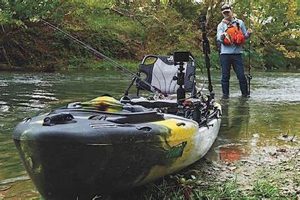
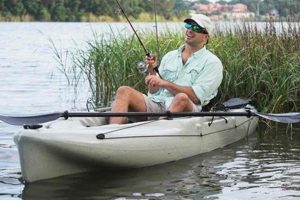
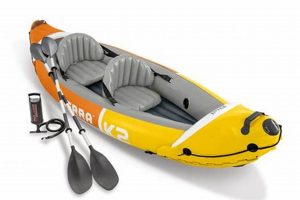
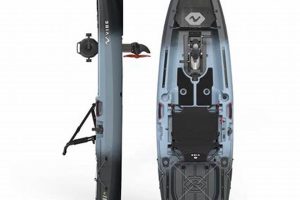
A durable, angler-focused vessel designed for recreational use on the water, this type of kayak typically features a sit-on-top design constructed from high-density polyethylene. This material contributes to its robust nature and resistance to UV damage, impacts, and general wear and tear. The compact size offers a balance between maneuverability and stability, making it suitable for a variety of freshwater environments such as ponds, lakes, and slow-moving rivers.
Smaller kayaks offer advantages in portability and storage. Their lighter weight often allows for easier car-topping and carrying to and from the water. The shorter length contributes to improved maneuverability, particularly in confined spaces like narrow creeks or densely vegetated areas. This can be a significant benefit for anglers seeking to access hard-to-reach fishing spots. Historically, kayaks have served diverse purposes, from hunting and transportation to recreation. Modern recreational models, specifically designed for fishing, have evolved to incorporate features like rod holders, tackle storage, and comfortable seating, catering to the specific needs of anglers.
This discussion will delve further into key aspects of selecting and using this type of watercraft, covering topics such as key features, essential accessories, paddling techniques, and important safety considerations.
Tips for Utilizing a 10-Foot Fishing Kayak
Proper preparation and technique enhance safety and enjoyment on the water. The following tips provide valuable guidance for maximizing the fishing kayak experience.
Tip 1: Prioritize Safety Gear: Always wear a personal flotation device (PFD). Carry a whistle for signaling, a waterproof first-aid kit, and a communication device.
Tip 2: Plan and Research: Check weather forecasts, water conditions, and local regulations before embarking on any kayaking trip. Inform someone of the intended route and estimated return time.
Tip 3: Master Basic Paddling Strokes: Learning efficient forward and turning strokes improves maneuverability and conserves energy. Practice these techniques in calm water before venturing into more challenging conditions.
Tip 4: Distribute Weight Evenly: Proper weight distribution enhances stability. Center heavier items within the kayak and avoid overloading. Secure gear to prevent shifting during movement.
Tip 5: Respect Wildlife and the Environment: Maintain a safe distance from wildlife and avoid disturbing natural habitats. Pack out all trash and adhere to Leave No Trace principles.
Tip 6: Practice Self-Rescue Techniques: Learn how to re-enter the kayak from the water in case of a capsize. Practice these maneuvers in a controlled environment with supervision.
Tip 7: Regularly Inspect and Maintain Equipment: Before each use, inspect the kayak for any signs of damage. Clean and store the vessel properly to prolong its lifespan.
Adherence to these guidelines promotes responsible enjoyment of the sport and contributes to a safe and successful kayaking experience.
These tips offer a foundation for a rewarding experience on the water. Further sections will explore advanced techniques and specific fishing strategies from a kayak.
1. Durability

Durability represents a critical factor in the value proposition of a 10-foot fishing kayak designed for extended use. Selecting a kayak built to withstand the rigors of regular use, including exposure to various environmental conditions, ensures long-term performance and return on investment. The following facets highlight key elements contributing to overall durability.
- Material Selection
High-density polyethylene (HDPE) stands as a prevalent material choice due to its impact resistance, UV stability, and overall robustness. HDPE can withstand impacts from rocks, submerged logs, and general wear and tear more effectively than less durable materials. This resilience translates to a longer lifespan and reduced risk of damage during transport, launch, and retrieval, essential considerations for a kayak frequently used.
- Construction Methods
Manufacturing techniques influence the structural integrity of the kayak. Rotational molding, a common process for HDPE kayaks, creates a seamless, one-piece hull with uniform thickness. This method minimizes weak points susceptible to cracking or stress fractures, further enhancing the kayak’s resistance to damage. Double-walled or reinforced hulls provide additional rigidity and protection against punctures.
- UV Resistance
Prolonged exposure to sunlight can degrade certain plastics, leading to cracking and discoloration. Kayaks designed for extended use often incorporate UV inhibitors in the plastic formulation. These additives protect against the damaging effects of ultraviolet radiation, preserving the structural integrity and aesthetic appearance of the kayak over time.
- Hardware and Fittings
The durability of hardware components, such as handles, latches, and seat fittings, also contributes to the overall lifespan of the kayak. Corrosion-resistant materials like stainless steel or marine-grade plastics ensure continued functionality and prevent premature failure. Well-designed and securely attached hardware minimizes the risk of breakage or loss during use.
Considering these elements when evaluating a 10-foot fishing kayak helps ensure the chosen vessel can withstand years of use in diverse environments. A durable kayak represents a reliable platform for pursuing angling adventures, offering long-term enjoyment and value.
2. Stability

Stability forms a cornerstone of effective angling from a 10-foot fishing kayak. A stable platform enables anglers to cast, reel, and land fish effectively without compromising safety. Several factors influence kayak stability, including hull design, width, and the angler’s center of gravity. Wider kayaks generally offer greater primary stabilityresistance to initial tippingmaking them suitable for calmer waters and less experienced paddlers. Kayaks with a flatter hull also enhance primary stability. However, these designs may sacrifice secondary stabilitythe ability to recover from a significant leancompared to kayaks with a more rounded or V-shaped hull. The angler’s center of gravity plays a crucial role. Maintaining a low center of gravity, achieved by sitting properly and distributing weight evenly, significantly contributes to stability. For example, sudden movements or leaning too far to one side can destabilize the kayak, particularly in challenging conditions like wind or choppy water. Understanding these factors empowers anglers to select a kayak appropriate for their skill level and intended fishing environment.
The relationship between stability and kayak fishing extends beyond simply staying afloat. Enhanced stability allows anglers to focus on fishing rather than constantly correcting balance. This is particularly crucial when performing tasks that require more movement, such as casting with two hands, fighting a strong fish, or reaching for equipment. Consider a scenario where an angler hooks a large fish. A stable kayak provides a secure platform to manage the fight, reducing the risk of capsizing and potentially losing the fish. Similarly, a stable platform allows for more accurate and powerful casting, increasing the likelihood of successful hookups. Practical applications demonstrate the importance of stability. Anglers fishing in rough conditions or standing to cast benefit significantly from a highly stable kayak. Conversely, anglers primarily fishing in calm, protected waters may prioritize maneuverability over maximum stability.
In summary, stability is not merely a safety consideration; it directly impacts fishing performance and overall enjoyment on the water. Selecting a 10-foot fishing kayak with appropriate stability characteristics for the intended fishing environment and individual skill level is paramount. Understanding the interplay between hull design, width, and personal balance empowers anglers to make informed decisions and maximize their time on the water. While stability is essential, it should be considered in conjunction with other factors, like maneuverability and portability, to select the optimal kayak for individual needs.
3. Portability

Portability significantly influences the overall utility of a 10-foot fishing kayak, particularly one intended for extended use. Transporting a kayak often involves navigating various terrains and logistical challenges. A kayak’s weight and dimensions directly impact ease of handling, loading, and storage, affecting accessibility to diverse fishing locations. Consider, for instance, an angler with limited storage space or a vehicle without a roof rack. A lighter, more compact kayak proves considerably easier to manage than a larger, heavier model. This practicality extends to launching and retrieving the kayak, especially in areas with limited access or challenging terrain. For example, carrying a kayak down a steep bank or across a sandy beach becomes significantly more arduous with increasing weight and bulk.
The 10-foot length contributes to enhanced portability compared to longer kayaks, striking a balance between on-the-water performance and off-the-water practicality. This compact size simplifies storage, transport, and maneuverability on land. The reduced length translates to a smaller footprint in garages, sheds, or apartments, a practical advantage for those with limited storage options. Furthermore, shorter kayaks often weigh less, facilitating easier loading and unloading onto vehicles, reducing strain, and minimizing the risk of damage. Consider the example of an angler frequently traveling to different fishing spots. A portable kayak significantly simplifies logistics, allowing for greater flexibility and access to diverse waterways.
In summary, portability enhances the overall usability of a 10-foot fishing kayak, particularly when considering long-term ownership and frequent usage. The manageable size and weight facilitate easier transport, storage, and handling, expanding access to a wider range of fishing locations. This practical aspect contributes significantly to the long-term value and enjoyment of a fishing kayak, allowing anglers to pursue their passion with greater ease and convenience. Prioritizing portability allows for seamless transitions between transport, launch, and the actual fishing experience, optimizing overall efficiency and enjoyment on the water.
4. Fishing Features

Specialized features distinguish fishing kayaks from recreational models, enhancing angling efficiency and overall experience. These features, integrated into the kayak’s design, contribute directly to functionality and long-term utility. An angler’s success and enjoyment on the water often depend on the availability and effective utilization of these specialized components. Understanding their purpose and application is crucial for selecting and utilizing a 10-foot fishing kayak effectively.
- Rod Holders
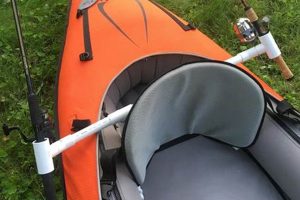
Dedicated rod holders secure fishing rods, allowing anglers to manage multiple lines or keep rods readily accessible while paddling or attending to other tasks. Flush-mounted rod holders offer a streamlined profile, minimizing interference while paddling. Adjustable rod holders provide flexibility for various fishing techniques and rod lengths. For example, an angler trolling might position rods pointing backward, while someone jigging might prefer a more vertical orientation. Securely mounted rod holders prevent loss or damage to valuable equipment, a critical consideration for long-term use.
- Tackle Storage
Integrated storage compartments provide organized and accessible storage for tackle boxes, lures, and other essential fishing gear. Dry storage compartments protect sensitive items from water damage, crucial for maintaining the functionality of electronic devices or preserving important documents. Easy-access storage allows for efficient retrieval of items without disrupting the fishing process. Consider an angler changing lures frequently; readily accessible storage streamlines this process, maximizing fishing time and minimizing disruption. Well-designed storage contributes significantly to an organized and efficient angling experience.
- Gear Tracks and Mounts
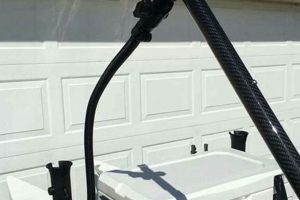
Gear tracks and mounting points offer versatility for customizing the kayak with accessories such as fish finders, GPS units, cameras, and additional rod holders. These adaptable systems allow anglers to tailor their setup to specific needs and fishing styles. For instance, mounting a fish finder provides real-time information about water depth and fish location, enhancing angling success. Similarly, attaching a camera allows for documenting memorable catches or capturing scenic views. The adaptability offered by gear tracks and mounts contributes significantly to the long-term versatility and value of the kayak.
- Paddle Holders/Clips
Securely storing the paddle when not in use is essential for maintaining a clear deck and preventing loss. Paddle holders or clips keep the paddle within easy reach while freeing up hands for fishing. This feature is particularly important in situations requiring both hands, such as landing a fish or adjusting tackle. A secure paddle also minimizes the risk of accidental dislodgement, especially in rough conditions. The seemingly simple paddle holder contributes significantly to overall efficiency and safety on the water.
These integrated features, specifically designed to enhance angling practicality, contribute significantly to the overall effectiveness and enjoyment of a 10-foot fishing kayak. The strategic incorporation of these elements streamlines the fishing experience, allowing anglers to focus on the sport itself. When evaluating a fishing kayak for long-term use, careful consideration of these features, in conjunction with other key factors like durability and stability, ensures a well-informed decision aligned with individual angling needs and preferences. The selection of a kayak equipped with appropriate fishing features directly impacts long-term satisfaction and success on the water.
5. Maneuverability

Maneuverability represents a critical performance attribute in a lifetime fishing kayak, directly influencing its effectiveness in diverse aquatic environments. The ability to navigate efficiently through various water conditions, including tight spaces and complex shorelines, significantly impacts angling success. A highly maneuverable kayak allows anglers to access secluded fishing spots, navigate obstacles, and position themselves strategically for optimal casting and retrieval. The following facets explore the key components and implications of maneuverability within the context of a 10-foot fishing kayak designed for extended use.
- Hull Design
Hull design significantly impacts a kayak’s maneuverability. A shorter kayak, like the 10-foot model, generally offers enhanced maneuverability compared to longer kayaks, particularly in confined areas or moving water. The shorter length reduces turning radius and allows for quicker directional changes. For example, navigating through narrow creeks or around dense vegetation becomes considerably easier with a shorter, more responsive hull. The specific hull shape also plays a role. A kayak with a more pronounced keel or tracking fin will track straighter and resist turning, beneficial for open water paddling. Conversely, a flatter hull or one with less pronounced features will turn more easily, advantageous for navigating tight turns and shallow areas.
- Water Conditions
Maneuverability interacts dynamically with prevailing water conditions. Current, wind, and waves can significantly impact a kayak’s responsiveness and directional control. A kayak that performs well in calm water might become challenging to control in strong winds or fast currents. The 10-foot length offers a balance between maneuverability and stability in varying conditions. For example, while a shorter kayak may be more susceptible to wind drift in open water, its maneuverability proves advantageous in navigating through swift currents or around obstacles in rivers or streams. Understanding the interplay between kayak design and water conditions is crucial for safe and effective paddling.
- Paddling Technique
Efficient paddling technique significantly enhances maneuverability, regardless of hull design or water conditions. Proper stroke mechanics, including forward strokes, sweep strokes, and draw strokes, allow for precise control and efficient movement. A skilled paddler can maneuver a kayak effectively even in challenging conditions. For example, using a sweep stroke allows for turning the kayak quickly without significant forward momentum, beneficial for navigating tight spaces or avoiding obstacles. Regular practice and refinement of paddling technique contribute significantly to maximizing a kayak’s maneuverability potential.
- Weight and Balance
The distribution of weight within the kayak affects its handling and maneuverability. An evenly distributed load enhances stability and responsiveness, while an uneven load can create drag and impede turning. Proper weight distribution becomes particularly important in a smaller kayak, like the 10-foot model, where even slight shifts in weight can have a noticeable impact on performance. For instance, an angler who concentrates weight at the stern might experience reduced maneuverability and responsiveness at the bow. Maintaining a balanced load enhances overall control and efficiency on the water.
The maneuverability of a 10-foot fishing kayak influences its long-term utility and effectiveness as a fishing platform. A kayak designed for extended use benefits from a balanced approach to maneuverability, considering factors like hull design, intended water conditions, and the angler’s paddling skills. Optimizing maneuverability enhances access to diverse fishing locations, improves efficiency in navigating complex environments, and contributes to a more rewarding and successful angling experience over the lifetime of the kayak.
Frequently Asked Questions
Addressing common inquiries regarding 10-foot fishing kayaks designed for extended use provides clarity for potential purchasers and enhances overall understanding of these specialized vessels.
Question 1: What weight capacity should one consider in a 10-foot fishing kayak?
Weight capacity dictates the maximum combined weight of the angler, gear, and any additional cargo the kayak can safely support. Exceeding this limit compromises stability and can lead to capsizing. A higher weight capacity generally correlates with a larger kayak volume, influencing both stability and storage space.
Question 2: How does hull design influence performance in a 10-foot fishing kayak?
Hull design significantly affects stability, maneuverability, and tracking. Wider, flatter hulls provide enhanced stability, while narrower, more pointed hulls prioritize speed and tracking. Understanding the relationship between hull design and intended usage is crucial for selecting an appropriate kayak.
Question 3: What are essential safety considerations when operating a 10-foot fishing kayak?
Wearing a personal flotation device (PFD) is paramount. Checking weather forecasts, informing someone of paddling plans, and carrying essential safety equipment, such as a whistle and first-aid kit, are crucial safety precautions.
Question 4: How does one transport a 10-foot fishing kayak effectively?
Roof racks designed for kayaks offer secure transport. Alternatively, some kayaks can be transported in the bed of a truck or inside a larger vehicle. Proper securing methods, utilizing straps and padding, prevent damage during transit.
Question 5: What maintenance is required for a 10-foot fishing kayak built for longevity?
Regular rinsing with fresh water after each use removes salt, dirt, and debris, extending the kayak’s lifespan. Storing the kayak out of direct sunlight prevents UV damage. Periodic inspections for damage and timely repairs maintain structural integrity.
Question 6: What advantages do specialized fishing features offer anglers?
Integrated rod holders, tackle storage compartments, and gear tracks streamline the fishing experience. These specialized features enhance organization, accessibility, and overall efficiency on the water, allowing anglers to focus on the sport.
Careful consideration of these frequently asked questions facilitates informed decision-making regarding the selection and utilization of a 10-foot fishing kayak. Understanding these aspects contributes to a safe, enjoyable, and successful angling experience.
The subsequent section will explore advanced techniques and specific fishing strategies from a kayak.
Conclusion
Exploration of the 10-foot fishing kayak designed for extended use reveals key attributes contributing to its efficacy as a fishing platform. Durability, influenced by material selection and construction, ensures long-term performance. Stability, dictated by hull design and weight distribution, provides a secure foundation for angling activities. Portability, enhanced by the kayak’s compact size, expands access to diverse fishing locations. Integrated fishing features, including rod holders and tackle storage, optimize on-the-water efficiency. Maneuverability, affected by hull design and paddling technique, enables navigation through varied water conditions. A comprehensive understanding of these interconnected elements informs appropriate selection and effective utilization.
Investing in a well-designed, durable 10-foot fishing kayak offers a pathway to rewarding angling experiences across diverse waterways. Strategic consideration of individual needs and fishing styles, coupled with informed evaluation of kayak features, empowers anglers to make choices aligned with long-term goals. The proper selection and utilization of a suitable fishing kayak unlock opportunities for enhanced enjoyment and success on the water.