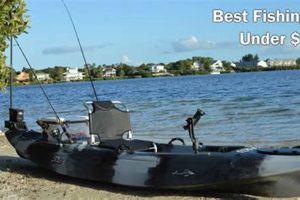
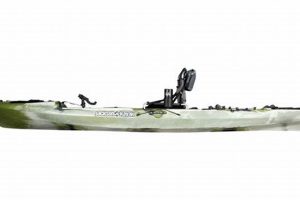
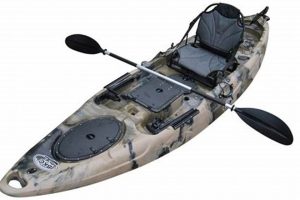
High-quality angling kayaks are not necessarily synonymous with high prices. Budget-friendly options are available that provide stability, essential features, and comfortable paddling experiences suitable for fishing. These kayaks often utilize durable, yet cost-effective materials and designs to achieve affordability without significantly compromising performance. For example, a shorter sit-on-top kayak constructed from rotomolded polyethylene can offer excellent stability and fishing functionality at a lower price point than a longer, feature-rich touring kayak.
Access to enjoyable and productive fishing experiences shouldn’t be limited by budget. Affordable fishing kayaks open up angling opportunities to a wider audience, allowing more individuals to connect with nature and enjoy the sport. Historically, kayak fishing was often associated with higher costs, but the increasing popularity of the sport has driven innovation and competition within the market, resulting in a broader selection of price points. This development has democratized kayak fishing, making it more accessible than ever before.
Key factors to consider when selecting a budget-friendly fishing kayak include stability, length, weight capacity, features like rod holders and storage compartments, and the intended fishing environment. Understanding these elements will help anglers choose a kayak that meets their specific needs and budget while maximizing their on-the-water enjoyment. The following sections will delve deeper into each of these critical aspects.
Tips for Selecting a Budget-Friendly Fishing Kayak
Choosing an affordable fishing kayak requires careful consideration of several factors to ensure the vessel meets angling needs without compromising performance or safety. The following tips offer guidance for selecting the optimal kayak within a budget.
Tip 1: Prioritize Stability: Stability is paramount, especially for fishing. Wider kayaks with flatter hulls generally offer better stability than narrower, more streamlined designs. Look for designs specifically engineered for stability, considering factors such as hull shape and width.
Tip 2: Consider Length and Weight: Shorter kayaks are easier to maneuver and transport, particularly for solo anglers fishing smaller bodies of water. However, longer kayaks often track better and offer more storage. Weight impacts portability and ease of car-topping, especially without specialized equipment.
Tip 3: Evaluate Weight Capacity: Ensure the kayak’s weight capacity accommodates the angler’s weight, plus gear and potential catches. Exceeding the weight capacity compromises stability and performance. Check manufacturer specifications for precise weight limits.
Tip 4: Assess Essential Features: Focus on essential fishing-specific features such as rod holders, storage compartments, and paddle holders. Prioritize these functionalities over non-essential features like advanced seating systems or rudder controls to stay within budget.
Tip 5: Research Materials: Rotomolded polyethylene offers a balance of durability and affordability. While other materials like fiberglass or thermoformed plastic might offer performance advantages, they often come at a higher price. Understand the trade-offs between material properties and cost.
Tip 6: Explore Used Options: Consider purchasing a used kayak in good condition. This can provide access to higher-end features and materials at a lower price. Carefully inspect used kayaks for any damage or wear before purchase.
By carefully evaluating these factors, anglers can select an affordable fishing kayak that provides an enjoyable and productive on-the-water experience without exceeding their budget. A well-chosen kayak enhances fishing opportunities and fosters a deeper connection with the sport.
Ultimately, finding the right kayak involves balancing budget considerations with individual fishing needs and preferences. The next section will discuss further resources and considerations for making informed purchasing decisions.
1. Stability

Stability forms a cornerstone of a positive fishing kayak experience, especially for budget-conscious anglers. A stable platform allows for comfortable casting, reeling, and landing fish without the constant worry of capsizing. This is particularly crucial in inexpensive kayaks, which may sometimes compromise on features for affordability. A less stable kayak can detract significantly from the fishing experience, making it difficult to focus on the task at hand and potentially creating a safety hazard. For instance, an angler attempting to stand for a better casting angle in an unstable kayak risks capsizing and losing equipment or even sustaining injury.
Several factors influence kayak stability, including hull design, width, and length. Wider, flatter hulls generally offer greater primary stability (initial resistance to tipping), making them suitable for calmer waters and activities like still fishing. Longer kayaks tend to have better secondary stability (resistance to capsizing after the initial tip), beneficial in rougher conditions or when navigating choppy water. Understanding these principles allows anglers to choose an inexpensive kayak that balances stability with other desired attributes. A shorter, wider kayak might be ideal for pond fishing, while a longer, narrower hull may be more suitable for navigating rivers or coastal areas, though potentially at the cost of some stability. Examining the specific dimensions and hull design of prospective purchases aids in identifying stable, budget-friendly options.
Prioritizing stability in an inexpensive fishing kayak ensures a safe and enjoyable experience. While budgetary constraints may limit options, understanding the factors that contribute to stability allows anglers to make informed choices. A stable kayak enhances fishing effectiveness and contributes to overall enjoyment on the water, regardless of price point. This focus on stability aligns directly with the goal of identifying the best inexpensive fishing kayaks: offering performance and safety without significant financial investment.
2. Durability

Durability is a critical factor when evaluating inexpensive fishing kayaks. A kayak’s ability to withstand regular use, impacts, and exposure to the elements directly impacts its lifespan and overall value. Frequent transport, loading and unloading, and navigating various water conditions can impose considerable stress on a kayak’s hull and components. A durable kayak minimizes repair costs and ensures continued enjoyment on the water, representing a crucial aspect of a cost-effective purchase. For instance, a kayak constructed from rotomolded polyethylene will generally offer greater resistance to impacts and abrasion compared to a kayak made from less durable materials, thereby reducing the likelihood of costly repairs or premature replacement.
The connection between durability and cost-effectiveness becomes particularly significant in the context of budget-friendly options. While some inexpensive kayaks might compromise on features to maintain affordability, durability should not be one of those compromises. A less durable kayak, even if initially inexpensive, can lead to significant expenses in the long run due to repairs or the need for early replacement. Conversely, a durable, inexpensive kayak offers long-term value, allowing anglers to enjoy the sport without unexpected financial burdens. Choosing a kayak constructed from robust materials and featuring reinforced stress points can significantly enhance its lifespan. For example, kayaks with reinforced hulls and decks are less likely to sustain damage from impacts with rocks, logs, or other obstacles encountered during fishing excursions.
Understanding the importance of durability allows anglers to make informed purchasing decisions that align with both budget constraints and long-term value. Prioritizing durability contributes to a positive and cost-effective ownership experience. While some features might be sacrificed to maintain affordability, compromising on durability ultimately undermines the value proposition of an inexpensive fishing kayak. A durable kayak ensures continued enjoyment of the sport, maximizing the return on investment and aligning with the goal of finding the best inexpensive fishing kayaks those that deliver both performance and longevity without excessive expenditure.
3. Features

Features play a crucial role in determining the suitability of a kayak for fishing, especially within a budget. While cost remains a primary concern, compromising on essential features can negatively impact fishing effectiveness and overall enjoyment. The “best inexpensive fishing kayaks” balance affordability with functionality, offering key features that enhance the angling experience without inflating the price. For example, integrated rod holders, while a seemingly simple feature, significantly improve fishing convenience and efficiency compared to a kayak lacking dedicated rod storage. Similarly, strategically placed storage compartments allow anglers to organize tackle and equipment, maximizing space and minimizing clutter, vital aspects often overlooked in the pursuit of low cost. An example of this balance would be a kayak offering a basic but functional seat with adequate back support, prioritizing comfort and practicality over more expensive adjustable seating systems.
Evaluating features necessitates prioritizing needs and intended fishing styles. An angler targeting larger game fish might require features like heavier-duty rod holders and increased storage capacity, while someone focused on smaller species in calmer waters may prioritize maneuverability and lighter weight over extensive storage. A kayak designed for river fishing might benefit from features that enhance tracking and stability, whereas a kayak intended for lake fishing could prioritize stability and storage space for tackle and gear. Recognizing these distinctions allows for informed decision-making, ensuring that chosen features align with specific fishing requirements. For example, a kayak with flush-mounted rod holders might be preferable for trolling, whereas adjustable rod holders could be more beneficial for casting and retrieving lures.
Selecting a kayak with the right features enhances fishing effectiveness and overall enjoyment. Balancing cost with functionality remains key. While some inexpensive kayaks might offer numerous features, focusing on essential features relevant to one’s fishing style delivers the most value. Prioritizing features aligned with fishing needs ensures that the kayak enhances rather than hinders the experience. Understanding this interplay allows anglers to choose the “best inexpensive fishing kayaks”those that provide the necessary tools for a successful and enjoyable fishing experience without exceeding budgetary constraints.
4. Portability
Portability represents a critical factor when selecting a fishing kayak, particularly within a budget. Transporting a kayak to and from fishing locations often involves navigating various logistical challenges, such as limited vehicle space, difficult terrain, and the angler’s physical capabilities. A highly portable kayak simplifies these challenges, expanding access to diverse fishing spots and enhancing overall enjoyment. For budget-conscious anglers, portability often influences the choice between purchasing a new kayak and exploring used options, or selecting a smaller, simpler model over a larger, feature-rich one. The interplay between portability, cost, and fishing experience forms a central consideration in the pursuit of the “best inexpensive fishing kayaks.”
- Weight and Dimensions
The kayak’s weight and dimensions directly impact its portability. Lighter kayaks are easier to carry, load, and unload, reducing physical strain and simplifying transport, especially for individuals fishing solo. Shorter kayaks often fit more easily in vehicles and require less storage space. For example, a kayak weighing under 50 pounds can typically be handled by one person, while a heavier kayak might necessitate assistance or specialized loading equipment. Similarly, a shorter kayak can often be transported in a standard pickup truck bed or on a roof rack without requiring a trailer, unlike longer models.
- Hull Design and Material
Hull design influences not only stability and performance but also portability. Compact designs and lighter materials, such as high-density polyethylene, contribute to overall reduced weight and easier handling. For instance, a sit-on-top kayak with a streamlined hull is often lighter and easier to maneuver on land compared to a wider, heavier sit-in kayak. Material selection also impacts durability; a robust, lightweight material minimizes the risk of damage during transport and extends the kayak’s lifespan, a crucial consideration for budget-conscious buyers.
- Transportation Methods and Accessories
Available transportation methods and accessories further influence portability. Kayak carts, roof racks, and trailers can significantly simplify transport but also add to the overall cost. Anglers seeking the “best inexpensive fishing kayaks” must consider the cost of these accessories in their budget. For example, a lightweight kayak cart might be a cost-effective solution for shorter distances, while a roof rack system becomes essential for longer journeys and frequent fishing trips. Evaluating available transportation options alongside the kayak’s inherent portability helps anglers make informed decisions aligned with both budgetary and logistical constraints.
- Launch and Landing Accessibility
Portability extends beyond simply transporting the kayak; it also encompasses ease of launch and landing. The ability to easily launch and retrieve a kayak, particularly in challenging environments, contributes significantly to the overall fishing experience. Lighter kayaks are generally easier to manage in shallow water, soft sand, or rocky terrain. For example, a lightweight kayak can be dragged across short stretches of beach or launched from a shallow bank without excessive effort, expanding fishing access to areas inaccessible to heavier, less portable kayaks. This expanded accessibility enhances the value proposition of portable, inexpensive kayaks.
Considering these facets of portability within the context of budget constraints allows anglers to select kayaks that optimize both fishing functionality and logistical practicality. The best inexpensive fishing kayaks don’t merely offer affordability; they offer a balanced approach that combines cost-effectiveness with performance and ease of use. Prioritizing portability enhances fishing opportunities and reduces the logistical barriers that might otherwise limit access to preferred fishing spots. Ultimately, a portable kayak expands fishing horizons and maximizes enjoyment on the water, representing a crucial element in the pursuit of the best inexpensive fishing kayak.
5. Comfort

Comfort significantly influences the overall fishing kayak experience, particularly during extended outings. While cost remains a primary factor when seeking the best inexpensive fishing kayaks, overlooking comfort can detract from fishing effectiveness and enjoyment. An uncomfortable kayak can lead to fatigue, back pain, and decreased focus, potentially shortening fishing trips and hindering overall success. Conversely, a comfortable kayak allows anglers to remain on the water longer, maximizing fishing opportunities and enjoyment. The connection between comfort and cost-effectiveness becomes crucial in the context of budget-friendly kayaks; finding a balance between affordability and adequate comfort is key to maximizing the value of the purchase. For example, a kayak with a basic molded seat might suffice for shorter trips, but a kayak with an adjustable padded seat and backrest offers significantly enhanced comfort for longer outings, justifying a potentially higher price within a budget.
Several factors contribute to kayak comfort, including seat design, backrest support, legroom, and deck padding. Seats with adjustable backrests and sufficient padding mitigate fatigue and back strain during prolonged periods on the water. Adequate legroom allows anglers to change positions and maintain comfortable posture, crucial for sustained focus and effective casting. Deck padding provides cushioning and grip, reducing fatigue and enhancing stability while standing or moving around the kayak. While high-end kayaks often offer advanced seating systems and features, budget-friendly options can still provide adequate comfort through thoughtful design and material choices. For instance, a kayak with a well-designed molded seat and ample legroom might offer comparable comfort to a more expensive kayak with an adjustable seat but limited legroom. Careful consideration of these factors allows anglers to select a kayak that prioritizes comfort within their budget constraints.
Prioritizing comfort in the selection of inexpensive fishing kayaks enhances fishing enjoyment and effectiveness. While budgetary limitations might necessitate compromises in certain areas, comfort should remain a key consideration. A comfortable kayak allows for longer, more productive fishing trips, maximizing the return on investment. Understanding the factors contributing to kayak comfort, and how those factors interact with cost, empowers anglers to make informed decisions aligned with both budgetary constraints and desired comfort levels. Choosing a comfortable kayak ensures that fishing remains an enjoyable and rewarding experience, regardless of the price point, reflecting the core principle of finding the best inexpensive fishing kayaks: maximizing performance and enjoyment without excessive expenditure.
Frequently Asked Questions (FAQs)
This section addresses common inquiries regarding the selection and use of budget-friendly fishing kayaks.
Question 1: What is the typical price range for a “best inexpensive fishing kayak”?
Prices typically range from $300 to $800, depending on features, materials, and brand. Sales and used options can further reduce costs.
Question 2: Do inexpensive kayaks compromise on quality and durability?
Not necessarily. Many budget-friendly options utilize durable materials like rotomolded polyethylene and offer reliable performance. Focusing on reputable brands and thorough inspection can ensure quality.
Question 3: Are inexpensive kayaks suitable for all fishing environments?
While some inexpensive kayaks excel in calm waters like lakes and ponds, others can handle moderate river currents or coastal environments. Careful consideration of hull design and stability is crucial for selecting an appropriate kayak for specific fishing locations.
Question 4: What essential features should one look for in an inexpensive fishing kayak?
Essential features include rod holders, storage compartments, and a comfortable seat. Prioritizing these features enhances fishing functionality without significantly increasing cost.
Question 5: How does one maintain an inexpensive fishing kayak?
Regular rinsing with fresh water after each use and proper storage out of direct sunlight prolong the lifespan of a kayak. Minor scratches can be repaired with readily available polyethylene repair kits.
Question 6: Where can one purchase a “best inexpensive fishing kayak”?
Reputable retailers specializing in outdoor gear, sporting goods stores, and online marketplaces offer a wide selection of budget-friendly kayaks. Comparing prices and researching reviews can help identify the best deals.
Careful consideration of individual fishing needs, budget constraints, and the factors discussed above enables informed purchasing decisions. Prioritizing essential features, durability, and stability ensures a positive and productive fishing experience regardless of price point.
For further guidance and specific product recommendations, consult the subsequent sections detailing specific kayak models and reviews.
Conclusion
Careful evaluation of stability, durability, features, portability, and comfort empowers informed decisions regarding budget-friendly fishing kayaks. Prioritizing essential features while remaining mindful of cost constraints allows anglers to maximize value and enjoyment on the water. Durable construction ensures long-term use, minimizing future expenses, while appropriate stability enhances fishing effectiveness and safety. Portability expands access to diverse fishing locations, and a comfortable kayak promotes extended fishing trips. Ultimately, aligning these considerations with individual fishing styles and budgetary limitations yields a satisfying and productive on-the-water experience.
The pursuit of angling enjoyment should not be hindered by financial constraints. Numerous high-quality, budget-friendly fishing kayaks offer exceptional value and performance. Diligent research and careful consideration of individual needs empower anglers to select a kayak that enhances their fishing experience without exceeding budgetary limits. The availability of affordable options fosters greater accessibility to the sport, inviting more individuals to experience the joys of kayak fishing.