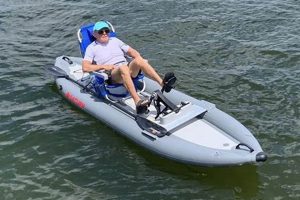
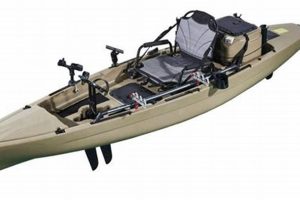
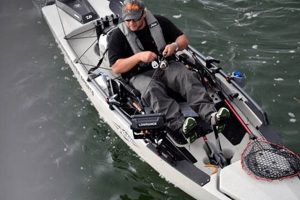
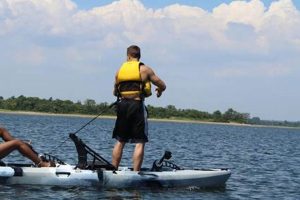
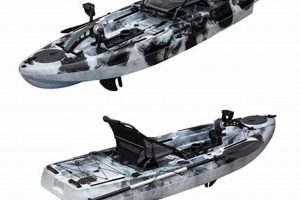
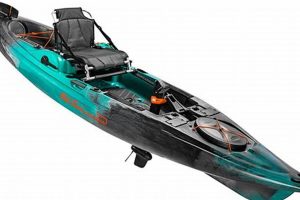
High-quality kayaks designed for angling often incorporate a foot-powered propulsion system. This hands-free approach allows anglers to maintain position and navigate waters efficiently while keeping their hands free for casting and reeling. Such kayaks are typically designed with features like rod holders, tackle storage, and comfortable seating to enhance the fishing experience.
Pedal-powered fishing kayaks offer significant advantages over traditional paddle kayaks and motorized boats. They provide a stealthier approach, minimizing disturbance to fish and allowing anglers to access shallow or vegetated areas easily. The hands-free operation dramatically improves casting accuracy and responsiveness to strikes. Furthermore, compared to motorized boats, they are environmentally friendly, quieter, and often more affordable. The development of efficient and reliable pedal drives has significantly advanced the sport of kayak fishing.
The following sections will explore key features to consider when selecting a suitable fishing kayak, including hull design, pedal drive mechanisms, stability, storage capacity, and other essential factors. Additionally, various models available on the market will be analyzed to provide a comprehensive overview of options for anglers of all skill levels and budgets.
Tips for Selecting a Pedal-Driven Fishing Kayak
Choosing a suitable pedal-driven fishing kayak requires careful consideration of various factors to ensure optimal performance and angler satisfaction. The following tips provide guidance for making an informed decision.
Tip 1: Prioritize Stability: Hull design significantly impacts stability. Wider, flatter hulls offer greater initial stability, beneficial for stand-up fishing, while longer, narrower hulls track better and offer superior speed.
Tip 2: Evaluate Pedal Drive Systems: Different pedal drive mechanisms exist, including propeller and fin-based systems. Research each type to understand advantages and disadvantages regarding efficiency, maintenance, and shallow-water performance.
Tip 3: Consider Seating Comfort and Adjustability: Long hours on the water necessitate a comfortable and supportive seat. Look for adjustable seating systems that accommodate different body types and fishing styles.
Tip 4: Assess Storage Capacity and Layout: Ample storage space for tackle, gear, and fish is essential. Consider the layout and accessibility of storage compartments to ensure efficient organization.
Tip 5: Factor in Weight and Portability: The kayak’s weight impacts transportation and launching. Consider the overall weight and whether a cart or other assistance is needed.
Tip 6: Examine Hull Material and Construction: Different materials offer varying durability, weight, and cost considerations. Polyethylene is common for its affordability and robustness, while composite materials offer lighter weight and enhanced performance.
Tip 7: Set a Realistic Budget: Pedal-driven kayaks span a wide price range. Establish a budget early in the selection process to narrow down options effectively.
By carefully considering these factors, anglers can select a pedal-driven fishing kayak optimized for their specific needs and preferences, leading to a more productive and enjoyable fishing experience.
The subsequent section provides a detailed comparison of several popular pedal-driven fishing kayak models, further assisting in the decision-making process.
1. Stability

Stability is a paramount consideration when selecting a pedal-driven fishing kayak. A stable platform is essential for casting, reeling, and landing fish, particularly in challenging conditions. It also contributes significantly to angler confidence and safety on the water. Several factors influence kayak stability, and understanding these elements is crucial for informed decision-making.
- Hull Design:
Hull design plays a critical role in determining stability. Wider, flatter hulls provide greater initial stability, making them suitable for stand-up fishing and activities requiring more balance. However, this stability often comes at the expense of speed and maneuverability. Longer, narrower hulls, while less stable initially, offer superior tracking and glide through the water more efficiently. “Pontoon-style” hulls offer exceptional stability but may be less maneuverable. The choice depends on the intended fishing style and water conditions.
- Center of Gravity:
The kayak’s center of gravity significantly impacts its stability. Lower centers of gravity enhance stability. Factors such as seat height and the distribution of weight within the kayak influence the center of gravity. Proper weight distribution, with heavier items positioned lower, improves stability. Anglers should consider their own weight and gear when assessing a kayak’s stability.
- Water Conditions:
Calm, flat water requires less inherent stability compared to rougher conditions or strong currents. Kayaks designed for open ocean or challenging environments typically prioritize stability over speed. Anglers fishing in sheltered waters may prioritize maneuverability and speed, opting for a slightly less stable hull.
- Personal Factors:
Individual balance and comfort levels also factor into stability considerations. Less experienced kayakers may prefer a more stable platform, while seasoned anglers may feel comfortable in a less stable, higher-performance hull. Testing different kayak models and evaluating personal preferences is essential for finding the optimal balance between stability and performance.
Ultimately, choosing a pedal-driven fishing kayak with appropriate stability requires careful consideration of hull design, weight distribution, intended water conditions, and personal factors. Balancing stability with other performance characteristics, such as speed and maneuverability, is crucial for selecting the optimal vessel for a satisfying and safe fishing experience.
2. Propulsion Efficiency

Propulsion efficiency is a critical factor in determining the performance of a pedal-driven fishing kayak. Efficient propulsion translates to greater speed, increased range, and reduced effort, allowing anglers to cover more water and access distant fishing spots with less fatigue. Several factors contribute to the overall efficiency of a pedal drive system.
- Pedal Drive Mechanism:
Different pedal drive mechanisms offer varying levels of efficiency. Propeller-based systems, while generally effective in open water, can be susceptible to weed entanglement and may be less efficient in shallow conditions. Fin-based systems, often mimicking the motion of a fish’s tail, tend to perform better in shallow water and vegetation, but may not generate the same top-end speed as propellers. Understanding the advantages and disadvantages of each mechanism is crucial for selecting the most appropriate system for the intended fishing environment.
- Gear Ratio and Design:
The gear ratio of the pedal drive system significantly impacts its efficiency. Higher gear ratios allow for greater speed but require more effort, while lower gear ratios prioritize torque and efficiency at lower speeds. The design of the gearing system itself, including the use of bearings and other components, also plays a role in minimizing friction and maximizing power transfer.
- Hull Design and Water Resistance:
The kayak’s hull design plays a crucial role in propulsion efficiency. Longer, narrower hulls generally offer less water resistance and track more efficiently, leading to higher speeds. Wider hulls, while offering greater stability, create more drag and reduce overall efficiency. The material and finish of the hull can also influence water resistance. Smooth, well-maintained surfaces minimize friction and improve performance.
- Maintenance and Condition:
Proper maintenance of the pedal drive system is essential for optimal efficiency. Regular lubrication, inspection for wear and tear, and prompt replacement of damaged components are crucial for ensuring smooth operation and minimizing energy loss due to friction or malfunction. Keeping the hull clean and free of debris also contributes to efficient propulsion.
Selecting a pedal-driven fishing kayak with a highly efficient propulsion system is paramount for maximizing fishing range, minimizing effort, and enhancing the overall fishing experience. Carefully evaluating the pedal drive mechanism, gear ratio, hull design, and maintenance requirements contributes to informed decision-making and ensures the chosen kayak effectively meets the angler’s specific needs and preferences.
3. Storage Capacity

Storage capacity is a crucial factor influencing the practicality and overall effectiveness of a pedal-driven fishing kayak. Sufficient and well-organized storage allows anglers to carry essential gear, tackle, and personal items, maximizing preparedness and efficiency on the water. The ability to transport catches comfortably and safely is also a critical consideration.
- Types of Storage:
Fishing kayaks offer various storage solutions, including front and rear hatches, tank wells, side pockets, and integrated tackle storage systems. Front hatches often provide ample space for larger items, while rear tank wells are suitable for crates or coolers. Side pockets offer quick access to frequently used items like pliers or sunscreen. Specialized tackle storage systems keep lures and tools organized and readily accessible.
- Capacity and Weight Considerations:
The overall storage capacity should align with the angler’s typical fishing trips and gear requirements. Longer expeditions necessitate greater storage space for provisions and equipment. Weight capacity is also crucial, ensuring the kayak can safely carry the combined weight of the angler, gear, and potential catches. Exceeding the weight capacity compromises stability and performance.
- Accessibility and Organization:
Easy access to stored items is essential for efficient fishing. Well-placed hatches and compartments with user-friendly closures facilitate quick retrieval of gear without disrupting fishing flow. Integrated organizers and dividers within storage compartments enhance organization and prevent items from shifting during transit.
- Waterproofing and Protection:
Protecting gear from water damage is paramount. Dry hatches with secure seals prevent water intrusion, safeguarding valuable electronics, tackle, and personal items. Some kayaks incorporate dedicated waterproof compartments for sensitive equipment. Properly sealing hatches and utilizing waterproof bags provides additional protection against splashes and unexpected submersion.
Adequate and well-designed storage solutions are integral to the functionality of a best fishing kayak with pedal drive. Careful consideration of storage types, capacity, accessibility, and waterproofing ensures anglers can carry essential equipment, remain organized on the water, and protect valuable gear from the elements. This contributes significantly to a more productive and enjoyable fishing experience.
4. Comfort and Adjustability
Comfort and adjustability are critical factors in selecting a high-performing fishing kayak, especially for extended trips. An uncomfortable seating position can lead to fatigue, back pain, and a diminished fishing experience. Proper adjustability allows anglers to customize the kayak’s setup to their individual body type and fishing style, optimizing comfort and performance. A well-designed seat with ample padding and adjustable back support is essential. Features like adjustable footrests and thigh braces further enhance comfort and control, allowing for efficient pedaling and stability. The ability to fine-tune the seat position and other contact points contributes significantly to reduced fatigue and increased fishing enjoyment, particularly during long hours on the water. For example, an angler targeting offshore species might prioritize a higher seat position for better visibility, while someone fishing in shallow waters might prefer a lower seat position for increased stability.
Beyond the seat itself, other adjustability features contribute to overall comfort and fishing effectiveness. Adjustable rod holders allow for optimal placement of rods and reels, maximizing casting efficiency and responsiveness. The ability to customize the position of fish finders and other accessories enhances functionality and minimizes strain. Consideration of these adjustable elements is crucial for creating a personalized and efficient fishing platform tailored to individual needs and preferences. A comfortable and adaptable setup allows anglers to focus on fishing rather than discomfort, maximizing enjoyment and success on the water.
In conclusion, comfort and adjustability are not merely desirable features but essential components of a high-quality fishing kayak. Proper ergonomic design and ample adjustability options contribute significantly to reduced fatigue, enhanced performance, and increased enjoyment on the water. Investing in a kayak with these features allows anglers to maximize their time on the water and focus on what matters most the fishing experience. Neglecting these aspects can compromise not only comfort but also fishing effectiveness and overall satisfaction.
5. Durability and Construction
Durability and construction are paramount when evaluating a fishing kayak equipped with a pedal drive. These vessels are subjected to demanding conditions, from harsh sunlight and saltwater exposure to impacts with rocks and submerged obstacles. A robust construction ensures longevity and reliable performance, safeguarding the investment and providing a safe and dependable platform for fishing adventures. Careful consideration of materials, construction techniques, and hardware quality is essential for informed decision-making.
- Hull Material:
Hull material significantly influences durability. Polyethylene is a common choice due to its impact resistance, affordability, and UV resistance. However, it can be heavier than other materials. Higher-end kayaks often utilize composites like fiberglass or carbon fiber, offering superior strength-to-weight ratios and enhanced performance, but typically at a higher cost. Thermoformed ABS plastic provides a balance between durability and affordability, although potentially less impact-resistant than polyethylene.
- Construction Techniques:
Construction techniques impact a kayak’s structural integrity. Rotomolded polyethylene kayaks are generally durable and impact-resistant. Composite kayaks often employ layered construction with reinforcement in high-stress areas, enhancing strength and stiffness. Examining joint construction and seam sealing is crucial for assessing long-term durability and preventing leaks. Well-constructed kayaks feature reinforced areas around the pedal drive system and other critical components.
- Hardware and Fittings:
High-quality hardware and fittings are essential for long-term reliability. Stainless steel or marine-grade aluminum components resist corrosion and provide robust attachment points for seats, rod holders, and other accessories. Inspecting the quality of latches, hinges, and other hardware provides insight into the overall durability and attention to detail in the kayak’s construction.
- UV Resistance and Protection:
Exposure to ultraviolet radiation from sunlight can degrade kayak materials over time, leading to fading, cracking, and reduced structural integrity. UV-resistant coatings and additives in the hull material protect against sun damage and prolong the kayak’s lifespan. Proper storage and maintenance, such as covering the kayak when not in use, further mitigate UV degradation.
The durability and construction of a pedal-driven fishing kayak directly impact its longevity, performance, and overall value. A well-constructed kayak withstands the rigors of the fishing environment, providing a reliable and safe platform for years of enjoyment. Careful evaluation of hull material, construction techniques, hardware quality, and UV resistance ensures a sound investment and contributes significantly to a positive and productive fishing experience.
6. Maneuverability
Maneuverability is a critical performance attribute directly influencing the effectiveness of a pedal-driven fishing kayak. Precise and responsive handling allows anglers to navigate complex waterways, position themselves strategically for optimal casting, and efficiently target fish in diverse environments. The ability to quickly change direction, navigate tight spaces, and maintain precise control contributes significantly to fishing success. Several factors contribute to a kayak’s maneuverability, and understanding their interplay is essential for informed decision-making.
Hull design plays a pivotal role in determining maneuverability. Shorter kayaks with a wider turning radius are generally more maneuverable than longer, narrower kayaks designed for tracking and speed in open water. The presence of a rudder or skeg system can significantly enhance directional control and tracking, particularly in windy conditions or strong currents. Features like a pronounced keel or tracking channels contribute to straight-line stability but may compromise turning agility. The interaction between hull design and control systems dictates the kayak’s overall maneuverability profile. For example, a kayak designed for navigating mangrove tunnels or tight creek bends would prioritize maneuverability over straight-line speed, often featuring a shorter hull and a highly responsive rudder system.
The choice of propulsion system also influences maneuverability. Pedal-driven kayaks offer distinct advantages over paddle kayaks in terms of hands-free operation and precise control. The ability to make subtle adjustments to speed and direction without changing paddle position enhances maneuverability in tight spots and around structure. However, the specific pedal drive mechanism can also impact handling. Fin-based systems are often more maneuverable in shallow water and vegetation compared to propeller-based systems prone to fouling. The weight distribution within the kayak also affects maneuverability. A balanced load with a lower center of gravity enhances stability and responsiveness, while an unevenly distributed load can compromise handling characteristics. Ultimately, achieving optimal maneuverability requires a balanced approach, considering hull design, control systems, propulsion type, and weight distribution to create a platform that excels in the intended fishing environment. This factor, alongside stability, propulsion efficiency, and storage, contributes significantly to the overall effectiveness and enjoyment derived from a pedal-driven fishing kayak.
Frequently Asked Questions
This section addresses common inquiries regarding pedal-driven fishing kayaks, providing concise and informative responses to assist in the selection process.
Question 1: What are the primary advantages of a pedal-driven fishing kayak over a traditional paddle kayak?
Pedal-driven kayaks offer hands-free propulsion, enabling anglers to focus on fishing techniques while maintaining position or navigating. This is particularly advantageous for techniques requiring precise boat control, such as trolling or working lures in specific areas.
Question 2: How do fin-based pedal drives compare to propeller-based systems in terms of performance and maintenance?
Fin-based drives excel in shallow water and vegetation, minimizing the risk of fouling. Propeller drives generally offer higher top-end speeds in open water but may require more maintenance due to potential damage from submerged obstacles. Each system presents distinct advantages and disadvantages depending on the intended fishing environment.
Question 3: What factors should be considered when determining the appropriate hull design for a pedal-driven fishing kayak?
Hull design influences stability, speed, and maneuverability. Wider hulls enhance stability, while longer, narrower hulls improve tracking and speed. Anglers should consider their fishing style, water conditions, and personal preferences when selecting a hull design.
Question 4: How does the weight capacity of a pedal-driven fishing kayak impact performance and safety?
Exceeding the specified weight capacity can compromise stability and maneuverability, increasing the risk of capsizing. Anglers must consider the combined weight of themselves, gear, and potential catches when selecting a kayak to ensure safe and optimal performance.
Question 5: What are the key features to look for in a comfortable and adjustable kayak seat?
Essential features include ample padding, adjustable back support, and breathable materials. Adjustable footrests and thigh braces further enhance comfort and control, particularly during long hours on the water. A comfortable and supportive seat minimizes fatigue and allows for extended fishing trips.
Question 6: What maintenance procedures are recommended for ensuring the longevity and performance of a pedal-driven fishing kayak?
Regular rinsing with fresh water after each use, especially in saltwater environments, helps prevent corrosion. Periodic lubrication of moving parts, inspection of the pedal drive system for wear and tear, and proper storage practices contribute significantly to maintaining performance and extending the kayak’s lifespan.
Careful consideration of these frequently asked questions empowers prospective buyers to make informed decisions and select the pedal-driven fishing kayak best suited to their individual needs and preferences.
The following section will provide a comprehensive comparison of several leading pedal-driven fishing kayak models, further assisting in the selection process.
Best Fishing Kayak with Pedal Drive
Careful selection of a pedal-driven fishing kayak significantly impacts angling success and overall enjoyment on the water. Factors such as stability, propulsion efficiency, storage capacity, comfort, durability, maneuverability, and price point require thorough consideration. Understanding the interplay of these elements empowers informed decision-making, aligning kayak features with individual fishing styles, target species, and budgetary constraints. Prioritizing key performance characteristics ensures a well-equipped and efficient fishing platform.
The evolution of fishing kayak design continues to advance, incorporating innovative features and technologies to enhance performance and angler experience. Investing time in research and evaluation is crucial for navigating the diverse market landscape and selecting a pedal-driven fishing kayak optimized for long-term satisfaction and angling success. Ultimately, a well-chosen vessel becomes an extension of the angler’s skillset, enabling efficient exploration, strategic positioning, and a deeper connection with the aquatic environment.