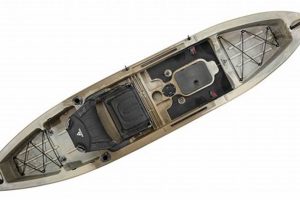
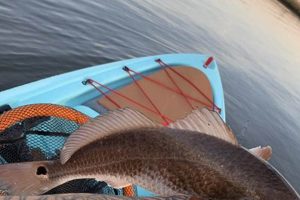
Battery-powered kayaks designed for angling offer a unique blend of mobility and convenience on the water. These vessels typically integrate an electric motor system, allowing anglers to navigate effortlessly across larger bodies of water, against currents, or in challenging wind conditions, all while conserving energy for fishing. This propulsion system frees the angler to focus on finding and catching fish, rather than paddling. A typical setup includes a transom-mounted or integrated motor, a battery, and a control system, often with variable speeds and forward/reverse functionality.
The rise in popularity of these watercraft stems from their ability to enhance the fishing experience. They provide access to previously unreachable fishing grounds, reduce fatigue associated with paddling, and allow for quieter, stealthier approaches to fish. Historically, anglers were limited by human-powered propulsion or larger, more expensive motorized boats. This innovation bridges the gap, offering a practical and relatively affordable solution for enhanced fishing capabilities. The evolution of battery technology and electric motors has been crucial to their development, leading to lighter, more efficient, and longer-lasting systems.
Further exploration of this topic will cover key areas such as selecting the appropriate motor and battery system, considering hull design and features specific to angling, understanding safety regulations and best practices, and outlining maintenance requirements for optimal performance and longevity.
Tips for Utilizing Electric Fishing Kayaks
Maximizing the advantages of an electrically powered fishing kayak requires careful consideration of several factors. These tips offer guidance for enhancing performance, safety, and overall fishing success.
Tip 1: Battery Management: Understand battery capacity and range limitations. Carry a spare battery for extended trips, and practice efficient energy management by utilizing the motor strategically, especially against currents or wind. Regularly charge batteries according to manufacturer guidelines and store them properly.
Tip 2: Weight Distribution: Proper weight distribution is crucial for stability and efficient motor operation. Distribute gear evenly throughout the kayak, avoiding overloading. Consider the combined weight of the angler, equipment, and the motor/battery system.
Tip 3: Safety Precautions: Always wear a personal flotation device. Carry a signaling device, such as a whistle or flare, and inform someone of your fishing plans, including location and expected return time. Check weather conditions before embarking and be prepared for changing conditions.
Tip 4: Navigation and Electronics: Familiarize oneself with the kayak’s motor controls and navigation system. Consider using a fish finder or GPS unit to enhance fishing success and situational awareness. Ensure electronic devices are waterproof and securely mounted.
Tip 5: Respect Wildlife and the Environment: Adhere to local fishing regulations and practice catch-and-release principles where appropriate. Avoid disturbing wildlife and minimize environmental impact by properly disposing of waste and respecting sensitive habitats.
Tip 6: Regular Maintenance: Rinse the kayak and motor with fresh water after each use, especially in saltwater environments. Inspect and lubricate moving parts according to manufacturer recommendations. Regularly check wiring connections for corrosion or damage.
Tip 7: Choosing the Right Kayak: Consider factors such as hull design, stability, weight capacity, and available features when selecting a kayak. Prioritize features tailored to specific fishing needs and preferences, such as rod holders, storage compartments, and mounting options for electronics.
By adhering to these guidelines, anglers can significantly enhance their fishing experience while ensuring safety and responsible use of electrically powered kayaks. These practices contribute to greater enjoyment and long-term satisfaction with this evolving technology.
This comprehensive approach to electric fishing kayaks provides a solid foundation for successful angling. The concluding section will reiterate key takeaways and offer final recommendations for maximizing enjoyment on the water.
1. Electric Propulsion

Electric propulsion forms the defining characteristic of fishing kayaks categorized as “electric.” This technology integrates an electric motor and battery system into the kayak, providing a distinct advantage over traditional paddle-powered vessels. The motor’s thrust allows anglers to cover greater distances, navigate against currents or wind, and conserve energy for the actual fishing activity. This is particularly advantageous in larger bodies of water or challenging environments where paddling becomes strenuous and time-consuming. For instance, an angler targeting offshore fishing spots can reach their destination faster and with less physical exertion, maximizing fishing time. Similarly, maneuvering in windy conditions becomes significantly easier, allowing for precise boat control and optimal lure presentation.
The practical implications of electric propulsion extend beyond simple convenience. Stealth becomes a key advantage. Electric motors operate far more quietly than gasoline outboards, allowing anglers to approach fish without disturbing them. This is particularly beneficial in shallow waters or when targeting skittish species. Furthermore, electric propulsion contributes to environmental responsibility by eliminating exhaust fumes and minimizing noise pollution, aligning with sustainable fishing practices. The ability to precisely control speed also enhances fishing techniques, allowing for slow trolling or maintaining a specific position relative to structure or cover. This level of control can be crucial for techniques like jigging or drifting live bait.
In summary, electric propulsion is not merely an add-on feature; it fundamentally transforms the fishing kayak experience. It expands access to fishing grounds, reduces physical strain, enhances stealth, and promotes environmental consciousness. While challenges such as battery life and weight capacity require consideration, the benefits of electric propulsion contribute significantly to the growing popularity and effectiveness of electric fishing kayaks. Understanding the capabilities and limitations of this technology allows anglers to make informed decisions and maximize their fishing potential. The integration of electric propulsion represents a significant advancement in kayak fishing, offering anglers new opportunities and enhancing their interaction with the aquatic environment.
2. Enhanced Fishing Access

Electric fishing kayaks significantly broaden angling opportunities by providing enhanced access to previously difficult-to-reach or physically demanding fishing grounds. The integration of electric propulsion overcomes limitations imposed by traditional paddling, opening up a wider range of locations and fishing styles. This expanded access contributes directly to increased fishing success and overall enjoyment of the sport.
- Extended Range:
Electric motors allow anglers to cover greater distances than paddling alone, expanding the reachable fishing area within a given timeframe. This is particularly advantageous for accessing distant shorelines, offshore structures, or upstream stretches of rivers. For example, anglers can now effortlessly reach distant islands or reefs that were previously inaccessible without considerable paddling effort. This extended range translates to more diverse fishing opportunities and the potential to discover new productive spots.
- Effortless Navigation in Challenging Conditions:
Wind, strong currents, and challenging water conditions can impede paddling progress and limit fishing effectiveness. Electric motors provide the necessary power to overcome these obstacles, allowing anglers to maintain position, navigate efficiently, and focus on fishing rather than battling the elements. Consider an angler fishing in a tidal river; an electric motor allows them to hold position against the current, presenting their bait effectively in a prime fishing location. This capability expands fishing possibilities in previously challenging or inaccessible environments.
- Access to Shallow Waters and Protected Areas:
Many productive fishing areas, such as shallow flats, backwater creeks, and protected estuaries, are difficult to access with larger motorized boats. Electric kayaks, with their shallow drafts and quiet operation, provide unobtrusive access to these sensitive ecosystems. Anglers can navigate shallow waters without disturbing the bottom or spooking fish, maximizing their chances of success in these often-productive habitats. This discreet approach minimizes environmental impact while maximizing fishing opportunities.
- Reduced Physical Strain:
Paddling long distances or against challenging conditions can be physically demanding, limiting fishing time and potentially impacting enjoyment. Electric motors alleviate this physical strain, allowing anglers to conserve energy for fishing and extend their time on the water. Anglers with physical limitations or those seeking a less strenuous experience can benefit significantly from this assistance, ensuring a more comfortable and enjoyable fishing trip. This enhanced accessibility opens up the sport to a wider range of participants.
In conclusion, the enhanced fishing access provided by electric kayaks significantly expands angling possibilities. The ability to cover greater distances, navigate challenging conditions, access shallow waters discreetly, and reduce physical strain contributes directly to a more productive and enjoyable fishing experience. By overcoming limitations inherent in traditional paddle kayaks, electric models open up new horizons for anglers of all skill levels and physical abilities, maximizing their interaction with the aquatic environment and increasing their chances of fishing success.
3. Quiet Operation
A key advantage of electric fishing kayaks lies in their quiet operation, a characteristic significantly impacting angling success. Unlike gasoline-powered boats, electric kayaks produce minimal noise, allowing anglers to approach fish without disturbance. This stealth advantage is particularly crucial in shallow waters or when targeting easily spooked species. The following facets explore the various aspects and implications of quiet operation in the context of electric fishing kayaks.
- Reduced Fish Disturbance
The near-silent operation of electric motors minimizes vibrations and noise that can alert and spook fish. This allows for closer approaches and increases the likelihood of a successful presentation. In contrast, the loud noise of a combustion engine can send vibrations through the water, alerting fish to danger from a considerable distance. This is particularly relevant in clear, shallow waters where fish are more easily spooked.
- Improved Stealth in Shallow Water
Shallow water environments often hold a wealth of fish but require a delicate approach. Electric kayaks excel in these scenarios due to their minimal noise output. Anglers can navigate shallow flats, creeks, and estuaries without disturbing the environment or alerting fish to their presence. This stealth is crucial for sight fishing or targeting fish in shallow, clear water where they are more susceptible to noise and disturbance.
- Enhanced Fishing Experience in Calm Waters
The quiet operation of electric kayaks enhances the overall fishing experience by minimizing disruptive noises. The tranquility allows anglers to better connect with the natural environment and focus on the subtle sounds of nature, such as bird calls or fish feeding. This creates a more immersive and enjoyable experience, particularly in calm waters where even small noises can be amplified and disruptive.
- Targeting Sensitive Species
Certain fish species are particularly sensitive to noise and vibrations. Electric kayaks offer a significant advantage when targeting these species, allowing anglers to approach without alarming them. This can be especially important for species like trout or bonefish, which are renowned for their skittish nature. The quiet approach afforded by electric kayaks increases the chances of a successful hookup with these wary fish.
In summary, the quiet operation of electric fishing kayaks offers a significant advantage by minimizing fish disturbance and enhancing the overall angling experience. This attribute allows for greater stealth in shallow waters, a more immersive experience in calm environments, and improved success when targeting noise-sensitive species. This quiet propulsion contributes directly to the increasing popularity and effectiveness of electric kayaks as a preferred platform for angling.
4. Battery Life and Range
Battery life and range are critical considerations for electric fishing kayaks, directly impacting usability and the overall fishing experience. These factors determine how far an angler can travel on a single charge and how long they can remain on the water, influencing fishing location choices and trip duration. Understanding the interplay between battery capacity, motor power, and real-world conditions is essential for maximizing fishing effectiveness and avoiding unforeseen limitations. For instance, a high-capacity battery coupled with a lower-power motor will typically provide a longer range, while a higher-power motor, though offering greater speed, will consume more energy and reduce range. Environmental factors, such as wind and currents, also play a significant role; paddling against strong headwinds or currents consumes considerably more battery power than calmer conditions.
The practical implications of battery life and range are readily apparent. An angler targeting distant fishing spots must carefully assess whether their kayak’s battery capacity is sufficient to reach the desired location and return safely. Overestimating range can lead to premature battery depletion, requiring paddling back, potentially against adverse conditions. Conversely, understanding battery limitations allows for strategic planning, such as utilizing the motor primarily for travel to and from fishing spots, relying on paddling while actively fishing. Modern battery technology offers various options, including lithium-ion batteries known for their higher energy density and lighter weight compared to traditional lead-acid batteries. Careful consideration of battery specifications, such as amp-hours (Ah) and voltage (V), alongside the motor’s power consumption, provides a more accurate estimate of potential range. Utilizing online range calculators or consulting manufacturer guidelines can further assist in making informed decisions.
In summary, battery life and range are fundamental aspects of electric fishing kayak ownership and operation. Understanding the factors influencing these parameters, coupled with careful planning and battery management strategies, ensures a more productive and enjoyable fishing experience. Failure to adequately address these considerations can lead to limitations and potentially compromise safety. Selecting the appropriate battery and motor combination based on individual fishing needs and environmental conditions is crucial for maximizing the benefits offered by electric kayak propulsion.
5. Weight Capacity and Stability
Weight capacity and stability are fundamental considerations for electric fishing kayaks, directly influencing safety, performance, and overall fishing effectiveness. These interconnected factors determine the kayak’s ability to handle the combined weight of the angler, gear, and the electric motor system itself, while maintaining stability and maneuverability. Insufficient weight capacity or compromised stability can lead to safety hazards, decreased performance, and a less enjoyable fishing experience. For instance, exceeding the weight capacity can submerge the kayak’s hull, increasing the risk of capsizing, particularly in rough water. Conversely, a kayak with ample weight capacity and excellent stability provides a secure and comfortable platform for fishing, even when standing to cast or reel in a fish.
The integration of an electric motor system adds another layer of complexity to weight capacity and stability considerations. The motor and battery contribute to the overall weight, reducing the available capacity for the angler and their gear. Moreover, the placement and weight distribution of the motor system can influence the kayak’s center of gravity, affecting stability. Kayaks designed specifically for electric motors often incorporate features to address these challenges, such as wider hulls, strategically placed mounting points for the motor, and integrated battery compartments that optimize weight distribution. Understanding these design features and their impact on stability is crucial for selecting an appropriate kayak. Practical considerations include not only the weight of essential fishing gear, such as rods, reels, tackle boxes, and fish finders, but also personal items like coolers, clothing, and safety equipment. Accurately estimating and distributing this combined weight ensures optimal performance and stability.
In summary, weight capacity and stability are integral components of electric fishing kayak selection and operation. Careful consideration of these factors, coupled with an understanding of how the electric motor system influences weight distribution and balance, ensures a safe, stable, and enjoyable fishing experience. Neglecting these aspects can compromise safety, limit fishing effectiveness, and detract from the overall enjoyment of using an electric fishing kayak. Prioritizing stability and adhering to manufacturer-specified weight limits are essential for maximizing performance and ensuring a safe and rewarding experience on the water.
6. Maintenance Requirements

Maintaining an electric fishing kayak properly is essential for ensuring its longevity, performance, and safety. Regular maintenance mitigates potential issues, optimizes operational efficiency, and preserves the kayak’s value over time. Neglecting routine maintenance can lead to costly repairs, decreased performance, and potentially hazardous situations on the water. The following facets outline key maintenance requirements specific to electric fishing kayaks.
- Motor Maintenance
Electric motors, particularly in the marine environment, require regular attention. Rinsing the motor with fresh water after each use, especially in saltwater, helps prevent corrosion. Periodic inspection of wiring connections, propeller condition, and mounting hardware ensures optimal performance and identifies potential problems early. Lubricating moving parts as recommended by the manufacturer reduces friction and wear, extending the motor’s lifespan. For example, saltwater exposure can quickly corrode metal components, leading to motor failure if not addressed promptly. Regular rinsing and lubrication are simple yet effective preventative measures.
- Battery Care
Proper battery maintenance is paramount for maximizing performance and lifespan. Charging batteries according to manufacturer guidelines prevents overcharging or deep discharging, both of which can significantly shorten battery life. Storing batteries in a cool, dry place away from direct sunlight helps maintain their capacity and prevents damage. Regularly inspecting battery terminals for corrosion and cleaning them as needed ensures optimal electrical conductivity. For instance, storing a lithium-ion battery in extreme heat can degrade its performance and reduce its overall lifespan. Following recommended storage practices is crucial for long-term battery health.
- Hull and Deck Maintenance
Maintaining the kayak’s hull and deck contributes to its overall longevity and performance. Regularly cleaning the hull removes dirt, grime, and marine growth, which can affect hydrodynamics and reduce speed. Inspecting the hull for cracks, scratches, or other damage allows for timely repairs, preventing further deterioration. UV exposure can degrade the kayak’s material over time, so storing it out of direct sunlight or using a UV-resistant cover helps preserve its integrity. For example, neglecting to clean marine growth from the hull can create drag, reducing efficiency and requiring more battery power to achieve the same speed.
- Wiring and Electrical System Checks
Regularly inspecting the kayak’s wiring and electrical system is essential for safety and preventing malfunctions. Checking wiring connections for corrosion, loose wires, or damage helps prevent electrical shorts and ensures reliable operation of the motor and other electronic devices. Inspecting and cleaning fuse holders and replacing blown fuses as needed protects the electrical system from overloads. Waterproofing electrical connections and components is crucial in a marine environment, preventing water ingress and potential electrical hazards. For example, a corroded wiring connection can lead to intermittent motor operation or complete failure, potentially leaving an angler stranded on the water.
By adhering to these maintenance requirements, owners of electric fishing kayaks can significantly extend the lifespan of their vessels, ensure optimal performance, and enhance safety on the water. Regular maintenance not only prevents costly repairs but also contributes to a more enjoyable and reliable fishing experience. A well-maintained kayak provides consistent performance, allowing anglers to focus on fishing rather than troubleshooting equipment issues. This proactive approach to maintenance is an investment that pays dividends in terms of longevity, performance, and peace of mind.
7. Cost Considerations

Cost considerations play a significant role in the decision-making process when selecting a fishing kayak equipped with an electric motor. Understanding the various cost components and their implications allows for informed choices aligned with individual budgets and fishing requirements. Analyzing the initial purchase price, alongside ongoing operational costs and potential maintenance expenses, provides a comprehensive perspective on the overall financial investment associated with owning and operating an electric fishing kayak.
- Initial Purchase Price
The initial purchase price of an electric fishing kayak varies significantly depending on factors such as brand reputation, features, motor power, battery capacity, and included accessories. Entry-level models may offer basic functionality at a lower price point, while higher-end kayaks equipped with advanced features and more powerful motors command a premium. Researching different brands and models, comparing features and specifications, and considering long-term needs helps determine the appropriate initial investment. For example, a kayak with a higher-capacity battery and a more powerful motor will typically have a higher initial cost but may offer greater range and performance, potentially justifying the increased expense for certain anglers.
- Battery Costs
Battery costs represent a significant component of the overall investment. Battery type, capacity, and lifespan influence replacement costs. Lithium-ion batteries, while generally more expensive upfront, offer higher energy density, lighter weight, and longer lifespans compared to lead-acid batteries, potentially offsetting the initial cost difference over time. Understanding battery technology and considering long-term replacement costs are essential aspects of the cost analysis. For instance, while a lead-acid battery might have a lower initial cost, its shorter lifespan and lower energy density might necessitate more frequent replacements, ultimately resulting in higher long-term costs compared to a lithium-ion alternative.
- Motor and Accessories
The cost of the electric motor itself, along with associated accessories, contributes to the overall expense. Motor power, features such as variable speed control and GPS integration, and mounting hardware all influence the price. Additional accessories, such as fish finders, rod holders, and specialized seating, further add to the overall cost. Evaluating essential versus optional features and prioritizing needs based on individual fishing styles and preferences allows for cost optimization. For example, an angler focused on trolling might prioritize a motor with variable speed control and GPS integration, while an angler focused on casting might prioritize a lighter, more maneuverable kayak with fewer electronic accessories.
- Maintenance and Repairs
Ongoing maintenance and potential repair costs should be factored into the overall cost analysis. Regular maintenance, including cleaning, lubrication, and periodic inspections, helps prevent costly repairs and extends the kayak’s lifespan. However, unforeseen repairs, such as motor or battery replacements, can arise. Setting aside a budget for potential maintenance and repairs mitigates the financial impact of these unexpected expenses. For instance, neglecting regular maintenance, such as rinsing the motor with fresh water after use in saltwater, can lead to corrosion and premature motor failure, requiring costly repairs or replacement. Proactive maintenance can significantly reduce the likelihood of such expenses.
By carefully considering these cost components, prospective buyers can make informed decisions when selecting an electric fishing kayak. Balancing initial investment costs against ongoing operational expenses and potential maintenance needs ensures that the chosen kayak aligns with both budgetary constraints and long-term fishing goals. A comprehensive cost analysis enables informed decision-making and maximizes the value derived from the investment, ensuring long-term satisfaction and enjoyment on the water. This holistic approach to cost considerations contributes to a more rewarding and sustainable fishing experience.
Frequently Asked Questions
This FAQ section addresses common inquiries regarding electric fishing kayaks, providing concise and informative responses to facilitate informed decision-making and enhance understanding of this specialized angling platform.
Question 1: What are the primary advantages of choosing an electric fishing kayak over a traditional paddle kayak?
Electric fishing kayaks offer several key advantages, including reduced physical exertion, enhanced access to distant fishing locations, effortless navigation against currents and wind, and quieter operation for stealthier approaches to fish. These features contribute to increased fishing efficiency and a more comfortable experience on the water.
Question 2: How long does a typical electric kayak battery last on a single charge?
Battery life depends on factors such as battery capacity, motor power, speed, and environmental conditions. A typical lithium-ion battery might provide several hours of continuous motoring at moderate speeds. Strategic use of the motor, combined with paddling, can significantly extend range and overall time on the water. Consulting manufacturer specifications provides more precise estimates for specific models.
Question 3: Are electric fishing kayaks suitable for use in saltwater environments?
Many electric fishing kayaks are designed for saltwater use, but proper maintenance is crucial. Thoroughly rinsing the kayak, motor, and all exposed metal components with fresh water after each use in saltwater helps prevent corrosion and ensures long-term functionality. Choosing kayaks with corrosion-resistant hardware and components is also advisable.
Question 4: How much maintenance do electric fishing kayaks typically require?
Regular maintenance includes rinsing the kayak and motor after each use, particularly in saltwater, inspecting and lubricating moving parts, checking wiring connections, and properly charging and storing batteries. Adhering to manufacturer recommendations regarding maintenance schedules ensures optimal performance and longevity.
Question 5: What safety precautions should be observed when using an electric fishing kayak?
Standard safety precautions for kayaking apply, including wearing a personal flotation device, carrying a signaling device, informing someone of fishing plans, and checking weather conditions. Additionally, understanding the kayak’s motor controls and battery management system, as well as adhering to local boating regulations, is essential.
Question 6: What factors should be considered when choosing between different electric fishing kayak models?
Key factors include weight capacity, stability, hull design, motor power and type, battery capacity and type, available features such as rod holders and storage compartments, and overall cost, including the initial purchase price, battery replacement costs, and potential maintenance expenses. Aligning these factors with individual fishing needs and preferences guides informed decision-making.
By addressing these frequently asked questions, potential buyers and current owners can gain a clearer understanding of the benefits, considerations, and practicalities associated with electric fishing kayaks. This knowledge empowers informed choices, enhances safety, and contributes to a more enjoyable and successful fishing experience.
The following section will offer concluding remarks and summarize key takeaways regarding electric fishing kayaks.
Conclusion
Electric fishing kayaks represent a significant advancement in angling technology, offering enhanced access, efficiency, and enjoyment on the water. Careful consideration of factors such as motor power, battery life, weight capacity, stability, maintenance requirements, and cost allows for informed selection and optimal utilization. Understanding the interplay of these elements empowers anglers to maximize the benefits of electric propulsion, expanding fishing opportunities while minimizing environmental impact. Proper maintenance practices ensure long-term performance and safety, contributing to a sustainable and rewarding fishing experience.
The evolution of electric fishing kayaks reflects a broader trend toward sustainable and technologically advanced angling practices. As battery technology continues to advance and kayak designs further refine integration of electric propulsion systems, the potential for enhanced fishing experiences will continue to expand. Choosing an electric fishing kayak represents an investment in both present enjoyment and future angling possibilities, aligning with a growing movement toward responsible and technologically advanced approaches to exploring and interacting with aquatic environments.