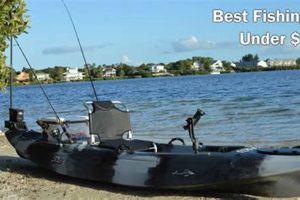
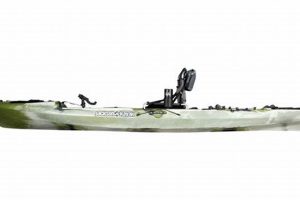
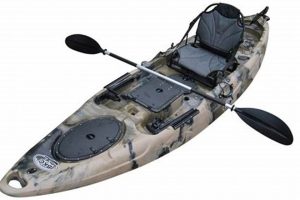
A high-quality fishing kayak designed for anglers seeking optimal performance and features within a specific budget represents a significant purchase. This type of watercraft typically includes specialized design elements such as rod holders, ample storage for tackle and gear, and a stable hull conducive to casting and reeling. An example would be a sit-on-top kayak constructed from durable, UV-resistant polyethylene, equipped with adjustable seating, multiple paddle holders, and a built-in transducer mount for fish finders, all retailing for less than a specified price point.
Acquiring a well-equipped and appropriately priced fishing kayak offers anglers significant advantages, enhancing both comfort and effectiveness on the water. Historically, fishing kayaks were simpler, less specialized craft. Modern advancements in materials, design, and manufacturing processes have led to a wider range of options with enhanced stability, maneuverability, and features tailored to the needs of serious anglers. This evolution has made kayak fishing more accessible and enjoyable, contributing to its growing popularity.
This article will delve into the key factors to consider when selecting such a kayak, including hull design, materials, features, and prominent manufacturers. Further exploration will cover essential accessories, safety considerations, and maintenance tips to ensure a rewarding and enduring ownership experience.
Tips for Selecting a Fishing Kayak
Choosing a fishing kayak requires careful consideration of various factors to ensure the vessel aligns with individual angling needs and budgetary constraints. The following tips provide guidance for navigating this selection process.
Tip 1: Define Fishing Style and Location: Consider the intended fishing environment (calm lakes, rivers, or open ocean) and target species. This informs the necessary kayak stability, length, and maneuverability. A shorter kayak is preferable for navigating tight spaces in rivers and creeks, while a longer kayak offers better tracking in open water.
Tip 2: Prioritize Stability and Comfort: Evaluate hull design (sit-on-top vs. sit-inside) based on desired stability and comfort. Sit-on-top kayaks offer superior stability and ease of entry/exit, ideal for warmer climates. Sit-inside kayaks provide better protection from the elements and a drier ride in colder conditions.
Tip 3: Assess Storage Capacity and Layout: Ample storage is crucial for tackle, gear, and safety equipment. Consider dedicated compartments, hatches, and bungee systems for secure and organized storage. Evaluate the layout for easy access to essential items while on the water.
Tip 4: Evaluate Weight Capacity and Kayak Weight: Ensure the kayak’s weight capacity accommodates angler weight, gear, and potential catch. Consider the kayak’s weight for ease of transport and launching, especially if solo launching is frequent.
Tip 5: Research Materials and Construction: Kayak materials impact durability, weight, and performance. Polyethylene kayaks offer excellent durability and affordability, while composites like fiberglass or carbon fiber provide lighter weight and increased speed, often at a higher price point.
Tip 6: Examine Features and Accessories: Consider essential features like rod holders, paddle holders, and anchor systems. Evaluate compatibility with fish finders, GPS units, and other electronics. Research available accessories for customization and enhanced functionality.
Tip 7: Test Paddle Before Purchasing: If possible, test paddle different kayak models to assess comfort, stability, and handling. This provides valuable firsthand experience and helps ensure a suitable fit and performance on the water.
By carefully considering these factors, anglers can make informed decisions leading to the acquisition of a fishing kayak that enhances their on-the-water experience and contributes to angling success.
These tips offer a starting point for further research and ultimately empower informed decisions aligned with specific angling needs and preferences. The subsequent section will explore popular kayak models within a defined budget range.
1. Stability

Stability represents a critical factor in evaluating fishing kayaks, especially within a specific budget. A stable platform is essential for various on-the-water activities, including casting, reeling, landing fish, and even entering and exiting the kayak. Compromised stability can lead to angler fatigue, difficulty in managing fishing gear, and potentially dangerous situations, particularly in challenging conditions. For kayaks priced under $1500, achieving optimal stability often involves a balance between hull design, width, and material construction. Wider kayaks generally offer greater initial stability, while longer, narrower kayaks may provide better secondary stability (resistance to tipping when leaning). Hull designs incorporating features like chines or pontoon-style hulls can further enhance stability. Understanding the nuances of stability is crucial for anglers seeking the best value and performance within their budget.
Consider, for example, an angler fishing in moderately choppy conditions. A kayak with insufficient stability might rock excessively, hindering accurate casting and increasing the risk of capsizing. Conversely, a highly stable kayak allows the angler to maintain balance and focus on fishing, even when dealing with wind, waves, or the movement of a hooked fish. Practical implications extend beyond mere comfort; enhanced stability translates directly to improved fishing efficiency and safety. Manufacturers often address stability concerns through design innovations, such as wider hulls, strategically placed seating, and integrated outriggers or stabilizers. These features can significantly impact the overall performance and user experience, particularly in budget-friendly kayaks where cost considerations might otherwise compromise stability.
In summary, stability plays a pivotal role in defining a “best” fishing kayak, particularly within a budget constraint. Prioritizing stability ensures not only a more comfortable and enjoyable fishing experience but also enhances safety and overall angling effectiveness. Careful consideration of hull design, width, and additional stability features is essential when evaluating kayaks in the sub-$1500 price range. This knowledge empowers informed purchasing decisions, aligning kayak selection with individual angling needs and prioritizing on-the-water safety and performance.
2. Storage Capacity

Storage capacity is a critical factor when selecting a fishing kayak, especially when working within a budget. Effective organization and accessibility of essential gear directly influence angling success and overall enjoyment on the water. A well-designed storage system contributes significantly to a positive and productive fishing experience. Understanding various storage options available in kayaks under $1500 empowers informed purchasing decisions.
- Tank Wells and Hatches:
Tank wells, typically located behind the seat, offer readily accessible storage for larger items like tackle boxes, crates, and even small coolers. Hatches provide sealed compartments for protecting sensitive electronics, gear, and personal items from water damage. Kayaks in the sub-$1500 range often feature variations in tank well size and hatch configuration, impacting overall storage volume and accessibility. Anglers carrying substantial amounts of gear should prioritize kayaks with larger tank wells and multiple hatches. Evaluating these features ensures compatibility with individual storage needs and contributes to efficient organization on the water.
- Rod Holders and Storage:
Dedicated rod holders are essential for securing fishing rods while paddling, trolling, or landing fish. Kayaks often feature flush-mounted rod holders or adjustable rod holders that swivel and accommodate different rod lengths. Under-$1500 kayaks might offer varying numbers and types of rod holders. Anglers specializing in techniques requiring multiple rods should prioritize kayaks with sufficient and appropriately designed rod holders to prevent tangling and facilitate efficient rod management.
- Dry Storage Compartments:
Dry storage compartments provide protected space for essential items vulnerable to water damage, such as phones, wallets, keys, and cameras. These compartments typically feature watertight seals and closures to ensure contents remain dry even in wet conditions. Kayaks within a budget may offer dedicated dry storage areas or rely on sealed bags or containers. Anglers operating in frequently wet environments or those prioritizing electronic device protection should carefully evaluate dry storage options.
- Bungee Cords and Deck Rigging:
Bungee cords and deck rigging systems offer versatile storage solutions for securing items on the kayak’s deck, providing quick access to frequently used gear. These systems accommodate items like paddle floats, extra paddles, and rain gear. Evaluating deck rigging configuration and bungee placement helps optimize storage layout and accessibility. Anglers often customize deck rigging to suit specific needs and preferences, further enhancing on-the-water efficiency.
The strategic combination of these storage features contributes significantly to a well-organized and efficient fishing experience. Selecting a kayak with adequate and appropriately designed storage solutions within a budget allows anglers to focus on fishing rather than managing gear. Balancing storage capacity with other essential kayak features, like stability and maneuverability, is crucial for optimizing overall performance and value within the $1500 price range.
3. Durability

Durability represents a critical factor influencing the long-term value and performance of a fishing kayak, especially within a defined budget. Kayaks endure considerable stress from UV exposure, impacts with rocks or submerged objects, and the general wear and tear of regular use. A durable kayak withstands these challenges, minimizing repair costs and maximizing time on the water. Within the sub-$1500 price range, material selection and construction techniques significantly impact a kayak’s ability to withstand these stressors. Compromising durability for cost savings can lead to premature wear, requiring costly repairs or even kayak replacement, ultimately negating any initial savings.
Consider, for example, a kayak constructed from inferior materials. Exposure to sunlight might lead to cracking or fading, compromising structural integrity and aesthetics. Impacts with rocks or debris could result in punctures or deep scratches, requiring patching or more extensive repairs. Conversely, a kayak built from high-quality, UV-resistant polyethylene or a similarly robust material demonstrates greater resistance to these environmental factors. Such a kayak retains its structural integrity and appearance over extended periods, providing a reliable and enjoyable fishing platform for years to come. This resilience translates directly to long-term cost savings and a higher return on investment. Manufacturers often employ specific construction techniques, such as reinforced hulls or impact-resistant layering, to enhance durability without significantly increasing costs. These features become increasingly important within a budget-conscious purchase decision.
Selecting a durable fishing kayak within a budget requires careful consideration of materials, construction, and manufacturer reputation. Prioritizing durability, even within cost constraints, ensures long-term performance and minimizes potential repair or replacement expenses. This emphasis on longevity contributes significantly to defining a “best” kayak within the $1500 price point, ensuring a reliable and rewarding fishing experience for years to come. This understanding empowers informed decisions, allowing anglers to balance initial investment against long-term value and prioritize a kayak built to withstand the rigors of regular on-the-water use.
4. Comfort and Features

Comfort and features play a crucial role in defining a “best” fishing kayak, particularly within a budget constraint. Extended periods on the water necessitate a comfortable and ergonomic design to minimize fatigue and maximize fishing enjoyment. Furthermore, well-chosen features enhance functionality, efficiency, and overall angling performance. Evaluating comfort and features within the context of a $1500 budget requires careful consideration of individual angling needs and preferences. This exploration delves into key aspects impacting comfort and functionality in budget-friendly fishing kayaks.
- Seating and Adjustability
Seating comfort significantly impacts long-term enjoyment and fatigue levels during extended fishing trips. Kayaks under $1500 may offer basic molded seats or more adjustable seating systems with enhanced back support and cushioning. Adjustable seating allows customization for individual body types and preferences, reducing strain and promoting better posture. A comfortable seating system enables anglers to focus on fishing rather than discomfort, contributing to a more positive and productive experience. High-quality seating, even in budget-friendly kayaks, can significantly enhance on-the-water comfort and endurance.
- Footrests and Leg Support
Proper leg support and adjustable footrests contribute to paddling efficiency, stability, and overall comfort. Secure and well-positioned footrests provide leverage for paddling and bracing, improving control and reducing leg fatigue. Kayaks within the $1500 range might offer adjustable footrests accommodating different leg lengths or molded footwells providing basic support. Proper leg positioning enhances comfort and stability, allowing for longer and more enjoyable fishing trips.
- Paddle Holders and Storage
Dedicated paddle holders or storage areas secure the paddle when not in use, preventing loss and freeing hands for fishing. Kayaks often feature integrated paddle parks or bungee systems for securing the paddle. Convenient paddle storage minimizes clutter and allows for quick transitions between paddling and fishing activities. This seemingly small feature significantly enhances on-the-water efficiency and organization.
- Additional Features (Rod Holders, Tackle Storage)
Features like rod holders, tackle storage compartments, and integrated accessory mounts enhance fishing functionality and efficiency. Kayaks under $1500 might offer various configurations of rod holders, tackle storage solutions, and mounting options for fish finders or other electronics. Prioritizing kayaks with features aligning with specific fishing techniques and preferences optimizes on-the-water performance and enjoyment. Well-designed features contribute to a more organized and productive fishing experience.
Careful consideration of comfort and features, within budget constraints, directly impacts long-term satisfaction with a fishing kayak. Prioritizing ergonomic seating, adequate leg support, convenient paddle storage, and fishing-specific features like rod holders enhances both comfort and on-the-water efficiency. Evaluating these aspects within the context of a $1500 budget empowers informed decisions, leading to the selection of a kayak that maximizes both comfort and performance for an enjoyable and productive fishing experience.
5. Maneuverability

Maneuverability represents a critical performance attribute in fishing kayaks, particularly when considering budget constraints. Efficient navigation through diverse water conditions, including tight rivers, shallow creeks, and open lakes, requires a kayak responsive to paddle input and capable of precise directional changes. Maneuverability directly influences angling success by enabling efficient access to fishing spots, precise boat control for optimal casting and presentation, and effective navigation through complex environments. Within the context of kayaks priced under $1500, understanding the factors influencing maneuverability empowers informed purchasing decisions, aligning kayak selection with specific fishing environments and angling styles.
- Hull Design and Length
Hull design significantly impacts a kayak’s maneuverability. Shorter kayaks generally turn more quickly and require less effort to change direction, making them well-suited for navigating tight spaces in rivers and creeks. Longer kayaks, while offering better tracking in open water, might be less agile in confined areas. Hull shape also plays a role; kayaks with flatter bottoms tend to turn more easily than those with more pronounced keels or V-shaped hulls. Within the sub-$1500 price range, manufacturers often balance maneuverability with stability and tracking performance through careful hull design, catering to diverse fishing environments.
- Width and Stability
Kayak width influences both stability and maneuverability. Wider kayaks generally offer increased stability but may sacrifice some maneuverability. Narrower kayaks tend to be more agile but might feel less stable, particularly for anglers new to kayaking. Finding a balance between stability and maneuverability is crucial, especially within a budget. Manufacturers often address this challenge by incorporating design features like chines or hard edges that enhance stability without significantly compromising turning performance.
- Weight and Material
Kayak weight affects maneuverability, especially in windy conditions or when paddling against currents. Lighter kayaks are generally easier to maneuver and require less effort to control. Material selection influences weight; kayaks constructed from lighter materials like fiberglass or composites offer enhanced maneuverability but often come at a higher price point. Within the $1500 budget, polyethylene kayaks provide a balance of durability and affordability, though they might be slightly heavier than higher-end alternatives. Understanding the weight implications of different materials informs decisions regarding maneuverability preferences and budget constraints.
- Rudder or Skeg Systems
Some fishing kayaks, even within the $1500 range, offer rudder or skeg systems to enhance tracking and maneuverability. Rudders provide active directional control, allowing for precise adjustments to course and counteracting wind or current drift. Skegs offer passive tracking assistance, improving straight-line paddling efficiency. The presence of a rudder or skeg can significantly enhance a kayak’s performance in open water or challenging conditions, making them a valuable feature to consider when evaluating maneuverability within a budget.
Selecting a “best” fishing kayak under $1500 requires careful evaluation of maneuverability characteristics in relation to intended fishing environments and individual paddling styles. Prioritizing maneuverability for navigating tight rivers and creeks might necessitate compromises in tracking performance in open water. Conversely, emphasizing stability might slightly reduce agility but enhance overall comfort and confidence. Understanding these trade-offs empowers informed decisions, aligning kayak selection with specific angling needs and maximizing on-the-water efficiency and enjoyment.
6. Target Fishing Environment
The intended fishing environment significantly influences the selection of a best fishing kayak under $1500. Different environments present unique challenges and require specific kayak characteristics for optimal performance and angler safety. Understanding the relationship between target environment and kayak selection is crucial for maximizing on-the-water effectiveness and enjoyment within budget constraints. This exploration delves into key environmental considerations and their implications for kayak choice.
- Calm Lakes and Ponds
Calm lakes and ponds offer relatively stable water conditions, prioritizing stability and comfort over maneuverability in kayak selection. These environments allow for the use of wider, more stable kayaks, including sit-on-top or recreational designs often available within a $1500 budget. Features like ample storage for gear and comfortable seating become more prominent considerations, as anglers can prioritize relaxation and extended fishing sessions without the need for constant maneuvering or rough-water handling.
- Slow-Moving Rivers and Creeks
Slow-moving rivers and creeks demand moderate maneuverability for navigating bends and obstacles while retaining stability for casting and fishing. Kayaks within the $1500 range with moderate lengths and widths, offering a balance between agility and stability, prove suitable. Features like rod holders and accessible storage remain important, allowing anglers to adapt to changing river conditions and target fish in diverse locations.
- Open Ocean and Coastal Waters
Open ocean and coastal environments require kayaks capable of handling waves, currents, and wind. Longer, more stable kayaks with tracking capabilities and features like rudders or skegs become essential for maintaining course and managing challenging conditions. While specialized ocean kayaks might exceed a $1500 budget, some longer and more stable recreational or touring kayaks within this price range can handle calmer coastal waters effectively. Prioritizing safety features and considering specialized designs becomes paramount in these environments.
- Rapid Rivers and Whitewater
Fishing in rapid rivers and whitewater demands specialized kayaks designed for maneuverability, stability, and durability in challenging conditions. These specialized whitewater kayaks typically exceed the $1500 budget. Attempting to use recreational or less specialized kayaks in such environments compromises safety and performance. Anglers targeting these environments should prioritize specialized equipment and consider renting or exceeding the budget for appropriate safety and performance.
Selecting the best fishing kayak under $1500 necessitates careful consideration of the target fishing environment. Matching kayak characteristics to the specific demands of the environment optimizes performance, enhances safety, and maximizes enjoyment on the water. Anglers operating within a budget should prioritize features aligning with their primary fishing locations, recognizing that compromises might be necessary for less frequent excursions into different environments. This understanding allows for informed decisions that balance cost with performance and safety considerations.
Frequently Asked Questions
This section addresses common inquiries regarding the selection and use of fishing kayaks within a specific budget.
Question 1: What are the most important features to consider in a fishing kayak under $1500?
Key features include stability, storage capacity, comfortable seating, rod holders, and durability. Prioritize features aligning with the primary fishing environment and angling style.
Question 2: How does kayak length affect performance in different fishing environments?
Shorter kayaks offer enhanced maneuverability in tight spaces like rivers and creeks, while longer kayaks provide better tracking in open water and increased storage capacity.
Question 3: Can a kayak under $1500 be used in the ocean?
While specialized ocean kayaks typically exceed this budget, some longer, more stable recreational kayaks within this price range can handle calmer coastal waters. Safety precautions and careful assessment of conditions are crucial.
Question 4: What materials offer the best durability for a fishing kayak in this price range?
High-quality polyethylene offers excellent durability and UV resistance at a reasonable price point. Consider reinforced hulls and reputable manufacturers for enhanced longevity.
Question 5: How important is seating comfort for extended fishing trips?
Seating comfort significantly impacts fatigue levels during long hours on the water. Adjustable seating systems with good back support and cushioning are highly recommended for enhanced comfort and reduced strain.
Question 6: What safety precautions should be taken when using a budget-friendly fishing kayak?
Essential safety measures include wearing a personal flotation device, carrying a whistle or signaling device, informing someone of fishing plans, and checking weather conditions before departure. Regular kayak maintenance and inspection are also crucial for safe operation.
Careful consideration of these frequently asked questions empowers informed purchasing decisions, leading to the selection of a fishing kayak that meets individual needs and enhances on-the-water safety and enjoyment.
The subsequent section offers a concluding perspective on selecting the optimal fishing kayak within a defined budget.
Conclusion
Careful evaluation of key featuresstability, storage, durability, comfort, maneuverability, and suitability to the target fishing environmentempowers informed decisions when purchasing a fishing kayak within a budget. Balancing these factors ensures optimal performance, longevity, and enjoyment on the water. Material selection, hull design, and included features contribute significantly to overall value and long-term satisfaction.
Investing time in research and prioritizing essential features ultimately yields a rewarding fishing experience. A well-chosen kayak becomes an extension of the angler, facilitating access to desired fishing locations and enhancing overall angling success. This considered approach ensures not just a purchase, but an investment in countless future fishing adventures.