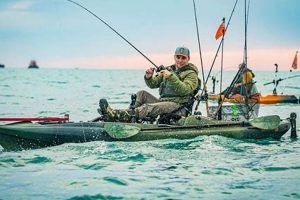
A specialized implement designed for propelling small, human-powered watercraft specifically outfitted for angling offers enhanced control and maneuverability in a variety of aquatic environments. These implements often feature a shorter, wider blade shape compared to paddles designed for recreational kayaking, facilitating efficient propulsion while minimizing disturbance to surrounding water and potentially startling fish. Specialized features such as drip rings and feathered blades can further enhance performance and comfort.
Effective propulsion is paramount for anglers seeking prime fishing locations. The correct implement allows for precise boat control in challenging conditions such as currents, wind, and shallow water. This precision enables anglers to maintain optimal positioning for casting and retrieving lines, significantly improving fishing success. Historically, paddles have evolved alongside the development of kayaks themselves, adapting to the specific needs of various activities, including fishing. The modern iteration represents a culmination of design innovations aimed at maximizing efficiency and stealth in angling scenarios.
Further exploration of this essential piece of fishing equipment will delve into key features to consider when selecting the optimal design, materials used in construction, proper paddling techniques for maximum efficiency and minimal physical strain, and maintenance practices to ensure longevity.
Tips for Selecting and Using a Kayak Fishing Paddle
Choosing and utilizing a suitable implement for kayak angling contributes significantly to on-the-water success and enjoyment. Careful consideration of several factors ensures optimal performance, comfort, and longevity of the equipment.
Tip 1: Blade Shape Considerations: Wider blades generate more power with each stroke, ideal for moving against currents or covering larger distances efficiently. Narrower blades offer increased cadence for sustained paddling over longer periods.
Tip 2: Shaft Material Selection: Fiberglass shafts offer a balance of durability and affordability. Carbon fiber shafts provide lighter weight and increased performance at a higher price point. Aluminum shafts represent a budget-friendly option, though they may be heavier.
Tip 3: Determining Appropriate Length: Paddle length depends on factors such as kayaker height, kayak width, and paddling style. Properly sized paddles prevent excessive strain and maximize efficiency.
Tip 4: Utilizing Drip Rings: Drip rings prevent water from running down the shaft onto the kayaker’s hands, improving grip and comfort, particularly in colder conditions.
Tip 5: Feathering Angle Adjustment: Feathered blades reduce wind resistance, improving efficiency, especially in windy conditions. The optimal feathering angle varies based on individual preference and paddling style.
Tip 6: Proper Paddling Technique: Engaging core muscles during paddling reduces strain on arms and shoulders, enabling sustained paddling over longer durations. Proper technique also enhances efficiency and control.
Tip 7: Maintenance and Care: Regularly rinsing the paddle with fresh water after each use prevents corrosion and extends its lifespan. Proper storage, away from direct sunlight and extreme temperatures, also contributes to longevity.
By understanding these key considerations, anglers can make informed decisions regarding paddle selection, leading to improved performance, comfort, and overall fishing experience.
In conclusion, selecting the right equipment and employing proper paddling techniques are essential components of successful kayak angling. These tips provide a foundation for making informed decisions and maximizing enjoyment on the water.
1. Blade Shape

Blade shape significantly influences a fishing kayak paddle’s performance, affecting factors like propulsion, maneuverability, and overall efficiency. Understanding the nuances of blade design is crucial for informed paddle selection.
- Surface Area
Larger blade surface area generates more power per stroke, beneficial for moving against currents or covering distances quickly. However, larger blades can be more tiring over extended periods. Smaller surface areas offer increased cadence and efficiency for sustained paddling, making them suitable for calmer waters and long-distance trips. Anglers frequently encounter varying water conditions, so blade surface area considerations must align with anticipated usage scenarios.
- Blade Shape (Asymmetry/Symmetry)
Asymmetrical blades, often with a dihedral angle or curved shape, provide smoother, more stable strokes, reducing flutter and increasing efficiency. Symmetrical blades offer a more balanced feel and are generally more affordable. The choice depends on individual paddling style and desired performance characteristics. An asymmetrical blade might be preferred for anglers seeking enhanced control in windy conditions, while a symmetrical blade could suffice for leisurely fishing in calm lakes.
- Blade Angle (High/Low)
High-angle blades, characterized by a more vertical paddling stroke, provide powerful propulsion, suitable for short bursts of speed and maneuvering in tight spaces. Low-angle blades, employed with a more horizontal stroke, are better suited for sustained paddling and covering longer distances with less exertion. Anglers fishing in rivers or areas with strong currents might benefit from a high-angle blade, while those fishing in open water might prefer a low-angle approach.
- Blade Material
While technically not a shape element, blade material impacts stiffness and durability, influencing how the blade interacts with the water. Durable plastic blades are common and offer good value, while reinforced composites offer lighter weight and higher performance but come at a premium cost. Fiberglass and carbon fiber blades deliver enhanced stiffness and responsiveness. The choice depends on budget and desired performance characteristics. Anglers prioritizing lightweight performance might opt for carbon fiber, while those seeking durability and affordability might choose a reinforced plastic blade.
Careful consideration of these blade shape aspects ensures selection of a fishing kayak paddle optimized for individual needs and targeted fishing environments. Choosing the correct blade shape allows for efficient propulsion, precise maneuverability, and reduced fatigue, ultimately contributing to a more successful and enjoyable angling experience.
2. Shaft Material

Shaft material significantly influences a fishing kayak paddle’s performance characteristics, including weight, durability, and flex. Choosing the appropriate material contributes to efficient paddling, reduced fatigue, and overall longevity of the equipment. Understanding the properties of various shaft materials is crucial for informed selection.
- Aluminum
Aluminum shafts are known for their affordability and durability. They are resistant to corrosion and can withstand considerable wear and tear. However, aluminum is heavier than other materials, which can lead to increased fatigue during extended paddling sessions. This material is a practical choice for anglers seeking a budget-friendly and robust option, but may not be ideal for those prioritizing lightweight performance.
- Fiberglass
Fiberglass shafts offer a balance of durability, performance, and cost-effectiveness. They are lighter than aluminum and provide a moderate degree of flex, which can absorb some of the impact from each stroke, reducing strain on the paddler’s joints. This material represents a versatile option suitable for a wide range of anglers and paddling conditions.
- Carbon Fiber
Carbon fiber shafts represent the premium option, offering the lightest weight and highest performance. Their stiffness and responsiveness translate to efficient power transfer with each stroke. However, carbon fiber comes at a higher price point and can be more susceptible to damage from impacts. This material is ideal for anglers prioritizing lightweight performance and efficient paddling, particularly in demanding conditions.
- Composite Materials
Composite shafts combine different materials, such as fiberglass and carbon fiber, to achieve specific performance characteristics. These blends can offer a customized balance of weight, stiffness, and durability. For example, a composite shaft might incorporate a higher percentage of carbon fiber in the blade area for increased power transfer, while utilizing fiberglass in the shaft for added durability. This allows manufacturers to fine-tune performance attributes to suit specific paddling styles and preferences.
The selection of shaft material directly impacts the overall performance and feel of a fishing kayak paddle. Consideration of factors such as budget, paddling style, and desired performance characteristics is essential for selecting a shaft material that optimizes on-the-water experience. The interplay between material properties, angler preferences, and paddling conditions ultimately determines the ideal shaft material for a given fishing kayak paddle.
3. Paddle Length

Paddle length is a critical factor influencing paddling efficiency, comfort, and overall performance in a fishing kayak. Selecting the appropriate length ensures proper biomechanics, minimizes strain, and maximizes power transfer during paddling. Understanding the factors influencing optimal paddle length is essential for informed decision-making.
- Kayak Width
Wider kayaks require longer paddles to ensure adequate reach and prevent excessive leaning during strokes. A narrow kayak, conversely, necessitates a shorter paddle. Measuring kayak width is a crucial first step in determining appropriate paddle length. For instance, a wider, more stable fishing kayak designed for open water may require a significantly longer paddle than a narrower, more maneuverable kayak intended for navigating tight streams.
- Paddler Height
Taller individuals generally require longer paddles to maintain a comfortable and efficient paddling posture. Shorter paddlers benefit from shorter paddles to avoid overreaching and potential strain. Paddler height is a key factor alongside kayak width in determining the optimal paddle length. A taller angler in a wide fishing kayak will likely need a considerably longer paddle than a shorter angler in the same kayak.
- Paddling Style (High-Angle/Low-Angle)
High-angle paddling, often used in whitewater or situations requiring quick maneuvers, typically utilizes a shorter paddle. Low-angle paddling, employed for sustained paddling over longer distances, generally benefits from a slightly longer paddle. Paddling style influences the ideal paddle length as it dictates the arc and reach of each stroke. An angler frequently paddling in choppy conditions with a high-angle stroke will likely prefer a shorter paddle than one paddling long distances in calm waters with a low-angle style.
- Paddle Blade Size and Shape
Larger paddle blades or blades with more surface area may require a slightly shorter paddle length to compensate for the increased resistance in the water. Smaller blades may benefit from a slightly longer length to maintain efficient paddling cadence. Blade size and shape influence the overall load on the paddle and thus impact the ideal length for optimal performance. An angler using a paddle with large, powerful blades might choose a slightly shorter length than one using a paddle with smaller, narrower blades.
Careful consideration of kayak width, paddler height, paddling style, and blade characteristics allows for informed selection of the optimal paddle length. Proper paddle length contributes significantly to efficient propulsion, reduced fatigue, and enhanced enjoyment on the water. Ultimately, a correctly sized fishing kayak paddle translates to improved performance and a more comfortable angling experience.
4. Drip Rings

Drip rings play a crucial, albeit often overlooked, role in enhancing the performance and comfort of a fishing kayak paddle. Positioned on the paddle shaft, these rings function as barriers against water migrating down the shaft towards the paddler’s hands. This seemingly simple function has significant practical implications, especially during extended paddling sessions or in colder climates.
Water dripping onto hands can lead to several detrimental effects. In cold weather, continuous dripping can contribute to discomfort, numbness, and even hypothermia. Even in warmer conditions, constant moisture can compromise grip strength, making it more difficult to maintain a secure hold on the paddle, particularly during challenging maneuvers or when battling strong currents. Furthermore, dripping water can increase friction, potentially leading to blisters and chafing over extended periods. Drip rings mitigate these issues by effectively diverting water away from the hands, maintaining drier, warmer, and more secure grip. For example, an angler fishing in early spring or late fall would significantly benefit from drip rings, as cold water dripping onto hands can quickly lead to discomfort and reduced dexterity.
While seemingly a minor component, drip rings demonstrably improve comfort and control during kayak fishing. Their presence minimizes distractions caused by wet hands, allowing anglers to focus on the task at hand. This enhanced focus can be particularly crucial in demanding situations, such as navigating through challenging currents, landing a large fish, or maintaining precise boat position for optimal casting. Understanding the practical benefits of drip rings underscores their importance in the overall design and functionality of a fishing kayak paddle, ultimately contributing to a more comfortable, efficient, and enjoyable angling experience. Neglecting this seemingly small detail can have noticeable consequences, particularly during extended outings or in adverse weather conditions. Therefore, considering the inclusion of drip rings is a worthwhile investment for any serious kayak angler.
5. Feathering Angle

Feathering angle, the degree to which paddle blades are offset from one another, plays a significant role in kayak paddling efficiency and performance, particularly in the context of fishing. Adjusting this angle influences wind resistance, paddling effort, and overall comfort, especially during long paddling sessions or in windy conditions. Understanding the impact of feathering angle is essential for optimizing paddling technique and maximizing on-the-water effectiveness while fishing.
- Reduced Wind Resistance
A feathered paddle presents a smaller surface area to the wind, minimizing resistance and making paddling more efficient, especially in crosswinds. The angled blade slicing through the air encounters less resistance than a blade perpendicular to the wind. This reduced resistance translates to less effort expended per stroke, conserving energy and enhancing paddling efficiency over extended periods. For example, an angler paddling in open water with consistent crosswinds will experience a noticeable decrease in paddling effort with feathered blades compared to unfeathered blades.
- Improved Blade Entry and Exit
Feathering can facilitate smoother blade entry and exit from the water, reducing splashing and turbulence. This cleaner stroke contributes to quieter paddling, a crucial advantage for anglers seeking to avoid disturbing fish. Minimizing splash and noise is particularly important in shallow water or when fishing for easily spooked species. For instance, an angler approaching a shallow-water fishing spot benefits from the smoother, quieter strokes facilitated by feathered blades, increasing the chances of a successful approach without startling fish.
- Customization and Adjustability
Many modern fishing kayak paddles offer adjustable feathering angles, allowing paddlers to customize the offset to their preference and paddling style. This adjustability allows for fine-tuning based on individual needs and prevailing conditions. Some paddles offer indexed feathering angles, providing pre-set options, while others allow for continuous adjustment within a specified range. This customization ensures optimal performance across diverse paddling styles and environmental conditions. An angler transitioning from calm lake fishing to a windy coastal environment can easily adjust the feathering angle to suit the conditions.
- Potential Drawbacks
While feathering offers advantages, it can also present challenges for some paddlers. It requires a slightly more complex paddling technique and can feel awkward for beginners. In certain situations, such as bracing or rolling, a feathered paddle can be less effective than an unfeathered one. Furthermore, excessively high feathering angles can exacerbate wrist strain for some individuals. Understanding these potential drawbacks is essential for selecting an appropriate feathering angle and adapting paddling technique accordingly. A novice kayaker might initially find feathered blades challenging and benefit from practicing with a lower feathering angle or unfeathered blades before progressing to higher angles.
Understanding the impact of feathering angle is crucial for optimizing paddling efficiency and comfort in a fishing kayak. Properly adjusted feathering contributes significantly to reduced wind resistance, smoother strokes, and ultimately, a more enjoyable and successful fishing experience. By considering individual paddling style, prevailing conditions, and potential drawbacks, anglers can leverage feathering angle to enhance their on-the-water performance. Selecting and effectively utilizing feathering is another example of how equipment customization can significantly enhance specialized activities like kayak fishing.
Frequently Asked Questions
Addressing common inquiries regarding specialized paddles designed for kayak angling provides clarity and facilitates informed equipment selection.
Question 1: What differentiates a paddle designed specifically for fishing from a standard kayak paddle?
Paddles designed for fishing kayaks often feature shorter, wider blades for enhanced maneuverability and reduced water disturbance. They may also include specialized features like integrated hooks for retrieving lures or lines, and ruler markings for measuring fish.
Question 2: How does one determine the appropriate length for a fishing kayak paddle?
Appropriate length depends on factors including kayaker height, kayak width, and paddling style. Consult sizing charts provided by manufacturers or consult with experienced retailers for personalized recommendations.
Question 3: What are the advantages of using a feathered paddle for kayak fishing?
Feathered blades reduce wind resistance, particularly beneficial in windy conditions. The optimal feathering angle is a matter of personal preference and can be adjusted on many modern paddles.
Question 4: What materials are commonly used in the construction of fishing kayak paddle shafts, and what are their respective benefits?
Common shaft materials include aluminum, fiberglass, and carbon fiber. Aluminum offers durability and affordability, fiberglass balances performance and cost, while carbon fiber provides the lightest weight and highest performance at a premium price.
Question 5: How does blade shape influence paddling performance in a fishing kayak?
Wider blades offer more power per stroke, suitable for moving against currents or covering distances quickly. Narrower blades provide increased cadence for sustained paddling over longer periods. Asymmetrical blades offer smoother strokes and reduced flutter, while symmetrical blades provide a more balanced feel.
Question 6: What maintenance practices are recommended to ensure the longevity of a fishing kayak paddle?
Rinsing the paddle with fresh water after each use and storing it away from direct sunlight and extreme temperatures will help prevent corrosion and prolong its lifespan.
Understanding these key aspects of specialized paddles contributes significantly to enhanced performance, comfort, and enjoyment on the water while kayak fishing.
Further exploration may delve into specific paddle models, advanced paddling techniques, and specialized accessories to further refine equipment choices and on-the-water skills.
Fishing Kayak Paddle
Effective propulsion is paramount in kayak angling. This exploration has highlighted the critical role played by specialized paddles in optimizing on-the-water performance. Blade shape, shaft material, length, presence of drip rings, and feathering angle all contribute significantly to efficient paddling, maneuverability, and overall comfort. Informed selection based on individual needs and anticipated fishing conditions ensures optimal equipment utilization. Understanding the nuances of these design elements empowers anglers to make informed decisions that enhance their fishing experience.
The pursuit of angling excellence necessitates continuous refinement of technique and equipment. Consideration of these key aspects of paddle design contributes not only to immediate performance enhancement but also to a deeper appreciation of the intricate relationship between human interaction and the aquatic environment. Strategic equipment choices, informed by knowledge and understanding, empower anglers to pursue their passion with increased efficiency and enjoyment.