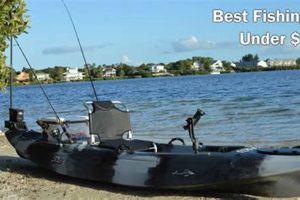
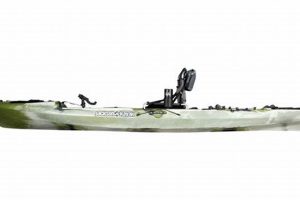
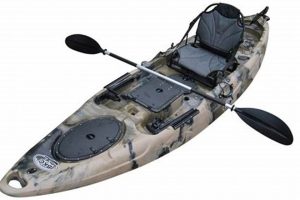
A high-quality, lake-suitable fishing kayak prioritizes stability, comfort, and features designed for angling. Such kayaks often include specialized seating, rod holders, storage for tackle and gear, and may even incorporate features like fish finders or livewells. A stable hull design is essential for casting and reeling in fish on calm waters, while comfortable seating allows for hours of enjoyable fishing. Ample storage ensures all necessary equipment is readily accessible.
Selecting an appropriate watercraft significantly enhances the angling experience. A well-designed vessel contributes to angler success and enjoyment by providing a stable platform, efficient movement across the water, and convenient access to fishing gear. Historically, anglers relied on traditional boats or shore fishing; the development of specialized fishing kayaks offers a more portable, affordable, and maneuverable option, opening up new possibilities for accessing prime fishing spots on lakes.
The subsequent sections will explore key considerations for selecting a lake fishing kayak, including hull design, materials, features, and popular models. Further discussion will encompass essential safety equipment, paddling techniques, and strategies for successful lake fishing from a kayak.
Tips for Choosing a Lake Fishing Kayak
Selecting an appropriate kayak for lake fishing requires careful consideration of several factors. These tips offer guidance for making an informed decision.
Tip 1: Prioritize Stability: A stable hull is paramount for lake fishing, enabling anglers to cast, reel, and land fish without compromising balance. Wider kayaks and those with flatter bottoms generally offer greater stability.
Tip 2: Consider Kayak Length and Weight: Longer kayaks track better and glide more efficiently, while shorter kayaks offer enhanced maneuverability. Kayak weight influences portability and ease of transport.
Tip 3: Evaluate Storage Capacity: Ample storage is essential for stowing tackle boxes, fishing rods, and other gear. Dedicated compartments and storage wells enhance organization and accessibility.
Tip 4: Assess Seating Comfort: Long hours on the water necessitate a comfortable seat with adequate back support. Adjustable seating systems allow for customization based on individual preferences.
Tip 5: Explore Fishing-Specific Features: Rod holders, paddle parks, anchor trolleys, and fish finder mounts are valuable features that enhance the angling experience.
Tip 6: Choose Appropriate Material: Kayaks are typically constructed from polyethylene, fiberglass, or composites. Polyethylene offers durability and affordability, while fiberglass and composites provide lighter weight and improved performance.
Tip 7: Set a Budget: Kayak prices vary significantly based on features, materials, and brand. Establishing a budget helps narrow down options and ensures a cost-effective purchase.
Careful consideration of these factors will lead to the selection of a kayak optimized for enjoyable and productive lake fishing. A well-chosen vessel improves on-the-water experiences and contributes to overall angling success.
By understanding the nuances of kayak selection, anglers can confidently choose the right craft to maximize their time on the lake. The following section will delve into specific kayak recommendations and further refine the selection process.
1. Stability

Stability represents a critical factor in selecting the optimal fishing kayak for lakes. A stable platform is essential for various on-the-water activities, including casting, reeling, landing fish, and even photography. Compromised stability can lead to angler fatigue, difficulty in managing fishing gear, and potentially dangerous situations.
- Primary Stability
Primary stability refers to a kayak’s initial resistance to tipping. A wider, flatter hull design generally provides higher primary stability, making it ideal for calm lake conditions and activities requiring minimal movement. A kayak with significant primary stability feels secure when stationary, allowing anglers to focus on fishing rather than balance.
- Secondary Stability
Secondary stability describes a kayak’s resistance to tipping at greater angles of lean. This characteristic becomes crucial when navigating choppy water or making sudden movements. Kayaks with rounded hulls often exhibit greater secondary stability, allowing them to recover from significant leans. While potentially less stable at rest, they offer greater confidence in dynamic conditions.
- Factors Influencing Stability
Several factors beyond hull design influence kayak stability. Kayak length, width, weight distribution, and the angler’s center of gravity all play a role. Longer kayaks tend to track straighter but can be less maneuverable, while shorter kayaks offer enhanced maneuverability but may sacrifice some stability. Understanding these factors allows for informed decision-making based on individual needs and fishing styles.
- Importance of Stability in Lake Fishing
Lake conditions can change rapidly, from calm glassy surfaces to wind-driven chop. A stable fishing kayak provides a secure platform for anglers to adapt to these changing conditions, maintaining comfort and control throughout the fishing experience. This stability allows for confident casting, hook sets, and fish retrieval, ultimately contributing to a more successful and enjoyable outing.
Ultimately, the ideal level of stability depends on the intended fishing style and the typical lake conditions encountered. Anglers fishing in calm, sheltered waters may prioritize primary stability, while those venturing into more exposed areas might prefer the responsiveness of secondary stability. Careful consideration of these factors ensures the selection of a kayak that optimizes both performance and safety on the lake.
2. Storage Capacity

Storage capacity is a critical factor influencing the suitability of a kayak for lake fishing. Adequate storage directly impacts an angler’s ability to carry essential gear, including tackle boxes, rods, safety equipment, and personal items. Insufficient storage can lead to a cluttered cockpit, hindering movement and fishing effectiveness, while ample, well-organized storage promotes efficiency and enjoyment on the water.
Different fishing styles necessitate varying storage requirements. Anglers targeting specific species may carry specialized gear, such as larger tackle boxes for bass fishing or dedicated fly fishing equipment. Kayak anglers participating in multi-day trips require significantly more storage for camping gear, food, and water. The ability to transport this equipment safely and efficiently directly impacts the success and enjoyment of the fishing expedition. For example, a kayak angler targeting trout in a remote alpine lake needs sufficient storage for camping gear and fishing equipment for an overnight stay. Without sufficient storage, this trip would be impractical or even impossible.
Effective storage solutions in fishing kayaks often include dedicated compartments, such as sealed hatches for dry storage, bungee cords for securing gear on deck, and recessed storage wells for tackle boxes. Rod holders, both flush-mounted and adjustable, further enhance organization by keeping rods secure and readily accessible. The strategic placement and design of these storage features maximize space utilization and contribute to a clutter-free cockpit. Understanding the importance of storage capacity enables anglers to select kayaks tailored to their specific needs and fishing styles. This informed decision leads to improved organization, enhanced efficiency, and a more positive overall fishing experience on the lake.
3. Comfort

Comfort plays a pivotal role in determining the suitability of a fishing kayak for lake use. Extended periods on the water, often characteristic of lake fishing, necessitate a comfortable seating arrangement to mitigate fatigue and maximize angling focus. An uncomfortable seating position can lead to backaches, stiffness, and decreased concentration, ultimately detracting from the overall fishing experience. Consider a scenario where an angler hooks a large fish; discomfort can hinder their ability to effectively fight and land the fish, potentially resulting in a lost catch.
Several factors contribute to kayak seating comfort. Seat design, including cushioning, back support, and adjustability, plays a significant role. High-quality padding and ergonomic contours provide crucial support, promoting proper posture and reducing pressure points. Adjustable seating systems allow anglers to customize the seat position to accommodate individual body types and preferences. Furthermore, features like adjustable footrests contribute to overall comfort by providing leg support and promoting stability. For instance, an angler with longer legs may require a kayak with ample legroom and adjustable footrests to maintain a comfortable and balanced position throughout the day.
Prioritizing comfort in kayak selection translates to improved endurance, enhanced focus, and a more enjoyable fishing experience. Anglers can remain on the water longer, explore more areas, and maintain concentration, ultimately increasing their chances of success. Choosing a comfortable kayak equates to investing in both enjoyment and performance on the lake. The ability to comfortably fish for extended periods without physical strain allows anglers to fully immerse themselves in the experience and dedicate their attention to the task at hand. This focus on comfort is not merely a matter of luxury; it is a strategic decision that can significantly influence fishing outcomes.
4. Maneuverability
Maneuverability represents a crucial aspect of fishing kayak performance, particularly in lake environments. Efficient navigation through varied water conditions, including shallow coves, weed beds, and open water, directly impacts angling success. A highly maneuverable kayak allows anglers to access prime fishing locations, adjust positioning efficiently, and respond effectively to changing fish behavior. Restricted maneuverability, conversely, limits exploration, hinders precise boat control, and can decrease overall fishing effectiveness.
- Tracking and Turning
Tracking refers to a kayak’s ability to maintain a straight course, while turning describes its responsiveness to paddle input. Longer kayaks generally track better in open water, offering efficient movement across longer distances. Shorter kayaks, however, often exhibit superior turning performance, enabling quick adjustments in direction and navigation through tighter spaces. Selecting a kayak with the appropriate balance of tracking and turning depends on the specific fishing environment and the angler’s preferred fishing style. For example, a kayak angler targeting bass in a shallow, weedy cove benefits from enhanced turning capabilities, while someone trolling for trout in open water prioritizes efficient tracking.
- Hull Design Influence
Hull design significantly influences kayak maneuverability. Flat-bottomed hulls provide excellent primary stability and maneuverability in calm water, making them well-suited for slow-moving rivers and sheltered lakes. Rounded or V-shaped hulls, while potentially less stable initially, offer enhanced maneuverability in choppy conditions and facilitate quick turns. The choice of hull design should align with the typical water conditions encountered and the angler’s desired performance characteristics.
- Impact of Water Conditions
Water conditions, including wind, current, and the presence of vegetation, can significantly impact kayak maneuverability. Wind can push kayaks off course, necessitating corrective strokes and potentially hindering precise positioning. Currents can similarly affect kayak control, requiring adjustments in paddling technique. Dense vegetation can impede movement, demanding a kayak capable of navigating through tight spaces and around obstacles.
- Role of Paddling Technique
Efficient paddling technique enhances kayak maneuverability, regardless of hull design or water conditions. Proper paddle strokes, including forward strokes, sweep strokes, and draw strokes, provide precise control over direction and speed. Mastering these techniques allows anglers to effectively maneuver their kayaks, even in challenging environments, and maximize their fishing opportunities. For example, a skilled angler can use a combination of forward and sweep strokes to navigate through a narrow channel lined with reeds, accessing a secluded fishing spot.
The interplay of these factors underscores the significance of maneuverability in selecting the best fishing kayak for lakes. Matching kayak characteristics to the intended fishing environment and personal paddling style ensures optimal performance and enhances the overall angling experience. A maneuverable kayak empowers anglers to explore diverse fishing locations, adapt to changing conditions, and ultimately increase their chances of success on the water.
5. Fishing Features

Specialized features distinguish fishing kayaks from recreational models, significantly enhancing angling effectiveness and overall experience. These features directly influence a kayak’s suitability for lake fishing, impacting functionality, organization, and angler success. Careful consideration of these features is essential when selecting the best fishing kayak for lakes.
- Rod Holders
Rod holders provide secure storage and convenient access to fishing rods. Flush-mounted rod holders offer a streamlined profile, minimizing line entanglement, while adjustable rod holders allow for customized positioning based on fishing techniques. Multiple rod holders enable anglers to employ diverse fishing strategies simultaneously. For example, an angler might troll with one rod held in a rear-mounted adjustable holder while simultaneously casting with another rod held in a forward-facing holder. The availability and placement of rod holders significantly impact fishing efficiency.
- Tackle Storage
Dedicated tackle storage compartments, ranging from small trays to large storage wells, keep essential gear organized and readily accessible. Dry storage compartments protect sensitive items from water damage, while open storage areas offer quick access to frequently used tackle. Efficient tackle organization minimizes time spent searching for gear, maximizing fishing time and focus. An angler targeting multiple species might organize tackle boxes by lure type or target species, streamlining lure changes and optimizing fishing effectiveness.
- Fish Finders and Electronics
Integrating fish finders and other electronics enhances angling success by providing crucial underwater insights. Transducers mounted to the kayak’s hull transmit sonar signals, revealing water depth, bottom structure, and fish locations. GPS units aid navigation and waypoint marking. These technologies provide a significant advantage in locating fish and understanding underwater terrain. An angler using a fish finder to identify a drop-off or submerged structure can strategically position the kayak for optimal fishing, significantly increasing the likelihood of success.
- Anchor Trolleys and Other Accessories
Anchor trolleys allow for controlled drifting and precise boat positioning, particularly advantageous in windy conditions or when fishing specific structures. Other accessories, such as paddle parks and gear tracks, further enhance functionality and organization. These features contribute to efficient boat control and angler convenience, maximizing fishing effectiveness. For instance, an angler fishing a windy shoreline can deploy an anchor trolley to maintain position and prevent drifting, allowing for focused casting and retrieval.
These specialized fishing features contribute significantly to a kayak’s performance and an angler’s success on the lake. The strategic selection and utilization of these features streamline fishing processes, enhance boat control, and provide crucial information about the underwater environment. Choosing a kayak equipped with the appropriate fishing features elevates the overall angling experience and increases the likelihood of a successful outing. The integration of these features transforms a standard kayak into a specialized fishing platform, optimized for performance and enjoyment on the lake.
6. Durability
Durability stands as a critical factor in determining the long-term value and performance of a fishing kayak, especially in the context of lake use. Lakes present diverse environmental challenges, including exposure to sunlight, temperature fluctuations, potential impacts from submerged obstacles, and the abrasive effects of sand and gravel. A durable kayak withstands these challenges, maintaining its structural integrity and performance characteristics over extended periods. This resilience translates to a reliable and dependable fishing platform, minimizing the risk of damage and maximizing the lifespan of the investment. Consider a scenario where a kayak is frequently dragged across rocky shorelines; a durable hull material, such as high-density polyethylene, resists abrasion and impact, ensuring the kayak remains functional despite regular exposure to such harsh conditions.
Several factors contribute to kayak durability. Hull material plays a significant role; high-density polyethylene is known for its impact resistance and UV stability, while fiberglass and composite materials offer high strength-to-weight ratios but may be more susceptible to cracking or chipping. Construction methods, including the quality of welds and seam sealing, further influence durability. Proper maintenance, such as regular cleaning and storage out of direct sunlight, also extends kayak lifespan. For example, consistently rinsing a kayak after use in saltwater prevents corrosion of metal components and degradation of the hull material, preserving its structural integrity and appearance.
The connection between durability and the “best fishing kayak for lakes” rests upon the understanding that a kayak’s ability to withstand environmental stresses directly impacts its long-term performance and value. A durable kayak minimizes repair costs, reduces the risk of on-the-water failures, and ensures a reliable fishing platform for years to come. This long-term perspective emphasizes the importance of durability as a key component in selecting the optimal fishing kayak for lake use. Investing in a durable kayak represents a commitment to a reliable, long-lasting fishing companion, capable of navigating the diverse challenges presented by lake environments.
Frequently Asked Questions
This section addresses common inquiries regarding the selection and use of fishing kayaks on lakes.
Question 1: What hull design is most suitable for lake fishing?
Optimal hull design depends on prevailing lake conditions and intended fishing style. Wider, flatter hulls offer enhanced stability, ideal for calm waters and stationary fishing. Longer kayaks with V-shaped hulls track efficiently in open water, advantageous for trolling or covering greater distances. Shorter kayaks with rounded hulls provide maneuverability in tight spaces, beneficial for navigating shallow coves or weedy areas.
Question 2: How important is kayak weight capacity for lake fishing?
Weight capacity dictates the maximum load a kayak can safely carry, encompassing the angler’s weight, fishing gear, and any additional equipment. Exceeding weight capacity compromises stability and performance. Selecting a kayak with ample weight capacity ensures safe and efficient operation on the lake.
Question 3: What essential safety gear should one carry while lake fishing from a kayak?
Essential safety equipment includes a personal flotation device (PFD), a whistle, a visual distress signal, and a first-aid kit. A paddle leash prevents paddle loss in the event of a capsize. Carrying a communication device, such as a cell phone or VHF radio, enables contact in emergencies. Local regulations may mandate additional safety equipment.
Question 4: How does one transport a fishing kayak to a lake?
Kayak transportation options include roof racks, trailers, and truck beds. Roof racks offer a versatile solution for most vehicles, while trailers accommodate multiple kayaks or larger models. Securing the kayak properly during transport prevents damage and ensures safe travel.
Question 5: What are the advantages of using a pedal-driven kayak for lake fishing?
Pedal-driven kayaks offer hands-free propulsion, allowing anglers to focus on fishing rather than paddling. This advantage proves particularly beneficial for techniques requiring precise boat control, such as trolling or maintaining position in current. Pedal drives also facilitate covering greater distances with less physical exertion.
Question 6: How does one choose between a sit-on-top and a sit-inside kayak for lake fishing?
Sit-on-top kayaks offer inherent stability and ease of entry and exit, making them suitable for warmer climates and anglers who prefer open cockpits. Sit-inside kayaks provide greater protection from the elements and offer a drier ride, advantageous in colder conditions. Angler preference and typical fishing conditions dictate the optimal choice.
Careful consideration of these frequently asked questions facilitates informed decision-making regarding kayak selection and promotes safe and enjoyable lake fishing experiences.
The next section will offer concluding thoughts and summarize key takeaways for selecting the best fishing kayak for lakes.
Conclusion
Careful selection of a lake fishing kayak hinges upon a comprehensive understanding of key performance characteristics. Stability, storage capacity, comfort, maneuverability, specialized fishing features, and durability collectively influence a kayak’s suitability for lake environments. Prioritizing these factors ensures optimal performance, angler comfort, and long-term satisfaction. Matching kayak characteristics to individual fishing styles and target species further refines the selection process, resulting in a vessel tailored to specific angling needs. An informed decision considers hull design, material selection, and available features within the context of typical lake conditions and intended fishing techniques. A thorough evaluation process culminates in the acquisition of a kayak optimized for productive and enjoyable lake fishing experiences.
The pursuit of the optimal lake fishing kayak represents an investment in enhanced angling opportunities. A well-chosen vessel expands access to diverse fishing locations, improves on-the-water efficiency, and contributes to overall angling success. The decision extends beyond mere equipment acquisition; it signifies a commitment to maximizing time on the water and fully experiencing the tranquility and rewards of lake fishing. The ideal kayak becomes an extension of the angler, seamlessly integrating with their fishing style and facilitating deeper immersion in the natural world. This pursuit of the perfect vessel ultimately enriches the angling experience and strengthens the connection between angler and environment.