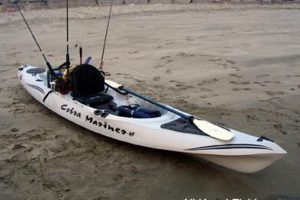
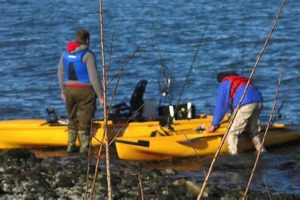
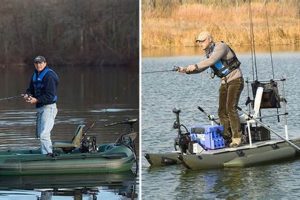
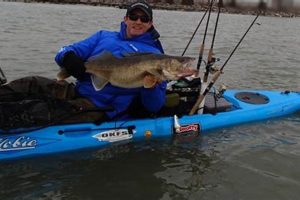
Compact, sit-on-top kayaks designed for angling typically range from 8 to 10 feet in length. These vessels prioritize maneuverability and ease of transport, often featuring specialized storage and accessory mounts tailored for fishing gear. A shorter hull enables anglers to navigate narrow waterways, tight turns, and shallow waters with greater agility.
The reduced length offers significant advantages for anglers seeking portability and simplified storage. These smaller craft are easier to car-top, load onto trailers, and store in smaller spaces, making them ideal for those with limited storage or transportation options. Historically, fishing kayaks tended to be longer, but advancements in hull design and materials have allowed manufacturers to create shorter kayaks that maintain stability and tracking while improving portability. This has broadened the accessibility of kayak fishing to a wider range of individuals.
This discussion will further explore the key features to consider when selecting a compact fishing kayak, including stability, storage capacity, and compatibility with various fishing styles. Considerations for different water types and angler experience levels will also be addressed.
Tips for Selecting a Compact Fishing Kayak
Choosing a compact fishing kayak requires careful consideration of various factors to ensure optimal performance and angler satisfaction. The following tips offer guidance for selecting a suitable vessel.
Tip 1: Prioritize Stability: Hull design significantly impacts stability. Wider, flatter hulls generally offer greater initial stability, beneficial for casting and reeling. Consider the anticipated water conditions and angler experience level when evaluating stability.
Tip 2: Evaluate Storage Capacity: Adequate storage is crucial for carrying fishing gear, tackle boxes, and safety equipment. Assess the available storage compartments and their accessibility.
Tip 3: Consider Weight Capacity: Ensure the kayak’s weight capacity accommodates the angler’s weight, plus gear, and potential catch. Exceeding the weight capacity can compromise stability and performance.
Tip 4: Assess Transportation and Storage Logistics: Compact kayaks are chosen for their portability. Evaluate the kayak’s weight and dimensions in relation to available transportation and storage options.
Tip 5: Consider Fishing Style: Different fishing styles necessitate specific features. Anglers targeting larger game fish may require a kayak with greater stability and tracking, while those fishing in shallow waters may prioritize maneuverability.
Tip 6: Evaluate Seat Comfort and Adjustability: Extended fishing trips require a comfortable and supportive seat. Consider seat adjustability, padding, and back support.
Tip 7: Factor in Intended Water Type: The intended fishing environment influences kayak selection. Calm lakes and rivers allow for greater hull design flexibility, while ocean or rough water environments demand enhanced stability and tracking.
By carefully considering these factors, anglers can select a compact fishing kayak that aligns with their individual needs and enhances their on-the-water fishing experience.
This information provides a foundation for making informed decisions about compact fishing kayaks. Further research and hands-on experience will contribute to a successful selection process.
1. Length (8-10 feet)

Length serves as a defining characteristic when categorizing kayaks as “short,” especially within the context of fishing. For fishing kayaks, the 8-10 foot range generally demarcates the shortest practical length, balancing portability with on-the-water performance. This length range significantly impacts maneuverability, storage, and transportation, making it a crucial consideration for anglers.
- Maneuverability:
Shorter kayaks excel in confined spaces, enabling navigation through narrow creeks, tight turns around obstacles like fallen trees, and shallow-water fishing. This enhanced maneuverability is advantageous for anglers targeting species that inhabit such environments.
- Portability and Storage:
Kayaks within the 8-10 foot range are significantly easier to transport and store compared to longer models. They require less space on roof racks, trailers, and in garages or sheds. This ease of transport expands fishing access for those with limited storage or smaller vehicles.
- Stability Considerations:
While shorter kayaks offer maneuverability advantages, they can be less stable than longer counterparts. Careful consideration of hull design, width, and weight capacity is crucial. Anglers should prioritize stability features, especially in challenging conditions or when standing to cast.
- Fishing Style Compatibility:
The 8-10 foot length range is well-suited for various fishing styles, including stillwater angling, river fishing, and inshore saltwater fishing. However, anglers pursuing larger game fish in open water may require the added stability and tracking of longer kayaks.
The 8-10 foot length defines the “shortest fishing kayak” category, influencing its suitability for various fishing scenarios. While maneuverability and portability are key advantages, anglers must also consider potential trade-offs in stability and tracking. A thorough assessment of individual needs and fishing styles remains crucial for selecting the optimal kayak length.
2. Maneuverability

Maneuverability represents a critical performance attribute in fishing kayaks, particularly within the “shortest” category. A kayak’s ability to navigate efficiently and respond effectively to angler input directly influences fishing success, especially in confined or challenging environments. This section explores the multifaceted aspects of maneuverability in short fishing kayaks.
- Turning Radius:
A smaller turning radius allows for quicker turns and adjustments in direction, crucial for navigating tight corners, narrow creeks, and obstacle-laden waters. Shorter kayaks typically exhibit a tighter turning radius compared to longer models, providing a distinct advantage in confined spaces. This agility enables anglers to access prime fishing spots often inaccessible to larger vessels.
- Tracking:
While maneuverability prioritizes turning and directional changes, tracking refers to a kayak’s ability to maintain a straight course with minimal paddling effort. Shorter kayaks may exhibit less inherent tracking ability than longer kayaks due to their reduced waterline length. However, design features such as a defined keel or tracking fins can enhance the tracking performance of shorter models, improving efficiency and reducing paddling effort over longer distances.
- Response to Paddling Input:
A highly maneuverable kayak responds quickly and predictably to paddle strokes. This responsiveness allows anglers to make precise adjustments in position and direction, crucial for accurate casting and lure presentation. Shorter kayaks, due to their lower inertia, generally exhibit enhanced responsiveness, contributing to a more dynamic and engaging paddling experience.
- Influence of Hull Design:
Hull design significantly influences maneuverability. Factors such as hull shape (flat, rounded, or V-shaped), rocker profile (the curvature of the hull from bow to stern), and the presence of chines (edges along the hull) all contribute to a kayak’s turning characteristics and overall agility. Shorter kayaks often incorporate design features that optimize maneuverability, such as flatter hulls and pronounced rocker profiles, enabling them to spin on a dime and navigate shallow or confined areas effectively.
Maneuverability in short fishing kayaks presents a complex interplay of factors, including turning radius, tracking, responsiveness, and hull design. While shorter lengths generally enhance agility and responsiveness, careful consideration of these individual elements remains essential for selecting a kayak that optimizes on-the-water performance in specific fishing environments.
3. Portability
Portability represents a defining advantage of the shortest fishing kayaks, directly influencing accessibility and ease of transport. The ability to easily transport and store a kayak significantly expands fishing opportunities, particularly for individuals with limited storage space or smaller vehicles. This section examines the key facets of portability in relation to shortest fishing kayaks.
- Transportation Methods:
Shorter kayaks offer greater flexibility in transportation methods. Their reduced length and weight facilitate easier car-topping, requiring simpler roof rack systems or even enabling transport within larger vehicles. Furthermore, shorter kayaks are generally easier to handle on trailers, simplifying launching and retrieval processes.
- Storage Solutions:
Limited storage space often restricts kayak ownership. Shorter kayaks address this constraint by requiring less storage area. They can be more easily stored in garages, sheds, or even within apartments or smaller homes, expanding kayak fishing accessibility to those without dedicated storage facilities.
- Weight Considerations:
Kayak weight significantly impacts portability. Shorter kayaks, due to their reduced size, generally weigh less than longer models. This lower weight simplifies handling during transport and storage, requiring less physical exertion and reducing the risk of strain or injury.
- Impact on Fishing Access:
Enhanced portability expands fishing access to a wider range of locations. Shorter kayaks enable anglers to explore remote ponds, smaller rivers, and other waterways often inaccessible to larger, less portable vessels. This expanded access opens up new fishing opportunities and diversifies angling experiences.
Portability, a cornerstone advantage of shortest fishing kayaks, directly enhances accessibility and expands fishing opportunities. By facilitating easier transportation and storage, shorter kayaks empower anglers to explore diverse waterways and enjoy the sport with greater convenience and flexibility. The reduced logistical burden associated with transport and storage significantly contributes to the appeal and practicality of these compact vessels.
4. Storage Capacity
Storage capacity in fishing kayaks directly impacts their practicality and effectiveness. While shorter kayaks prioritize maneuverability and portability, storage remains a crucial consideration, particularly for anglers carrying essential gear, tackle, and safety equipment. Balancing limited space with storage needs presents a design challenge in shorter kayaks, necessitating innovative solutions and strategic organization.
- Rear Tank Wells:
Rear tank wells, often found on sit-on-top kayaks, offer open storage space for larger items like tackle crates, coolers, or dry bags. While shorter kayaks may have smaller tank wells compared to longer models, strategically utilizing bungee cords and tie-down points maximizes storage efficiency and secures gear effectively.
- Front Hatch Storage:
Front hatch storage compartments provide enclosed, protected storage for smaller items like fishing tackle, electronics, and personal belongings. In shorter kayaks, front hatches may be smaller or less accessible than in longer models. Utilizing waterproof bags and organizers maximizes space utilization and protects sensitive gear from moisture.
- Side-Mounted Rod Holders:
Side-mounted rod holders are essential for anglers, providing secure storage and easy access to fishing rods while underway. Shorter kayaks typically offer fewer rod holders than longer models, requiring anglers to prioritize rod selection and potentially utilize additional rod leashes or storage solutions.
- Integrated Tackle Storage:
Some shorter fishing kayaks incorporate integrated tackle storage compartments, often located within easy reach of the angler. These compartments provide dedicated storage for smaller tackle boxes, lures, and tools, enhancing organization and efficiency on the water. While space may be limited in shorter kayaks, integrated storage solutions optimize available space and minimize clutter.
Storage capacity in shortest fishing kayaks requires careful consideration and strategic organization. While space limitations exist compared to longer models, utilizing available storage features effectively, employing organizational tools, and prioritizing essential gear maximizes functionality and ensures anglers can carry the necessary equipment for a successful fishing trip. The balance between portability and storage capacity remains a defining characteristic of the shortest fishing kayak category.
5. Stability

Stability represents a critical performance characteristic in any kayak, but it holds particular significance for shorter fishing kayaks. The reduced length inherent in these designs presents inherent challenges to stability, requiring careful consideration of hull design, weight distribution, and angler behavior. Understanding the factors influencing stability is essential for safe and effective kayak fishing.
- Primary Stability:
Primary stability refers to a kayak’s initial resistance to tipping. Wider, flatter hulls generally exhibit greater primary stability, providing a more secure feeling platform, especially for less experienced anglers. In shorter kayaks, maximizing primary stability becomes crucial due to the reduced length and potentially higher center of gravity. A stable platform facilitates activities like casting, reeling, and landing fish without compromising balance.
- Secondary Stability:
Secondary stability describes a kayak’s ability to resist capsizing when leaned or tilted. Kayaks with rounded or flared hulls often exhibit greater secondary stability, allowing for more aggressive maneuvering and recovery from leans. While shorter kayaks might have less inherent secondary stability than longer models, hull design features can mitigate this, enabling controlled leaning for turning or bracing in waves.
- Weight Distribution:
Proper weight distribution plays a crucial role in maintaining stability. Distributing weight evenly within the kayak, and keeping heavier items lower in the hull, enhances overall stability. In shorter kayaks, the impact of weight distribution is amplified due to the shorter waterline length. Careful loading and positioning of gear are essential for preventing instability.
- Angler Behavior:
Angler actions significantly influence stability. Sudden movements, leaning too far, or standing abruptly can compromise stability, especially in shorter kayaks. Maintaining a low center of gravity, moving smoothly and deliberately, and avoiding abrupt weight shifts contribute significantly to maintaining balance and preventing capsizes.
Stability in shortest fishing kayaks requires careful consideration of multiple factors. Balancing primary and secondary stability, managing weight distribution effectively, and practicing mindful angler behavior are crucial for ensuring safe and efficient performance on the water. Understanding these elements empowers anglers to select and operate shorter kayaks effectively while minimizing the risks associated with reduced length.
6. Weight Capacity
Weight capacity represents a critical factor influencing the performance and safety of shortest fishing kayaks. This specification, determined by the manufacturer, denotes the maximum combined weight of the angler, gear, and any potential catch the kayak can safely support. Exceeding this limit compromises stability, reduces freeboard (the distance between the waterline and the top edge of the hull), and increases the risk of capsizing. In shorter kayaks, the impact of exceeding weight capacity is amplified due to the shorter waterline, making adherence to this limit even more crucial. For example, a shorter kayak with a weight capacity of 250 pounds carrying a 200-pound angler, 60 pounds of gear, and a 20-pound fish exceeds the limit, potentially leading to instability and reduced performance. Conversely, a shorter kayak with a 300-pound capacity comfortably accommodates the same load, maintaining stability and safe operation.
Understanding weight capacity is essential for informed kayak selection and safe on-the-water practices. Anglers should carefully consider their body weight, the estimated weight of their gear (including rods, reels, tackle boxes, and safety equipment), and the potential weight of their intended catch when assessing kayak suitability. Choosing a kayak with adequate weight capacity ensures optimal performance, maintains appropriate freeboard, and maximizes safety. This becomes particularly critical in shorter kayaks, where the margin for error is reduced due to the shorter length. Overlooking weight capacity can lead to dangerous situations, especially in challenging conditions such as rough water or strong currents. For instance, a heavily loaded shorter kayak encountering unexpected waves might swamp or capsize more readily than a properly loaded kayak within its weight capacity.
Weight capacity in shortest fishing kayaks directly influences safety and performance. Careful consideration of this factor during the selection process ensures optimal stability, maneuverability, and overall on-the-water experience. Ignoring weight capacity compromises safety and can lead to hazardous situations. Prioritizing this crucial specification empowers anglers to make informed decisions and enjoy the sport safely and effectively.
7. Targeted Fish Species
The selection of a shortest fishing kayak often correlates directly with the targeted fish species. Specific species inhabit particular environments, and kayak characteristics, including length, maneuverability, and stability, influence an angler’s ability to effectively target those species. Understanding this relationship is crucial for optimizing fishing success and selecting the appropriate vessel.
For instance, anglers pursuing bass in shallow, vegetated waters benefit from the maneuverability of shorter kayaks. Their compact size allows navigation through tight spaces, accessing areas larger kayaks cannot reach. Conversely, targeting larger offshore species like tuna or marlin necessitates a longer, more stable kayak capable of handling rougher water conditions. Shorter kayaks lack the necessary stability and storage capacity for such pursuits. Similarly, anglers targeting trout in small streams benefit from the maneuverability and portability of shorter kayaks, enabling them to access remote stretches of water and navigate tight bends. However, if targeting larger game fish in open lakes or coastal areas, a longer kayak provides the necessary stability and tracking for extended paddling and battling powerful fish. Matching kayak selection to the target species and their habitat significantly enhances fishing effectiveness and overall experience.
In summary, targeted fish species significantly influence the suitability of a shortest fishing kayak. Matching kayak characteristics to the specific fishing environment and target species maximizes angling effectiveness. Maneuverability in tight spaces for bass, stability in open water for larger species, and portability for accessing remote areas for trout exemplify the practical significance of this connection. Careful consideration of target species and corresponding habitat characteristics ensures anglers select the most appropriate kayak for their specific fishing needs, optimizing both success and enjoyment on the water.
Frequently Asked Questions
This section addresses common inquiries regarding the shortest fishing kayaks, providing concise and informative responses to aid in informed decision-making.
Question 1: What defines a “short” fishing kayak?
Fishing kayaks typically considered “short” fall within the 8 to 10-foot length range. This range balances portability with sufficient on-the-water performance for various fishing styles.
Question 2: Are shorter kayaks suitable for all fishing environments?
While shorter kayaks excel in calm waters like ponds, lakes, and slow-moving rivers, they may be less suitable for challenging conditions like open ocean or fast-flowing currents due to reduced stability and tracking compared to longer kayaks.
Question 3: How does length affect stability in fishing kayaks?
Generally, shorter kayaks can be less stable than longer models due to their reduced waterline length. However, wider hulls and thoughtful design features can mitigate this, offering sufficient stability for various fishing activities.
Question 4: What are the advantages of a shorter fishing kayak?
Key advantages include enhanced maneuverability in tight spaces, simplified transport and storage due to reduced size and weight, and often a lower price point compared to longer kayaks.
Question 5: What are the disadvantages of shorter fishing kayaks?
Potential disadvantages include reduced tracking ability compared to longer models, less storage space for gear, and potentially decreased stability, especially in rougher water conditions.
Question 6: How does one choose the right length fishing kayak?
Selecting the appropriate length requires careful consideration of intended fishing locations, target species, storage and transport limitations, and individual angler preferences. Evaluating these factors helps determine the optimal balance between portability and performance.
Careful consideration of these factors aids informed decision-making when selecting a fishing kayak. Individual needs and intended usage ultimately dictate the most appropriate kayak length for a safe and enjoyable fishing experience.
For a more detailed examination of specific kayak models and features, please continue to the next section.
Shortest Fishing Kayaks
Compact fishing kayaks, typically ranging from 8 to 10 feet, present distinct advantages for anglers prioritizing maneuverability, portability, and access to confined waterways. This exploration has highlighted the critical interplay between length, stability, storage capacity, and intended fishing style. While shorter lengths enhance agility and ease of transport, they require careful consideration of stability and weight capacity limitations. The suitability of a compact fishing kayak ultimately depends on a thorough assessment of individual angler needs, target species, and the intended fishing environment.
The evolution of kayak design and materials continues to refine the performance and functionality of compact fishing platforms. Continued innovation promises further enhancements in stability, storage solutions, and specialized features tailored for diverse fishing styles. A comprehensive understanding of these evolving trends empowers anglers to make informed decisions, selecting the optimal vessel for maximizing on-the-water success and enjoyment.