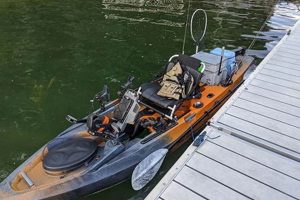
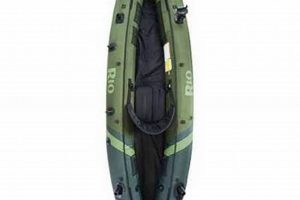
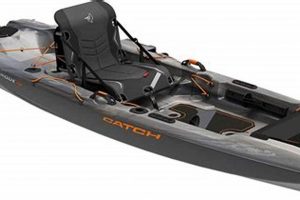
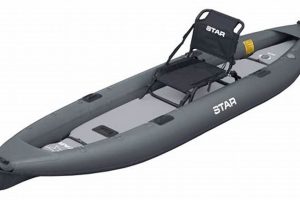
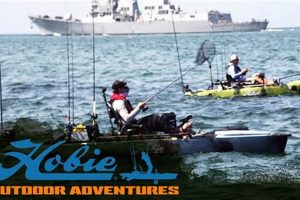
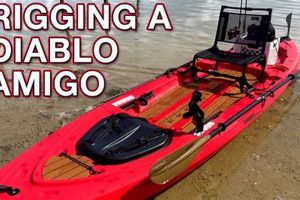
This sit-on-top vessel is designed for angling, offering stability and features tailored to the needs of fishermen. Common attributes include rod holders, storage compartments for tackle, and often a comfortable, elevated seat. These watercraft are typically constructed from durable, lightweight materials like high-density polyethylene.
Anglers value such watercraft for their maneuverability, allowing access to shallow waters and secluded fishing spots often unreachable by larger boats. The stability offered by the wider hull design is also crucial for casting and reeling in fish. Furthermore, these smaller vessels offer an affordable and accessible entry point into kayak fishing, contributing to the growing popularity of the sport.
Further exploration will cover specific design elements, material considerations, and comparisons with other popular fishing kayak models. An in-depth analysis of performance characteristics, user experiences, and recommended accessories will also be provided.
Tips for Kayak Fishing
Effective angling from a kayak requires preparation and technique. The following tips can enhance fishing success and overall safety on the water.
Tip 1: Prioritize Safety Equipment. Always wear a personal flotation device (PFD). Carry a whistle for signaling, a waterproof first-aid kit, and a communication device in a waterproof bag.
Tip 2: Plan the Trip. Check weather forecasts, water conditions, and fishing regulations before departure. Inform someone of the intended fishing location and estimated return time.
Tip 3: Distribute Weight Evenly. Balance gear distribution within the kayak for optimal stability and tracking. Avoid overloading the vessel.
Tip 4: Practice Paddling and Maneuvering. Become familiar with basic paddling strokes and maneuvering techniques before venturing into open water. Consider practicing self-rescue procedures.
Tip 5: Choose Appropriate Fishing Gear. Opt for shorter rods and reels suitable for kayak fishing. Use tackle appropriate for the target species and fishing location.
Tip 6: Employ Stealth Tactics. Minimize noise and movement to avoid spooking fish. Approach fishing areas slowly and quietly.
Tip 7: Respect the Environment. Practice catch-and-release whenever possible. Pack out all trash and fishing line. Adhere to designated fishing zones and regulations.
Adherence to these guidelines can significantly improve angling success and ensure a safe and enjoyable experience on the water.
These foundational tips provide a starting point for successful kayak fishing. The following section will delve into advanced techniques and specific strategies for various fish species.
1. Stability

Stability is a paramount consideration in kayak fishing, directly influencing angling success and overall safety. For the Ascend H10, stability translates to a secure platform for casting, reeling, and landing fish, even in challenging conditions. This characteristic also contributes to angler confidence and comfort, allowing for extended fishing sessions without fatigue or compromise.
- Hull Design
The H10’s hull design plays a pivotal role in its stability. The relatively flat bottom and wider beam create a stable platform, minimizing rocking and tipping. This design element proves particularly advantageous in calmer waters, providing a predictable and steady base for fishing activities.
- Center of Gravity
Maintaining a low center of gravity is crucial for stability. The H10’s seat position and overall design contribute to a lower center of gravity, enhancing stability. Proper weight distribution within the kayak further optimizes balance and reduces the risk of capsizing.
- Water Conditions
While the H10 exhibits inherent stability, water conditions can significantly influence its performance. Calm lakes and slow-moving rivers provide the optimal environment for maximizing the kayak’s stability. In choppier waters or stronger currents, maintaining balance requires increased vigilance and adjusted paddling techniques.
- Angler Movement
Sudden movements, such as casting or reaching for gear, can momentarily compromise stability. The H10’s design mitigates the impact of such movements, but anglers should practice smooth, controlled actions to maintain balance. Understanding the kayak’s limitations and adjusting movements accordingly contributes to a safer and more productive fishing experience.
The Ascend H10’s stability profile contributes significantly to its suitability for fishing. The combination of hull design, center of gravity considerations, and angler awareness allows for a confident and secure fishing experience, maximizing angling opportunities and promoting on-the-water safety. However, understanding the impact of varying water conditions and angler movements remains essential for optimal performance and a positive overall experience.
2. Maneuverability
Maneuverability is a critical performance attribute for fishing kayaks, directly impacting access to fishing locations and overall on-the-water efficiency. For the Ascend H10, maneuverability translates to the ability to navigate tight spaces, quickly change directions, and efficiently position the vessel for optimal casting angles. This characteristic is particularly valuable in environments with complex shorelines, dense vegetation, or swift currents.
- Hull Design
The H10’s shorter length and moderately rockered hull contribute to its maneuverability. The shorter length reduces turning radius, while the rocker profile enhances responsiveness to paddle strokes. This combination allows for quick turns and precise adjustments in position, enabling anglers to navigate challenging waterways and effectively target fish in diverse locations.
- Tracking
While maneuverability is prized, maintaining a reasonably straight course (tracking) is also important for efficient paddling. The H10’s hull design balances maneuverability with acceptable tracking performance. While not designed for long-distance paddling in open water, the H10 offers sufficient tracking to cover moderate distances and maintain course in mild currents.
- Water Conditions
Water conditions influence maneuverability. In calm waters, the H10 responds quickly to paddle input, allowing for precise maneuvering. In moving water, currents can impact tracking and require adjustments in paddling technique. Understanding the interplay between hull design and water conditions is essential for effective maneuvering.
- Paddling Technique
Efficient paddling technique is fundamental to maximizing the H10’s maneuverability. Proper paddle strokes and body positioning contribute to precise control and efficient movement. Mastering basic paddling techniques, such as forward strokes, sweep strokes, and draw strokes, empowers anglers to effectively maneuver the kayak in various situations.
The Ascend H10’s maneuverability profile enhances its versatility as a fishing platform. The balanced design facilitates access to a wider range of fishing locations and allows for efficient positioning in challenging environments. This characteristic, combined with appropriate paddling technique and an understanding of water conditions, contributes to a more productive and enjoyable fishing experience. However, recognizing the trade-off between maneuverability and tracking performance is essential for informed decision-making and realistic expectations regarding the kayak’s capabilities in different water environments.
3. Storage Capacity

Adequate storage capacity is essential for kayak anglers, enabling transport of essential gear and ensuring a well-organized and efficient fishing experience. The Ascend H10 fishing kayak addresses this need with a thoughtful storage layout designed to accommodate tackle, equipment, and personal items. Understanding the storage features and their practical application contributes to informed purchase decisions and optimal utilization of the kayak’s capabilities.
- Rear Tankwell
The open tankwell at the stern provides ample space for larger items such as a tackle crate, cooler, or dry bag. Bungee cords secure these items, preventing shifting or loss during transport. This area is ideal for bulky gear that is not frequently accessed during fishing.
- Front Hatch
A sealed hatch located near the bow offers protected storage for smaller items sensitive to water exposure, such as electronics, wallets, and keys. This compartment provides a secure and dry environment for essential gear.
- Side Storage Compartments
Smaller compartments located within reach of the seated angler offer convenient storage for frequently accessed items like pliers, line cutters, and lures. This readily accessible storage contributes to efficient tackle management and reduces the need to reach into the rear tankwell or front hatch during active fishing.
- Rod Holders
Flush-mounted rod holders provide secure storage for fishing rods while not in use. This feature keeps rods organized and prevents entanglement, enhancing safety and convenience. Some models may offer adjustable rod holders for customized positioning.
The Ascend H10’s storage system contributes significantly to its practicality as a fishing platform. The combination of open storage, sealed compartments, and dedicated rod holders allows anglers to organize gear effectively and maintain a clutter-free cockpit. This well-designed storage system enhances both fishing efficiency and overall enjoyment on the water by keeping essential items readily accessible while protecting sensitive gear from the elements.
4. Comfort

Comfort significantly impacts fishing kayak usability, directly influencing angler endurance and focus. Discomfort can curtail fishing trips, limiting access to prime fishing locations and reducing overall enjoyment. The Ascend H10 fishing kayak addresses comfort through several key design features aimed at enhancing the on-the-water experience.
The H10’s seat design plays a crucial role in comfort. The padded seat and adjustable backrest provide support and cushioning, reducing strain during extended periods on the water. The ability to adjust the backrest angle allows anglers to customize the seating position for optimal comfort and support. Furthermore, the seat’s elevated position enhances visibility and facilitates casting and reeling. An uncomfortable seat can lead to backaches, stiffness, and reduced fishing effectiveness, highlighting the importance of ergonomic design considerations.
Footrests also contribute to comfort and stability. Adjustable footrests accommodate anglers of varying heights, allowing for proper leg extension and support. Proper leg positioning enhances balance and reduces fatigue, contributing to a more comfortable and stable fishing experience. Ill-fitting or absent footrests can result in leg cramps and discomfort, negatively impacting overall enjoyment and fishing performance. Furthermore, the H10’s spacious cockpit provides ample legroom, accommodating various seating positions and reducing feelings of confinement.
In summary, the Ascend H10 addresses angler comfort through a combination of seat design, adjustable footrests, and a spacious cockpit. These features contribute to reduced fatigue, enhanced stability, and increased enjoyment during longer fishing trips. The emphasis on comfort reflects an understanding of the importance of angler well-being and its direct impact on fishing performance and overall satisfaction. Prioritizing comfort enhances the overall fishing experience, allowing anglers to focus on the sport rather than physical discomfort.
5. Durability

Durability is a critical factor influencing the lifespan and overall value of a fishing kayak. For the Ascend H10, durability translates to resistance against impacts, abrasion, and UV degradation. This resilience ensures the kayak withstands the rigors of regular use, including transport, launch, and retrieval, as well as encounters with rocks, submerged obstacles, and varying weather conditions. The H10’s construction, typically utilizing high-density polyethylene (HDPE), contributes to this durability. HDPE is known for its impact resistance, robustness, and ability to withstand UV exposure, making it a suitable material for kayak construction. This material choice directly influences the kayak’s ability to maintain structural integrity over time, even with frequent use in challenging environments. A durable kayak minimizes repair costs and ensures long-term usability, contributing to a positive ownership experience.
The practical implications of a durable kayak are significant. Anglers often transport kayaks on roof racks, trailers, or truck beds, exposing them to potential impacts and abrasion. During launch and retrieval, kayaks can scrape against rocks, gravel, or concrete ramps. On the water, submerged logs, rocks, and other obstacles pose further risks. A durable kayak, like the Ascend H10, withstands these challenges, minimizing damage and maintaining functionality. For example, the HDPE hull can tolerate minor impacts without cracking or deforming, ensuring the kayak remains watertight and functional. This resilience translates to fewer repairs, reduced maintenance costs, and a longer lifespan, ultimately enhancing the value proposition of the kayak.
In conclusion, the Ascend H10’s durability, largely attributed to its HDPE construction, is a key factor contributing to its longevity and overall value. This durability translates to resistance against impacts, abrasion, and UV degradation, enabling the kayak to withstand the rigors of regular use and various environmental challenges. The practical significance of this durability is evident in the reduced need for repairs, minimized maintenance costs, and extended lifespan, ultimately enhancing the ownership experience and ensuring long-term enjoyment on the water. This robust construction allows anglers to focus on fishing rather than worrying about potential damage to their equipment, contributing to a more positive and productive outdoor experience.
6. Portability
Portability significantly influences the accessibility and overall usability of a fishing kayak. For the Ascend H10, portability translates to ease of transport and handling, enabling anglers to access various fishing locations, regardless of vehicle type or physical limitations. This characteristic expands fishing opportunities and contributes to a more convenient and enjoyable experience. The following facets explore the key components of the H10’s portability.
- Weight
The H10’s relatively light weight simplifies handling and transport. This characteristic reduces the physical strain associated with loading, unloading, and carrying the kayak, making it accessible to a wider range of anglers. For example, the lighter weight allows for easier car-topping, even for individuals with limited upper body strength. This reduces reliance on specialized loading equipment and expands access to remote fishing locations.
- Dimensions
The H10’s compact dimensions further contribute to its portability. The shorter length simplifies maneuvering and storage, while the manageable width facilitates transport on standard roof racks or in truck beds. These dimensions minimize the need for oversized vehicles or specialized trailers, increasing transport options and reducing logistical challenges associated with larger kayaks. This compact size also simplifies storage in garages, sheds, or even apartments.
- Carrying Handles
Integrated carrying handles facilitate convenient transport. Strategically placed handles, often located at the bow and stern, provide secure grip points for lifting and carrying. These handles distribute weight evenly, reducing strain and simplifying handling. Well-designed handles contribute to a safer and more controlled carrying experience, minimizing the risk of drops or accidental damage during transport.
- Compatibility with Transport Accessories
The H10’s design often incorporates features compatible with various transport accessories, such as kayak carts and roof rack systems. This compatibility expands transport options and simplifies loading and unloading procedures. For example, scupper holes can accommodate kayak cart straps, enabling wheeled transport from vehicle to launch point. This compatibility minimizes physical strain and simplifies access to diverse fishing locations.
The Ascend H10’s portability, encompassing weight, dimensions, carrying handles, and compatibility with transport accessories, contributes significantly to its versatility and user-friendliness. This characteristic expands fishing opportunities by simplifying access to a wider range of locations, regardless of vehicle type or physical limitations. The emphasis on portability reflects a design philosophy focused on convenience and accessibility, enhancing the overall fishing experience and making kayak angling more enjoyable and less logistically challenging.
Frequently Asked Questions
This section addresses common inquiries regarding the Ascend H10 fishing kayak, providing concise and informative responses to facilitate informed decision-making and enhance user understanding.
Question 1: What is the weight capacity of the Ascend H10?
The Ascend H10 typically has a weight capacity of around 325 pounds. This encompasses the combined weight of the angler, gear, and any additional equipment carried on board.
Question 2: Is the Ascend H10 suitable for use in saltwater environments?
While primarily designed for freshwater use, the H10’s high-density polyethylene construction can tolerate saltwater exposure. Thorough rinsing with fresh water after each saltwater use is recommended to prevent corrosion or damage to hardware.
Question 3: Does the Ascend H10 come with a paddle?
The standard Ascend H10 package typically does not include a paddle. Paddles are often purchased separately, allowing anglers to select a paddle length and design appropriate for their individual needs and paddling style.
Question 4: How stable is the Ascend H10 compared to other fishing kayaks?
The H10 offers good stability due to its flat-bottom hull and wider beam. Compared to longer, narrower kayaks designed for speed, the H10 prioritizes stability, making it suitable for anglers who value a secure platform for casting and reeling.
Question 5: Can the Ascend H10 be transported on a car roof rack?
Yes, the H10’s compact size and relatively light weight make it suitable for transport on most car roof racks. Use of appropriate tie-down straps and foam blocks is recommended to secure the kayak and protect the vehicle’s finish.
Question 6: What is the warranty coverage for the Ascend H10?
Warranty coverage for the Ascend H10 can vary. It is recommended to consult the manufacturer’s official website or authorized dealers for specific warranty details and applicable terms and conditions.
This FAQ section provides a concise overview of key considerations related to the Ascend H10 fishing kayak. Consulting the manufacturer’s website or authorized dealers is recommended for detailed specifications, warranty information, and authorized retailer locations.
The following section will offer a concluding summary of the Ascend H10’s key features and overall value proposition.
Conclusion
The Ascend H10 fishing kayak presents a compelling option for anglers seeking a stable, maneuverable, and feature-rich platform. Its design prioritizes stability and comfort, enabling extended fishing sessions, while its compact size and portability facilitate access to diverse waterways. The thoughtful integration of storage compartments and rod holders enhances fishing efficiency, allowing anglers to focus on the sport. Durability, attributed to robust construction, ensures long-term value and resilience against the rigors of regular use. Analysis of its core attributesstability, maneuverability, storage capacity, comfort, durability, and portabilityreveals a well-rounded design catering to the specific needs of kayak anglers.
The Ascend H10 stands as a testament to the evolving landscape of kayak fishing, offering an accessible and practical entry point into the sport. Continued exploration of kayak angling and informed equipment choices, driven by individual needs and preferences, promise enhanced experiences on the water. Careful consideration of vessel characteristics empowers anglers to maximize their time on the water, contributing to both fishing success and overall enjoyment of the outdoors.