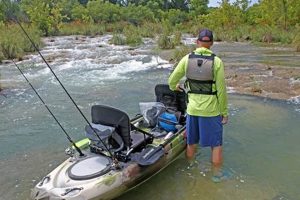
Elevated angling platforms designed for stability and hands-free fishing provide anglers with improved visibility, casting range, and leverage when battling fish. These specialized watercraft are typically wider and more stable than recreational kayaks, often featuring design elements such as outriggers or pontoon-style hulls. Specialized features like rod holders, tackle storage, and anchor trolleys further enhance the angling experience.
This approach to angling offers significant advantages. The elevated perspective allows for better sight fishing and improved casting accuracy. The stable platform allows anglers to easily change lures, land fish, and maneuver in various water conditions. The evolution of these watercraft reflects a growing demand for specialized equipment that enhances the sport fishing experience. Their development has been driven by innovations in materials and design, leading to increasingly stable, durable, and feature-rich platforms.
Further exploration will cover key features to consider when selecting an appropriate vessel for this style of fishing, including hull design, stability features, and specialized angling accessories. Additionally, the discussion will address techniques for safe and effective operation, including proper balance, paddling strategies, and anchoring methods.
Tips for Elevated Kayak Angling
Optimizing stability and safety is paramount when fishing from an elevated position on the water. Careful consideration of equipment and technique contributes significantly to a successful and enjoyable experience. The following tips provide guidance for maximizing performance and safety.
Tip 1: Prioritize Stability: Select a watercraft designed specifically for stand-up fishing. Wider hulls, outriggers, and pontoon-style designs enhance stability. Consider the intended fishing environment; calmer waters allow for less stable platforms.
Tip 2: Gradual Transition: Practice standing up and maneuvering in shallow, calm water before venturing into deeper or more challenging conditions. Gradually acclimate to the elevated perspective and the watercraft’s movement.
Tip 3: Proper Weight Distribution: Maintain a low center of gravity by bending the knees and keeping weight centered over the kayak. Avoid sudden movements or leaning too far in any direction.
Tip 4: Utilize a Paddle Leash: Secure the paddle to the vessel using a leash. This prevents loss of the primary means of propulsion in case of a fall.
Tip 5: Wear a Personal Flotation Device: A properly fitted personal flotation device (PFD) is essential for safety. Ensure it is comfortable and allows for a full range of motion while casting and reeling.
Tip 6: Anchor Appropriately: Use an anchor trolley system to control drift and maintain position in desired fishing areas. Ensure the anchor is properly sized and weighted for the water conditions.
Tip 7: Minimize Onboard Gear: Keep the deck clear of unnecessary gear. Organize tackle and equipment for easy access and to avoid tripping hazards.
By adhering to these guidelines, anglers can significantly improve their stability, safety, and overall fishing experience. Prioritizing safety and practicing proper techniques contributes to confidence and enjoyment on the water.
Mastery of these foundational elements allows anglers to fully appreciate the advantages of elevated angling and focus on the pursuit of their target species.
1. Stability

Stability forms the cornerstone of successful elevated kayak angling. Compromised stability negates the advantages of the elevated perspective, hindering casting accuracy and fish fighting effectiveness. The inherent instability of a kayak, exacerbated by standing, necessitates specific design considerations. A stable platform allows for confident maneuvering and reduces the risk of capsizing, particularly crucial when handling fish or navigating challenging water conditions. Consider, for example, the difference between attempting a hookset on a stable platform versus a wobbly one; the former allows for controlled power application, while the latter risks both angler and fish.
Several factors influence stability. Hull design plays a significant role; wider, flatter hulls generally provide greater initial stability. Outriggers and pontoon-style hulls offer secondary stability, enhancing the kayak’s resistance to tipping. Weight distribution also impacts stability; keeping weight low and centered minimizes the risk of capsizing. Understanding these factors enables informed decisions regarding kayak selection and on-the-water practices. For instance, anglers targeting larger species in open water would prioritize a kayak with maximal stability features, while those fishing calm, protected waters might opt for slightly less stable, more maneuverable designs.
Ultimately, prioritizing stability ensures safety and enhances the angling experience. A stable platform fosters confidence, allowing anglers to focus on fishing rather than maintaining balance. This understanding empowers informed equipment choices and promotes safe angling practices, contributing to a more enjoyable and productive experience on the water.
2. Balance

Balance is integral to the successful execution of elevated kayak angling. Maintaining equilibrium while standing on a relatively small, potentially unstable platform presents a unique challenge. This dynamic interplay between gravity, buoyancy, and angler movement requires constant adjustment and awareness. Failure to maintain balance compromises not only fishing effectiveness but also safety. Consider the scenario of hooking a powerful fish; a loss of balance during the fight could result in a missed opportunity or even a capsize. Conversely, a stable, balanced stance allows for controlled leverage and maximizes the angler’s ability to manage the fish.
Several factors influence balance on a fishing kayak. The kayak’s design, including hull shape and the presence of stability aids like outriggers, plays a crucial role. Environmental conditions such as wind and current also impact balance, requiring ongoing adjustments. Furthermore, the angler’s body position and weight distribution significantly influence stability. A low center of gravity, achieved by bending the knees and keeping weight centered over the kayak, enhances balance. Similarly, smooth, deliberate movements contribute to stability, whereas sudden shifts in weight can compromise equilibrium. For instance, an angler shifting weight to one side to reach for a dropped lure can create instability, highlighting the importance of maintaining a balanced stance.
Mastering balance on a fishing kayak enhances both safety and angling effectiveness. Improved stability translates to increased casting accuracy, more effective fish fighting, and a reduced risk of accidents. Understanding the factors influencing balance and practicing techniques to maintain equilibrium are essential for maximizing the benefits of elevated kayak angling. This knowledge empowers anglers to select appropriate equipment, adapt to changing conditions, and confidently enjoy the advantages of this specialized fishing approach.
3. Specialized Design

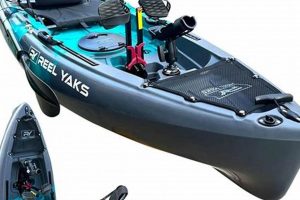
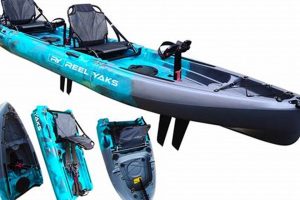
Specialized design differentiates fishing standing kayaks from recreational kayaks, optimizing them for stability, functionality, and the unique demands of elevated angling. This specialization manifests in several key areas. Hull design prioritizes stability, often featuring wider beams, flatter bottoms, and specialized features like pontoons or outriggers. These design elements counteract the inherent instability of standing on a kayak, providing a secure platform for casting, fighting fish, and maneuvering in various water conditions. Consider, for example, the difference between a narrow, V-shaped hull designed for speed and a wide, flat-bottomed hull designed for stability; the latter prioritizes stability required for stand-up fishing, while the former sacrifices stability for speed. Deck layout also plays a crucial role. Fishing standing kayaks typically feature spacious, uncluttered decks, optimized for movement and providing ample room for standing and casting. Recessed rod holders, strategically placed gear tracks, and integrated tackle storage systems enhance functionality and minimize the risk of tripping or entanglement. Compare this to a recreational kayak’s deck, often cluttered with bungee cords and limited space, unsuitable for the demands of elevated angling.
Furthermore, specialized design extends to features like elevated seating positions and integrated standing platforms. Elevated seats facilitate transitioning between sitting and standing, crucial for adapting to changing fishing conditions or reducing fatigue. Standing platforms offer designated areas optimized for balance and stability, providing a secure footing while sight fishing or casting. Consider an angler sight fishing in shallow water; an integrated standing platform provides a stable, elevated vantage point for spotting fish and executing precise casts, a functionality absent in standard recreational kayaks. The practical significance of this specialized design is clear. It enhances stability, improves functionality, and optimizes the angling experience, enabling anglers to fish more effectively and safely from an elevated position. This understanding allows for informed equipment choices, ensuring that the selected kayak aligns with the specific demands and preferences of elevated angling.
In summary, specialized design is paramount for fishing standing kayaks, distinguishing them from recreational models and optimizing them for the biomechanics and practicalities of elevated angling. From hull design and deck layout to specialized features like standing platforms and elevated seating, every aspect contributes to enhanced stability, improved functionality, and a safer, more effective angling experience. Understanding the connection between specialized design and elevated kayak angling empowers informed decision-making and enhances the overall on-the-water experience.
4. Elevated Perspective
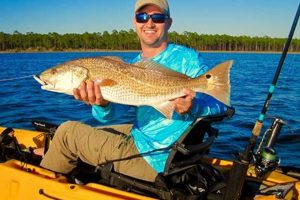
The elevated perspective afforded by a fishing standing kayak significantly alters the angling experience, offering distinct advantages over traditional seated positions. This elevated vantage point enhances sight fishing, improves casting accuracy and distance, and provides greater leverage when battling fish. The heightened viewpoint allows anglers to see deeper into the water, spot fish in shallow areas or around structure, and observe subtle surface disturbances that might otherwise go unnoticed. Imagine spotting a school of redfish tailing in shallow grass flats; from a seated position, the angler might only see the tips of their tails, while from an elevated position, the entire fish and its behavior become visible, allowing for a more targeted approach.
Improved casting accuracy and distance also result from the elevated perspective. The higher release point allows for a longer casting arc, resulting in greater distance and accuracy, particularly beneficial when targeting specific structure or presenting lures to wary fish. Consider casting to a submerged log in a fast-flowing river; the elevated perspective provides the angler with a clearer view of the target and allows for more precise placement of the lure, maximizing the chances of a successful presentation. Moreover, the elevated stance provides enhanced leverage when fighting fish. The angler can exert more pressure and maintain better control, reducing the risk of line breakage and increasing the likelihood of landing the fish. Picture battling a large tarpon; the elevated stance allows the angler to use their body weight and leverage more effectively, increasing the chances of successfully landing the powerful fish.
In summary, the elevated perspective inherent in fishing standing kayaks offers a significant advantage, impacting key aspects of the angling experience. From enhanced sight fishing and improved casting to increased leverage during fish fights, the elevated vantage point contributes directly to angling success. Understanding the practical significance of this elevated perspective empowers anglers to utilize the advantages effectively, maximizing their chances of a successful and rewarding fishing trip.
5. Casting Range
Casting range, a critical aspect of angling effectiveness, is significantly influenced by the elevated perspective offered by fishing standing kayaks. Maximizing casting distance allows anglers to cover more water, target distant structures, and present lures to fish beyond the reach of traditional seated positions. The connection between casting range and these specialized kayaks warrants detailed exploration.
- Biomechanics and Leverage
Standing provides an inherent biomechanical advantage, allowing anglers to utilize their entire body for generating casting power. The extended reach and higher release point contribute to a longer casting arc, translating directly to increased distance. This leverage advantage becomes particularly apparent when casting heavier lures or battling strong winds, scenarios where seated casting might prove limiting. Imagine casting a large swimbait into a strong headwind; the leverage provided by the standing position enables a more powerful cast, overcoming the wind resistance and delivering the lure to the target area.
- Improved Accuracy
While distance is important, accuracy is paramount. The elevated perspective enhances target visibility, allowing for more precise casts. This improved accuracy is crucial for presenting lures near structure, targeting specific fish, or working lures through complex cover. Consider presenting a fly to a rising trout in a crystal-clear stream; the elevated view allows the angler to precisely place the fly in the trout’s feeding lane, maximizing the chances of a successful presentation.
- Adaptability to Conditions
The ability to adjust casting range based on conditions is essential. Elevated kayak angling facilitates this adaptability. Anglers can easily transition between shorter, more controlled casts for close-quarters fishing and longer casts for covering open water or reaching distant targets. This adaptability is crucial in dynamic environments where conditions change frequently. For instance, an angler might use short, accurate casts when fishing tight to mangrove shorelines and then switch to longer casts when targeting fish schooling in open bays.
- Impact on Fishing Strategies
Extended casting range expands strategic options. Anglers can explore larger areas, target fish holding at greater distances, and utilize a wider variety of lures and techniques. This expanded capability opens up new possibilities for targeting specific species or exploiting particular feeding patterns. For example, an angler might use long casts with topwater lures to cover vast expanses of shallow flats, searching for predatory fish actively hunting baitfish.
In conclusion, casting range is intricately linked to the effectiveness of fishing standing kayaks. The elevated perspective, enhanced leverage, and improved accuracy contribute to a significant advantage, expanding strategic possibilities and maximizing angling success. Understanding this connection empowers anglers to leverage the full potential of their elevated fishing platform, leading to a more rewarding and productive experience on the water.
6. Hands-Free Fishing
Hands-free fishing, a significant advantage offered by the stability of fishing standing kayaks, enhances angling efficiency and safety. Maintaining a stable, upright posture frees an angler’s hands for essential tasks beyond simply holding a rod and reel. This capability streamlines various actions, from changing lures and adjusting tackle to landing fish and operating electronic devices. Consider the scenario of a hooked fish making a sudden run; a seated angler might struggle to manage the rod, reel, and net simultaneously, while an angler standing on a stable platform can maintain control of the rod with one hand and quickly grab the net with the other. This efficient multitasking enhances the likelihood of a successful landing.
Furthermore, hands-free operation contributes significantly to safety. In situations requiring quick reactions, such as navigating unexpected obstacles or responding to changing weather conditions, having both hands available is crucial. Imagine encountering a submerged log in a fast-flowing river; an angler fishing hands-free can quickly adjust the kayak’s course with a double-handed paddle stroke, avoiding a potential collision. Conversely, an angler holding a rod might struggle to react in time, increasing the risk of capsizing. The stability of fishing standing kayaks facilitates this hands-free capability, enhancing both efficiency and safety on the water.
In summary, the connection between hands-free fishing and fishing standing kayaks is fundamental to understanding the advantages of this angling approach. The stability provided by the kayak’s design enables anglers to perform essential tasks without compromising balance or safety, enhancing both efficiency and responsiveness in dynamic on-the-water environments. This understanding underscores the practical value of specialized kayak design and highlights its contribution to a more effective and secure angling experience.
Frequently Asked Questions
Addressing common inquiries regarding elevated kayak angling provides clarity and fosters informed decision-making. The following questions and answers offer insights into key aspects of this specialized fishing approach.
Question 1: Are specialized kayaks required for elevated angling?
While technically possible to stand on some recreational kayaks, specialized designs significantly enhance stability and safety. Purpose-built fishing standing kayaks incorporate features like wider hulls, outriggers, and standing platforms, optimizing them for elevated angling.
Question 2: How stable are fishing standing kayaks?
Stability varies depending on the specific design and features. Kayaks with wider beams, outriggers, or pontoon-style hulls offer greater stability than narrower designs. Environmental factors like wind and current also influence stability.
Question 3: What are the primary advantages of elevated kayak angling?
Elevated angling provides improved visibility for sight fishing, increased casting range and accuracy, and enhanced leverage when battling fish. The hands-free capability also facilitates tasks like changing lures and landing fish.
Question 4: Is experience required for elevated kayak angling?
Prior kayaking experience is beneficial but not strictly required. Beginners should practice in calm, shallow water before venturing into more challenging conditions. Gradual acclimation to the elevated perspective and the kayak’s movement is recommended.
Question 5: What safety precautions should be taken?
Wearing a personal flotation device (PFD) is crucial. A paddle leash prevents loss of the primary means of propulsion. Practicing self-rescue techniques and informing someone of fishing plans are also recommended safety measures.
Question 6: What factors should be considered when selecting a fishing standing kayak?
Factors to consider include hull design, stability features, weight capacity, storage options, and intended fishing environment. Evaluating these aspects ensures selection of a kayak appropriate for individual needs and preferences.
Careful consideration of these frequently asked questions equips individuals with essential knowledge for making informed decisions regarding elevated kayak angling. Prioritizing safety and understanding the nuances of this specialized fishing approach contributes to a more enjoyable and successful on-the-water experience.
Further exploration may include specific product recommendations, detailed technique guides, or advanced angling strategies related to elevated kayak fishing.
Fishing Standing Kayak
Elevated angling platforms offer distinct advantages, transforming the angling experience through enhanced visibility, increased casting range, and improved leverage. Specialized design considerations, including hull design, stability features, and integrated accessories, contribute significantly to both performance and safety. Understanding the interplay of balance, stability, and specialized equipment is crucial for maximizing the benefits and mitigating the inherent risks of this dynamic approach to fishing. From the selection process to on-the-water techniques, informed decision-making empowers anglers to confidently embrace the advantages of elevated perspectives.
As angling techniques evolve and technology advances, continued innovation promises further refinement of specialized watercraft. The pursuit of enhanced stability, increased functionality, and improved angler performance will likely drive future developments in this specialized segment of the fishing industry. Ultimately, the integration of thoughtful design and informed angling practices will continue to shape the evolution of elevated angling, enhancing the overall experience for anglers seeking new perspectives and innovative approaches to the sport.