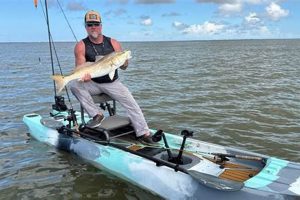
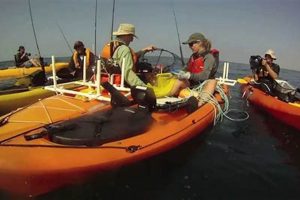
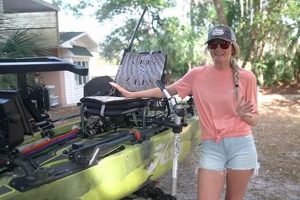
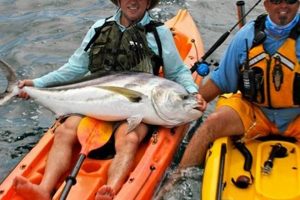
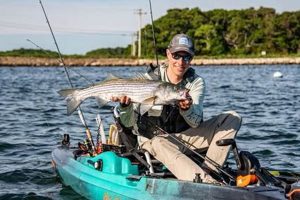
This specific type of watercraft designates a kayak designed for angling, measuring approximately 4.27 meters in length. This length generally offers a balance of stability, maneuverability, and storage capacity suitable for carrying fishing gear and navigating various waterways.
Vessels of this size often provide ample deck space for mounting rod holders, fish finders, and other specialized equipment. The length contributes to decent tracking performance, allowing anglers to cover greater distances efficiently. Compared to shorter kayaks, these vessels often offer improved speed and load capacity, valuable attributes for longer fishing trips or carrying heavier gear. Historically, the evolution of fishing kayaks has seen an increase in length to accommodate the growing demands of anglers for enhanced stability and storage.
The following sections will explore key aspects to consider when selecting a suitable watercraft for angling, including hull design, materials, propulsion systems, and essential features. Further discussion will delve into popular fishing techniques and suitable locations for employing these techniques with such a vessel.
Tips for Selecting and Utilizing a Fishing Kayak
Careful consideration of several factors contributes significantly to a successful and enjoyable fishing experience from a kayak.
Tip 1: Stability is Paramount: Prioritize stability, especially for anglers new to kayak fishing. Wider hulls generally offer greater stability, minimizing the risk of capsizing, particularly when casting or reeling in a catch. Consider kayaks designed with a flatter bottom for enhanced primary stability.
Tip 2: Evaluate Propulsion Options: Paddle propulsion provides a quiet, eco-friendly approach, ideal for stealthy maneuvering in shallow waters. Pedal-powered kayaks offer hands-free fishing and greater speed over longer distances, while motorized kayaks provide the fastest option for covering extensive areas.
Tip 3: Assess Storage Capacity: Ample storage is essential for carrying tackle boxes, rods, safety gear, and potential catches. Consider dry storage compartments for protecting sensitive electronics and personal belongings. Evaluate the layout and accessibility of storage areas for efficient organization.
Tip 4: Consider Comfort and Ergonomics: A comfortable seat with adjustable back support is crucial for extended fishing trips. Ensure adequate legroom and footrests for optimal paddling efficiency and comfort. Test the kayak’s seating before purchase, if possible, to ensure a proper fit.
Tip 5: Choose Appropriate Materials: Polyethylene kayaks offer durability and affordability, while composite materials like fiberglass and carbon fiber provide lighter weight and improved performance but often come at a higher cost. Consider the trade-offs between durability, weight, and budget.
Tip 6: Research Fishing Accessories: Explore rod holders, fish finders, and anchor trolleys designed to enhance fishing efficiency. Ensure compatibility with the chosen kayak model before purchasing accessories.
Tip 7: Prioritize Safety Equipment: Always wear a personal flotation device (PFD) and carry essential safety gear, including a whistle, signaling mirror, and first-aid kit. Inform someone of your fishing plans, including location and expected return time.
By carefully considering these factors, anglers can select a vessel optimized for their specific needs and fishing style, maximizing their chances of success and enjoyment on the water.
This comprehensive guide will now delve deeper into the specifics of hull design, propulsion systems, and essential features to further assist in making informed decisions.
1. Length and Stability

The relationship between length and stability is a critical consideration in kayak fishing, particularly for vessels approximately 14 feet long. This length presents specific advantages and challenges related to balance and maneuverability, influencing angler performance and safety. Understanding this interplay is fundamental to selecting and effectively utilizing a fishing kayak of this size.
- Center of Gravity and Balance
A longer kayak, such as a 14-foot model, possesses a lower center of gravity compared to shorter kayaks. This lower center of gravity contributes to increased stability, making it less prone to tipping. However, factors like weight distribution (gear and angler) still significantly influence balance. An unevenly loaded 14-foot kayak can become unstable despite its inherent length advantage.
- Primary and Secondary Stability
Primary stability refers to the initial resistance to tipping when the kayak is at rest, while secondary stability describes its resistance to capsizing when leaned. Fourteen-foot kayaks generally offer good primary stability due to their length and width. However, their secondary stability might be less pronounced than wider, shorter kayaks. Understanding this distinction is crucial for anglers engaging in activities that shift weight, such as casting or landing fish.
- Maneuverability and Tracking
While increased length enhances trackingthe ability to maintain a straight courseit can sometimes compromise maneuverability in tight spaces or swift currents. Fourteen-foot kayaks often require more effort to turn quickly compared to shorter models. This characteristic becomes particularly relevant when navigating narrow waterways or pursuing agile fish species.
- Impact of Water Conditions
The length and stability of a 14-foot kayak interact differently with varying water conditions. Calm, flat water generally presents fewer stability challenges, allowing the kayak’s length advantages to shine in terms of speed and tracking. However, in rougher waters or strong currents, the longer profile can become more susceptible to being pushed off course, demanding more effort to maintain control and balance.
In conclusion, a 14-foot fishing kayak offers a balance between stability and maneuverability. While the length contributes to a lower center of gravity and improved tracking, factors such as weight distribution and water conditions significantly influence overall stability. Anglers must consider these interconnected elements to optimize performance and ensure a safe and successful fishing experience on the water.
2. Hull Design

Hull design significantly influences a fishing kayak’s performance, particularly in the 14-foot length range. Understanding the nuances of various hull designs is crucial for anglers seeking to optimize stability, speed, maneuverability, and tracking performance. This section explores key hull design characteristics relevant to 14-foot fishing kayaks.
- Flat Bottom Hull
Flat bottom hulls offer exceptional primary stability, making them ideal for calm waters and activities requiring a stable platform, such as stand-up fishing. They provide excellent initial resistance to tipping but can feel less stable when leaned. This design prioritizes stability over speed and maneuverability, making it well-suited for anglers focused on stationary fishing in sheltered environments. However, in rougher water, flat bottom hulls can feel less predictable and responsive. In a 14-foot kayak, this design provides a stable platform for casting and reeling but may require more effort to maneuver in windy conditions.
- Rounded Hull
Rounded hulls excel in maneuverability and speed, making them suitable for paddling longer distances and navigating complex waterways. They offer a smoother, more efficient glide through the water compared to flatter designs. However, rounded hulls sacrifice some primary stability for increased performance. They are more susceptible to initial tipping but offer good secondary stability, allowing for dynamic leaning and turning. In a 14-foot kayak, a rounded hull provides efficient tracking and responsiveness but requires more attention to balance, particularly when standing.
- V-Shaped Hull
V-shaped hulls excel in tracking and cutting through chop and waves, making them suitable for open water and rougher conditions. The sharp entry point of the hull provides excellent directional stability and reduces the impact of waves. However, V-shaped hulls offer less primary stability than flatter designs. While offering a smoother ride in challenging conditions, they require more balance and core engagement from the angler. In a 14-foot kayak, this design facilitates covering longer distances in open water but necessitates careful weight management for optimal stability.
- Pontoon Hull
Pontoon hulls, characterized by two separate pontoons running the length of the kayak, provide exceptional stability, even surpassing flat bottom designs. This design is ideal for anglers prioritizing stability above all else, particularly those new to kayaking or requiring a stable platform for specific activities. While pontoon hulls excel in stability, they compromise speed and maneuverability. They are generally slower and less responsive than other hull designs. In a 14-foot kayak, a pontoon hull offers maximum stability for activities like stand-up fishing or photography but sacrifices speed and agility.
Selecting the appropriate hull design for a 14-foot fishing kayak depends on individual angling needs and preferences. Prioritizing stability, maneuverability, speed, or tracking influences the ideal choice. Considering the typical fishing environment (calm lakes, rivers, or open ocean) further refines the decision, ensuring a kayak optimally suited to specific conditions and angling styles. Ultimately, understanding the characteristics of each hull design empowers anglers to make informed choices, maximizing their on-water experience.
3. Propulsion Methods
Propulsion method selection significantly impacts the fishing experience within the context of a 14-foot kayak. This kayak length presents specific considerations regarding propulsion efficiency, maneuverability, and overall fishing effectiveness. Choosing between paddle, pedal, and motor propulsion involves evaluating trade-offs between speed, stealth, and physical exertion.
Paddle propulsion offers a traditional, quiet approach, advantageous for stealthy angling in shallow waters or areas with dense vegetation. However, paddling a 14-foot kayak over long distances can be physically demanding. Pedal-powered kayaks offer hands-free fishing and increased speed compared to paddling, reducing fatigue during longer trips. This propulsion method allows anglers to cover more water and maintain fishing focus. However, pedal drives can add complexity and cost. Motorized kayaks provide the greatest speed and range, enabling anglers to access distant fishing spots efficiently. The added weight and noise of a motor, however, can detract from the stealth and tranquility often desired in fishing environments. For instance, a bass angler in a shallow, vegetated area might prefer paddle propulsion for its quiet maneuverability, while an angler targeting offshore species might choose a motorized kayak to cover greater distances. An angler seeking a balance between speed and hands-free fishing would likely opt for a pedal drive.
The practical significance of understanding propulsion methods lies in optimizing fishing effectiveness and enjoyment. Choosing the appropriate propulsion system directly impacts an angler’s ability to reach desired fishing locations, cover water efficiently, and conserve energy for fishing. Matching the propulsion method to the fishing environment, target species, and personal physical capabilities ensures a more productive and satisfying experience on the water. Each method presents advantages and disadvantages related to speed, stealth, cost, maintenance, and environmental impact. Careful consideration of these factors within the context of a 14-foot kayak is crucial for maximizing angling success and overall enjoyment.
4. Storage Capacity

Storage capacity is a critical factor influencing the utility of a 14-foot fishing kayak. The ability to transport essential gear, including tackle, safety equipment, and potential catches, directly impacts fishing success and overall experience. This section examines key facets of storage capacity as they relate to 14-foot fishing kayaks.
- Types of Storage
Fishing kayaks typically offer various storage options, including front and rear hatches, tank wells, and side storage compartments. Hatches provide secure, waterproof storage for sensitive items like electronics and personal belongings. Tank wells, often located behind the seat, accommodate larger items like tackle crates or coolers. Side storage compartments offer quick access to frequently used items like pliers or lures. The specific configuration and accessibility of these storage areas significantly influence organizational efficiency and overall fishing practicality. A 14-foot kayak generally provides ample space for multiple storage options, allowing for diverse configurations tailored to individual angler needs.
- Weight Capacity and Distribution
Weight capacity dictates the total load a kayak can safely carry, encompassing angler weight, gear, and any potential catch. Exceeding the weight capacity compromises stability and performance. Proper weight distribution within the kayak is equally critical for maintaining balance and efficient paddling or pedaling. Evenly distributing gear within available storage compartments optimizes stability and prevents the kayak from becoming unbalanced. A 14-foot kayak’s length contributes to a higher weight capacity compared to shorter models, enabling anglers to carry more gear and larger catches. However, careful consideration of weight distribution remains essential for optimal performance and safety.
- Storage Integration and Accessibility
Storage integration refers to how seamlessly storage compartments are incorporated into the kayak’s overall design. Well-integrated storage maximizes usable space while minimizing interference with paddling or fishing activities. Accessibility refers to the ease with which stored items can be retrieved. Easy-to-open hatches and strategically placed compartments enhance on-water efficiency. In a 14-foot fishing kayak, storage integration and accessibility contribute significantly to a streamlined and productive fishing experience.
- Specialized Storage Solutions
Many fishing kayaks offer specialized storage solutions tailored to angling needs, such as rod holders, tackle management systems, and dedicated compartments for electronics or batteries. Rod holders secure fishing rods within easy reach while keeping them organized and out of the way. Tackle management systems provide designated spaces for lures, hooks, and other small items, promoting efficient organization and preventing tangles. Specialized storage enhances overall fishing efficiency and allows anglers to focus on the task at hand. In a 14-foot kayak, these features significantly improve on-water organization and streamline fishing processes.
Effective storage solutions are crucial for maximizing the utility of a 14-foot fishing kayak. The ability to securely and efficiently transport essential gear enhances fishing success and overall enjoyment on the water. By carefully considering storage capacity, type, integration, and specialized features, anglers can optimize their kayak’s functionality and create a more organized and productive fishing experience. The interplay between these storage aspects contributes significantly to a successful and enjoyable outing, transforming the 14-foot kayak into a well-equipped and efficient fishing platform.
5. Material Construction
Material selection significantly influences the performance, durability, and cost of a 14-foot fishing kayak. Understanding the properties of common kayak construction materialspolyethylene, fiberglass, and thermoformed compositesis essential for informed decision-making. Each material presents distinct advantages and disadvantages regarding weight, impact resistance, maintenance requirements, and overall lifespan. Choosing the appropriate material depends on individual needs, fishing style, and budgetary constraints.
Polyethylene kayaks are known for their durability and affordability. Rotational molding creates a seamless, highly impact-resistant hull capable of withstanding significant abuse. This materials resilience makes it well-suited for rocky shorelines or frequent transportation. However, polyethylene kayaks are heavier than those constructed from other materials, impacting portability and on-water performance. Fiberglass kayaks offer a lighter, stiffer hull compared to polyethylene, translating to improved speed and maneuverability. Fiberglass construction allows for more complex hull designs, optimizing performance for specific water conditions. However, fiberglass is more susceptible to damage from impacts and requires greater care during transport and storage. Thermoformed composite kayaks represent a higher-end option, utilizing advanced materials like ABS or ASA for enhanced durability and lighter weight compared to polyethylene. These kayaks often incorporate layers of different materials for optimized stiffness, impact resistance, and UV protection. The thermoforming process allows for precise hull shaping, maximizing performance characteristics. However, this construction method typically comes at a premium cost.
The material choice represents a critical balance between performance, durability, and cost. A 14-foot kayak intended for recreational fishing in calm lakes might prioritize polyethylene’s durability and affordability. An angler seeking enhanced performance in open water might opt for the lighter weight and responsiveness of fiberglass or thermoformed composites. Understanding the long-term implications of material choice is crucial. Polyethylene’s resilience minimizes maintenance, while fiberglass and composite kayaks require greater care to prevent damage. The chosen material directly impacts the kayak’s overall lifespan and long-term cost of ownership. An informed decision regarding material construction contributes significantly to a satisfying and productive fishing experience over the kayak’s lifespan.
6. Target Species
Target species significantly influence the selection and outfitting of a 14-foot fishing kayak. The specific fish sought dictates the necessary equipment, fishing techniques, and ideal kayak features. Understanding this interplay is crucial for optimizing fishing success and overall experience. This section explores the relationship between target species and the features of a 14-foot fishing kayak, emphasizing how specific fish influence equipment choices and angling strategies.
- Species Size and Fighting Strength
Larger, stronger fish like tuna or muskie require a kayak with enhanced stability and robust construction. A 14-foot kayak’s length contributes to stability, but additional features like a wider beam and reinforced hull further enhance its suitability for battling powerful fish. Targeting smaller species like panfish or trout allows for greater flexibility in kayak choice, with less emphasis on extreme stability.
- Habitat and Fishing Environment
Target species habitat directly influences kayak selection. Fishing in open ocean for pelagic species like tuna demands a kayak with excellent tracking and stability in rough water. A 14-foot kayak designed for open-water performance offers advantages in these conditions. Conversely, fishing in calm lakes or rivers for bass or crappie allows for a wider range of kayak choices, including those prioritizing maneuverability over open-water performance.
- Fishing Techniques and Equipment
Specific fishing techniques employed for different species dictate necessary kayak features. Trolling for large fish requires rod holders, downriggers, and ample storage for tackle. Fly fishing necessitates a stable platform for casting and retrieving. A 14-foot kayak offers sufficient space for mounting specialized equipment and accommodating diverse fishing techniques. Targeting specific species often involves tailored equipment choices that influence kayak selection.
- Range and Mobility Requirements
The range and mobility required to target specific species influence propulsion choices and storage capacity. Fishing for migratory species like striped bass might necessitate covering large distances, favoring a motorized or pedal-powered kayak. A 14-foot kayak provides ample space for battery storage or pedal drive systems. Conversely, fishing for localized species in smaller bodies of water might prioritize maneuverability, making a paddle-powered kayak more suitable. The target species’ behavior and distribution directly impact propulsion choices and storage needs.
Understanding the target species is fundamental to selecting and outfitting a 14-foot fishing kayak effectively. Matching kayak features to the specific fish sought ensures a more productive and enjoyable fishing experience. Species size, habitat, preferred fishing techniques, and mobility requirements all influence the ideal kayak configuration. A well-equipped 14-foot kayak, tailored to the target species, enhances angling success and transforms the kayak into a specialized fishing platform optimized for specific needs and conditions.
Frequently Asked Questions
This section addresses common inquiries regarding 14-foot fishing kayaks, providing concise and informative responses to assist in informed decision-making.
Question 1: What are the advantages of a 14-foot kayak for fishing?
Kayaks of this length offer a balance of stability, speed, and storage capacity suitable for various fishing environments and target species. The increased length contributes to improved tracking and often provides ample space for mounting fishing accessories.
Question 2: Are 14-foot kayaks suitable for beginners?
While manageable for beginners, these kayaks might present initial challenges regarding maneuverability compared to shorter models. Prior experience with kayaking or thorough pre-trip practice is recommended.
Question 3: What type of water is best suited for a 14-foot fishing kayak?
These kayaks perform well in calm lakes, slow-moving rivers, and sheltered coastal areas. While capable of handling moderate chop, they might be less suitable for extremely rough open-water conditions.
Question 4: What is the typical weight capacity of a 14-foot fishing kayak?
Weight capacity varies depending on the specific model and manufacturer but generally ranges from 350 to 500 pounds, including angler weight, gear, and potential catch.
Question 5: What essential features should one look for in a 14-foot fishing kayak?
Key features include comfortable seating, ample storage compartments, rod holders, transducer mounts, and a stable hull design suitable for the intended fishing style and environment.
Question 6: How does one transport a 14-foot kayak?
Transportation typically requires roof racks or a dedicated kayak trailer. Securing the kayak properly during transport is crucial for preventing damage or accidents. Considering transportation logistics before purchase is advisable.
Understanding these common aspects of 14-foot fishing kayaks assists potential buyers in making informed decisions based on individual needs and intended usage. Careful consideration of length, stability, and intended water conditions ensures a suitable kayak choice for optimal fishing experiences.
The following section will delve deeper into specific kayak models and brands, providing further guidance for prospective buyers.
Conclusion
Fourteen-foot fishing kayaks represent a versatile platform for diverse angling pursuits. Careful consideration of hull design, propulsion methods, storage capacity, material construction, and target species ensures optimal selection and utilization. Balancing stability, maneuverability, and load capacity remains crucial for maximizing on-water effectiveness and safety. Understanding the interplay between these factors empowers informed decisions, transforming the kayak into a personalized fishing platform.
The informed selection of a 14-foot fishing kayak unlocks diverse angling opportunities. Investing time in research and thoughtful consideration ultimately enhances fishing experiences, fostering a deeper connection with the aquatic environment.