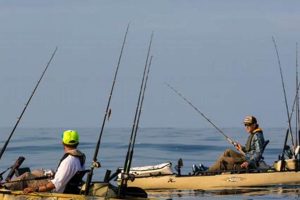
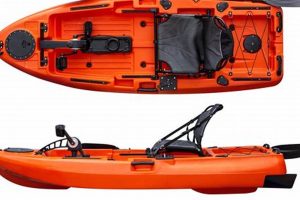
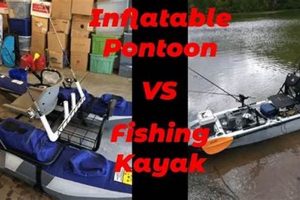
A tandem canoe designed specifically for angling typically features specialized attributes such as rod holders, elevated seating for enhanced visibility, and stability optimized for casting and reeling. Such watercraft are typically constructed from durable materials like aluminum, fiberglass, or specialized plastics to withstand the rigors of fishing environments.
Small, human-powered vessels like these offer a stealthy and versatile approach to angling, enabling access to shallow waters and secluded fishing spots often inaccessible to larger motorized boats. Their compact size simplifies transport and storage. Historically, canoes have played a crucial role in fishing traditions worldwide, providing a sustainable and efficient means of harvesting aquatic resources. Modern designs build upon this heritage, incorporating innovative features to enhance the fishing experience.
Further exploration will cover key topics including selecting the appropriate hull design and material, essential fishing accessories, safety considerations for open water angling, and recommended fishing techniques best suited for this type of watercraft.
Tips for Tandem Canoe Fishing
Successful fishing from a tandem canoe requires careful planning and execution. These tips offer guidance for a safe and productive experience.
Tip 1: Distribute Weight Evenly: Balanced weight distribution is crucial for stability. Gear should be positioned evenly throughout the canoe, with heavier items placed low and centrally. Shifting weight during casting or landing a fish should be minimized.
Tip 2: Practice Paddling and Maneuvering: Coordinated paddling is essential for efficient movement and control. Practice paddling strokes and maneuvering techniques in calm water before venturing into fishing areas.
Tip 3: Choose Appropriate Paddles: Paddle length and blade shape impact paddling efficiency. Select paddles appropriate for individual height and paddling style. Asymmetrical blades offer smoother strokes.
Tip 4: Utilize Anchor or Stake-Out Pole: Maintaining position in a chosen fishing spot requires an anchor or stake-out pole, especially in moving water or windy conditions.
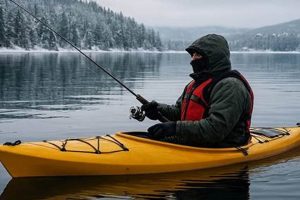
Tip 5: Wear Personal Flotation Devices: Safety should always be prioritized. Personal flotation devices (PFDs) are essential and should be worn at all times while on the water.
Tip 6: Be Mindful of Weather Conditions: Weather can change rapidly on the water. Check forecasts before embarking and be prepared for changes in wind, temperature, and precipitation.
Tip 7: Respect Wildlife and the Environment: Practice Leave No Trace principles. Pack out all trash and avoid disturbing natural habitats.
Tip 8: Communicate Effectively: Clear communication between paddlers is crucial, especially during fishing activities. Establish signals or verbal cues for maneuvering and handling fish.
Adhering to these guidelines will contribute to a more enjoyable and successful tandem canoe fishing experience. Preparation and mindful practice are key to maximizing enjoyment and minimizing risk.
By understanding the nuances of tandem canoe fishing, anglers can unlock a unique and rewarding way to connect with nature and pursue their passion.
1. Stability

Stability is a paramount concern in a two-person fishing canoe. A stable platform is essential for safe and effective angling, allowing occupants to cast, retrieve, and land fish without compromising balance. Instability can lead to capsizing, gear loss, and potentially dangerous situations, especially in challenging conditions such as wind, waves, or strong currents. The canoe’s hull design significantly influences its stability. Wider, flatter hulls generally offer greater initial stability, making them suitable for calmer waters and less experienced paddlers. However, they may be less maneuverable and susceptible to wind drift. Narrower, deeper hulls provide better tracking and performance in rougher conditions but require more experience to balance effectively. Consider a scenario where two anglers are fishing in a narrow, deep-hulled canoe. A sudden shift in weight, such as one angler leaning to net a fish, could easily destabilize the canoe if not carefully counterbalanced by the other occupant.
Several factors contribute to canoe stability beyond hull design. Weight distribution plays a crucial role. Evenly distributing gear and passengers within the canoe minimizes the risk of tipping. Low seating positions also enhance stability by lowering the center of gravity. Proper paddling technique is equally important. Synchronized and controlled paddle strokes maintain balance and prevent rocking. External factors like wind and waves can significantly impact stability. Anglers should be mindful of changing weather conditions and adjust their fishing strategies accordingly. For instance, in windy conditions, positioning the canoe perpendicular to the waves can improve stability. Understanding the interplay of these factors allows for informed decisions regarding canoe selection and safe operation.
Prioritizing stability in a two-person fishing canoe directly contributes to a safer and more productive fishing experience. By understanding the factors influencing stability and employing appropriate techniques, anglers can mitigate risks and maximize their enjoyment on the water. Choosing a canoe with a suitable hull design, maintaining proper weight distribution, and practicing sound paddling techniques are essential steps toward ensuring a stable and enjoyable fishing outing. A stable canoe allows anglers to focus on fishing rather than constantly battling to maintain balance, ultimately enhancing the overall experience.
2. Capacity
Capacity, concerning a two-person fishing canoe, signifies the maximum weight the vessel can safely carry. This encompasses the combined weight of occupants, fishing gear, and any additional cargo. Understanding and respecting capacity limitations is crucial for maintaining stability, ensuring safe operation, and preventing potentially hazardous situations on the water. Exceeding the specified capacity compromises buoyancy and increases the risk of capsizing, especially in adverse conditions.
- Weight Capacity:
Weight capacity, typically expressed in pounds or kilograms, represents the total weight a canoe can safely support. This figure encompasses the combined weight of all occupants, gear, and other items brought onboard. Manufacturers provide weight capacity ratings based on design and structural considerations. Ignoring these ratings can lead to instability, decreased freeboard (the distance between the waterline and the gunwale), and increased susceptibility to swamping or capsizing. A canoe overloaded with fishing gear, for instance, might sit dangerously low in the water, increasing the risk of taking on water over the gunwales, particularly in waves or choppy conditions.
- Person Capacity:
While designed for two individuals, person capacity considerations extend beyond simply the number of occupants. The combined weight of the two individuals must fall within the overall weight capacity of the canoe. Two larger individuals with substantial gear might exceed the weight capacity of a canoe designed for two average-sized persons. Furthermore, the distribution of weight between the two occupants also influences stability. Significant weight differences between paddlers can create uneven trim, potentially affecting maneuverability and increasing the risk of capsize.
- Gear Capacity:
Fishing gear, including rods, reels, tackle boxes, coolers, and other equipment, contributes significantly to the overall weight in a fishing canoe. Careful consideration must be given to the type and quantity of gear carried. Selecting lightweight, compact gear when possible can optimize capacity utilization. Efficient packing and distribution of gear within the canoe also contribute to maintaining balance and stability. Overpacking with unnecessary or bulky gear not only limits space but also compromises performance and safety.
- Volume Capacity:
Volume capacity, while not directly related to weight, plays a practical role in a two-person fishing canoe. The available space within the canoe dictates how much gear can be comfortably and securely stowed. Overcrowding the canoe with gear can impede movement, interfere with paddling, and create an unstable environment. Efficient organization and storage solutions, such as dry bags and specialized tackle organizers, can maximize available space and ensure gear remains accessible while minimizing clutter.
Careful consideration of these capacity-related factors is essential for a safe and successful fishing outing in a two-person canoe. Understanding the interplay between weight, persons, gear, and volume allows for informed decisions regarding gear selection, packing strategies, and overall trip planning. Respecting the manufacturer’s stated capacity limits is paramount for preserving stability, optimizing performance, and ensuring the safety of all occupants.
3. Maneuverability
Maneuverability in a two-person fishing canoe directly impacts its effectiveness and the overall fishing experience. Efficient movement and precise control are essential for navigating diverse water conditions, accessing secluded fishing spots, and responding effectively to changing circumstances. Restricted maneuverability can limit fishing opportunities and present challenges in currents, wind, or confined waterways. Understanding the factors influencing maneuverability enables informed decisions regarding canoe selection and paddling techniques.
- Hull Design:
Hull design significantly influences a canoe’s maneuverability. Shorter, wider hulls generally offer greater initial stability but sacrifice maneuverability and tracking. They tend to turn more slowly and require more effort to maintain a straight course, particularly in windy conditions. Longer, narrower hulls, while potentially less stable initially, excel in tracking and maneuverability, enabling quicker turns and more responsive handling. For example, a shorter, wider canoe might be suitable for calm ponds or slow-moving rivers where maneuverability is less critical. A longer, narrower design would be preferred for navigating winding streams or larger lakes with prevailing winds.
- Rocker:
Rocker refers to the curvature of the hull from bow to stern. Canoes with significant rocker, meaning a more pronounced upward curve at the ends, turn more easily but track less effectively in a straight line. Conversely, canoes with minimal rocker track well but require more effort to turn. Moderate rocker often provides a balance between maneuverability and tracking, suitable for a variety of fishing environments. A canoe with significant rocker would be advantageous for navigating tight turns in a winding creek, while a canoe with less rocker would be preferable for paddling across open water.
- Paddling Technique:
Effective paddling technique is paramount for maximizing maneuverability. Proper paddle strokes, including forward strokes, sweep strokes, and draw strokes, enable precise control of direction and speed. Coordinated paddling between two occupants is crucial for efficient movement and responsive maneuvering. Asymmetrical paddle blades, designed with a curved or dihedral shape, enhance stroke efficiency and control. Practice and coordination between paddlers are essential for executing maneuvers effectively, especially in challenging conditions like currents or wind.
- Water Conditions:
Water conditions, including current, wind, and obstacles, significantly impact maneuverability. Strong currents can challenge directional control, requiring precise paddle strokes and strategic positioning. Wind can push a canoe off course, necessitating corrective strokes and potentially affecting stability. Navigating around obstacles like rocks or submerged logs demands careful maneuvering and precise paddle control. Adapting paddling techniques and understanding how the canoe responds to various water conditions are essential for safe and effective navigation.
The interplay of these factors determines a fishing canoe’s maneuverability, influencing its suitability for specific fishing environments and angler preferences. Selecting a canoe with appropriate hull design and rocker characteristics, coupled with proficient paddling technique, allows anglers to navigate efficiently, access desired fishing locations, and respond effectively to changing water conditions. Optimized maneuverability enhances the overall fishing experience, allowing anglers to focus on fishing rather than struggling to control the canoe.
4. Portability
Portability significantly influences the practicality and accessibility of a two-person fishing canoe. Ease of transport and storage directly impacts where and how often the canoe can be used. Reduced portability limits access to remote or challenging-to-reach fishing locations, while enhanced portability expands fishing opportunities. Consider the difference between a lightweight, easily disassembled canoe that can be transported on a car rooftop versus a heavier, one-piece canoe requiring a trailer. The former expands access to remote lakes and ponds accessible only by rough terrain, while the latter might restrict usage to locations with boat ramps and trailer parking.
Several factors contribute to a canoe’s portability. Weight is a primary consideration. Lighter canoes are easier to handle and transport, requiring less effort for loading, unloading, and carrying. Material selection directly impacts weight. Aluminum canoes offer a balance between durability and weight, while composite materials like Kevlar or fiberglass provide lighter options but often at a higher cost. Hull design also influences portability. Shorter canoes are generally easier to manage than longer ones, especially in confined spaces. Detachable or foldable canoes offer ultimate portability, allowing for compact storage and transport in smaller vehicles. Consider a scenario where an angler frequently fishes small, secluded ponds accessible only by a narrow, overgrown trail. A lightweight, portable canoe enables access to these otherwise inaccessible fishing spots.
The practical significance of portability extends beyond simply reaching the water. Storage considerations also come into play. Compact storage solutions are essential for those with limited space. Detachable canoes, inflatable canoes, or those designed for nesting storage minimize required storage space. Choosing a canoe with appropriate portability features, aligned with individual needs and fishing goals, significantly enhances the overall fishing experience. Easy transport and convenient storage encourage more frequent usage, expanding fishing opportunities and maximizing enjoyment on the water. Ignoring portability limitations can lead to frustration, restricted access, and reduced enjoyment of the sport.
5. Specialized Features

Specialized features distinguish a two-person fishing canoe from a general-purpose canoe, optimizing it for angling activities. These features enhance functionality, efficiency, and the overall fishing experience. Consider the cause-and-effect relationship between integrated rod holders and angler convenience. Rod holders provide secure storage for fishing rods, freeing hands for paddling, baiting hooks, or landing fish. This direct correlation between specialized features and enhanced fishing functionality underscores their importance in a dedicated fishing canoe.
Several key specialized features contribute to a fishing canoe’s effectiveness. Integrated rod holders, as mentioned, are a prime example. Other features include anchor systems, allowing anglers to maintain position in a chosen fishing spot; storage compartments designed for tackle boxes and other fishing gear; and specialized seating designed for comfort and stability during long fishing outings. These features are integral components of a well-equipped fishing canoe. For instance, a livewell, designed to keep caught fish alive and fresh, is a specialized feature highly valued by anglers practicing catch-and-release or intending to consume their catch later. The absence of such a feature would necessitate alternative, potentially less effective methods of fish retention.
Understanding the practical significance of specialized features empowers informed decisions during canoe selection. Prioritizing features aligned with individual fishing styles and target species enhances efficiency and enjoyment on the water. Anglers targeting specific species might prioritize specialized features like mounting platforms for fish finders or trolling motor mounts. Recognizing the connection between specialized features and specific fishing techniques allows anglers to optimize their equipment choices and maximize their success on the water. A deep understanding of these features contributes to a more productive, comfortable, and ultimately, more rewarding fishing experience.
Frequently Asked Questions
This section addresses common inquiries regarding two-person fishing canoes, providing concise and informative responses to facilitate informed decision-making and enhance understanding of this specialized watercraft.
Question 1: What are the key advantages of a dedicated fishing canoe over a recreational canoe?
Dedicated fishing canoes offer features like rod holders, specialized seating, and enhanced stability designed specifically for angling. These features optimize fishing functionality and comfort compared to standard recreational canoes.
Question 2: How does one choose the correct size fishing canoe for two individuals?
Appropriate canoe size depends on the combined weight of occupants and gear, intended fishing environment, and desired performance characteristics. Consulting manufacturer specifications regarding weight capacity and considering factors like stability and maneuverability are essential.
Question 3: What materials are commonly used in the construction of fishing canoes, and how do they compare?
Common materials include aluminum, fiberglass, and various plastics. Aluminum offers durability and affordability, while fiberglass provides enhanced performance and lighter weight. Plastics offer varying degrees of durability and cost-effectiveness.
Question 4: What safety precautions should be taken when fishing from a two-person canoe?
Essential safety measures include wearing personal flotation devices, checking weather conditions before embarking, carrying essential safety equipment (whistle, bailer, first-aid kit), and adhering to safe paddling practices. Awareness of local regulations and navigation rules is also crucial.
Question 5: How does one maintain and store a fishing canoe properly?
Proper maintenance involves cleaning the canoe after each use, inspecting for damage, and addressing any necessary repairs promptly. Storage recommendations vary depending on material and climate, but generally involve storing the canoe upside down in a protected location, away from excessive sunlight and extreme temperatures.
Question 6: What are the essential accessories for a two-person fishing canoe?
Essential accessories include paddles appropriate for individual height and paddling style, personal flotation devices, an anchor or stake-out pole, fishing rods and reels, tackle boxes, and appropriate safety gear. Additional accessories might include fish finders, trolling motors, and specialized storage solutions.
Careful consideration of these frequently asked questions empowers informed decisions and contributes to safer and more productive fishing experiences in a two-person canoe.
The next section will delve into advanced techniques for tandem canoe fishing, including strategies for coordinated paddling, casting, and landing fish effectively from a two-person platform.
Fishing Canoe 2 Person
Careful consideration of factors like stability, capacity, maneuverability, portability, and specialized features is essential when selecting a fishing canoe designed for two occupants. Understanding these elements contributes significantly to optimized performance, enhanced safety, and a more rewarding angling experience. Balancing individual needs and preferences with the practical limitations of the chosen watercraft allows for informed decisions regarding vessel selection and usage. Proper maintenance and adherence to safety guidelines further contribute to long-term enjoyment and responsible use of these specialized vessels.
Effective use of a two-person fishing canoe hinges on a thorough understanding of its capabilities and limitations. Informed decision-making regarding vessel selection, coupled with responsible operation and maintenance practices, ensures not only a productive and enjoyable fishing experience but also the preservation of these valuable resources for future generations of anglers. Successful tandem canoe fishing requires a harmonious blend of skill, knowledge, and respect for the aquatic environment.