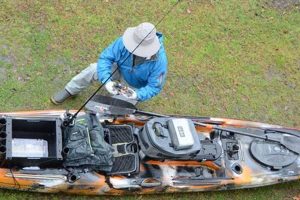
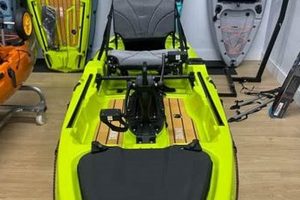
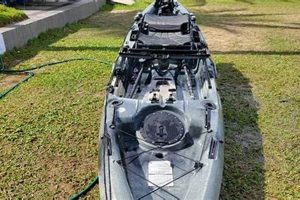
Kayaks designed specifically for angling often feature elevated seating positions. This design element provides anglers with improved visibility, casting range, and overall comfort, particularly during prolonged fishing trips. An example would be a kayak with a seat positioned several inches higher than traditional sit-inside kayak models, often incorporating adjustable features and specialized backrests.
Elevated seating offers several advantages. The improved vantage point allows for better sight fishing and more accurate casting. Furthermore, the higher position can ease strain on the back and legs, making long hours on the water more comfortable. Historically, fishing kayaks often adopted lower seating positions for stability. However, the growing demand for enhanced comfort and visibility led to the development of designs prioritizing raised seating, significantly improving the fishing experience.
The subsequent sections will delve deeper into specific aspects of these specialized watercraft, exploring design variations, material selection, stability considerations, and other factors influencing the overall performance and suitability for various fishing environments.
Tips for Elevated Kayak Fishing
Optimizing the advantages of kayaks designed for angling with raised seating requires careful consideration of various factors. The following tips offer guidance for enhancing stability, comfort, and fishing efficacy.
Tip 1: Prioritize Stability: Seat height influences a kayak’s center of gravity. Wider hulls and outriggers can enhance stability, particularly crucial in elevated seating designs. Testing stability before venturing into open water is essential.
Tip 2: Consider Seat Adjustability: Adjustable seats allow anglers to customize their position for optimal comfort and fishing effectiveness. The ability to adjust height and angle throughout the fishing trip can significantly reduce fatigue.
Tip 3: Select Appropriate Paddle Length: Paddle length should be adjusted to account for the higher seating position. A longer paddle may be required for efficient stroke mechanics and to maintain proper leverage.
Tip 4: Distribute Weight Evenly: Proper weight distribution is critical for maintaining balance and stability, especially in elevated positions. Distributing gear evenly throughout the kayak can prevent tipping or unwanted leaning.
Tip 5: Practice Entry and Exit Techniques: Entering and exiting a kayak with a higher seat requires careful consideration. Practicing these maneuvers in shallow water or with assistance can prevent accidental capsizing.
Tip 6: Choose a Suitable Backrest: Back support becomes increasingly important with elevated seating. Selecting a comfortable and supportive backrest can significantly reduce back strain during extended fishing trips.
Tip 7: Factor in Wind Conditions: Higher seating increases susceptibility to wind impact. Consider wind conditions and water currents when planning fishing trips and adjust positioning or anchoring strategies accordingly.
By adhering to these guidelines, anglers can maximize the benefits of higher seating positions while maintaining safety and comfort on the water. Proper preparation and attention to detail contribute significantly to a successful and enjoyable fishing experience.
Following these recommendations will facilitate informed decisions regarding equipment selection and on-the-water practices, ultimately contributing to a more productive and enjoyable fishing experience.
1. Elevated Vantage Point

A defining characteristic of high seat fishing kayaks is the elevated vantage point afforded to the angler. This higher seating position offers significant advantages for various aspects of the fishing experience, impacting visibility, casting mechanics, and overall comfort.
- Improved Sight Fishing
The elevated position allows anglers to see deeper into the water and cover a wider area. This enhanced visibility is particularly advantageous in shallow water or clear conditions where spotting fish is crucial. For example, anglers targeting bonefish in the flats or trout in a clear stream benefit greatly from the improved sightlines. This advantage translates to increased fishing success by allowing anglers to identify and target fish more effectively.
- Enhanced Casting Range and Accuracy
Sitting higher provides a greater arc for casting, allowing anglers to achieve longer casts and reach areas inaccessible from lower positions. This can be particularly beneficial when fishing in windy conditions or when targeting fish holding far from the kayak. Moreover, the elevated perspective can improve casting accuracy by providing a clearer view of the target area. This increased range and accuracy expands fishing opportunities and improves the chances of a successful hookup.
- Reduced Physical Strain
The higher seat position reduces strain on the back and legs, especially during long hours on the water. Traditional sit-in kayaks often require anglers to maintain a bent posture, which can lead to discomfort and fatigue. The elevated seating position promotes a more natural and comfortable posture, enabling anglers to fish for extended periods without experiencing undue physical stress. This increased comfort translates to longer and more enjoyable fishing trips.
- Enhanced Awareness of Surroundings
The higher perspective offers a better overall view of the surrounding environment, allowing anglers to better navigate through obstacles, identify potential hazards, and observe changes in water conditions or wildlife activity. This heightened awareness contributes to improved safety on the water and enhances the overall fishing experience by providing a broader perspective of the natural surroundings. For instance, an angler might be able to spot a submerged log or approaching boat more easily from a higher vantage point.
These interconnected benefits highlight the significant role of the elevated vantage point in optimizing the fishing experience from a high seat kayak. By providing improved visibility, casting capabilities, comfort, and situational awareness, these kayaks enhance fishing effectiveness and overall enjoyment on the water. This design feature allows anglers to maximize their time on the water and focus on the pursuit of their target species.
2. Enhanced Casting

Enhanced casting performance represents a significant advantage offered by high seat fishing kayaks. The elevated seating position inherent in these designs directly influences casting mechanics, leading to improved distance, accuracy, and overall effectiveness. The higher vantage point provides an extended casting arc, allowing for longer casts with less effort. This is particularly beneficial when targeting fish at a distance or when fishing in challenging environments such as windy conditions or areas with overhanging vegetation. Additionally, the elevated perspective allows for a clearer view of the target area, facilitating more precise casting and reducing the likelihood of snags or missed targets. For example, anglers targeting redfish in shallow flats can benefit significantly from the enhanced casting distance and accuracy afforded by a high seat kayak.
The impact of enhanced casting extends beyond simply reaching distant targets. Improved accuracy contributes to a more efficient fishing experience by reducing wasted casts and minimizing disturbances in the fishing area. This is particularly important in situations where stealth is crucial, such as when targeting wary species like trout or bonefish. Furthermore, the increased casting range afforded by high seat kayaks opens up access to fishing grounds that might be unreachable from lower seating positions. This expanded reach can be advantageous in diverse fishing environments, from large lakes and rivers to shallow coastal flats and estuaries. For anglers specializing in techniques like fly fishing or lure casting, the improved casting dynamics offered by a high seat kayak can be a game-changer.
In summary, the connection between enhanced casting and high seat fishing kayaks is integral to the overall performance and effectiveness of these specialized watercraft. The elevated seating position directly translates to improvements in casting distance, accuracy, and efficiency. This advantage provides anglers with greater control over their fishing presentation, expands access to fishing grounds, and ultimately increases the likelihood of a successful fishing experience. Understanding the biomechanics involved and selecting appropriate gear further optimizes casting performance and contributes to maximizing the advantages offered by these specialized kayaks.
3. Improved Comfort

Comfort is a crucial factor influencing the overall enjoyment and duration of fishing trips. High seat fishing kayaks address this concern by offering design features that prioritize angler comfort, promoting extended time on the water and reduced physical strain. The elevated seating position contributes significantly to this improved comfort, impacting posture, stability, and overall physical well-being during extended fishing sessions. Understanding the elements contributing to this enhanced comfort is essential for selecting and effectively utilizing these specialized kayaks.
- Reduced Back Strain
Traditional sit-in kayaks often require anglers to maintain a bent posture, placing strain on the lower back over time. The higher seating position in specialized fishing kayaks promotes a more upright and natural posture, minimizing back strain and fatigue. This ergonomic advantage allows for longer fishing trips without the discomfort associated with prolonged sitting in lower positions. For anglers with pre-existing back conditions, this feature can be particularly beneficial.
- Improved Legroom and Circulation
The elevated seat design often provides increased legroom compared to traditional kayaks. This added space allows for greater freedom of movement and improved circulation in the legs, reducing stiffness and discomfort. Anglers can adjust their leg position more easily, promoting blood flow and preventing cramps or numbness during extended periods on the water. This enhanced comfort is particularly noticeable during long fishing trips or in colder weather conditions.
- Enhanced Stability and Balance
While counterintuitive, the higher center of gravity in high seat kayaks can, when combined with appropriate hull design, actually contribute to improved stability. Wider hulls and outriggers compensate for the elevated seating position, providing a stable platform for casting, reeling, and landing fish. This enhanced stability reduces the risk of tipping and increases angler confidence, particularly in challenging conditions such as choppy water or strong currents. The improved stability also facilitates easier movement within the kayak, enhancing overall comfort and reducing the risk of fatigue.
- Customization and Adjustability
Many high seat fishing kayaks offer adjustable seating systems, allowing anglers to customize the seat height, angle, and backrest position for optimal comfort and support. This customization caters to individual preferences and physical needs, ensuring a comfortable and personalized fishing experience. Adjustable features may include sliding tracks, reclining backrests, and adjustable foot braces, enabling anglers to fine-tune their seating position for maximum comfort and fishing efficiency throughout the day.
These elements of improved comfort, facilitated by the design features of high seat fishing kayaks, contribute significantly to the overall enjoyment and effectiveness of the fishing experience. By reducing physical strain, promoting better posture, and enhancing stability, these specialized kayaks enable anglers to spend more time on the water focused on fishing, rather than battling discomfort. The integration of these comfort-enhancing features underscores the emphasis on angler well-being in modern kayak design, contributing to a more accessible, enjoyable, and ultimately successful fishing experience.
4. Stability Considerations
Stability is a paramount concern in kayak design, particularly for high seat fishing kayaks. The elevated seating position inherently raises the center of gravity, increasing the potential for instability. Consequently, manufacturers employ various design strategies to mitigate this effect and ensure a safe and comfortable fishing experience. Wider hulls, for instance, provide a larger base of support, enhancing primary stability (resistance to initial tipping). Outriggers and pontoon systems further augment stability, particularly secondary stability (the ability to recover from a significant lean). Understanding the interplay between center of gravity and hull design is crucial for anglers choosing a high seat kayak. For example, an angler fishing in calm, protected waters might prioritize maneuverability over extreme stability, opting for a narrower hull with a moderately high seat. Conversely, an angler fishing in rougher conditions or open ocean would likely prioritize stability, choosing a wider, more stable platform even at the expense of some maneuverability.
Beyond inherent design features, factors such as weight distribution and angler behavior also influence stability. Properly distributing gear and equipment within the kayak is essential to maintain balance and prevent excessive leaning. Avoid sudden movements or shifting weight abruptly, as these actions can compromise stability and increase the risk of capsizing. Anglers should practice entering and exiting the kayak in shallow water or with assistance to familiarize themselves with the higher center of gravity and develop safe techniques. Furthermore, understanding the impact of environmental factors such as wind and current is crucial. High seated kayaks are more susceptible to windage, particularly side winds. Anglers should anticipate these effects and adjust their paddling technique or seek sheltered areas when necessary. In practical terms, this knowledge allows anglers to make informed decisions about where and how they fish, maximizing safety and enjoyment on the water. Consider the scenario of an angler fishing from a high seat kayak in a strong crosswind. Understanding the impact of windage allows the angler to anticipate the drift and adjust paddling technique or anchoring strategy accordingly, maintaining better control and preventing unintended drifting into hazardous areas.
In conclusion, stability considerations are integral to the design and utilization of high seat fishing kayaks. Elevated seating presents inherent stability challenges, necessitating careful design choices and user awareness. By understanding the factors that influence stability including hull design, weight distribution, angler behavior, and environmental conditions anglers can make informed decisions about kayak selection and on-the-water practices. This knowledge contributes significantly to a safer, more comfortable, and ultimately more successful fishing experience, enabling anglers to confidently enjoy the benefits of elevated seating without compromising stability or safety. Ultimately, the successful integration of stability considerations allows for the full realization of the advantages offered by high seat fishing kayaks: improved visibility, enhanced casting performance, and increased comfort, all while ensuring a safe and enjoyable experience on the water.
5. Specialized Design

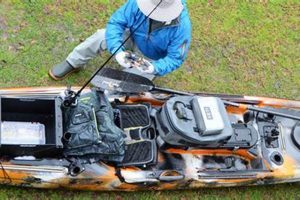
Specialized design differentiates high seat fishing kayaks from recreational models, optimizing them for angling effectiveness and comfort. This specialization manifests in several key features directly impacting functionality and user experience. Integrated rod holders, strategically positioned for easy access and secure rod storage, exemplify this design focus. Gear tracks, enabling modular customization with fish finders, GPS units, and other accessories, further enhance utility. Specialized storage compartments, designed to accommodate tackle boxes, dry bags, and other fishing essentials, contribute to organized and efficient angling. These features demonstrate a design philosophy prioritizing the specific needs of anglers. Consider, for example, a kayak designed for fly fishing. Recessed rod holders protect longer fly rods during transport and paddling, while strategically placed gear tracks allow for mounting fly tying stations or other specialized equipment. Similarly, kayaks designed for trolling might feature integrated downrigger mounts and larger storage compartments for accommodating heavier tackle and larger catches. These tailored designs reflect a deep understanding of diverse fishing styles and their respective equipment requirements.
The practical significance of specialized design becomes evident on the water. Efficient access to rods and tackle reduces time spent fumbling with equipment, maximizing fishing time. Secure rod storage minimizes the risk of losing valuable gear during transport or unexpected maneuvers. Ergonomically designed seating systems, often adjustable to accommodate various body types and fishing styles, enhance comfort and reduce fatigue during long hours on the water. Furthermore, specialized hull designs cater to specific fishing environments. Stable, flat-bottomed hulls are ideal for calm lakes and ponds, while longer, V-shaped hulls provide better tracking and performance in rivers or open water. These specialized design elements synergistically enhance the overall fishing experience, improving efficiency, comfort, and ultimately, success. For instance, a kayak designed for shallow water fishing might feature a shallow draft hull that allows access to areas inaccessible to deeper draft vessels, while also incorporating a stand-assist strap to facilitate sight fishing while standing.
In conclusion, specialized design is integral to the functionality and effectiveness of high seat fishing kayaks. These design elements cater specifically to the needs of anglers, optimizing performance, comfort, and overall fishing success. Understanding the purpose and benefits of these specialized features empowers anglers to choose kayaks best suited to their individual fishing styles and target species, enhancing their overall experience on the water. The continuous evolution of kayak design reflects ongoing efforts to refine and enhance these specialized features, further blurring the lines between recreational paddling and dedicated fishing platforms and offering anglers increasingly sophisticated and effective tools for pursuing their passion.
6. Targeted fishing applications
The design of high seat fishing kayaks directly correlates with targeted fishing applications. Specific design features cater to diverse fishing styles and environments, influencing kayak selection. For instance, kayaks intended for freshwater lake fishing might prioritize stability and storage capacity for tackle and gear, while those designed for ocean fishing often incorporate features for enhanced stability in rougher conditions and potentially even rod holders specifically designed for larger saltwater rods and reels. Kayaks targeting river fishing might prioritize maneuverability and tracking performance in currents, potentially featuring a rudder or skeg system. These targeted designs underscore the importance of aligning kayak selection with specific fishing applications. Choosing a kayak designed for the intended fishing environment and style maximizes efficiency, comfort, and ultimately, success on the water. For example, an angler targeting bass in a shallow, weedy lake would benefit from a stable kayak with a shallow draft and ample storage for tackle and lures. Conversely, an angler targeting tuna in the open ocean requires a kayak prioritizing stability in rough conditions, speed, and features like rod holders designed for heavy-duty saltwater fishing gear.
Understanding the connection between targeted fishing applications and kayak design empowers anglers to make informed purchasing decisions. Considering factors such as target species, fishing environment, and preferred fishing techniques allows for selection of a kayak optimized for individual needs. This informed approach enhances the overall fishing experience, contributing to increased comfort, efficiency, and effectiveness on the water. Further considerations include the type of fishing practiced, such as fly fishing versus trolling. Fly fishing often requires specialized storage for fly boxes and potentially even a standing platform for casting, while trolling necessitates features like rod holders designed for downriggers and increased storage capacity for larger catches. Recognizing these nuanced design elements tailored to specific fishing applications is crucial for maximizing the kayak’s utility and the angler’s overall success.
In conclusion, the relationship between targeted fishing applications and high seat fishing kayak design is fundamental to successful angling. Specialized design features cater to specific fishing styles and environments, enhancing both comfort and effectiveness. By carefully considering individual fishing needs and understanding the design features that address those needs, anglers can select kayaks that optimize their experience on the water. This informed decision-making process contributes not only to increased fishing success but also to a more comfortable, efficient, and enjoyable time spent pursuing one’s passion. Ultimately, this connection emphasizes the importance of viewing kayak selection not as a one-size-fits-all proposition, but rather as a process of matching specific design features to targeted fishing applications, thereby maximizing the benefits of this versatile and increasingly popular fishing platform.
7. Accessibility Variations
Accessibility variations in high seat fishing kayaks address the diverse needs of anglers with varying physical abilities, ensuring inclusivity and promoting equal access to the sport. These adaptations focus on facilitating easier entry and exit, enhanced stability, and adaptable seating arrangements, enabling a wider range of individuals to experience the benefits of kayak fishing. Understanding these variations is crucial for promoting inclusivity and ensuring that kayak fishing remains accessible to everyone.
- Adaptive Seating Systems
Standard kayak seats may not provide adequate support or comfort for all individuals. Adaptive seating systems offer customized support and adjustability, catering to specific needs and preferences. Examples include seats with enhanced lumbar support, adjustable backrests, and customizable cushioning. These adaptations can significantly improve comfort and reduce strain for anglers with back problems, mobility limitations, or other physical considerations. Specialized seating systems contribute to a more inclusive and enjoyable fishing experience, allowing individuals with diverse physical needs to participate comfortably.
- Modified Entry and Exit Points
Entering and exiting a kayak can be challenging, particularly for individuals with limited mobility. Wider cockpits, slide-in seats, and strategically placed grab handles facilitate easier entry and exit. These modifications minimize the physical strain and risk of falls associated with traditional kayak entry and exit methods. For example, a kayak with a side entry allows anglers to sit down on the seat first and then swing their legs into the cockpit, eliminating the need to step over the gunwale. These adaptations broaden access to kayak fishing, enabling participation from individuals who might otherwise find it difficult or impossible.
- Enhanced Stability Features
Stability is a crucial factor for all kayakers, but especially for those with balance concerns or mobility limitations. Wider hulls, outriggers, and pontoon systems provide enhanced stability, minimizing the risk of tipping and increasing angler confidence. These features allow individuals with varying levels of balance and coordination to feel secure and comfortable on the water. For example, outriggers provide additional lateral stability, reducing the likelihood of tipping in rough conditions or during sudden movements. This enhanced stability fosters a sense of security and allows anglers to focus on fishing rather than worrying about balance.
- Adaptive Paddling Equipment
Standard paddles may not be suitable for all individuals. Adaptive paddling equipment, such as lighter paddles, ergonomic grips, and specialized paddle floats, caters to varying levels of strength and dexterity. These modifications enable individuals with limited upper body strength or hand mobility to paddle effectively and comfortably. For example, lightweight paddles reduce fatigue, while ergonomic grips improve comfort and reduce strain on wrists and hands. These adaptations further expand access to kayak fishing by accommodating a wider range of physical capabilities.
These accessibility variations highlight the growing emphasis on inclusivity within the kayak fishing community. By addressing the diverse needs of anglers with varying physical abilities, manufacturers are expanding access to the sport and ensuring that everyone can enjoy the benefits of high seat fishing kayaks. These adaptations not only enhance comfort and safety but also promote a sense of independence and empowerment, allowing individuals of all abilities to experience the joys of kayak fishing. Continued development and innovation in accessible kayak design will further broaden participation and foster a more inclusive and welcoming environment for all anglers.
Frequently Asked Questions
This section addresses common inquiries regarding kayaks designed for angling with elevated seating, offering concise and informative responses.
Question 1: How does seat height impact stability?
Elevated seating raises the center of gravity, potentially impacting stability. However, manufacturers compensate for this by incorporating design features such as wider hulls, outriggers, and pontoon systems to enhance stability. Individual angler behavior and weight distribution also influence overall stability.
Question 2: Are high seat kayaks suitable for all body types and physical conditions?
Adaptive seating systems and modified entry/exit points accommodate diverse physical needs. Kayaks with adjustable seats, wider cockpits, and enhanced stability features cater to a broader range of anglers, including those with mobility limitations or other physical considerations.
Question 3: What are the advantages of elevated seating for fishing?
Elevated seating improves visibility for sight fishing, enhances casting range and accuracy, and reduces physical strain during longer fishing trips. The higher vantage point provides a better overall perspective of the surrounding environment, improving navigation and safety.
Question 4: Do high seat kayaks require specialized paddling techniques?
While fundamental paddling techniques remain consistent, adjustments for the higher center of gravity and potential windage may be necessary. Practicing in calm conditions before venturing into challenging environments is recommended.
Question 5: How does one choose the right high seat fishing kayak?
Consider individual fishing styles, target species, and typical fishing environments. Factors such as stability requirements, storage capacity, and desired features (e.g., rod holders, gear tracks) influence kayak selection.
Question 6: Are high seat kayaks more difficult to transport than traditional kayaks?
Weight and dimensions vary significantly among models. Consider vehicle capacity and available storage space when selecting a kayak. Roof racks, trailers, and other transportation aids can facilitate transport.
Careful consideration of these factors ensures informed decision-making regarding kayak selection and utilization, optimizing the fishing experience and promoting safety on the water.
The subsequent section offers an in-depth exploration of various high seat fishing kayak models available on the market, providing detailed specifications and comparative analyses to aid in the selection process.
High Seat Fishing Kayak
High seat fishing kayaks represent a significant advancement in angling technology, optimizing the fishing experience through enhanced comfort, improved visibility, and specialized design features. The elevated seating position, while requiring careful consideration of stability factors, offers distinct advantages for sight fishing, casting performance, and overall physical well-being during extended outings. Specialized design elements, including integrated rod holders, gear tracks, and ample storage, further enhance functionality and cater to diverse fishing styles. The availability of accessibility variations underscores the growing emphasis on inclusivity within the sport, enabling anglers of all abilities to experience the benefits of this innovative kayak design. From calm lakes to open ocean environments, high seat fishing kayaks provide a versatile and effective platform for pursuing a variety of fishing disciplines.
Continued innovation in kayak design and technology promises further refinement of high seat fishing kayaks, enhancing performance, comfort, and accessibility. As angler awareness of the benefits of elevated seating grows, these specialized kayaks will likely play an increasingly prominent role in the future of the sport, further bridging the gap between traditional fishing boats and human-powered watercraft. The evolution of high seat fishing kayaks reflects a broader trend towards specialization and customization within the angling community, empowering anglers to pursue their passion with greater comfort, efficiency, and success. Careful consideration of individual needs and preferences remains paramount in selecting the optimal kayak, ensuring a rewarding and enriching experience on the water.