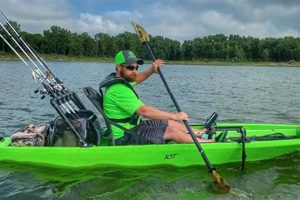
This activity involves the use of a small, portable, air-filled watercraft for angling. Imagine casting a line for bass from a lightweight vessel easily transported in the trunk of a car and quickly inflated at the water’s edge. This exemplifies the core concept.
The portability and affordability of these vessels have broadened access to angling opportunities, particularly in locations inaccessible to larger, traditional boats. Historically, fishing was often limited by the logistical challenges of transporting boats. This method offers a solution, enabling anglers to explore previously unreachable waters, from remote ponds and small rivers to protected coastal areas. This accessibility is a significant advantage, promoting the enjoyment of the sport across a wider range of individuals and environments.
Exploring the nuances of this angling method requires a closer examination of several key areas, including suitable kayak selection, essential gear and safety precautions, effective fishing techniques from these platforms, and responsible practices for minimizing environmental impact. These topics will be further elaborated upon below.
Tips for Kayak Fishing
Effective angling from inflatable kayaks requires careful consideration of several factors. The following tips offer guidance for a safe and productive experience.
Tip 1: Choose the Right Kayak: Kayak selection depends on the intended fishing environment (calm lakes versus flowing rivers) and angler preferences. Consider factors like length, width, and weight capacity. Longer kayaks track better in open water, while shorter, wider kayaks offer greater stability.
Tip 2: Prioritize Safety Equipment: Always wear a personal flotation device (PFD). Carry a whistle, signaling device, and first-aid kit. Check weather forecasts before embarking and inform someone of your planned location and return time.
Tip 3: Pack Essential Gear Efficiently: Utilize dry bags to protect electronics and other sensitive items. Distribute weight evenly within the kayak for optimal balance and stability. Consider using a kayak crate or storage system for organized tackle and gear access.
Tip 4: Master Basic Paddling Techniques: Efficient paddling conserves energy and allows for precise maneuvering. Practice different strokes for navigating various water conditions.
Tip 5: Employ Appropriate Anchoring Strategies: A properly set anchor prevents drifting and maintains position in desired fishing locations. Choose an anchor suitable for the bottom type and water depth.
Tip 6: Adapt Fishing Techniques: Utilize tackle and techniques suited to kayak fishing, such as shorter rods and lighter lines. Practice casting from a seated position and learn how to land fish safely in the confined space of a kayak.
Tip 7: Respect the Environment: Adhere to “Leave No Trace” principles. Pack out all trash, avoid disturbing wildlife, and respect fishing regulations. Be mindful of other water users.
By following these guidelines, anglers can significantly enhance their on-the-water experience, ensuring both safety and fishing success while preserving the natural environment. These essential tips will be further elaborated upon in the concluding sections.
The following section will offer a concluding summary of key principles and encourage further exploration of resources for responsible and enjoyable kayak angling.
1. Kayak Selection
Kayak selection significantly influences the effectiveness and enjoyment of inflatable kayak fishing. The chosen vessel must align with the specific fishing environment and angler’s needs. Consider, for instance, an angler targeting largemouth bass in a small, weedy pond. A shorter, wider kayak offering enhanced stability and maneuverability proves advantageous for navigating tight spaces and casting accurately. Conversely, an angler pursuing offshore species requires a longer, narrower kayak designed for tracking efficiently in open water and handling choppier conditions. The connection between kayak selection and fishing success is direct; an inappropriate choice can hinder maneuverability, limit access to desired fishing spots, and compromise stability, potentially leading to capsizing.
Several factors merit careful consideration during the selection process. Hull design (sit-on-top versus sit-inside) influences stability and access to gear. Weight capacity dictates the amount of gear and anglers the kayak can safely accommodate. Material durability directly impacts the kayak’s resistance to punctures and abrasion from rocks or other submerged obstacles. Furthermore, features like integrated rod holders, anchor trolleys, and storage compartments enhance fishing functionality and organization. Evaluating these aspects against the intended fishing environment and personal preferences ensures optimal performance and enjoyment.
Ultimately, selecting the appropriate inflatable kayak transforms a potentially frustrating outing into a productive and enjoyable experience. A well-chosen vessel expands angling opportunities, facilitates access to diverse fishing locations, and enhances overall fishing performance. Neglecting careful consideration of these selection factors can lead to instability, limited access, and reduced fishing success, underscoring the critical connection between kayak selection and achieving the full potential of inflatable kayak fishing.
2. Safety Gear

Safety gear is paramount when fishing from an inflatable kayak. The inherent instability of these vessels, coupled with the often remote locations they allow access to, necessitates careful consideration of potential hazards and appropriate safety precautions. Overlooking these precautions can transform a leisurely fishing trip into a life-threatening situation. Understanding and utilizing essential safety equipment significantly mitigates risks and ensures a safe and enjoyable experience.
- Personal Flotation Device (PFD)
A PFD is non-negotiable. It provides essential buoyancy in the event of capsizing or accidental immersion, particularly crucial in cold water or strong currents. A properly fitted PFD should be worn at all times while on the water, regardless of perceived swimming ability. Inflatable PFDs offer greater comfort for extended wear but require regular inspection and maintenance to ensure proper functionality in an emergency.
- Signaling Devices
Communication devices are crucial for summoning assistance in emergencies. A whistle attached to the PFD allows for audible signaling in case of separation or distress. A waterproof VHF radio enables direct communication with the Coast Guard and other boaters, facilitating rapid response in emergencies. Visual distress signals, such as flares or a signal mirror, further enhance visibility and increase the likelihood of rescue.
- First-Aid Kit
Minor injuries, such as hook punctures or cuts, are common occurrences while fishing. A comprehensive first-aid kit containing essential supplies like antiseptic wipes, bandages, pain relievers, and motion sickness medication allows for immediate treatment of minor injuries and ailments, preventing escalation and ensuring continued comfort on the water. Knowledge of basic first-aid procedures is essential for effective utilization of these supplies.
- Float Plan and Communication
Informing someone on shore of the planned fishing location, estimated return time, and emergency contacts provides a critical safety net. This float plan allows for prompt initiation of search and rescue efforts if the angler fails to return as scheduled. Regular communication updates via cell phone or VHF radio further enhance safety by providing ongoing location information and status updates.
These safety precautions, when implemented collectively, create a comprehensive safety net for inflatable kayak anglers. Neglecting these measures significantly increases the risk of accidents and jeopardizes angler safety. Prioritizing safety ensures not only a more secure experience but also allows anglers to fully enjoy the tranquility and rewards of fishing from an inflatable kayak.
3. Efficient Packing

Efficient packing is crucial for inflatable kayak fishing, directly impacting stability, safety, and overall fishing success. A poorly packed kayak can become unstable, hindering maneuverability and increasing the risk of capsizing. Furthermore, disorganized gear impedes efficient access to essential equipment, disrupting fishing flow and potentially leading to missed opportunities. Methodical packing optimizes space utilization, ensures readily accessible gear, and maintains kayak balance, contributing significantly to a safe and productive fishing experience.
- Weight Distribution
Proper weight distribution is fundamental for maintaining kayak stability. Concentrating weight in the center and low in the kayak minimizes the risk of tipping. Heavy items, such as batteries and tackle boxes, should be positioned centrally and secured to prevent shifting during movement. Distributing weight evenly from side to side also prevents listing, which can impede paddling and compromise stability. Uneven weight distribution can create an unstable platform, increasing the risk of capsizing, especially in challenging conditions such as wind or waves.
- Dry Bag Utilization
Protecting sensitive items from water damage is essential. Electronics, clothing, and food should be stored in waterproof dry bags. These bags provide a secure barrier against splashes, rain, and even full submersion, safeguarding valuable equipment and ensuring angler comfort. Failing to protect sensitive items can result in costly damage and compromise essential functionality, impacting both safety and the overall fishing experience.
- Organized Storage Solutions
Utilizing specialized kayak storage solutions, such as crates and tackle organizers, maximizes space utilization and facilitates efficient access to gear. These systems allow anglers to keep essential items, like lures, tools, and fishing lines, readily accessible, minimizing time spent searching and maximizing fishing time. Disorganized gear storage can disrupt fishing flow and lead to missed opportunities, particularly in fast-paced fishing situations.
- Minimizing Gear
Carrying only essential gear reduces weight and clutter, enhancing kayak performance and maneuverability. Overpacking can lead to instability, reduced paddling efficiency, and increased fatigue. Carefully evaluating essential gear and eliminating unnecessary items optimizes kayak performance and improves overall fishing experience. A streamlined approach to gear selection enhances both efficiency and enjoyment on the water.
These facets of efficient packing collectively enhance safety, improve fishing performance, and contribute to a more enjoyable inflatable kayak fishing experience. A well-organized kayak allows anglers to focus on fishing rather than managing gear, maximizing opportunities and creating a more streamlined and rewarding experience on the water. By contrast, inefficient packing can lead to instability, decreased efficiency, and a less enjoyable outing, underscoring the critical role of organization in maximizing the potential of inflatable kayak fishing.
4. Paddling Technique
Paddling technique is integral to successful inflatable kayak fishing. Efficient paddling enables precise maneuvering, conserves energy for fishing, and contributes significantly to overall safety. Mastery of fundamental paddling strokes allows anglers to navigate diverse water conditions, access productive fishing spots, and maintain optimal kayak position. Conversely, inefficient paddling leads to wasted energy, difficulty maintaining position, and potential safety risks. Understanding and implementing effective paddling techniques maximizes fishing opportunities and enhances overall enjoyment on the water.
- Forward Stroke
The forward stroke propels the kayak forward. A proper forward stroke involves a smooth, powerful motion, utilizing core muscles rather than just arms. The paddle blade enters the water near the angler’s feet and exits near the hips, maximizing propulsion with each stroke. A strong forward stroke allows for efficient travel across open water and against currents, enabling anglers to reach distant fishing locations with minimal effort.
- Reverse Stroke
The reverse stroke stops forward momentum and allows for backward movement. It mirrors the forward stroke, with the paddle blade entering the water near the hips and exiting near the feet. The reverse stroke is crucial for maneuvering in tight spaces, avoiding obstacles, and maintaining precise position while fishing. Mastering this stroke enables controlled movement in reverse, essential for navigating complex environments and maintaining desired fishing locations.
- Sweep Stroke
The sweep stroke turns the kayak. A wide, arcing stroke from the bow to the stern rotates the kayak efficiently. The sweep stroke is essential for changing direction, navigating around obstacles, and positioning the kayak for optimal casting angles. Effective use of the sweep stroke allows for precise maneuvering in confined spaces and facilitates strategic positioning for targeting fish in specific locations.
- Draw Stroke
The draw stroke moves the kayak sideways. The paddle blade is placed vertically in the water and pulled towards the kayak, drawing the boat sideways. This stroke is invaluable for precise adjustments in position, moving closer to shorelines or structure, and navigating tight spaces without changing the kayak’s facing direction. Mastering the draw stroke enhances maneuverability in close proximity to obstacles and allows for subtle adjustments in position while fishing.
These fundamental paddling techniques, when mastered and combined strategically, empower anglers to navigate efficiently, conserve energy, and position themselves advantageously for fishing success. Proficient paddling technique transforms an inflatable kayak into a versatile fishing platform, enabling access to diverse fishing locations and enhancing overall on-the-water performance. A strong understanding of these techniques directly translates to increased fishing opportunities and a more rewarding inflatable kayak fishing experience.
5. Anchoring Strategy

Anchoring strategy is a critical element of successful fishing from an inflatable kayak. A properly set anchor maintains the kayak’s position in desired fishing locations, preventing drift and allowing anglers to focus on fishing rather than constantly adjusting position. Conversely, an ineffective anchoring strategy can lead to frustration, wasted time, and potentially hazardous situations. Understanding anchoring principles and employing appropriate techniques are essential for maximizing fishing efficiency and safety.
- Anchor Selection
Anchor selection depends on the bottom type and water conditions. In calmer waters with sandy or muddy bottoms, a lightweight folding grapnel anchor is often sufficient. In areas with rocky bottoms or stronger currents, a heavier anchor with better holding power, such as a fluke or mushroom anchor, may be required. Choosing an inappropriate anchor can result in dragging, leading to undesirable drift and potential entanglement with underwater obstacles.
- Anchor Deployment
Proper anchor deployment is crucial for maximizing holding power. The anchor should be lowered slowly, allowing the line to pay out gradually until it reaches the bottom. Once the anchor has settled, additional line should be let out to create an appropriate scope (ratio of anchor line to water depth), typically 5:1 or 7:1. Insufficient scope reduces holding power, while excessive scope can lead to tangling and difficulty retrieving the anchor.
- Anchor Positioning
Strategic anchor placement optimizes fishing presentation and coverage. Positioning the kayak upstream of a target area allows natural drift to carry the bait or lure through the desired zone. Alternatively, anchoring perpendicular to a shoreline or structure allows anglers to cover a wider area with casts. Careful consideration of current, wind, and fish behavior informs optimal anchor placement for maximizing fishing effectiveness.
- Anchor Retrieval
Retrieving the anchor requires a controlled and deliberate approach. Pulling directly upwards on the anchor line can be difficult and may result in damage to the kayak or injury to the angler. Instead, the kayak should be paddled slowly towards the anchor point while retrieving the line. Once the kayak is directly above the anchor, it can be lifted vertically. Proper retrieval technique minimizes strain and prevents potential complications.
These facets of anchoring strategy, when implemented effectively, contribute significantly to successful inflatable kayak fishing. A secure and stable kayak platform allows anglers to focus on fishing techniques and presentation, maximizing opportunities for success. Conversely, inadequate anchoring can lead to frustration, wasted time, and potential safety risks, underscoring the importance of understanding and implementing a sound anchoring strategy for a productive and enjoyable inflatable kayak fishing experience.
6. Fishing Adaptations
Fishing from an inflatable kayak necessitates specific adaptations to traditional angling techniques. The confined space and unique challenges of this platform require adjustments in equipment, casting methods, and fish handling. These adaptations are crucial for maximizing fishing success and ensuring angler safety. Ignoring these specialized approaches can lead to frustration, lost opportunities, and potential hazards.
- Rod Selection
Shorter rods, typically between 6 and 7 feet, are generally preferred for kayak fishing. These shorter rods offer greater control and maneuverability within the limited space of a kayak, facilitating accurate casting and effective fish fighting. Longer rods, while suitable for shore fishing, can be cumbersome and difficult to manage in a kayak, increasing the risk of tangling or snagging.
- Tackle Modifications
Lighter tackle and lines are often advantageous in a kayak. The lower profile of the kayak brings anglers closer to the water, reducing the need for heavy tackle to cast long distances. Lighter tackle also enhances sensitivity, allowing for better detection of subtle bites and improved control over smaller fish. Furthermore, downsizing tackle can increase the challenge and excitement of catching larger fish from a small vessel.
- Casting Techniques
Casting from a seated position requires adjustments to traditional casting techniques. Anglers must maintain a balanced posture and utilize a more compact casting motion to avoid tipping or losing balance. Practicing casting from a seated position before venturing onto the water is essential for developing proficiency and minimizing the risk of accidents. Underhand or sidearm casts are often more effective than overhead casts in the confined space of a kayak.
- Fish Handling and Landing
Landing a fish in a kayak requires careful consideration of balance and safety. A landing net is a valuable tool for securing fish quickly and minimizing the risk of losing them or capsizing. Keeping the fish close to the kayak during the landing process reduces strain on the rod and line and minimizes the chance of the fish escaping. Larger fish may require careful maneuvering and strategic positioning to bring them safely onboard.
These fishing adaptations are essential for a successful and enjoyable inflatable kayak fishing experience. Adapting techniques and equipment to the unique challenges of this platform significantly enhances fishing efficiency, improves safety, and maximizes the overall enjoyment of the sport. By embracing these modifications, anglers can fully leverage the advantages of inflatable kayaks and unlock their full potential as versatile fishing platforms.
Frequently Asked Questions
This section addresses common inquiries regarding the utilization of inflatable kayaks for angling.
Question 1: Are inflatable kayaks durable enough for fishing?
Modern inflatable kayaks constructed from durable materials like PVC or Hypalon offer surprising resilience against punctures and abrasion. While caution around sharp objects and rocky terrain remains advisable, these kayaks withstand typical fishing conditions remarkably well. Proper care and maintenance further enhance longevity.
Question 2: How stable are inflatable kayaks for fishing activities?
Inflatable kayak stability varies depending on design and intended use. Wider kayaks generally provide greater initial stability, while longer, narrower designs offer superior tracking. Anglers should consider factors such as water conditions and personal balance when selecting a kayak. Proper weight distribution and avoiding sudden movements further enhance on-the-water stability.
Question 3: Can inflatable kayaks handle larger fish?
Inflatable kayaks are capable of handling surprisingly large fish. The key lies in utilizing appropriate tackle, employing proper fighting techniques, and maintaining a balanced posture during the fight. A landing net is invaluable for securing larger fish safely.
Question 4: How easy are inflatable kayaks to transport and store?
Portability and ease of storage represent significant advantages of inflatable kayaks. When deflated and folded, these kayaks easily fit within a vehicle’s trunk or storage area. This portability eliminates the need for trailers or roof racks, expanding access to diverse fishing locations.
Question 5: What essential safety precautions should be considered?
Wearing a personal flotation device (PFD) is paramount. Carrying a signaling device, such as a whistle or VHF radio, and informing someone of the planned fishing location and return time are crucial safety measures. Checking weather forecasts before embarking is essential for avoiding hazardous conditions.
Question 6: What are the primary advantages of fishing from an inflatable kayak?
Key advantages include portability, affordability, and access to waters often inaccessible to traditional boats. Their lightweight nature facilitates easy transport and launch, while relatively low cost makes them an attractive option for anglers on a budget.
Addressing these common queries aims to provide clarity regarding the practicalities and advantages of inflatable kayak fishing. Informed decision-making based on these insights enhances the overall fishing experience.
Further exploration of specialized resources and online communities can offer additional insights and enhance preparation for inflatable kayak fishing excursions.
Conclusion
This exploration has highlighted the multifaceted nature of fishing with inflatable kayaks. From equipment selection and safety considerations to specialized techniques and environmental responsibility, successful kayak angling necessitates careful planning and execution. Key factors such as kayak choice, appropriate safety gear, efficient packing strategies, paddling proficiency, strategic anchoring, adapted fishing techniques, and environmental stewardship contribute significantly to a productive and safe experience. The interplay of these elements underscores the comprehensive nature of this pursuit.
The accessibility and versatility offered by inflatable kayaks continue to expand angling opportunities, enabling exploration of diverse waterways and pursuit of a variety of fish species. As this angling method gains popularity, continued emphasis on responsible practices and safety awareness will ensure the sustainability and enjoyment of this rewarding recreational activity for future generations.