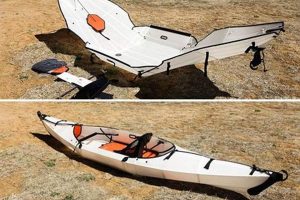
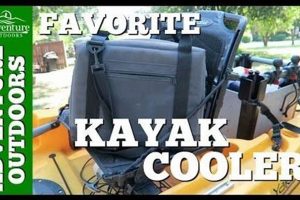
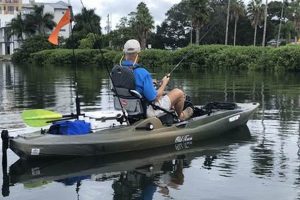
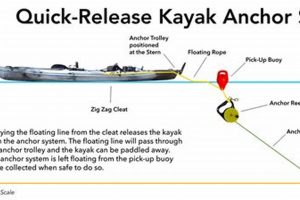
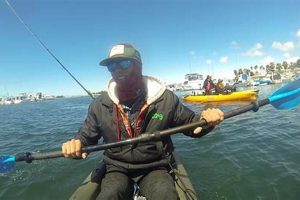
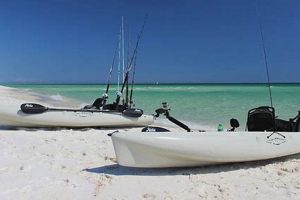
A small, human-powered vessel designed for angling often features specialized modifications for stability, maneuverability, and gear storage. These vessels might include customizations such as rod holders, anchor trolleys, livewells, and specialized seating. An example would be a compact, sit-on-top watercraft configured with multiple rod holders and a built-in fish finder.
The increasing popularity of this type of angling reflects a desire for accessible and versatile fishing experiences. These craft provide anglers with the ability to reach secluded fishing spots often inaccessible to larger boats, fostering a closer connection with nature and offering a unique angling challenge. Historically, smaller fishing boats have played a vital role in subsistence and recreational fishing, and modern iterations continue this tradition with advanced materials and design features.
The following sections will delve deeper into specific aspects, including popular models, essential gear, effective fishing techniques, and responsible angling practices.
Tips for Small Vessel Angling
Effective angling from compact watercraft requires specialized techniques and careful planning. The following tips offer guidance for enhancing safety and maximizing fishing success.
Tip 1: Prioritize Stability: Weight distribution is critical. Keep the center of gravity low and balanced. Avoid sudden movements or leaning too far over the side. Practice entering and exiting the vessel in shallow water before venturing into deeper areas.
Tip 2: Choose Appropriate Gear: Shorter rods and reels are easier to manage in confined spaces. Select tackle suited to the target species and fishing environment. Consider using a landing net to facilitate safe fish handling.
Tip 3: Plan and Prepare: Research fishing locations and check weather forecasts before embarking. Inform someone of the intended fishing area and estimated return time. Pack essential safety equipment, including a personal flotation device, a whistle, and a first-aid kit.
Tip 4: Master Paddle Techniques: Efficient paddling conserves energy and allows for precise boat control. Learn basic strokes for maneuvering in various wind and current conditions. Consider using a rudder or pedal-driven system for hands-free propulsion.
Tip 5: Respect Wildlife and the Environment: Practice catch-and-release whenever possible. Adhere to local fishing regulations and licensing requirements. Properly dispose of fishing line and other waste to protect aquatic ecosystems.
Tip 6: Navigate Safely: Be mindful of other vessels and water users. Maintain a safe distance and avoid congested areas. Carry a navigational chart or GPS device and be aware of potential hazards such as shallow water or submerged obstacles.
Tip 7: Stay Hydrated and Sun-Protected: Bring plenty of water and snacks to maintain energy levels. Wear appropriate clothing, including a hat and sunglasses, and apply sunscreen regularly to protect against the sun’s harmful rays.
By adhering to these guidelines, anglers can enhance both safety and fishing success while enjoying the unique experience offered by small vessel angling.
These tips provide a solid foundation for responsible and productive fishing practices. The concluding section will summarize key takeaways and offer additional resources for anglers.
1. Stealth

Stealth plays a crucial role in the effectiveness of specialized fishing kayaks, particularly when targeting wary fish in shallow or heavily pressured waters. A lower profile reduces visibility to fish, allowing closer approaches without disturbance. Quiet propulsion systems, such as paddles or electric motors, minimize noise and vibration that could spook fish. Hull designs that minimize water displacement contribute to a quieter approach and reduced wake, further enhancing stealth. For instance, a kayak with a low-profile deck and a muted color scheme blends seamlessly with the surrounding environment, maximizing the chances of a successful approach to skittish fish. Furthermore, the ability to navigate quietly through shallow waters expands access to areas often inaccessible to larger, more conspicuous vessels.
The impact of stealth extends beyond simply getting closer to fish. It allows anglers to present lures or bait more naturally, increasing the likelihood of a strike. In clear water environments, the reduced visibility afforded by a stealthy kayak enables anglers to observe fish behavior without detection, offering valuable insights into their feeding patterns and preferred habitats. This understanding can inform tackle choices and presentation techniques, leading to improved fishing outcomes. For example, observing fish feeding on specific types of vegetation near the surface might prompt an angler to switch to a topwater lure that mimics the natural food source. This targeted approach, facilitated by stealth, enhances angling effectiveness. Moreover, in heavily fished areas, a stealthy approach can provide a significant advantage, as fish accustomed to the noise and presence of conventional boats are more likely to respond positively to a subtle presentation.
The emphasis on stealth underscores the specialized nature of these fishing kayaks. While stealth contributes significantly to angling success, it’s essential to balance it with other factors such as stability and maneuverability. Choosing a kayak that optimizes all these attributes requires careful consideration of the target species, fishing environment, and individual angling style. Understanding the interplay of these factors allows anglers to select the most effective platform for their specific needs. The practical application of stealth principles, combined with informed decision-making regarding kayak design and fishing techniques, empowers anglers to maximize their chances of success while minimizing environmental impact. Further exploration of these interdependencies will contribute to a more comprehensive understanding of specialized fishing kayaks and their role in modern angling practices.
2. Maneuverability

Maneuverability represents a critical performance attribute for specialized fishing kayaks, directly influencing their effectiveness in diverse aquatic environments. The ability to navigate tight spaces, swiftly change direction, and maintain precise control enhances angling opportunities and overall fishing success.
- Navigating Complex Waterways:
Compact dimensions and responsive handling characteristics allow these kayaks to access shallow creeks, navigate through dense vegetation, and maneuver around submerged obstacles effectively. For example, exploring narrow, winding mangrove tunnels or accessing secluded ponds teeming with fish becomes feasible due to enhanced maneuverability. This capability expands fishing opportunities beyond the limitations of larger vessels, opening up a wider range of potential fishing grounds.
- Precise Boat Control:
The ability to position the kayak accurately is crucial for presenting lures or bait effectively and maximizing fishing success. Responsive handling enables quick adjustments to changing currents, wind conditions, or fish behavior. For instance, maintaining an optimal position relative to a school of moving fish or holding steady in a fast-flowing current becomes easier with precise boat control. This precision allows anglers to focus on fishing techniques rather than constantly battling to maintain position.
- Efficient Paddling and Propulsion:
Hull design and paddling dynamics influence maneuverability. Kayaks designed for agility often feature shorter lengths and narrower beams, facilitating quick turns and responsive handling. Efficient paddle strokes and the potential integration of pedal-drive or electric motor systems further enhance maneuverability. For example, executing a quick turning maneuver to follow a hooked fish or swiftly repositioning the kayak to avoid obstacles becomes more efficient with a maneuverable design and propulsion system.
- Stealth and Approach:
Maneuverability contributes to stealth by enabling anglers to approach fish discreetly without creating excessive disturbance. The ability to navigate quietly and make precise adjustments in position minimizes the chances of spooking fish, particularly in clear, shallow water. This subtle approach maximizes angling opportunities by allowing closer proximity to fish without alerting them to the angler’s presence. For instance, approaching a shallow-water flat teeming with bonefish requires a stealthy approach, and maneuverability enables subtle adjustments to maintain an optimal casting position without disturbing the fish.
The convergence of these maneuverability facets enhances the versatility and effectiveness of specialized fishing kayaks. By enabling access to diverse environments, precise boat control, and stealthy approaches, maneuverability significantly contributes to overall fishing success. The ability to navigate challenging waterways and respond effectively to dynamic fishing situations empowers anglers to explore new possibilities and maximize their angling potential.
3. Customization

Customization plays a pivotal role in optimizing specialized fishing kayaks, transforming them into highly effective and personalized angling platforms. The ability to tailor these vessels to individual needs and preferences, as well as specific fishing styles and target species, significantly enhances their versatility and functionality. This adaptability stems from modular design features and a wide range of compatible accessories, empowering anglers to create purpose-built kayaks tailored to their unique requirements.
Several factors drive the importance of customization. Anglers targeting different species often require specialized gear and setups. For example, a bass angler might prioritize rod holders and a livewell, while a fly fisherman might prefer a stripping basket and anchor trolley system. Environmental conditions also influence customization choices. Fishing in open, rough waters necessitates different adaptations than fishing in calm, sheltered bays. Furthermore, personal preferences regarding seating, storage, and electronics integration contribute significantly to the overall angling experience. These diverse needs are addressed through customizable features, enabling anglers to fine-tune their kayaks for optimal performance and comfort.
Real-world examples illustrate the practical significance of customization. A kayak equipped with a fish finder, GPS unit, and strategically placed rod holders enhances angling efficiency. Integrating a power supply for electronics and lights extends fishing opportunities into low-light conditions. Adding specialized storage compartments for tackle and gear maximizes organization and accessibility. Furthermore, customizing the seating system for improved comfort and support enhances endurance during long fishing trips. These examples demonstrate how customization transforms a standard kayak into a highly specialized fishing platform, tailored to the specific needs and preferences of the individual angler.
Understanding the interplay between customization and specialized fishing kayaks unlocks their full potential. By carefully selecting and integrating appropriate accessories and modifications, anglers can optimize their vessels for specific fishing scenarios, target species, and personal preferences. This adaptability enhances not only fishing effectiveness but also the overall enjoyment and comfort of the angling experience. Recognizing the value of customization empowers anglers to create highly personalized and efficient fishing platforms, maximizing their chances of success on the water.
4. Stability
Stability forms a cornerstone of specialized fishing kayak design, directly influencing angler safety, comfort, and fishing effectiveness. A stable platform provides a secure foundation for casting, reeling, and landing fish, while also enabling anglers to confidently navigate various water conditions. Compromised stability can lead to capsizing, equipment loss, and potentially dangerous situations, especially in challenging environments such as rough waters or strong currents. Therefore, understanding the factors that contribute to kayak stability is crucial for informed decision-making and safe angling practices.
Several design elements contribute to kayak stability. Hull design plays a significant role, with wider hulls generally offering greater initial stability. However, wider hulls can compromise maneuverability and speed. Longer kayaks tend to track better in a straight line but may be less maneuverable in tight spaces. The location of the seat and the angler’s center of gravity also influence stability. A lower center of gravity enhances stability, while a higher center of gravity increases the risk of capsizing. Understanding these design principles enables anglers to select kayaks appropriate for their intended use and skill level. For instance, a wider, more stable hull might be preferred for fishing in calm lakes, while a narrower, more maneuverable hull might be better suited for navigating rivers or streams.
The practical implications of stability extend beyond simply preventing capsizing. A stable platform allows anglers to stand up and cast, significantly expanding their field of vision and casting range. This enhanced perspective can be particularly advantageous in shallow water environments or when sight fishing. Increased stability also facilitates more confident fish fighting, allowing anglers to apply greater pressure without risking loss of balance. Furthermore, a stable kayak enhances comfort, reducing fatigue and enabling longer fishing trips. By understanding the factors that contribute to stability and selecting a kayak appropriate for their needs, anglers can enhance safety, improve fishing performance, and maximize their enjoyment on the water. This knowledge empowers informed decisions, promoting responsible angling practices and a deeper appreciation for the design and functionality of specialized fishing kayaks.
5. Accessibility
Accessibility represents a significant advantage offered by specialized fishing kayaks, expanding angling opportunities by granting access to waters often inaccessible to larger, motorized boats. This enhanced accessibility stems from their compact size, lightweight nature, and human-powered propulsion, enabling anglers to explore shallow-water environments, navigate narrow waterways, and reach secluded fishing spots previously beyond reach. This capability opens up a wider range of fishing grounds and fosters a closer connection with nature, enhancing the overall angling experience.
Several factors contribute to this enhanced accessibility. The compact design allows for easy transport and launching, eliminating the need for boat ramps or trailers. Kayaks can be easily car-topped, carried short distances, or launched from virtually any shoreline, expanding access to remote ponds, small lakes, and upstream stretches of rivers. Their shallow draft enables navigation through shallow water and over submerged obstacles, opening up areas teeming with fish often inaccessible to deeper-hulled boats. Furthermore, the human-powered nature of kayaks eliminates the noise and environmental impact associated with motorized vessels, allowing for a more stealthy and environmentally conscious approach to angling. For example, paddling a kayak through a quiet marsh allows anglers to approach wary fish without disturbance, maximizing fishing success while minimizing environmental impact.
The practical significance of this accessibility extends beyond simply reaching new fishing spots. It enables anglers to explore diverse ecosystems, target specific species in their preferred habitats, and experience the tranquility of secluded natural environments. For instance, accessing pristine headwaters or navigating through mangrove tunnels offers unique angling opportunities and fosters a deeper appreciation for the natural world. This connection with nature enhances the overall fishing experience and promotes responsible angling practices. Furthermore, the relative affordability and ease of use of kayaks compared to larger boats democratizes access to angling opportunities, making fishing more accessible to a wider range of individuals. Recognizing the accessibility advantages offered by specialized fishing kayaks empowers anglers to explore new waters, connect with nature, and pursue their passion for fishing in a more versatile and sustainable manner.
6. Compact Design
Compact design represents a defining characteristic of specialized fishing kayaks, significantly influencing their transportability, storage, and maneuverability. This attribute contributes to their versatility and accessibility, enabling anglers to reach diverse fishing locations often inaccessible to larger vessels. Examining the facets of compact design reveals its profound impact on the overall angling experience.
- Transportation and Storage
The compact form factor facilitates easy transportation and storage. Kayaks can be readily loaded onto vehicle roof racks, transported in truck beds, or even carried short distances, eliminating the need for trailers and expanding access to remote fishing locations. Compactness also simplifies storage, allowing kayaks to be stored in garages, sheds, or even apartments, minimizing storage space requirements. This ease of transport and storage enhances convenience and expands angling opportunities by simplifying logistics.
- Maneuverability in Tight Spaces
Compact dimensions enhance maneuverability, enabling navigation through narrow waterways, shallow creeks, and dense vegetation. This agility allows anglers to access secluded fishing spots, explore intricate mangrove systems, and navigate around obstacles effectively. The ability to maneuver in tight spaces expands fishing possibilities and allows for a more intimate exploration of diverse aquatic environments. For example, navigating a narrow, overgrown creek becomes feasible with a compact, easily maneuverable kayak, providing access to prime fishing areas often inaccessible to larger boats.
- Stealth and Approach
The smaller profile of compact kayaks contributes to a stealthier approach, minimizing disturbance and reducing the likelihood of spooking fish, particularly in shallow water. This advantage allows anglers to get closer to fish without detection, increasing the chances of a successful presentation and enhancing fishing effectiveness. The low profile also reduces visibility from a distance, making the kayak less conspicuous to fish and other wildlife.
- Weight and Portability
Compact kayaks are generally lighter than larger vessels, facilitating easier handling and launching. This reduced weight simplifies solo launching and retrieval, making it easier for individuals to manage the kayak without assistance. The lighter weight also reduces strain during transport and portage, enhancing accessibility for anglers of varying physical abilities.
The compact design of specialized fishing kayaks contributes significantly to their versatility and effectiveness. By optimizing transportability, storage, maneuverability, and stealth, these compact vessels expand angling opportunities and enhance the overall fishing experience. The ability to reach remote locations, navigate tight spaces, and approach fish discreetly empowers anglers to explore diverse environments and pursue their passion with greater efficiency and enjoyment. This combination of features makes compact design a crucial element in the success and popularity of specialized fishing kayaks.
Frequently Asked Questions
This section addresses common inquiries regarding specialized fishing kayaks, providing concise and informative responses to clarify potential uncertainties and enhance understanding.
Question 1: What differentiates a specialized fishing kayak from a recreational kayak?
Specialized fishing kayaks feature design elements optimized for angling, including rod holders, specialized seating, enhanced stability, and often additional storage for tackle and gear. Recreational kayaks prioritize stability and comfort for general paddling, lacking the specific features required for effective fishing.
Question 2: Are specialized fishing kayaks suitable for beginners?
Certain models cater specifically to beginners, offering enhanced stability and user-friendly features. However, proper instruction and practice are essential for safe and effective kayak operation, regardless of experience level. Selecting a stable, beginner-friendly model and seeking guidance from experienced paddlers can facilitate a smooth learning process.
Question 3: What safety precautions should one take when using a fishing kayak?
Wearing a personal flotation device is paramount. Checking weather forecasts before embarking and informing someone of the intended fishing location and return time are crucial safety practices. Carrying essential safety equipment, such as a whistle, first-aid kit, and communication device, is also highly recommended.
Question 4: How does one choose the appropriate fishing kayak?
Consider factors such as fishing style, target species, intended fishing environment, and budget. Research various models, compare features, and consider seeking expert advice from kayak retailers or experienced anglers. Testing different kayaks, if possible, can provide valuable insights before making a purchase decision.
Question 5: What essential gear is needed for fishing from a kayak?
Essential gear includes appropriate fishing rods, reels, tackle, and safety equipment. Additional accessories, such as a landing net, anchor, and paddle leash, can enhance fishing efficiency and safety. Specialized gear, such as fish finders or GPS units, might also be considered depending on individual needs and preferences.
Question 6: What are the advantages of fishing from a kayak compared to a larger boat?
Kayaks offer enhanced accessibility to shallow waters and secluded fishing spots often inaccessible to larger vessels. Their compact size, maneuverability, and stealthy nature can provide a significant advantage when targeting certain fish species. Additionally, kayaks offer a closer connection with nature and a unique angling perspective.
These responses provide a foundational understanding of specialized fishing kayaks. Further research and consultation with experienced anglers can enhance knowledge and facilitate informed decisions regarding kayak selection, equipment, and safe angling practices.
The subsequent section will delve into advanced techniques for maximizing fishing success from a kayak.
Conclusion
This exploration has highlighted the multifaceted nature of small, human-powered fishing vessels, emphasizing their unique capabilities and contributions to the angling experience. From enhanced access to secluded waterways and the stealthy pursuit of wary fish to the personalized customization options and the inherent connection with nature, these vessels offer a distinctive approach to angling. Key design elements, such as stability, maneuverability, and compact form, contribute significantly to their effectiveness and versatility across diverse fishing environments. Understanding these core attributes empowers informed decision-making regarding vessel selection, equipment choices, and responsible angling practices.
The continuing evolution of design and technology promises further advancements in performance, functionality, and angler experience. As awareness of environmental stewardship grows, the low-impact nature of these vessels aligns with a sustainable approach to enjoying aquatic environments. Continued exploration of specialized techniques and responsible angling practices will further enhance the effectiveness and enjoyment derived from this unique and evolving approach to fishing. Embracing these principles fosters a deeper appreciation for the sport and contributes to the long-term health of aquatic ecosystems.