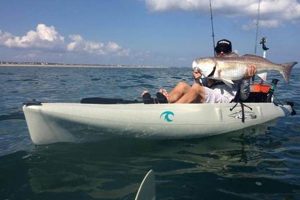
A kayak designed for angling requires specific features to enhance the experience and ensure safety and effectiveness on the water. Enhanced stability is paramount, particularly for larger individuals, as it minimizes the risk of capsizing and allows for comfortable casting and reeling. Such watercraft often feature wider hulls, flatter bottoms, and outriggers or stabilizers. They are typically constructed from durable materials capable of handling heavier loads and the rigors of fishing activities. Features such as rod holders, tackle storage, and comfortable seating contribute to a productive and enjoyable outing.
The need for specialized fishing kayaks arose from the increasing popularity of kayak fishing. Anglers discovered that standard recreational kayaks lacked the necessary stability, storage, and features required for a successful fishing trip. A secure and stable platform is especially crucial for larger anglers, allowing them to focus on fishing rather than maintaining balance. This focus on stability has driven innovation in design and manufacturing, resulting in a variety of kayaks specifically tailored to meet the unique needs of fishing enthusiasts of all sizes.
The subsequent sections will delve deeper into key factors to consider when selecting a fishing kayak tailored for larger individuals, including weight capacity, hull design, features, and top-rated models currently available.
Tips for Choosing a Fishing Kayak
Selecting a suitable fishing kayak involves careful consideration of several factors to ensure stability, comfort, and a successful angling experience. The following tips offer guidance for making an informed decision.
Tip 1: Prioritize Weight Capacity: Payload capacity should exceed the combined weight of the angler, gear, and any potential catch. Exceeding the manufacturer’s recommended weight limit compromises stability and performance.
Tip 2: Consider Hull Design: Wider, flatter hulls generally offer greater stability than narrower, V-shaped hulls. Pontoon-style hulls provide exceptional stability, while sit-on-top kayaks are easier to re-enter after a water landing.
Tip 3: Evaluate Features: Essential features include rod holders, tackle storage compartments, and a comfortable, adjustable seat. Additional features such as anchor trolleys and rudder systems can further enhance the fishing experience.
Tip 4: Test Before Purchasing: If possible, test paddle different models to assess stability and comfort firsthand. This allows one to determine the best fit based on individual preferences and physical stature.
Tip 5: Check for Durability: Opt for kayaks constructed from robust, UV-resistant materials that can withstand the rigors of fishing environments. Rotomolded polyethylene is a popular choice for its durability and impact resistance.
Tip 6: Research Reputable Brands: Choosing a reputable manufacturer ensures quality construction, reliable performance, and access to customer support if needed.
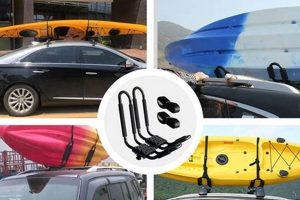
Tip 7: Consider Transportation and Storage: Factor in the length and weight of the kayak and ensure adequate transportation and storage solutions are available.
By considering these tips, individuals can select a fishing kayak that offers optimal stability, performance, and comfort, leading to a more enjoyable and productive time on the water.
In conclusion, finding the right fishing kayak involves a thoughtful assessment of individual needs and priorities. The following section provides a summary of key considerations and reinforces the importance of choosing wisely.
1. Weight Capacity

Weight capacity is a critical factor influencing the stability of a fishing kayak, especially for larger individuals. A kayak’s weight capacity represents the maximum combined weight of the angler, gear, and any potential catch it can safely support. Exceeding this limit compromises stability, increases the risk of capsizing, and negatively impacts maneuverability. A higher weight capacity directly correlates to greater stability, providing a secure and balanced platform for casting, reeling, and other fishing activities. For larger anglers, selecting a kayak with ample weight capacity is not merely a recommendation, but a necessity for ensuring a safe and enjoyable experience. For example, an angler weighing 250 pounds with 50 pounds of gear requires a kayak with a minimum weight capacity of 300 pounds, with additional capacity recommended for potential catches.
The relationship between weight capacity and stability is rooted in the principles of buoyancy and displacement. A kayak with a higher weight capacity typically possesses a larger hull volume, displacing more water and creating greater buoyant force. This increased buoyancy counteracts the downward force exerted by the weight of the angler and gear, resulting in enhanced stability. Inadequate weight capacity leads to excessive submersion of the hull, reducing buoyancy and making the kayak more susceptible to tipping. This is particularly relevant for larger individuals, as their greater weight requires a proportionally higher level of buoyancy to maintain equilibrium. Selecting a kayak with a weight capacity significantly exceeding the anticipated load offers a crucial safety margin and enhances overall stability. For instance, a kayak with a 400-pound capacity offers more stability for a 300-pound combined weight than a kayak rated for 325 pounds.
Understanding the critical relationship between weight capacity and stability is fundamental for selecting a suitable fishing kayak. A higher weight capacity provides a larger margin of safety, enhances stability, and contributes to a more confident and enjoyable fishing experience, particularly for larger anglers. Prioritizing weight capacity during the selection process ensures a stable and secure platform, allowing anglers to focus on fishing rather than constantly managing their balance. This translates to increased safety, improved casting accuracy, and an overall more rewarding experience on the water.
2. Width and Hull Design

Width and hull design are fundamental determinants of stability in fishing kayaks, particularly for larger individuals. Wider kayaks inherently offer greater initial stability, meaning they resist tipping more effectively when at rest or moving slowly. A wider beam creates a larger base of support, enhancing balance and reducing the likelihood of capsizing. Hull design plays an equally crucial role. Flat-bottomed hulls maximize stability on calm water, providing a stable platform for casting and reeling. However, they can be less efficient for paddling longer distances. Pontoon hulls, characterized by two separate hulls connected by a deck, deliver exceptional stability, making them ideal for larger anglers or those fishing in choppy conditions. For example, a 36-inch wide kayak with a flat bottom offers significantly more initial stability than a 30-inch wide kayak with a V-shaped hull. This wider, flatter design creates a more secure platform, particularly beneficial for larger anglers.
The interplay between width and hull design influences not only stability but also maneuverability and tracking. Wider kayaks tend to be slower and less agile than narrower kayaks, while flat-bottomed hulls can be more susceptible to wind drift. V-shaped hulls, while less stable initially, offer better tracking and cut through the water more efficiently. A well-designed fishing kayak balances stability and performance, tailoring the hull design and width to the intended use and angler’s needs. For instance, a kayak designed for slow-moving rivers or lakes might prioritize stability with a wider, flatter hull, while a kayak intended for open ocean fishing might prioritize tracking and speed with a narrower, V-shaped hull, potentially incorporating features like a rudder to enhance control. The choice of width and hull design depends on the specific fishing environment and the angler’s priorities.
Selecting the appropriate width and hull design is crucial for optimizing stability and performance. Larger individuals benefit significantly from wider kayaks and more stable hull designs, such as flat or pontoon hulls. This enhanced stability provides a secure platform for fishing, minimizing the risk of tipping and maximizing comfort. However, considerations of maneuverability and tracking performance should not be overlooked. The ideal choice balances stability with other performance characteristics based on the intended fishing environment and individual needs. Careful consideration of these factors ensures a kayak that provides both stability and the desired level of performance on the water. For larger anglers, prioritizing stability is essential for safety and enjoyment, even if it means some compromise on speed or maneuverability.
3. Stability Features
Stability features play a crucial role in the design and functionality of fishing kayaks intended for larger individuals. These features directly address the challenges posed by increased weight and the need for a secure and balanced platform for angling activities. Enhanced stability ensures not only safety and comfort but also facilitates effective casting and reeling, contributing to a more productive and enjoyable fishing experience.
- Outriggers/Stabilizers
Outriggers and stabilizers are detachable or integrated extensions that broaden the kayak’s base of support. They significantly enhance stability, particularly in challenging conditions such as rough water or strong currents. Deployable outriggers offer flexibility, allowing anglers to adjust stability based on the environment. Fixed stabilizers provide continuous stability enhancement. These features are particularly beneficial for larger anglers who require additional support to maintain balance. For example, inflatable outriggers provide substantial added stability when deployed, and can be easily stowed when not needed.
- Wider Hulls
Wider hulls inherently offer greater initial stability compared to narrower designs. The increased beam (width) provides a larger surface area in contact with the water, distributing weight more effectively and reducing the tendency to tip. Wider hulls are particularly advantageous for larger individuals due to their increased displacement and buoyancy, providing a more secure platform. A 36-inch wide hull offers considerably more stability than a 32-inch wide hull, all other factors being equal.
- Flat Bottoms
Flat-bottomed hulls maximize stability on calm water, providing a stable platform for casting and stationary fishing. This design minimizes rocking and swaying, allowing for greater precision in angling techniques. While flat bottoms may sacrifice some maneuverability and speed compared to other hull designs, the enhanced stability they offer is highly beneficial for larger anglers. This design prioritizes a secure and balanced platform over speed and agility.
- Weight Distribution
Proper weight distribution within the kayak is essential for maintaining stability. Positioning heavier items lower in the hull and evenly distributing gear can significantly improve balance. Kayaks designed for larger individuals often feature strategically placed storage compartments to facilitate optimal weight distribution. For instance, locating tackle boxes and batteries close to the center of gravity enhances stability. Uneven weight distribution, such as concentrating heavy items at the stern or bow, can compromise stability and increase the risk of capsizing.
These stability features, when integrated into a kayak’s design, collectively contribute to a secure and balanced platform, crucial for larger individuals. The combination of outriggers or stabilizers, wider hulls, flat bottoms, and thoughtful weight distribution significantly enhances stability, enabling anglers to focus on fishing with confidence and comfort. Choosing a kayak incorporating these features is essential for larger individuals seeking a stable and enjoyable fishing experience.
4. Comfort and Adjustability
Comfort and adjustability are paramount considerations for larger individuals seeking a stable fishing kayak. Extended time on the water requires a supportive and customizable environment to minimize fatigue and maximize enjoyment. A comfortable and adaptable kayak enhances not only the fishing experience but also promotes proper posture and reduces the risk of physical strain. Appropriate adjustability features accommodate varying body types and preferences, ensuring a personalized fit for optimal comfort and stability.
- Seat Design and Adjustability
Seat design plays a pivotal role in overall comfort. High-back seats with adjustable lumbar support cater to larger frames and provide crucial back support during long hours on the water. Adjustable straps and cushioning further enhance comfort and allow for personalized customization. A well-designed seat minimizes pressure points and promotes proper posture, reducing fatigue and discomfort. For example, a kayak seat with adjustable height, recline, and lumbar support allows anglers to tailor the seating position to their individual needs, ensuring optimal comfort and reducing strain on the back and legs.
- Footrest Positioning
Adjustable footrests are essential for maintaining proper posture and providing leverage while paddling and fishing. Multiple footrest positions accommodate varying leg lengths and ensure a comfortable and efficient paddling stroke. Proper leg positioning contributes to stability and reduces fatigue. For example, adjustable foot braces allow anglers to find the optimal leg extension, enhancing paddling efficiency and providing crucial support for balance and stability. Fixed footrests can lead to discomfort and compromised stability, especially for individuals with longer or shorter legs.
- Cockpit Dimensions
Cockpit dimensions, including width and depth, directly impact comfort and ease of entry and exit. Larger cockpits provide more room for movement and accommodate larger body types. Sufficient legroom is essential for comfort and prevents cramping during extended fishing trips. The cockpit design should balance spaciousness with security, ensuring a comfortable yet stable seating position. A spacious cockpit with ample legroom allows for easier entry and exit, especially for larger individuals, and provides greater freedom of movement while fishing.
- Deck Padding and Layout
Deck padding enhances comfort and provides a non-slip surface for standing or moving around the kayak. Ergonomically designed deck layouts with strategically placed features, such as rod holders and cup holders, improve accessibility and minimize the need for excessive reaching or bending. Adequate padding and a well-designed deck layout contribute to both comfort and efficiency. For example, a kayak with ample deck padding and strategically placed rod holders allows anglers to easily reach their gear without compromising balance or comfort.
Comfort and adjustability are integral to the overall experience of fishing from a kayak, particularly for larger individuals. Proper seat design, adjustable footrests, appropriate cockpit dimensions, and a well-padded and organized deck contribute significantly to comfort, reduce fatigue, and promote stability. These features are essential considerations for individuals spending extended hours on the water, ensuring a comfortable and enjoyable fishing experience. Prioritizing comfort and adjustability ultimately enhances not only the immediate experience but also contributes to long-term well-being and enjoyment of the sport.
5. Durable Construction
Durable construction is paramount for stable fishing kayaks designed for larger individuals. The inherent stresses exerted by heavier loads and the demanding nature of fishing environments necessitate robust materials and construction techniques. Durability directly influences not only the kayak’s lifespan but also its ongoing stability and performance. A kayak’s structural integrity underpins its ability to maintain shape and resist deformation under stress, which is crucial for preserving stability and preventing performance degradation over time. For example, a kayak constructed from high-density polyethylene (HDPE) with reinforced seams and robust hull design can withstand impacts, abrasion, and UV exposure, ensuring long-term durability and consistent performance in harsh conditions.
The connection between durable construction and stability becomes even more pronounced when considering the specific needs of larger anglers. The increased weight capacity requirement necessitates a stronger structure to support the combined weight of the angler, gear, and potential catch. A robust hull and deck prevent flexing and twisting, which could compromise stability and lead to a less secure fishing platform. Durable construction also ensures the kayak can withstand the rigors of launching, landing, and navigating various water conditions without sustaining damage that could compromise stability. For instance, reinforced seat mounts and hardware ensure these critical components remain securely attached and functional even under the stress of heavier loads, contributing to consistent stability over time.
Selecting a fishing kayak with durable construction is a long-term investment that directly contributes to stability, performance, and safety. Materials such as rotomolded polyethylene, known for their impact resistance and UV stability, are commonly used in high-quality fishing kayaks. Reinforced seams, robust hardware, and well-designed hull structures further enhance durability and contribute to long-term performance. Investing in a durably constructed kayak ensures consistent stability and performance over time, providing a reliable and secure platform for larger anglers to enjoy the sport of fishing without compromise. Failure to prioritize durable construction can lead to premature wear and tear, compromised stability, and ultimately a less enjoyable and potentially unsafe fishing experience.
6. Storage Options

Ample and well-designed storage is crucial for stable fishing kayaks designed for larger individuals. Beyond simply accommodating the increased gear often carried by anglers, strategically placed storage contributes directly to stability and efficient angling. Proper weight distribution, facilitated by effective storage solutions, is essential for maintaining balance and maximizing performance on the water. Insufficient or poorly designed storage can lead to uneven weight distribution, compromising stability and hindering maneuverability. Optimized storage solutions enable anglers to organize gear effectively, maintain a balanced center of gravity, and access essential equipment quickly and efficiently without compromising stability.
- Tank Wells (Rear Storage)
Large, open storage areas at the rear of the kayak are ideal for storing bulky items like tackle crates and coolers. Securing these heavier items at the stern contributes to balanced weight distribution, particularly beneficial for larger anglers. Bungee cords or tie-down straps ensure gear remains secure and prevents shifting that could negatively impact stability. Positioning heavier gear at the rear helps maintain the kayak’s trim and prevents the bow from rising excessively, enhancing both stability and tracking.
- Front Hatch Storage
Watertight hatches located at the bow provide secure storage for items that need protection from the elements. Distributing weight towards the front of the kayak counterbalances heavier items stored at the rear, further optimizing trim and stability. Dry storage safeguards essential gear like electronics and clothing, preserving their functionality and contributing to a more successful and enjoyable fishing trip. Proper weight distribution across the kayak’s length enhances stability and prevents unwanted tilting.
- Side Storage/Tackle Boxes
Dedicated compartments and integrated tackle storage systems facilitate easy access to frequently used items. Side storage keeps essential gear within reach, minimizing the need for excessive movement that could compromise stability. Organized storage solutions enhance efficiency and allow anglers to focus on fishing rather than searching for equipment. readily accessible tackle boxes and compartments contribute to a more streamlined and productive fishing experience, minimizing disruptions and maximizing time on the water. Keeping frequently used items within easy reach improves both efficiency and safety.
- Rod Holders (Flush-Mounted and Adjustable)
Rod holders are indispensable for securing fishing rods while paddling or when multiple rods are in use. Flush-mounted rod holders minimize interference with paddling and casting, while adjustable rod holders offer flexibility in positioning rods for various fishing techniques. Securely stowed rods prevent entanglement and contribute to a safer and more organized cockpit environment, reducing the risk of accidental tipping or gear loss. Proper rod storage enhances both safety and efficiency on the water.
Strategic storage options are integral to stability and efficiency in fishing kayaks designed for larger individuals. Well-designed storage facilitates optimal weight distribution, enhances accessibility, and contributes to a more organized and productive fishing experience. Prioritizing ample and strategically placed storage enhances stability, improves performance, and allows anglers to focus on what matters most enjoying their time on the water. The right storage solutions contribute directly to a more comfortable, safe, and successful fishing experience.
7. Specialized Features
Specialized features distinguish fishing kayaks from recreational models, enhancing stability, functionality, and the overall angling experience, particularly for larger individuals. These features cater specifically to the demands of fishing, offering advantages in terms of organization, accessibility, and specialized performance. For larger anglers, these features contribute significantly to stability and comfort, enabling them to focus on fishing effectively and safely.
- Anchor Trolley System
An anchor trolley system allows controlled anchoring from various positions on the kayak. This is particularly advantageous in windy conditions or currents, enabling anglers to maintain position and stability while fishing. The system consists of a line running along the length of the kayak, with an anchor attachment point that can be adjusted. This allows anglers to position the anchor at the bow, stern, or side, depending on the wind or current direction, optimizing stability and fishing effectiveness. For larger individuals, maintaining precise positioning is crucial for stability, and an anchor trolley provides this control, preventing drifting and minimizing the effort required to stay in the desired fishing location.
- Rudder Systems
Rudder systems enhance directional control and maneuverability, particularly in windy or challenging conditions. A foot-controlled rudder allows for precise steering adjustments without requiring hand paddling, freeing up the angler to focus on fishing. This enhanced control contributes significantly to stability, especially in rough water or strong currents, by allowing for quick corrections and maintaining the desired course. For larger individuals, the added stability provided by a rudder system is crucial for navigating challenging conditions and maintaining a secure and balanced platform while fishing.
- GPS/Fish Finder Mounts
Integrated mounts for GPS units and fish finders provide convenient access to navigational and fish-finding technology. Securely mounted electronics enhance situational awareness and fishing effectiveness. Properly positioned mounts allow anglers to view screens without compromising posture or stability. For larger individuals, maintaining balance while operating electronics can be challenging, and dedicated mounts minimize movement and enhance stability, ensuring safe and efficient use of these essential tools.
- Livewell Systems
Livewell systems provide a contained environment for keeping caught fish alive and fresh. These systems often incorporate aeration and water circulation to maintain optimal conditions for the fish. While livewells add weight, their strategic placement within the kayak can contribute to balanced weight distribution, enhancing stability. For larger anglers, maintaining stability with a livewell requires careful consideration of weight distribution, and well-designed livewell systems minimize the impact on overall balance. A balanced load enhances stability and ensures a safe and enjoyable fishing experience.
These specialized features enhance the functionality and stability of fishing kayaks, particularly for larger anglers. Features like anchor trolleys, rudder systems, GPS/fish finder mounts, and livewells contribute to a more controlled, efficient, and stable fishing experience. By carefully considering these features during the selection process, larger individuals can choose a kayak that meets their specific needs and enhances their safety, comfort, and overall enjoyment on the water. These features transform a standard kayak into a specialized fishing platform, optimized for stability and performance in various fishing environments.
Frequently Asked Questions
This section addresses common inquiries regarding fishing kayaks designed for larger individuals, providing concise and informative responses to facilitate informed decision-making.
Question 1: What is the recommended weight capacity for a kayak angler exceeding 250 pounds?
A kayak’s weight capacity should exceed the combined weight of the angler, all gear, and potential catch. For an angler exceeding 250 pounds, a minimum capacity of 400 pounds is generally advisable, allowing for ample gear and potential catches without compromising stability.
Question 2: How does hull design impact stability for heavier anglers?
Wider, flatter hulls, including pontoon-style designs, generally offer greater stability for heavier anglers. These designs maximize the kayak’s contact with the water, providing a more stable platform and reducing the likelihood of tipping. Wider beams increase initial stability, while flatter bottoms provide stability on calm water.
Question 3: What features are essential for enhancing stability in a fishing kayak for a larger person?
Essential stability-enhancing features include wider hulls, flatter bottoms, outriggers or stabilizers, and adjustable seating systems for optimal weight distribution. These features collectively contribute to a more secure and balanced platform, allowing for comfortable and safe fishing.
Question 4: How can one determine the appropriate kayak width for optimal stability?
Kayak width is directly proportional to stability. For enhanced stability, individuals weighing over 250 pounds should consider kayaks with a width of 34 inches or more. Testing different widths is recommended to determine the optimal balance between stability and desired maneuverability.
Question 5: What materials contribute to a durable and stable fishing kayak for heavier individuals?
Rotomolded polyethylene is a popular choice for its durability, impact resistance, and UV stability. This material can withstand the rigors of heavier loads and varied water conditions, contributing to long-term stability and performance. Reinforced seams and robust hardware further enhance durability.
Question 6: How does proper weight distribution impact stability in a fishing kayak?
Proper weight distribution is crucial for maintaining stability. Distributing heavier items lower and evenly within the kayak enhances balance. Utilizing storage compartments strategically and avoiding excessive weight concentration at either end of the kayak contribute significantly to stability and control.
Careful consideration of these frequently asked questions provides a foundation for informed decision-making when selecting a stable and suitable fishing kayak. Prioritizing stability ensures a safe and enjoyable experience on the water.
The next section offers a concluding overview of key considerations for selecting the ideal fishing kayak.
Conclusion
Selecting a stable fishing kayak tailored for larger individuals requires careful consideration of various factors. Prioritizing a kayak’s weight capacity is paramount for safety and performance. Hull design, featuring wider beams and flatter bottoms, plays a critical role in enhancing stability. Features such as outriggers, stabilizers, and adjustable seating contribute significantly to a secure and comfortable fishing experience. Durable construction, utilizing robust materials like rotomolded polyethylene, ensures long-term reliability and performance. Ample and strategically located storage options facilitate proper weight distribution, further enhancing stability. Specialized features like anchor trolleys, rudders, and mounting systems for electronics optimize functionality and control on the water. Thorough consideration of these elements ensures the selection of a kayak that prioritizes stability without compromising performance or comfort.
Investing in a stable fishing kayak empowers larger individuals to experience the full enjoyment and rewards of angling. A properly chosen kayak provides a secure and comfortable platform, enabling anglers to focus on the sport rather than managing balance. This translates to enhanced safety, increased fishing success, and a deeper connection with the outdoor experience. The selection process represents an investment not only in equipment but also in the pursuit of a fulfilling and enriching pastime. By prioritizing stability and carefully evaluating available options, individuals can confidently embark on their angling adventures with the assurance of a secure and enjoyable experience on the water.