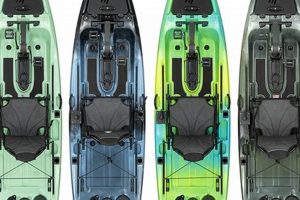
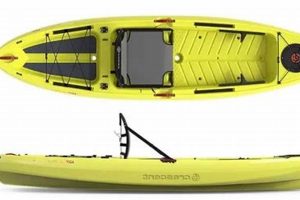
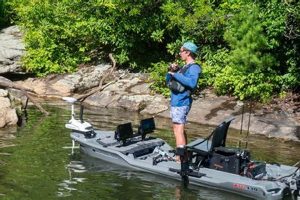
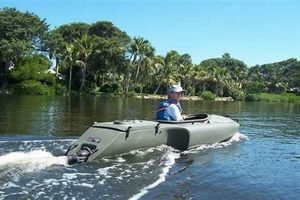
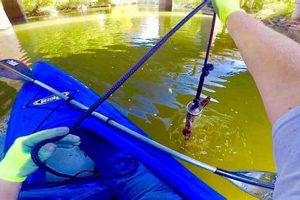
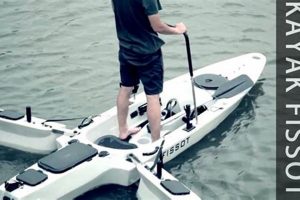
This sit-on-top fishing kayak is designed for anglers seeking stability and performance on the water. Typically constructed from durable, lightweight materials, it features a spacious cockpit, ample storage for gear, and specialized features like rod holders and paddle parks. Such kayaks are often chosen for their ability to navigate various water conditions, from calm lakes to slow-moving rivers.
Anglers value vessels of this type for their enhanced stability, which allows for comfortable casting and reeling. The design often incorporates features that improve tracking and maneuverability, making it easier to navigate to desired fishing spots. Historically, fishing from small, human-powered watercraft has been a common practice across cultures. Modern advancements in materials and design have led to specialized kayaks that cater to the specific needs of anglers, enhancing their experience and efficiency on the water.
Further exploration of this topic will cover aspects like specific design features, performance characteristics in different water conditions, user reviews, and comparisons with similar products on the market. This information will provide a comprehensive understanding of its suitability for various fishing styles and environments.
Tips for Kayak Fishing Success
Effective kayak angling requires preparation and an understanding of both the vessel and the environment. The following tips offer guidance for a safe and productive fishing experience.
Tip 1: Pre-Trip Planning: Research potential fishing locations thoroughly, considering water conditions, access points, and local regulations. Checking weather forecasts is crucial for safety and comfort.
Tip 2: Proper Gear Organization: Organize tackle and equipment for easy access within the kayak’s limited space. Prioritize essential items and utilize waterproof storage solutions.
Tip 3: Stability and Balance: Maintain a low center of gravity within the kayak to enhance stability. Avoid sudden movements and practice entering and exiting the vessel in shallow water.
Tip 4: Paddle Technique: Employ efficient paddling techniques to conserve energy and navigate effectively. Learn basic strokes for maneuvering in various water conditions.
Tip 5: Anchoring and Positioning: Utilize appropriate anchoring systems for maintaining position in desired fishing areas. Consider using a drift sock or stake-out pole in shallow water.
Tip 6: Catch and Release Practices: Handle fish with care and utilize proper catch-and-release techniques to minimize stress on the fish and ensure their survival.
Tip 7: Safety Precautions: Always wear a personal flotation device (PFD) and carry essential safety gear, including a whistle, signaling device, and first-aid kit. Inform someone of your fishing plans and estimated return time.
By implementing these strategies, anglers can enhance their safety, efficiency, and overall enjoyment on the water. Preparation and thoughtful consideration of these factors contribute significantly to a successful kayak fishing excursion.
These tips provide a foundation for successful kayak fishing. The following section will offer a detailed exploration of specific techniques and strategies for various fishing environments.
1. Sit-on-top Design

The Field & Stream Eagle Talon 120 utilizes a sit-on-top kayak design. This configuration differs significantly from traditional sit-inside kayaks, offering distinct advantages for angling. Sit-on-top designs provide enhanced stability, particularly beneficial for casting and reeling. The open cockpit allows for greater freedom of movement, facilitating easier entry and exit, a crucial factor for safety and convenience, especially in the event of a capsize. This design also simplifies re-entry into the kayak from the water. Self-bailing scupper holes further enhance the sit-on-top design’s practicality by draining water from the cockpit, maintaining buoyancy and minimizing the risk of swamping.
The elevated seating position inherent in sit-on-top kayaks improves visibility, allowing anglers to spot fish and navigate more effectively. This design also offers superior ventilation, contributing to comfort during warm weather conditions. The open cockpit allows for easier access to gear and tackle stored within the kayak. For example, an angler might need to quickly access a different lure or adjust fishing line; the sit-on-top design allows for this without the constraints of a closed cockpit. The increased stability offered by this design is particularly valuable in challenging conditions such as choppy water or when landing a large fish. This design feature enhances the angler’s ability to maintain balance and control.
In summary, the sit-on-top design of the Field & Stream Eagle Talon 120 directly contributes to its suitability for fishing. This design prioritizes stability, ease of access, and freedom of movement, all essential elements for a comfortable and productive fishing experience. While sit-inside kayaks offer other advantages, such as protection from the elements, the sit-on-top configuration presents clear benefits for angling activities. The selection of this design demonstrates a focus on practicality and user experience within the context of kayak fishing.
2. Stability

Stability represents a critical performance characteristic for fishing kayaks, directly influencing angler safety, comfort, and fishing effectiveness. For the Field & Stream Eagle Talon 120, stability plays a crucial role in its suitability for various fishing environments and techniques.
- Primary Stability:
Primary stability refers to the kayak’s initial resistance to tipping when at rest. A wider hull and lower center of gravity contribute to higher primary stability. This is crucial for remaining upright while casting, reeling, and landing fish. The Eagle Talon 120’s hull design prioritizes primary stability, allowing anglers to feel secure and balanced in calm water conditions.
- Secondary Stability:
Secondary stability describes the kayak’s resistance to tipping when leaned or tilted. This characteristic comes into play during turns and maneuvers, or when encountering waves or currents. While the Eagle Talon 120 emphasizes primary stability, its secondary stability allows for moderate maneuvering and handling of minor water disturbances.
- Impact of Weight Capacity:
The kayak’s weight capacity directly influences its stability. Exceeding the specified weight limit can compromise both primary and secondary stability, making the kayak more prone to tipping. Adhering to the Eagle Talon 120’s weight capacity ensures optimal performance and safety.
- Influence of Design Features:
Specific design elements, such as the hull shape, chines, and the presence of a keel, impact stability. The Eagle Talon 120’s relatively flat hull contributes to its initial stability, while its moderate rocker profile allows for some maneuverability. The absence of a pronounced keel makes it less susceptible to wind drift, but also slightly reduces tracking performance in straight lines.
The Field & Stream Eagle Talon 120’s stability profile prioritizes a secure and balanced platform for fishing activities, particularly in calmer waters. While its design favors primary stability, the kayak offers sufficient secondary stability for moderate maneuvering. Understanding the nuances of its stability performance allows anglers to make informed decisions about its suitability for their intended fishing environments and techniques.
3. Maneuverability
Maneuverability in a fishing kayak directly impacts an angler’s ability to navigate various water conditions and access desired fishing spots. The Field & Stream Eagle Talon 120’s maneuverability profile reflects its intended use in calmer waters such as lakes and slow-moving rivers. Its design prioritizes stability, which can sometimes come at the expense of nimble turning. The kayak’s length and moderate rocker profile contribute to decent tracking performance in straight lines, allowing for efficient paddling over longer distances. However, this also means it requires more effort to turn sharply compared to shorter, more agile kayaks. For example, navigating through tight channels or quickly changing direction to pursue a fish might require more deliberate paddling input. The kayak’s shallow draft allows access to shallow water areas, expanding fishing opportunities, but can also make it more susceptible to wind drift in open, exposed locations.
Consider a scenario where an angler wants to navigate through a dense patch of lily pads. The Eagle Talon 120’s stability provides a secure platform for casting and reeling within the vegetation, but its turning radius might require more strategic paddling to avoid entanglement. Alternatively, in a scenario involving open water with a moderate breeze, the kayak’s tracking performance allows for efficient travel between distant fishing spots. However, its susceptibility to wind drift necessitates adjustments in paddling technique or the use of a rudder or drift sock to maintain the desired course. These examples illustrate the practical implications of the kayak’s maneuverability characteristics in real-world fishing situations.
Understanding the maneuverability profile of the Field & Stream Eagle Talon 120 informs anglers about its strengths and limitations. Its design favors stability and tracking for calm water environments, while its turning performance is less agile than shorter kayaks designed for navigating complex waterways. This information allows anglers to make informed decisions about its suitability for their specific fishing needs and preferred fishing locations. Choosing appropriate paddling techniques and accessories, such as a rudder or drift sock, can enhance maneuverability in certain situations and further optimize the kayak’s performance on the water.
4. Storage Capacity

Storage capacity in the Field & Stream Eagle Talon 120 fishing kayak directly impacts its practicality and suitability for various fishing excursions. Adequate storage allows anglers to carry essential gear, including tackle boxes, rods, safety equipment, and personal items. The kayak’s storage features typically include a rear tank well, a front hatch, and side storage compartments. The rear tank well, often secured with bungee cords, accommodates larger items like tackle crates or a cooler. The front hatch provides a sealed compartment for protecting valuables from water damage. Side storage compartments offer quick access to frequently used items such as pliers, lures, or a fishing license. The capacity and accessibility of these storage areas influence the duration and type of fishing trips the kayak can support. For example, a multi-day fishing expedition requires significantly more storage space than a short afternoon trip. The kayak’s specified weight capacity should also be considered, as overloading can compromise stability and performance. Efficient organization of gear within the available storage space maximizes the kayak’s functionality on the water. Utilizing waterproof bags and containers protects sensitive items from moisture and contributes to overall organization.
Consider a scenario where an angler plans a day-long fishing trip targeting different species. The rear tank well could accommodate a larger tackle box containing a variety of lures and rigs. The front hatch could store a camera, extra clothing, and a first-aid kit, protected from the elements. Side compartments could hold frequently used tools like pliers and line cutters. This organized approach allows for efficient access to gear without disrupting the fishing process. Alternatively, for a shorter, more focused fishing trip, a smaller tackle box and fewer accessories might suffice, leaving ample storage space for personal items like water bottles and snacks. These examples illustrate the practical implications of storage capacity in different fishing scenarios.
Understanding the storage options and limitations of the Field & Stream Eagle Talon 120 allows anglers to plan and execute successful fishing trips. Efficient utilization of available storage space, combined with thoughtful packing strategies, maximizes the kayak’s utility and contributes to a positive on-the-water experience. While the kayak offers adequate storage for most day trips, anglers planning extended expeditions might consider additional storage solutions or minimizing gear to ensure optimal performance and safety.
5. Fishing Features

Dedicated fishing features distinguish the Field & Stream Eagle Talon 120 from recreational kayaks, optimizing its performance for angling activities. These features enhance efficiency, convenience, and overall fishing success. Flush-mounted rod holders provide secure storage and quick access to fishing rods, keeping them readily available while paddling or maneuvering. Adjustable rod holders further customize positioning for specific fishing techniques. These features eliminate the need to hold rods constantly, reducing fatigue and allowing for quicker reaction times when a fish strikes. For instance, an angler trolling with multiple lines can benefit significantly from strategically placed rod holders. Similarly, an angler sight-fishing in shallow water can maintain a ready position with a rod secured in an easily accessible holder. The inclusion of paddle parks or paddle clips keeps the paddle secure and out of the way during casting and reeling, preventing interference and potential damage. This allows for uninterrupted focus on fishing and minimizes distractions.
Additional fishing features often found in kayaks like the Eagle Talon 120 include tackle storage compartments, gear tracks for mounting accessories, and anchor trolley systems. Tackle storage compartments keep essential gear organized and within easy reach, minimizing disruptions during fishing. Gear tracks provide mounting points for fish finders, GPS units, cameras, and other accessories, enhancing the angler’s ability to locate fish, navigate, and document their experience. An anchor trolley system allows controlled anchoring from various positions on the kayak, optimizing boat positioning in relation to current and wind. For example, an angler fishing in a river can use the anchor trolley to position the kayak upstream, allowing a natural drift through a promising fishing area. These integrated features contribute significantly to the kayak’s specialization for fishing, maximizing efficiency and enhancing the overall angling experience.
In summary, the Field & Stream Eagle Talon 120’s fishing-specific features significantly impact its functionality and effectiveness as a fishing platform. These features offer practical advantages, enhancing convenience, organization, and efficiency on the water. From rod holders and paddle parks to gear tracks and anchor trolleys, these design elements contribute to a more streamlined and productive fishing experience. While the basic hull design provides a stable platform, the integrated fishing features elevate the kayak’s performance to meet the specific demands of angling. Understanding these features and their practical applications empowers anglers to maximize their fishing potential and derive greater satisfaction from their time on the water.
6. Durability
Durability represents a critical factor in evaluating the long-term value and performance of a fishing kayak, particularly one intended for diverse environments like the Field & Stream Eagle Talon 120. A durable kayak withstands the rigors of regular use, including transportation, impacts, and exposure to various weather conditions. This directly influences the kayak’s lifespan and the overall cost of ownership.
- Material Construction
The Eagle Talon 120 typically utilizes high-density polyethylene (HDPE) for its construction. HDPE offers a balance of impact resistance, UV resistance, and affordability. This material can withstand minor collisions with rocks, logs, and other obstacles encountered in various water environments. While HDPE is generally durable, its thickness and overall quality can vary, impacting the kayak’s long-term resistance to wear and tear. Examining the kayak’s construction and the manufacturer’s specifications provides insight into its expected durability under normal use conditions.
- UV Resistance
Prolonged exposure to sunlight can degrade the materials of a kayak, leading to fading, cracking, and reduced structural integrity. HDPE offers inherent UV resistance, protecting the kayak from the damaging effects of the sun. However, the level of UV protection can vary based on the specific formulation of the HDPE used in the kayak’s construction. Storing the kayak out of direct sunlight when not in use further extends its lifespan and preserves its appearance. This consideration is particularly relevant for anglers who frequently fish in sunny climates.
- Impact Resistance
Kayaks often encounter impacts from rocks, logs, and other obstacles, especially in rivers and shallow-water environments. The Eagle Talon 120’s HDPE construction provides a reasonable level of impact resistance, protecting it from minor collisions. However, severe impacts can still cause damage. Careful handling during transport and mindful navigation in challenging environments minimize the risk of damage and contribute to the kayak’s longevity.
- Hardware and Fittings
The durability of a fishing kayak also depends on the quality of its hardware and fittings. Components like handles, latches, and rod holders should be corrosion-resistant and securely attached to the kayak. Inspecting these components for signs of wear or corrosion provides insight into the kayak’s overall durability and the potential need for maintenance or replacement. High-quality hardware contributes to the kayak’s long-term functionality and ensures reliable performance in various conditions.
The durability of the Field & Stream Eagle Talon 120 directly impacts its long-term performance and value. Understanding the factors contributing to its durability, including material construction, UV resistance, impact resistance, and hardware quality, allows anglers to make informed purchasing decisions. Proper care and maintenance further enhance the kayak’s lifespan, ensuring its continued performance and enjoyment on the water for years to come. Choosing a durable kayak represents an investment in long-term fishing enjoyment and minimizes the need for frequent repairs or replacements.
7. Portability
Portability significantly influences the practical usability of the Field & Stream Eagle Talon 120 fishing kayak. Transporting the kayak to and from various fishing locations requires consideration of its weight, dimensions, and available carrying options. The Eagle Talon 120, while designed for stability and performance on the water, also necessitates manageable portability for convenient transport. Its weight and length influence the ease of loading and unloading from vehicles, as well as the physical effort required for carrying it over short distances. Integrated carrying handles, typically located at the bow and stern, facilitate handling and transport. The use of roof racks, kayak trailers, or specialized kayak carts can further enhance portability, especially for longer distances or individuals with physical limitations. The kayak’s material composition, typically high-density polyethylene (HDPE), contributes to its relatively lightweight nature, though variations exist among specific models and manufacturing processes. For example, an angler with limited upper body strength might find transporting the kayak challenging without assistance or specialized carrying equipment. Conversely, an angler with access to a kayak trailer experiences minimal difficulty in transporting the kayak to various fishing destinations.
The choice of transportation method influences access to different fishing locations. Carrying the kayak on a roof rack requires compatible vehicle attachments and adherence to safe loading practices. Using a kayak trailer expands access to remote locations or those with limited parking near the water’s edge. Transporting the kayak by hand restricts access to areas within a reasonable carrying distance. Consider an angler intending to fish a remote mountain lake. The portability challenges posed by the kayak’s size and weight necessitate careful planning and potentially the use of specialized transport equipment. Alternatively, accessing a local pond with ample parking near the shore simplifies transport and minimizes the impact of portability limitations. These scenarios underscore the practical significance of portability in relation to accessing desired fishing locations.
In summary, the portability of the Field & Stream Eagle Talon 120 fishing kayak directly influences its practicality and the range of accessible fishing environments. Balancing the kayak’s on-the-water performance with manageable transport considerations represents a crucial aspect of its overall utility. Evaluating transportation options, considering physical limitations, and understanding the kayak’s dimensions and weight empowers anglers to make informed decisions regarding its suitability for their specific needs and intended use. Choosing appropriate carrying equipment and planning transport logistics enhance the overall fishing experience by minimizing the challenges associated with portability.
Frequently Asked Questions
This section addresses common inquiries regarding the Field & Stream Eagle Talon 120 fishing kayak, providing concise and informative responses.
Question 1: What is the weight capacity of the Eagle Talon 120?
The Eagle Talon 120 typically has a weight capacity of around 325-350 lbs. It is essential to consult the manufacturer’s specifications for the precise weight limit of the specific model year.
Question 2: Is the Eagle Talon 120 suitable for ocean use?
While the Eagle Talon 120 performs well in calm lakes and slow-moving rivers, it is not ideally suited for open ocean conditions. Its design prioritizes stability over performance in rough water and strong currents. Specialized ocean kayaks offer enhanced tracking, maneuverability, and safety features for challenging ocean environments.
Question 3: What materials are used in the construction of the Eagle Talon 120?
The Eagle Talon 120 is generally constructed from high-density polyethylene (HDPE), a durable and UV-resistant material suitable for kayak manufacturing.
Question 4: Does the Eagle Talon 120 come with a paddle?
Some retailers offer package deals that include a paddle. However, the standard offering typically includes only the kayak itself. It is advisable to confirm the specific inclusions with the retailer before purchase.
Question 5: How does the Eagle Talon 120 perform in windy conditions?
Due to its relatively flat hull and shallow draft, the Eagle Talon 120 can be susceptible to wind drift in open, exposed areas. Using a rudder or drift sock can improve tracking and control in windy conditions.
Question 6: What maintenance is required for the Eagle Talon 120?
Regular rinsing with fresh water after each use helps prevent the buildup of salt, dirt, and grime. Periodic inspection of hardware and fittings for signs of wear or corrosion is also recommended. Storing the kayak out of direct sunlight when not in use helps preserve its color and material integrity.
This FAQ section provides a starting point for understanding key aspects of the Field & Stream Eagle Talon 120. Further research and consultation with experienced kayak anglers can provide additional insights and address specific individual needs.
The next section will delve deeper into the performance characteristics of the Eagle Talon 120 in various fishing scenarios.
Field and Stream Eagle Talon 120 Fishing Kayak
This exploration has provided a comprehensive overview of the Field and Stream Eagle Talon 120 fishing kayak, encompassing its design, features, performance characteristics, and suitability for various angling scenarios. Key aspects discussed include the sit-on-top design’s impact on stability and accessibility, the maneuverability profile in different water conditions, the storage capacity’s influence on practicality, and the specialized fishing features that enhance angling efficiency. Durability and portability considerations further inform potential users about the kayak’s long-term value and logistical implications. Analysis of these elements provides a well-rounded understanding of the kayak’s strengths and limitations within the context of diverse fishing environments and angler preferences.
The Field and Stream Eagle Talon 120 presents a compelling option for anglers seeking a stable and feature-rich platform for calm-water fishing. Its design prioritizes stability and practicality, making it well-suited for lakes, ponds, and slow-moving rivers. However, limitations in maneuverability and performance in challenging conditions necessitate careful consideration of intended use. Ultimately, informed decision-making, based on individual needs and fishing preferences, determines the suitability of this kayak as a valuable tool for enhancing angling experiences. Further research, including user reviews and comparisons with similar models, empowers prospective buyers to make well-informed choices that align with their specific fishing goals and priorities.