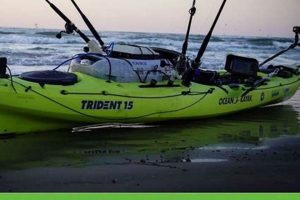
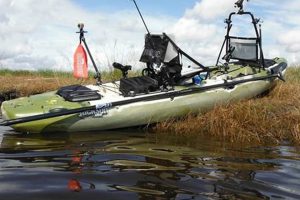
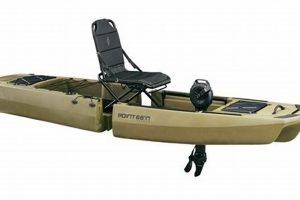
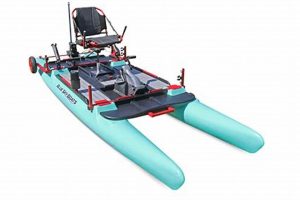
This specific watercraft is designed for angling, blending stability and maneuverability with features tailored for the pursuit of a predatory freshwater fish. It typically includes specialized storage for rods and tackle, along with design elements that promote a stealthy approach, crucial for successful angling in clear water. Examples of such features might include rod holders, recessed tackle trays, and a hull design that minimizes noise and surface disturbance.
The combination of a stable platform for casting and retrieving, coupled with the portability and stealth offered by this type of vessel, makes it a highly effective tool for anglers targeting these fish. This approach allows access to shallower waters and tighter spaces often inaccessible to larger boats, enhancing the angler’s ability to locate and engage their target species. Historically, fishing from small, human-powered vessels has been a common practice, and modern designs represent a refined evolution of this tradition, incorporating advanced materials and construction techniques to improve performance and durability.
The following sections will explore specific design characteristics, popular models, recommended equipment, effective fishing techniques, and essential safety considerations associated with this specialized angling platform.
Tips for Kayak Fishing for Pike
Successful pike fishing from a kayak requires careful planning and execution. These tips offer guidance for a productive and enjoyable experience.
Tip 1: Choose the Right Kayak: Stability is paramount. A wider, flatter hull provides a more stable casting platform, minimizing the risk of capsizing during a fight with a large fish. Sit-on-top kayaks offer easier re-entry if a spill does occur.
Tip 2: Utilize Stealth: Pike are ambush predators. Approach fishing locations quietly, minimizing paddling strokes and noise. Drifting or using a slow, controlled paddle allows for a more natural presentation of lures.
Tip 3: Target Structure: Pike often hold near weeds, submerged logs, and drop-offs. Focus casting efforts around these areas to increase the likelihood of encountering fish.
Tip 4: Employ Effective Lures: Large spinnerbaits, crankbaits, and jerkbaits effectively mimic the movements of prey fish, enticing strikes. Soft plastic swimbaits and frogs also prove effective, especially in weedy areas.
Tip 5: Handle Fish Carefully: Pike possess sharp teeth. Use pliers or a lip grip to safely handle them, minimizing risk of injury to both angler and fish. Practice catch-and-release whenever possible to conserve fish populations.
Tip 6: Prioritize Safety: Always wear a personal flotation device (PFD). Carry a whistle and a communication device in case of emergencies. Inform someone of your fishing plans, including location and expected return time.
Tip 7: Respect the Environment: Dispose of fishing line and other waste responsibly. Avoid disturbing natural habitats, such as nesting areas. Practice Leave No Trace principles to minimize impact on the environment.
By adhering to these guidelines, anglers can enhance their chances of success while promoting safe and responsible kayak fishing practices.
These practical tips, coupled with a well-chosen kayak and appropriate gear, lay the foundation for successful pike fishing expeditions.
1. Stability

Stability is a paramount consideration in a fishing kayak designed for pursuing pike. A stable platform is crucial not only for angler comfort but also for effective casting, hooksets, and the maneuvering required when battling a large, powerful fish. A lack of stability can compromise safety and significantly hinder fishing success, especially in challenging conditions. The following facets explore the key components contributing to stability in a Vanhunks pike fishing kayak.
- Hull Design
Hull design plays a critical role in determining a kayak’s stability. Wider, flatter hulls generally offer greater initial stability, making them ideal for calm waters and less experienced paddlers. A broader base reduces the likelihood of tipping, providing a secure platform for standing and casting. Vanhunks kayaks incorporate design elements aimed at maximizing stability for the angler, while still maintaining sufficient maneuverability for navigating diverse water environments. A carefully considered hull design balances these competing needs, enhancing both safety and fishing efficacy.
- Center of Gravity
A lower center of gravity contributes significantly to a kayak’s stability. The design and positioning of seating and storage compartments influence the overall center of gravity. Lowering the angler’s weight within the hull reduces the likelihood of tipping. Vanhunks kayaks often feature seating systems designed to position the angler closer to the waterline, enhancing stability. Proper weight distribution within the kayak further optimizes balance and reduces the chance of capsizing.
- Water Conditions
While inherent stability is crucial, water conditions significantly impact the perceived and actual stability of a kayak. Calm, flat water presents fewer challenges, while wind, waves, and currents can significantly test a kayak’s stability. The inherent stability of a Vanhunks kayak provides a solid foundation, but anglers must also adjust their techniques and positioning in response to changing conditions. Understanding how wind and water affect balance is vital for maintaining stability in dynamic environments.
- Angler Behavior
Angler movements within the kayak significantly affect stability. Sudden shifts in weight, aggressive casting motions, or leaning too far over the side can compromise balance. Maintaining a smooth, controlled center of gravity is essential. Anglers should practice techniques for reaching and retrieving gear without disrupting the kayak’s equilibrium. Understanding how personal movements affect stability is crucial for maintaining a secure and balanced fishing platform.
By carefully considering these factorshull design, center of gravity, water conditions, and angler behavioranglers can maximize the stability of their Vanhunks pike fishing kayak. This enhanced stability translates directly to improved safety, increased casting accuracy, and more effective fish fighting capabilities, ultimately leading to a more successful and enjoyable angling experience.
2. Maneuverability
Maneuverability is a critical attribute in a pike fishing kayak, directly influencing an angler’s ability to navigate diverse water environments and effectively target fish. Precise control and responsiveness are essential for accessing shallow, weedy areas, maneuvering around obstacles, and positioning the kayak optimally for casting and retrieving lures. The following facets explore the key components contributing to maneuverability in a Vanhunks pike fishing kayak.
- Hull Design
Hull design significantly impacts a kayak’s maneuverability. Shorter kayaks with a more defined keel tend to track straighter and offer efficient gliding, while shorter, wider hulls provide enhanced turning capabilities. Vanhunks kayaks often incorporate design elements that balance tracking and maneuverability, allowing anglers to navigate various water conditions effectively. The specific hull design influences how the kayak responds to paddle strokes, currents, and wind, affecting overall control and precision.
- Paddle Length and Design
Paddle length and blade shape play a crucial role in maneuverability. A properly sized paddle allows for efficient and controlled strokes, while the blade shape influences the power and precision of each stroke. A shorter paddle with a wider blade provides more power for quick turns, while a longer, narrower blade offers greater efficiency for straight-line paddling. Choosing the right paddle enhances the kayak’s responsiveness and allows anglers to navigate with precision.
- Rudder System (if equipped)
Some Vanhunks kayaks offer a rudder system, which provides additional directional control, particularly in windy conditions or when dealing with strong currents. A rudder allows anglers to maintain a straight course with minimal effort, freeing up their hands for fishing. The rudder’s effectiveness depends on its design and integration with the kayak’s hull, and proper usage enhances the kayak’s overall maneuverability.
- Water Conditions
Water conditions significantly influence a kayak’s maneuverability. Calm, flat water allows for predictable and controlled movement, while wind, waves, and currents can create challenges. The kayak’s inherent maneuverability interacts with these external forces, requiring anglers to adapt their paddling techniques and utilize the kayak’s features, such as a rudder system, to maintain optimal control and positioning.
By considering these factorshull design, paddle characteristics, rudder system (if present), and prevailing water conditionsanglers can optimize the maneuverability of their Vanhunks pike fishing kayak. Enhanced maneuverability provides a distinct advantage when targeting pike, allowing anglers to access prime fishing locations, position themselves strategically, and effectively present lures, ultimately increasing their chances of success.
3. Storage (rods, tackle)

Effective storage solutions are integral to a successful pike fishing kayak. Organized and readily accessible rods, reels, tackle, and other essential gear contribute significantly to angler efficiency and overall fishing success. Well-designed storage facilitates quick lure changes, prevents tangles, and maximizes fishing time by minimizing time spent searching for equipment. The following facets explore the key components of storage in a Vanhunks pike fishing kayak.
- Rod Holders
Dedicated rod holders secure rods while paddling and navigating, preventing damage and freeing the angler’s hands for other tasks. Flush-mounted rod holders offer a streamlined profile, minimizing interference with paddling, while adjustable rod holders accommodate different rod lengths and fishing techniques. Securely stowed rods minimize the risk of entanglement and facilitate quick access when fish are spotted.
- Tackle Storage
Integrated tackle storage compartments within easy reach allow anglers to quickly change lures and access essential tools without disrupting their fishing rhythm. Waterproof compartments protect sensitive gear from the elements, while removable tackle trays facilitate organization and customization. Efficient tackle storage contributes to a streamlined and productive fishing experience.
- Dry Storage
Dry storage compartments safeguard essential items, such as phones, wallets, and keys, from water damage. These compartments typically feature watertight seals and hatches, ensuring contents remain dry even in wet conditions. Dry storage is vital for protecting valuable belongings and ensuring peace of mind during fishing excursions.
- Other Storage Options
Additional storage options, such as bungee cords, deck rigging, and storage hatches, further enhance the kayak’s carrying capacity. These features accommodate larger items like landing nets, tackle boxes, and safety gear. Strategic placement of these additional storage options maximizes deck space and maintains a clutter-free environment, enhancing overall fishing efficiency.
Well-designed storage solutions significantly enhance the overall fishing experience in a Vanhunks pike fishing kayak. Efficiently organized and accessible gear allows anglers to focus on fishing, maximizing their time on the water and increasing their chances of success. By carefully considering the various storage options available, anglers can select a kayak that best suits their individual needs and fishing style.
4. Stealth

Stealth plays a crucial role in pike fishing, as these predatory fish are easily spooked by disturbances. A less conspicuous approach significantly increases the likelihood of a successful catch. The Vanhunks pike fishing kayak is designed with features that contribute to a stealthier presence on the water, enhancing angling effectiveness. The following facets explore the key components of stealth in this specialized fishing platform.
- Hull Design
The kayak’s hull design influences its ability to move quietly through the water. Features like a streamlined profile and a shallow draft minimize surface disturbance and reduce noise, allowing anglers to approach pike without detection. A well-designed hull contributes significantly to a stealthy approach, increasing the chances of getting close to wary fish.
- Color and Camouflage
The color of the kayak plays a crucial role in blending in with the surrounding environment. Subdued earth tones, greens, and browns help the kayak disappear against the backdrop of vegetation and water, reducing visibility to fish. Effective camouflage patterns further enhance concealment, allowing anglers to remain undetected in shallow waters and weedy areas where pike often lurk.
- Minimizing Movement and Noise
Smooth, controlled paddling strokes are essential for maintaining a stealthy approach. Abrupt movements and splashing create vibrations and noise that can alert pike and cause them to flee. Quiet operation extends to minimizing gear noise and avoiding sudden shifts in weight within the kayak, preserving a low-profile presence.
- Approach and Positioning
Strategic approach and positioning are crucial for remaining undetected. Utilizing natural cover, such as overhanging trees and reeds, provides concealment while approaching fishing areas. Positioning the kayak upwind or up-current minimizes the chance of noise and scent carrying towards the fish, further enhancing stealth.
These facets of stealth, integrated into the design and usage of the Vanhunks pike fishing kayak, contribute significantly to angling success. By minimizing disturbance and remaining inconspicuous, anglers increase their chances of encountering and catching these wary predators. A stealthy approach is often the defining factor between a successful fishing trip and an empty net.
5. Durability

Durability is a critical factor in a fishing kayak, especially when targeting a powerful fish like pike. The kayak must withstand the rigors of navigating various water environments, including shallow areas with submerged obstacles, as well as the stresses exerted during the fight with a strong fish. A durable kayak ensures longevity, minimizes the risk of damage, and provides a reliable platform for anglers in demanding fishing conditions. The following facets explore the key components of durability in a Vanhunks pike fishing kayak.
- Construction Materials
The choice of construction materials significantly impacts a kayak’s durability. High-density polyethylene (HDPE) is a common material known for its impact resistance and ability to withstand abrasion. Other materials, such as rotomolded plastic, offer excellent durability and UV resistance, ensuring the kayak can endure prolonged exposure to sunlight and harsh weather conditions. The selection of robust materials contributes directly to the kayak’s overall longevity and resilience.
- Hull Thickness and Design
The thickness and design of the hull contribute to its ability to resist impacts and punctures. A thicker hull generally provides greater protection against rocks, logs, and other submerged hazards. Reinforced areas, particularly in the keel and bow, further enhance the kayak’s ability to withstand collisions. A well-designed hull balances durability with performance, providing a robust platform capable of handling challenging environments.
- Hardware and Fittings
The quality and durability of hardware components, such as handles, latches, and D-rings, are essential for long-term performance. Corrosion-resistant materials, like stainless steel or marine-grade aluminum, ensure these components withstand exposure to saltwater and freshwater environments. Durable hardware maintains the kayak’s structural integrity and functionality over time.
- UV Resistance
Exposure to sunlight can degrade certain materials, causing them to become brittle and susceptible to cracking. UV-resistant materials and coatings protect the kayak from the damaging effects of prolonged sun exposure, preserving its color and structural integrity over time, particularly in harsh climates.
The durability of a Vanhunks pike fishing kayak is a direct result of these factors: robust construction materials, well-engineered hull design, durable hardware, and UV resistance. These elements combine to create a fishing platform capable of withstanding the demands of pike fishing, ensuring longevity and providing anglers with a dependable vessel for years of successful fishing expeditions. Investing in a durable kayak minimizes the risk of damage and ensures reliable performance in challenging conditions, allowing anglers to focus on the pursuit of their target species without compromise.
6. Portability

Portability is a significant factor influencing the practicality and accessibility of a fishing kayak, particularly when targeting pike, which often inhabit remote or difficult-to-reach waters. The ease with which a kayak can be transported and launched directly impacts an angler’s ability to explore diverse fishing locations and maximize their time on the water. This section explores the key components of portability related to the Vanhunks pike fishing kayak.
- Weight and Dimensions
The kayak’s weight and dimensions directly influence its portability. Lighter kayaks are easier to handle and transport, requiring less physical exertion during loading, unloading, and carrying. Compact dimensions further enhance portability, allowing the kayak to fit easily on roof racks or in the back of a vehicle. The balance between weight, size, and on-the-water performance is a key consideration in kayak design. Vanhunks kayaks aim to provide a balance of portability and performance, allowing anglers to access a wider range of fishing locations.
- Transportation Methods
Various transportation methods exist for kayaks, including roof racks, trailers, and even carrying by hand for shorter distances. The choice of method depends on the kayak’s size and weight, as well as the angler’s vehicle and physical capabilities. Vanhunks kayaks are designed with transportability in mind, often incorporating features such as integrated handles and molded-in side handles to facilitate easier handling and secure transport.
- Launch and Retrieval
Ease of launch and retrieval contributes significantly to a kayak’s overall portability. Lightweight kayaks are easier to maneuver into and out of the water, minimizing effort and time spent on these tasks. Kayaks with a shallow draft can be launched from various shorelines, expanding access to different fishing spots. The simplicity of launching and retrieving a Vanhunks kayak contributes to a more efficient and enjoyable fishing experience.
- Storage Considerations
Storage requirements are an important aspect of portability. Compact kayaks require less storage space, making them ideal for anglers with limited storage options. Some kayaks can be disassembled or folded for even more compact storage, further enhancing their portability. The storage footprint of a Vanhunks kayak is a practical consideration for anglers who need to store their kayak in apartments, garages, or other limited spaces.
The portability of a Vanhunks pike fishing kayak significantly enhances its versatility and accessibility. The ability to easily transport, launch, and store the kayak expands fishing opportunities and allows anglers to explore a wider range of waters in pursuit of pike. By carefully considering these facets of portability, anglers can select a kayak that aligns with their individual needs and logistical constraints, maximizing their time on the water and overall fishing enjoyment.
Frequently Asked Questions
This section addresses common inquiries regarding the use of specialized fishing kayaks for targeting pike.
Question 1: What are the key features to consider when selecting a kayak specifically for pike fishing?
Key features include stability for casting and fighting fish, sufficient storage for rods and tackle, maneuverability in various water conditions, a stealthy profile for approaching wary pike, and durability to withstand the rigors of fishing environments.
Question 2: How does the hull design impact performance when fishing for pike?
Hull design influences stability, maneuverability, and tracking. Wider hulls offer greater stability, while shorter hulls enhance maneuverability. A well-designed hull balances these attributes to optimize performance in diverse fishing scenarios.
Question 3: What safety precautions should be taken when kayak fishing for pike?
Essential safety precautions include wearing a personal flotation device (PFD), carrying a whistle and communication device, informing someone of fishing plans, and being aware of weather conditions and potential hazards.
Question 4: What are the recommended fishing techniques for targeting pike from a kayak?
Effective techniques include casting lures near weed beds, submerged logs, and drop-offs, using a slow retrieve to mimic prey fish, and employing a variety of lures such as spinnerbaits, crankbaits, and jerkbaits.
Question 5: How does one maintain and care for a fishing kayak to ensure its longevity?
Proper maintenance includes rinsing the kayak with fresh water after each use, storing it out of direct sunlight, regularly inspecting and tightening hardware, and addressing any damage promptly to prevent further deterioration.
Question 6: What are the advantages of using a kayak specifically designed for pike fishing compared to a general-purpose kayak?
Specialized kayaks offer features tailored for pike fishing, such as rod holders, tackle storage, and a stable platform for casting and fighting fish, enhancing angling efficiency and overall success.
Understanding these aspects contributes to a well-informed decision when selecting and utilizing a specialized fishing kayak for targeting pike. Careful consideration of these factors enhances both safety and fishing success.
The subsequent section will delve into specific models and their respective features, providing further guidance for selecting the ideal kayak for individual needs and preferences.
Conclusion
This exploration has highlighted the specialized design and features that make a specific type of kayak well-suited for targeting pike. Key attributes such as stability, maneuverability, dedicated storage, a stealthy profile, inherent durability, and portability contribute significantly to its effectiveness as a fishing platform. Understanding these elements allows anglers to make informed decisions regarding selection and utilization, maximizing their potential for success on the water.
The pursuit of pike from a specialized kayak offers a unique and rewarding angling experience. By carefully considering the discussed aspects and prioritizing safety and environmental responsibility, anglers can engage in this pursuit effectively and contribute to the preservation of aquatic ecosystems for future generations. Continued exploration of advanced techniques and equipment promises further enhancement of this specialized fishing discipline.