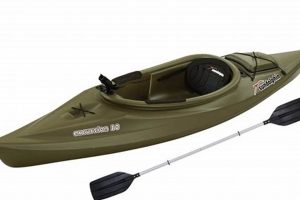
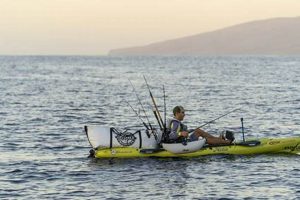
A setup employing a specialized arrangement of lines, lures, and weights deployed from a small, human-powered watercraft targets fish through their natural predatory responses to movement and enticing presentations. This method can involve various configurations, including planer boards, downriggers, and specialized lures designed for specific species and water conditions.
This approach offers several advantages. The maneuverability and shallow draft of the vessel allow access to areas often unreachable by larger motorized boats, expanding fishing opportunities. The relatively quiet nature of human-powered propulsion minimizes disturbance, potentially increasing catch rates. Furthermore, the low cost and ease of transport associated with these smaller craft make them a popular choice among anglers. This method has evolved alongside advancements in materials and design, progressing from basic line-and-lure systems to the sophisticated, highly effective systems available today.
The following sections will delve deeper into specific techniques, equipment choices, and strategic considerations for maximizing effectiveness, including a detailed examination of various configurations, lure selection strategies, and adaptations for targeting different species.
Tips for Effective Trolling from a Kayak
Optimizing a trolling setup from a kayak requires careful consideration of several factors. These tips offer guidance for improved catches and a more enjoyable experience.
Tip 1: Match Equipment to Target Species: Lure selection, line weight, and rod action should align with the targeted fish species. Researching local fish behavior and preferred prey is crucial.
Tip 2: Control Trolling Speed: Maintaining a consistent, appropriate speed is essential for lure action and fish attraction. A speed and distance tracker can assist with monitoring.
Tip 3: Utilize Rod Holders and Organizers: Proper rod placement and secure storage prevent tangles and maximize fishing time. Rod holders allow for multiple lines in the water, increasing catch potential.
Tip 4: Employ Stealth Tactics: Minimizing noise and visual disturbances can significantly impact catch rates. Avoiding sudden movements and bright clothing can help.
Tip 5: Vary Depth and Lure Presentation: Experimenting with different trolling depths and lure actions can help determine the most effective strategies for specific conditions and target species. Downriggers and planer boards offer diverse presentation options.
Tip 6: Prioritize Safety: Wearing a personal flotation device and carrying essential safety equipment, such as a whistle and signaling devices, are paramount. Checking weather conditions before embarking is crucial.
Tip 7: Respect Local Regulations: Adhering to fishing regulations and licensing requirements ensures the sustainability of local fish populations and promotes responsible angling practices.
By implementing these strategies, anglers can significantly improve their chances of success and enjoy a more productive and rewarding experience on the water.
The following section will provide a concluding overview and highlight the key advantages of this adaptable and effective fishing technique.
1. Kayak Stability

Kayak stability forms the foundation of a successful trolling rig setup. A stable platform directly impacts an angler’s ability to manage lines, control the trolling presentation, and react to fish strikes effectively. Compromised stability diminishes control and increases the risk of capsizing, especially when fighting larger fish or navigating challenging water conditions. Understanding the factors contributing to kayak stability is essential for a safe and productive trolling experience.
- Primary Stability (Initial Stability)
Primary stability refers to a kayak’s resistance to tipping when initially leaned. Wider kayaks generally exhibit higher primary stability, providing a more secure feeling platform, particularly beneficial for beginners or when managing multiple rods. A wider hull minimizes tipping during routine actions like baiting hooks or reeling in fish. However, higher primary stability can compromise maneuverability.
- Secondary Stability (Final Stability)
Secondary stability describes a kayak’s resistance to capsizing once it’s leaned beyond its initial stability point. This characteristic is crucial when fighting strong fish or encountering unexpected waves. Kayaks with rounded or flared hulls often demonstrate higher secondary stability, providing a reassuring sense of security when leaning into turns or battling strong currents. This stability allows anglers to exert more pressure on hooked fish without compromising their balance.
- Center of Gravity
The combined center of gravity of the angler, kayak, and gear significantly influences overall stability. A lower center of gravity enhances stability. Distributing weight evenly and storing heavier items lower in the kayak improves balance. High seating positions raise the center of gravity, potentially decreasing stability, while lower seating positions enhance stability, crucial for managing a trolling spread effectively.
- Water Conditions
Prevailing water conditions significantly impact kayak stability. Calm, flat water presents fewer challenges compared to choppy conditions or strong currents. Wind, waves, and current can destabilize even the most stable kayaks, underscoring the importance of choosing a kayak appropriate for the intended fishing environment and understanding its stability characteristics. Matching kayak design and stability features to the anticipated water conditions ensures a safer and more controlled trolling experience.
Selecting a kayak with appropriate stability characteristics for the intended trolling application is paramount. Considering factors like hull design, width, and the angler’s experience level ensures a balanced and secure platform for managing lines, fighting fish, and navigating various water conditions, ultimately optimizing the effectiveness and safety of the trolling rig.
2. Rod Holders

Rod holders constitute an integral component of a kayak fishing trolling rig, directly influencing both efficiency and safety. They provide secure points to position rods, freeing the angler’s hands for other tasks such as boat control, lure adjustments, and landing fish. Without rod holders, managing multiple lines while trolling becomes unwieldy and increases the risk of tangles and lost gear. Furthermore, an unsecured rod may be easily displaced by a sudden strike or unexpected wave action. For instance, trolling for crappie with two rods requires dedicated holders to maintain proper lure depth and separation, preventing line entanglement and maximizing coverage of the water column. Similarly, when targeting larger species like salmon, secure rod holders are essential for absorbing powerful strikes and preventing rod loss. The placement and type of rod holders significantly affect the overall functionality of the trolling setup.
Different rod holder styles offer varying levels of adjustability and functionality. Flush-mount rod holders offer a streamlined profile but limited adjustability, while adjustable rod holders allow for precise positioning and control over rod angles, crucial for optimizing lure presentation and hook sets. Track systems provide further versatility, allowing anglers to reposition rod holders along the kayak’s gunwales. Selecting appropriate rod holders depends on target species, trolling techniques, and personal preferences. For example, adjustable rod holders mounted near the stern facilitate trolling multiple lines at varying depths, while forward-mounted rod holders might be preferred for techniques like planing or targeting specific structures. Careful consideration of rod holder placement and functionality optimizes line management and enhances the overall trolling experience.
Effective rod holder placement optimizes line angles and minimizes interference between lines, maximizing the efficiency of the trolling spread. Properly secured rods prevent loss of gear during strikes and contribute to angler safety, particularly when targeting strong fish. The selection and positioning of rod holders within a kayak fishing trolling rig represent key considerations for anglers seeking to improve their catch rates and overall fishing experience. The interplay between rod holder type, placement, and the specific trolling application underscores the importance of a well-planned and executed setup.
3. Line Management

Effective line management is crucial for successful kayak fishing trolling rigs. Tangles, snags, and crossed lines diminish fishing time and can lead to lost gear and fish. A well-organized system ensures smooth operation, maximizes fishing efficiency, and contributes significantly to a positive on-the-water experience. Consider a scenario where multiple lines are deployed without proper organization; a strong strike on one line could quickly lead to a tangled mess, impacting the other lines and potentially resulting in a lost fish. Conversely, a streamlined line management system allows for efficient retrieval and redeployment, increasing the chances of multiple hookups and a more productive fishing trip.
- Rod Holder Placement and Angles
Strategic rod holder placement and angles minimize line interference. Positioning rods at varying angles, both horizontally and vertically, separates lines and reduces the risk of tangles, particularly when turning or maneuvering the kayak. For example, angling outboard rod holders slightly outwards prevents lines from converging behind the kayak. This is especially important when trolling with multiple lines in confined areas or near structures.
- Line Counter Reels
Line counter reels offer precise control over trolling depth and lure presentation. Knowing the amount of line deployed allows for consistent replication of successful retrieves and adjustments based on fish activity and bottom contours. This data-driven approach improves the angler’s ability to target specific depths and maintain optimal lure presentation, critical for species like walleye or trout that often suspend at specific depths.
- Spooling and Line Condition
Properly spooled line with minimal twists and kinks ensures smooth casting and retrieval, minimizing tangles and maximizing line sensitivity. Regularly checking for line damage and replacing worn sections prevents unexpected break-offs during a fight. Maintaining line integrity is paramount when trolling, as even minor abrasions can weaken the line, increasing the risk of losing a trophy fish.
- Line Organization Systems
Utilizing line organizers, such as clips or cleats, keeps lines neatly arranged and readily accessible, further minimizing tangles and maximizing fishing time. This organized approach proves invaluable when dealing with multiple lines and varying lure types. A dedicated system for managing line slack and preventing it from drifting into the propeller or rudder (if applicable) is essential for maintaining a clean and efficient trolling setup.
These interconnected elements of line management contribute directly to the overall success of a kayak fishing trolling rig. An organized system ensures that lines remain tangle-free, maximizing fishing time and increasing the odds of a successful catch. By considering these factors, anglers can create a streamlined and efficient setup that enhances their overall trolling experience.
4. Lure Selection
Lure selection plays a pivotal role in the effectiveness of a kayak fishing trolling rig. The chosen lure directly influences the ability to attract and hook target species. Several factors dictate appropriate lure choices, including target species, water conditions, trolling speed, and the specific fishing environment. A deep-diving crankbait might prove effective when trolling for lake trout in deep, clear water, while a shallow-running minnow imitation might be preferred for targeting bass in weedy shallows. Understanding these relationships is essential for maximizing catch rates.
Matching lure characteristics to the target species’ feeding habits and the prevailing environmental conditions is paramount. Consider factors such as lure size, color, action, and diving depth. Smaller lures often prove effective for pressured fish or when targeting smaller species. Brightly colored lures might excel in murky water or low-light conditions, while more natural colors often produce better results in clear water. Lure action, whether a subtle wobble or an aggressive vibration, should mimic the movement of common prey items. Diving depth must align with the target species’ preferred feeding zone. For instance, trolling for pelagic species like mackerel or tuna requires lures that can reach greater depths and withstand higher trolling speeds, unlike lures used for bottom-dwelling species like flounder or snapper.
Strategic lure selection significantly contributes to the overall success of a kayak fishing trolling rig. Aligning lure characteristics with the target species and environmental factors increases the probability of attracting and hooking fish. This understanding empowers anglers to make informed decisions, ultimately leading to a more productive and rewarding fishing experience. The ability to adapt lure selection to changing conditions is a hallmark of a skilled angler. Experimentation and observation play key roles in refining lure choices and maximizing on-the-water success. This adaptability, combined with a solid understanding of fish behavior and environmental influences, forms the cornerstone of effective lure selection.
5. Trolling Speed

Trolling speed represents a critical factor influencing the effectiveness of a kayak fishing trolling rig. Maintaining the correct speed directly impacts lure action, presentation, and the ability to attract target species. An improper speed can render even the most enticing lure ineffective, while a well-controlled speed maximizes lure performance and increases the likelihood of attracting and hooking fish. This intricate relationship between trolling speed and lure behavior underscores the importance of understanding and controlling this variable.
- Lure Action
Different lures require specific speeds to achieve their intended action. Crankbaits, for example, have a designed wobble or vibration that becomes most effective within a specific speed range. Trolling too slowly might result in minimal action, while excessive speed can disrupt the lure’s intended movement and diminish its attractiveness. Matching trolling speed to the lure’s design characteristics is essential for maximizing its effectiveness and enticing fish.
- Target Species Behavior
Different fish species exhibit varying predatory responses and preferred prey speeds. A slow, methodical troll might prove effective for lethargic bottom-dwellers, while faster speeds might be necessary to trigger strikes from aggressive pelagic species. Understanding the target species’ behavior and adjusting trolling speed accordingly significantly increases the chances of a successful presentation. For instance, slow-trolling live bait might be preferred for targeting muskie, while a faster troll with a flasher and hoochie might prove more effective for salmon.
- Water Conditions and Depth
Water conditions, such as current and depth, influence the effective trolling speed. Strong currents necessitate adjustments to maintain desired lure depth and action. Similarly, trolling depth impacts the speed required to achieve the desired lure presentation. Deep-diving lures often require slower speeds to reach their target depth, while shallow-running lures may perform optimally at higher speeds. Adapting trolling speed to these dynamic factors maximizes lure effectiveness and presentation.
- Kayak Control and Stability
Maintaining a consistent trolling speed requires a stable and controllable kayak platform. Excessive speed can compromise stability, especially in challenging conditions or when fighting a fish. A controlled speed allows for precise lure presentation and maximizes the angler’s ability to maneuver the kayak effectively, particularly in confined areas or near structures. Balancing speed with kayak control and stability ensures a safe and productive fishing experience.
These interconnected factors highlight the integral role of trolling speed within a kayak fishing trolling rig. Adjusting speed based on lure characteristics, target species behavior, water conditions, and kayak control ensures optimal lure presentation and increases the likelihood of successful hookups. Mastering trolling speed control is a crucial skill for any kayak angler seeking to maximize their catch rates and overall fishing effectiveness. It transforms the trolling rig from a collection of equipment into a dynamic and adaptable fishing system, enhancing the angler’s ability to connect with target species.
6. Safety Equipment
Safety equipment is paramount when employing a kayak fishing trolling rig. The inherent risks associated with on-water activities are amplified when combining fishing with a small, human-powered vessel. Factors such as changing weather conditions, vessel traffic, and the potential for entanglement with fishing gear underscore the necessity of prioritizing safety. Neglecting essential safety precautions can transform a recreational activity into a hazardous situation. For example, an unexpected squall can quickly capsize an unprepared kayaker, while entanglement with fishing lines during a fish fight can restrict movement and increase the risk of drowning. Therefore, a comprehensive understanding of and adherence to safety practices are crucial components of responsible kayak fishing.
Several key pieces of safety equipment directly contribute to mitigating risks associated with kayak fishing trolling rigs. A personal flotation device (PFD) is non-negotiable and should be worn at all times. A PFD provides buoyancy in the event of capsize, significantly increasing the chances of survival. A whistle or air horn serves as an essential signaling device in emergencies, particularly in conditions of limited visibility or when separated from the kayak. A waterproof first-aid kit allows for immediate treatment of minor injuries and can prove crucial in delaying more serious complications until professional medical assistance is available. Carrying a communication device, such as a VHF radio or a waterproof cell phone, enables contact with emergency services or other boaters in case of distress. Navigation lights or reflective tape enhance visibility in low-light conditions, reducing the risk of collision with other vessels. Finally, a paddle leash prevents loss of the primary means of propulsion in the event of capsize or an unexpected drop. These elements of safety equipment, when used correctly and consistently, significantly mitigate the risks associated with kayak fishing.
Integrating safety practices into kayak fishing trolling rigs goes beyond simply carrying the necessary equipment; it requires a proactive approach to risk assessment and mitigation. Regularly checking weather forecasts before embarking on a fishing trip allows for informed decisions regarding trip timing and location. Informing someone of the planned fishing route and expected return time provides an additional layer of security. Understanding local boating regulations and navigation rules minimizes the risk of accidents and ensures compliance with legal requirements. Practicing self-rescue techniques, such as re-entering a capsized kayak, equips anglers with the skills necessary to respond effectively in emergency situations. The consistent application of these safety measures reinforces a culture of preparedness and responsible angling, ultimately contributing to a safer and more enjoyable kayak fishing experience.
7. Local Regulations
Adherence to local regulations forms an integral component of responsible kayak fishing trolling rig operation. These regulations, often specific to a particular body of water or region, aim to preserve fish populations, protect sensitive ecosystems, and ensure the safety of all water users. They encompass various aspects, including licensing requirements, catch limits (size and number), permitted fishing seasons, and restricted areas. Ignoring these regulations can result in fines, legal penalties, and damage to the environment. For example, fishing for certain species during spawning seasons might be prohibited to protect breeding populations. Similarly, size restrictions ensure that younger fish can mature and contribute to the overall health of the fishery. Disregarding these rules disrupts the delicate balance of the aquatic ecosystem and jeopardizes the long-term sustainability of the resource.
Specific regulations directly impact how kayak fishing trolling rigs are employed. Restricted areas, often designated to protect sensitive habitats or breeding grounds, might limit where trolling is permitted. Designated speed limits in certain zones can affect trolling speed and lure presentation. Regulations concerning the use of specific gear, such as the type and number of hooks or the use of live bait, also influence rigging choices. For instance, some areas may prohibit the use of treble hooks to minimize injury to released fish, while others may restrict the use of live bait to prevent the introduction of invasive species. Understanding and complying with these specific regulations are crucial for responsible and legal kayak fishing. Furthermore, awareness of local regulations contributes to the overall safety of the fishing experience. Designated boating lanes or areas restricted to motorized vessels minimize the risk of collisions between kayaks and larger boats. Regulations concerning the display of navigation lights or the use of sound-producing devices enhance visibility and reduce the risk of accidents in low-light conditions or congested waterways.
Integrating an understanding of local regulations into kayak fishing trolling rig practices ensures legal compliance, promotes conservation, and enhances safety. Anglers bear the responsibility of researching and adhering to these regulations, contributing to the long-term health of aquatic ecosystems and the sustainability of the sport. This responsible approach not only safeguards the environment but also cultivates a positive image of kayak fishing within the broader community. By respecting these regulations, anglers demonstrate a commitment to responsible resource management and contribute to the preservation of fishing opportunities for future generations. This proactive engagement with local regulations strengthens the ethical foundation of kayak fishing and fosters a sustainable relationship between anglers and the environment they enjoy.
Frequently Asked Questions
This section addresses common inquiries regarding the utilization of trolling rigs in kayak fishing scenarios.
Question 1: What are the primary advantages of employing a trolling rig from a kayak?
Maneuverability in shallow water and quiet propulsion allow access to areas inaccessible to larger boats, potentially increasing fishing opportunities while minimizing disturbance to fish. The lower cost and easier transport of kayaks also offer significant advantages.
Question 2: How does one select an appropriate kayak for trolling?
Kayak selection depends on target species, water conditions, and personal preference. Stability, storage capacity, and the ability to accommodate rod holders and other accessories should be considered. Longer kayaks generally track better for straight-line trolling, while wider kayaks offer enhanced stability, beneficial for managing multiple rods or larger fish. Sit-on-top kayaks are often preferred for their ease of entry and exit, especially important for anglers targeting larger species.
Question 3: What essential equipment is required beyond the kayak itself?
Essential equipment includes appropriate rods and reels, a selection of lures, line, rod holders, a PFD, safety gear (whistle, signaling devices), and appropriate attire for weather conditions. Additional accessories such as fish finders, GPS units, and drift socks can enhance the experience and improve catch rates.
Question 4: What are common challenges encountered when trolling from a kayak, and how can these be addressed?
Common challenges include maintaining a consistent trolling speed, managing multiple lines, and dealing with wind and current. Utilizing a drift sock or sea anchor can help control drift and maintain a desired trolling speed. Proper rod holder placement and line management techniques minimize tangles and maximize fishing efficiency. Understanding weather patterns and water conditions is crucial for a safe and successful outing.
Question 5: How does trolling from a kayak differ from trolling from a larger motorized boat?
Trolling from a kayak requires a more nuanced approach due to the smaller platform and reliance on human power. Maneuverability and stealth offer advantages in shallow water and around structure, but covering large expanses of open water can be more challenging. Speed control and line management require greater attention. Safety considerations are also paramount due to the smaller size and lower profile of a kayak.
Question 6: What resources are available for learning more about effective kayak trolling techniques?
Numerous online resources, including forums, articles, and instructional videos, offer valuable insights into kayak trolling techniques. Local fishing clubs and kayak outfitters can provide personalized guidance and recommendations specific to local waters and target species. Hands-on experience, combined with continuous learning and adaptation, is key to mastering this fishing method.
These frequently asked questions offer a starting point for anglers exploring the rewarding world of kayak trolling. Continuous learning and adaptation based on experience and local conditions will further refine technique and enhance fishing success.
The following section will provide a concluding overview and highlight the key advantages of this adaptable and effective fishing technique.
Kayak Fishing Trolling Rig
This exploration has examined the multifaceted nature of kayak fishing trolling rigs, encompassing equipment selection, rigging techniques, safety considerations, and the importance of adhering to local regulations. From the stability of the kayak platform and the strategic placement of rod holders to the nuanced selection of lures and the precise control of trolling speed, each element contributes significantly to the overall effectiveness and safety of this specialized fishing approach. Effective line management and a thorough understanding of target species behavior further enhance the probability of successful angling outcomes. Prioritizing safety equipment and adhering to local regulations underscore a commitment to responsible angling practices, crucial for the long-term sustainability of aquatic resources.
The adaptability and effectiveness of kayak fishing trolling rigs offer anglers a unique opportunity to connect with the aquatic environment. By embracing a comprehensive understanding of the principles and practices outlined herein, anglers can unlock the full potential of this dynamic fishing method, enhancing both their catch rates and their overall appreciation for the intricacies of the sport. Continued learning and adaptation based on experience and observation will further refine techniques and solidify the angler’s connection with the aquatic world. This pursuit of knowledge and refinement underscores the enduring appeal and rewarding nature of kayak fishing.