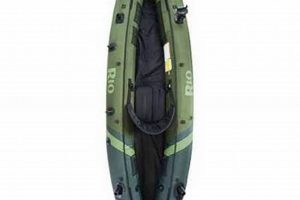
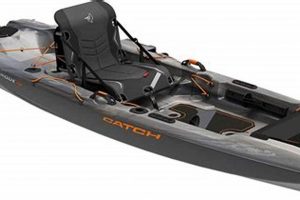
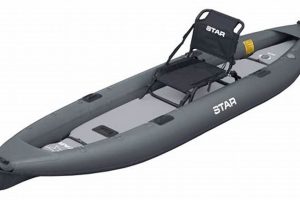
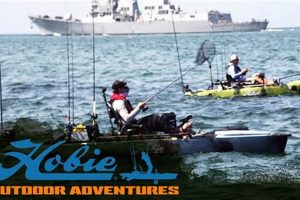
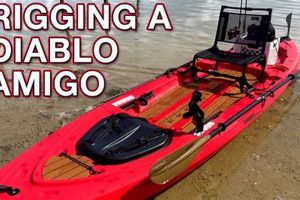
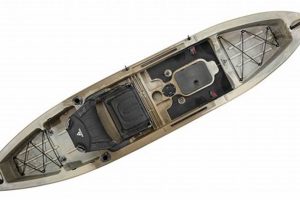
Paddling a kayak designed for fishing, like the Helen model, involves a variety of techniques tailored to specific needs. These range from powerful forward strokes for covering distance to subtle maneuvering strokes for precise boat control around fishing spots. An example would be a gentle draw stroke to position the kayak closer to a promising snag without disturbing the water.
Efficient paddling technique is essential for successful kayak fishing. It conserves energy, allowing anglers to cover more water and fish longer. Precise control is crucial for approaching fish stealthily and maintaining position in currents or wind. Historically, kayak fishing has evolved from traditional methods using basic paddles to modern designs incorporating specialized blades and techniques for optimal performance.
This article will delve into essential paddling techniques for fishing kayaks, focusing on efficiency, maneuverability, and specialized strokes for diverse fishing scenarios. Further topics will include paddle selection, kayak outfitting for paddling comfort, and safety considerations for on-the-water performance.
Essential Kayak Fishing Paddling Tips
Effective paddling technique maximizes efficiency and control, crucial for a successful fishing experience. These tips focus on optimizing performance and minimizing effort on the water.
Tip 1: High-Angle Paddle Stroke: Maintaining a high paddle angle during the forward stroke maximizes power and minimizes shoulder strain. The paddle should enter the water close to the kayak and exit near the hips.
Tip 2: Core Engagement: Utilizing core muscles for rotation during the stroke improves power and reduces fatigue. Focus on twisting from the torso rather than relying solely on arm strength.
Tip 3: Smooth and Consistent Cadence: A consistent paddling rhythm conserves energy and maintains momentum. Avoid jerky or erratic movements that disrupt boat stability.
Tip 4: Proper Blade Immersion: The entire paddle blade should be submerged during the power phase of the stroke. Partial immersion reduces efficiency and wastes energy.
Tip 5: Draw Stroke for Maneuvering: The draw stroke allows precise lateral movement. Reach out perpendicular to the kayak, plant the blade, and pull the kayak towards the paddle.
Tip 6: Reverse Sweep Stroke for Turning: This stroke facilitates quick turns. Sweep the paddle in a wide arc away from the kayak’s stern.
Tip 7: Feathering the Paddle: Rotating the paddle blade parallel to the wind reduces resistance and improves control in windy conditions.
Mastering these techniques allows for efficient travel, precise boat control, and reduced fatigue, ultimately enhancing the overall fishing experience.
By implementing these strategies, anglers can focus on fishing rather than paddling, improving their chances of success on the water. The following section will discuss essential safety considerations for kayak fishing excursions.
1. Paddle Stroke Technique

Paddle stroke technique forms the foundation of effective kayak fishing, particularly with specialized models like the Helen. Efficient propulsion and precise maneuvering directly correlate with the angler’s ability to navigate various water conditions and approach fish stealthily. A powerful forward stroke maximizes distance covered, while nuanced corrective strokes maintain boat position against currents or wind. The draw stroke, for instance, allows subtle lateral movement, crucial for precise positioning near submerged structures or vegetation without disturbing the target area. Conversely, a poorly executed stroke results in wasted energy, reduced boat control, and increased noise, potentially spooking fish.
Consider navigating a narrow, shallow creek choked with overhanging branches. A high-angle stroke with minimal blade splash becomes essential for progress without disturbing the water or snagging on obstacles. Alternatively, in open water facing strong winds, a low-angle power stroke combined with efficient feathering minimizes wind resistance and maintains directional control. These examples illustrate how varied paddling techniques directly impact successful fishing outcomes within different environments.
Mastering fundamental paddle strokes, including forward, reverse, sweep, and draw strokes, equips anglers with the tools to control their kayak effectively. This proficiency becomes paramount when employing a fishing-specific kayak like the Helen, enabling anglers to exploit its design features for optimal performance and enhance their overall fishing experience. This mastery ultimately translates to greater efficiency, reduced fatigue, and increased opportunities for success on the water.
2. Efficient Power Transfer

Efficient power transfer is paramount in kayak fishing, particularly with specialized models like the Helen, where maximizing propulsion while minimizing energy expenditure is crucial. This efficiency directly translates to covering more water, conserving energy for fishing, and maintaining stealth. Understanding the factors influencing power transfer enables anglers to refine their technique and optimize performance on the water.
- Paddle Blade Design and Angle:
The shape and angle of the paddle blade significantly influence power transfer. A high-angle paddle stroke, combined with a blade designed for efficient “catch” in the water, maximizes propulsion with each stroke. Conversely, a poorly angled or inefficient blade design dissipates energy, resulting in reduced forward momentum and increased fatigue. The Helen kayak, often used in calmer waters for precise fishing, benefits from a blade designed for a higher angle stroke.
- Body Posture and Core Engagement:
Proper body posture and core engagement are essential for transferring power from the body to the paddle. A stable, upright posture allows for efficient rotation and leverage, maximizing the force applied to each stroke. Engaging core muscles, rather than relying solely on arm strength, ensures sustained power and reduces fatigue. This is particularly important in the Helen kayak, where precise maneuvering often requires sustained, controlled paddling.
- Cadence and Stroke Rate:
A consistent and appropriate stroke rate contributes significantly to efficient power transfer. A cadence that is too fast can lead to wasted energy and reduced control, while a cadence that is too slow fails to generate sufficient momentum. Finding the optimal balance between stroke rate and power output is key for maximizing efficiency, particularly in fishing situations requiring prolonged paddling, as is often the case with the Helen.
- Kayak Design and Stability:
The design and stability of the kayak itself influence power transfer. A stable platform allows for efficient application of force to the paddle, minimizing energy lost to rocking or instability. The Helen fishing kayak, designed for stability, provides a solid platform for maximizing the effectiveness of each paddle stroke, contributing to overall efficiency.
These interconnected factors contribute significantly to efficient power transfer in a Helen fishing kayak. By optimizing these elements, anglers can improve their paddling efficiency, conserve energy, and maximize their time on the water focused on fishing. This translates directly to a more productive and enjoyable fishing experience. Further exploration of kayak-specific paddling techniques can further enhance these benefits.
3. Maneuverability in Currents

Maneuverability in currents is a critical skill for kayak anglers, especially when using a fishing-specific kayak like the Helen. These kayaks are often employed in environments where currents play a significant role, such as rivers, estuaries, and tidal zones. Precise boat control is essential for maintaining position, approaching fishing targets effectively, and ensuring safety in dynamic water conditions. The ability to execute specific paddle strokes effectively directly influences the angler’s success and overall fishing experience.
- Eddy Turns and Current Management:
Utilizing current differentials and eddies is crucial for maneuvering efficiently. Performing an eddy turn, where the kayak pivots within an eddy, allows anglers to change direction with minimal effort. Understanding current flow and using appropriate paddle strokes, such as sweep strokes and bow draws, allows for precise positioning within these dynamic water features. This is particularly relevant when fishing from a Helen kayak in moving water, where maintaining position near structure or cover is essential.
- Ferrying Across Currents:
Ferrying, or paddling across a current at an angle, is a fundamental skill for maintaining the desired course and reaching specific locations. Proper angle and paddle stroke selection, often employing forward and corrective strokes, prevents being swept downstream. In the context of the Helen fishing kayak, this is essential for accessing fishing spots across moving water, particularly when targeting specific structures or areas of varying depth and current flow.
- Corrective Strokes and Maintaining Position:
Currents exert constant pressure on a kayak, requiring continuous corrective strokes to maintain position. Draw strokes, stern draws, and low brace strokes are essential tools for counteracting the current’s force and preventing unwanted drift. These techniques are crucial when fishing from a Helen kayak, especially when holding position near a promising fishing area or maintaining a precise drift within a target zone.
- Wind and Current Interaction:
Wind and current often interact to create complex water dynamics. Understanding how these forces combine influences paddle stroke selection and boat positioning. Adjusting paddling technique to compensate for both wind and current ensures effective maneuverability. This is particularly relevant in a Helen fishing kayak, where maintaining stability and precise control in variable conditions is paramount for presenting lures effectively and detecting subtle bites.
Mastering these maneuverability techniques in currents is essential for effectively utilizing a Helen fishing kayak in dynamic water environments. These skills allow anglers to maintain precise boat control, position themselves strategically, and conserve energy, ultimately maximizing their fishing success and overall experience on the water.
4. Stability and Balance

Stability and balance are fundamental aspects of kayak fishing, especially when using a specialized fishing kayak like the Helen. The inherent stability of the kayak platform directly influences the angler’s ability to cast, retrieve, land fish, and navigate various water conditions. Maintaining balance while performing fishing-related activities is crucial for safety and overall success on the water. This exploration delves into the components contributing to stability and balance in a Helen fishing kayak.
- Hull Design and Stability:
The Helen fishing kayak’s hull design plays a pivotal role in its stability. Wider hulls generally offer greater primary stability (initial resistance to tipping), while longer hulls contribute to secondary stability (resistance to capsizing once tilted). The specific hull design of the Helen balances these factors to provide a stable platform suitable for fishing activities. This stability allows anglers to confidently stand, cast, and fight fish without compromising balance. A wider, flatter hull, common in many Helen models, provides initial stability, while features like chines or a shallow-V hull contribute to secondary stability, enabling recovery from unexpected rocking or leaning.
- Center of Gravity and Weight Distribution:
The center of gravity and weight distribution within the kayak significantly influence stability. A lower center of gravity enhances stability, making the kayak less prone to tipping. Proper weight distribution, with heavier items positioned lower and centrally, further improves balance. When fishing from a Helen kayak, distributing gear evenly and keeping heavier items low contributes to overall stability, especially when making dynamic movements like casting or retrieving. An uneven weight distribution, such as concentrating weight on one side, can compromise stability and increase the risk of capsizing.
- Paddler Position and Posture:
The paddler’s position and posture directly impact stability and balance. Sitting upright with a stable core engages core muscles, providing support and balance. Leaning excessively or making sudden movements compromises stability and increases the risk of tipping. In a Helen fishing kayak, maintaining a balanced and upright posture is essential for performing fishing-related tasks comfortably and safely. Proper posture also enhances paddling efficiency and reduces fatigue.
- Water Conditions and External Factors:
Water conditions, such as currents, waves, and wind, significantly influence stability. Strong currents or waves can destabilize a kayak, requiring adjustments in paddling technique and body position to maintain balance. Wind can also affect stability, especially when combined with currents. When fishing from a Helen kayak in challenging conditions, understanding how these external factors impact stability is crucial for maintaining control and ensuring safety. Adjusting paddling technique, such as using corrective strokes, and lowering the center of gravity by sitting lower in the kayak, can enhance stability in adverse conditions.
These interconnected elements contribute to the overall stability and balance of a Helen fishing kayak. Understanding these factors and adapting to varying conditions empowers anglers to maintain a stable platform, enhancing safety, fishing performance, and the overall enjoyment of the on-the-water experience. By actively managing these factors, anglers can maximize the stability inherent in the Helen kayak’s design, allowing them to focus on fishing rather than constantly correcting their balance.
5. Adapting to Wind Conditions
Wind significantly impacts kayak handling, particularly noticeable in specialized fishing kayaks like the Helen. Wind resistance against the hull and paddle creates drift and reduces paddling efficiency. Adapting paddling technique to prevailing wind conditions becomes crucial for maintaining course, conserving energy, and maximizing fishing effectiveness. Failure to compensate for wind can lead to significant drift, hindering accurate placement and retrieval of fishing lines, and complicating navigation, particularly challenging in areas with complex currents or obstacles.
Several techniques improve performance in windy conditions. Lowering paddle angle reduces wind resistance, minimizing paddle flutter and maintaining a more efficient stroke. Angling the kayak slightly into the wind (windward) counteracts drift, requiring fewer corrective strokes. Employing a rudder, if available, assists in maintaining course, freeing the paddler to focus on fishing. In situations with strong gusts or sustained winds, utilizing sheltered areas or seeking a windbreak near the shoreline minimizes the impact of wind, enabling more controlled fishing. Consider a scenario where an angler targets a specific structure downwind. Failure to account for wind drift results in overshooting the target, necessitating laborious upwind paddling, wasting energy and potentially disturbing the fishing area. Conversely, anticipating wind drift and angling the approach accordingly ensures precise placement, conserving energy and maximizing fishing time.
Adapting to wind conditions is essential for effective kayak fishing, particularly in models like the Helen designed for specific fishing environments. Understanding wind effects on the kayak and implementing appropriate paddling techniques and strategies maximizes control, efficiency, and fishing success, ensuring a safer and more productive experience on the water. This understanding allows anglers to effectively navigate and fish in a wider range of conditions, maximizing their opportunities regardless of wind variations.
6. Minimizing Fatigue

Minimizing fatigue is crucial for successful kayak fishing, particularly in specialized fishing kayaks like the Helen, often used for extended periods on the water. Fatigue reduction directly correlates with enhanced paddling efficiency, prolonged fishing time, improved safety, and overall enjoyment. Efficient paddling technique, proper posture, and strategic rest periods contribute significantly to minimizing fatigue and maximizing fishing effectiveness. Consider an angler targeting distant fishing grounds. Reduced fatigue allows for efficient travel to and from the target area, conserving energy for fishing rather than battling exhaustion. This translates to more casts, better reaction time to strikes, and a greater chance of success.
Several factors contribute to fatigue in kayak fishing. Repetitive paddling motions, especially with improper technique, strain muscles and joints. Maintaining an awkward posture compromises ergonomics, leading to discomfort and reduced endurance. Exposure to sun, wind, and water can contribute to dehydration and exhaustion. Proper paddling technique, utilizing core muscles rather than solely relying on arms, reduces strain and improves efficiency. Maintaining a comfortable and supported posture minimizes stress on the back and shoulders. Regular hydration and breaks, even brief pauses to stretch or adjust position, significantly reduce fatigue and improve overall endurance. Practical examples include adjusting seat position for optimal back support, incorporating stretching exercises during breaks, and maintaining hydration by regularly consuming water or electrolyte beverages.
The relationship between minimizing fatigue and effective kayak fishing is integral, particularly in models like the Helen designed for specific fishing scenarios. Reduced fatigue enhances paddling efficiency, extends fishing time, and improves safety. Understanding the causes of fatigue and implementing appropriate strategies ensures a more productive and enjoyable fishing experience. By actively addressing fatigue, anglers can maximize their time on the water, focusing on fishing rather than battling physical limitations, ultimately improving their overall success and enjoyment. This focus on fatigue management distinguishes experienced anglers, allowing them to fish longer, cover more water, and react more effectively to fishing opportunities.
7. Quiet Operation for Fishing
Quiet operation is a critical element of successful kayak fishing, particularly when using a specialized model like the Helen, often employed in shallow-water or heavily vegetated environments where fish are easily spooked. Minimizing noise from paddling and kayak movement directly impacts fishing success. Excessive noise disrupts the underwater environment, alerting fish and reducing the likelihood of strikes. Conversely, quiet operation allows closer approaches to target areas, increasing fishing opportunities and overall effectiveness.
Several factors contribute to kayak noise. Paddle drips and splashes create surface disturbances that transmit sound underwater. Kayak hull slap against the water generates low-frequency vibrations that travel considerable distances. Gear shifting or accidental bumps within the kayak produce sharp, localized sounds that can deter fish. Modified paddling techniques, such as a high-angle stroke with a smooth entry and exit, minimize splashing and dripping. Maintaining a steady, controlled paddling cadence reduces hull slap. Securing gear within the kayak to prevent movement minimizes extraneous noises. Consider an angler targeting wary fish in a shallow cove. A noisy approach, characterized by splashing paddles and a rocking hull, alerts fish, causing them to scatter. Conversely, a quiet approach, achieved through smooth, controlled paddling and secure gear, allows the angler to remain undetected, maximizing the chances of a successful presentation.
The relationship between quiet operation and effective kayak fishing is paramount, especially with models like the Helen designed for stealth and maneuverability. Minimizing noise enhances fishing success by reducing fish disturbance, allowing closer approaches, and improving presentation effectiveness. Understanding the sources of kayak noise and implementing techniques for quiet operation distinguishes successful anglers. This understanding allows for a more harmonious interaction with the underwater environment, ultimately leading to a more rewarding and productive fishing experience. This emphasis on quiet operation underlines the connection between angler skill and respect for the aquatic ecosystem.
Frequently Asked Questions
This FAQ section addresses common inquiries regarding paddling techniques and considerations specific to fishing kayaks, particularly models like the Helen, known for their stability and maneuverability.
Question 1: What is the most efficient paddle stroke for covering distance in a Helen fishing kayak?
The most efficient stroke for distance is a modified high-angle forward stroke. Maintaining a high paddle angle and engaging core muscles for rotation maximizes power and minimizes fatigue. This technique is particularly effective in the Helen due to its stable platform and design optimized for paddling efficiency.
Question 2: How does one maneuver a Helen fishing kayak effectively in windy conditions?
Wind affects kayak handling significantly. Lowering the paddle angle reduces wind resistance on the blade, while angling the kayak slightly into the wind (windward) counteracts drift. A rudder, if available, further enhances directional control. Utilizing sheltered areas minimizes wind impact, particularly when fishing in exposed locations.
Question 3: What techniques minimize noise when paddling a Helen fishing kayak to avoid disturbing fish?
Quiet operation is crucial for stealthy fishing. A smooth, high-angle paddle stroke with minimal splashing reduces surface disturbance. Maintaining a consistent paddling cadence minimizes hull slap against the water. Securing loose gear prevents extraneous noises that could alert fish.
Question 4: How does weight distribution affect stability in a Helen fishing kayak, and how can one optimize it?
Weight distribution significantly impacts stability. Distributing gear evenly and placing heavier items low in the kayak, ideally near the center, lowers the center of gravity, enhancing stability. Avoiding excessive weight on one side prevents imbalance and tipping, particularly during casting or retrieving.
Question 5: What are the essential safety considerations when paddling a Helen fishing kayak in moving water?
Moving water presents specific safety challenges. Wearing a personal flotation device (PFD) is paramount. Understanding current dynamics and eddy formations is essential for safe navigation. Carrying appropriate safety gear, including a whistle and signaling devices, ensures preparedness for emergencies.
Question 6: How can one adapt paddling techniques to varying current speeds and directions in a Helen fishing kayak?
Adapting to currents involves utilizing specific strokes effectively. Ferrying across currents requires angling the kayak and maintaining a consistent paddle stroke. Eddy turns and corrective strokes, such as draw strokes and stern draws, enable precise maneuvering and position holding in dynamic current flows.
Understanding these fundamental paddling techniques and considerations significantly enhances kayak fishing performance, particularly in models like the Helen, designed for stability and maneuverability. These insights contribute to greater efficiency, improved safety, and ultimately, a more rewarding fishing experience.
This concludes the FAQ section. The following section will offer practical tips and advanced techniques for maximizing performance in a Helen fishing kayak.
Conclusion
Effective paddling technique is fundamental to maximizing the performance of a Helen fishing kayak. This exploration has highlighted the interconnected aspects of efficient propulsion, precise maneuvering, stability, and adapting to environmental conditions. From understanding the nuances of paddle strokes to managing wind and current, each element contributes significantly to fishing success and overall on-the-water experience. Optimizing these factors empowers anglers to navigate diverse waters, approach fish stealthily, and maintain a stable platform for casting and retrieving, ultimately translating to increased fishing opportunities.
The pursuit of refined paddling technique represents a continuous journey. As anglers gain experience and understanding of their kayak’s characteristics, they can further refine their skills to achieve optimal performance. This ongoing development unlocks the full potential of the Helen fishing kayak, transforming it from a simple vessel into an extension of the angler’s skill and passion for the sport. This dedication to continuous improvement distinguishes experienced anglers and elevates kayak fishing from a recreational activity to a true art form.